The first time a box of peeping chicks showed up on my porch, I stood there holding a bag of feed I’d grabbed off the shelf without really understanding what I was looking at. Starter, grower, layer, medicated, non-medicated, this many percent protein, that many percent calcium. It felt like a lot for something that seemed like it should just be simple.
It is simple, once you know the handful of things that actually matter. Here’s exactly what I feed newborn chicks now, and everything I got wrong the first time around.
The First 24 to 48 Hours: Why Chicks Don’t Need Food Right Away
This surprised me the first time I learned it. A chick absorbs the remaining yolk sac into its body right before hatching, and that yolk provides enough nutrition to sustain the chick for roughly the first 24 to 48 hours of life. This is exactly why hatcheries can ship day-old chicks through the mail without feeding them along the way.
That said, don’t use this as a reason to delay getting food and water in front of them once they’re in your brooder. Set everything up before they arrive, and let them start eating and drinking whenever they’re ready, rather than treating that window as time you don’t need to prepare.
Chick Starter Feed: The Only Thing That Really Matters at First
A complete chick starter feed is genuinely the only thing you need to worry about for at least the first several weeks. Alabama Cooperative Extension recommends a starter feed containing 20 to 22 percent protein for egg-laying breeds, used until birds are about 6 weeks old.
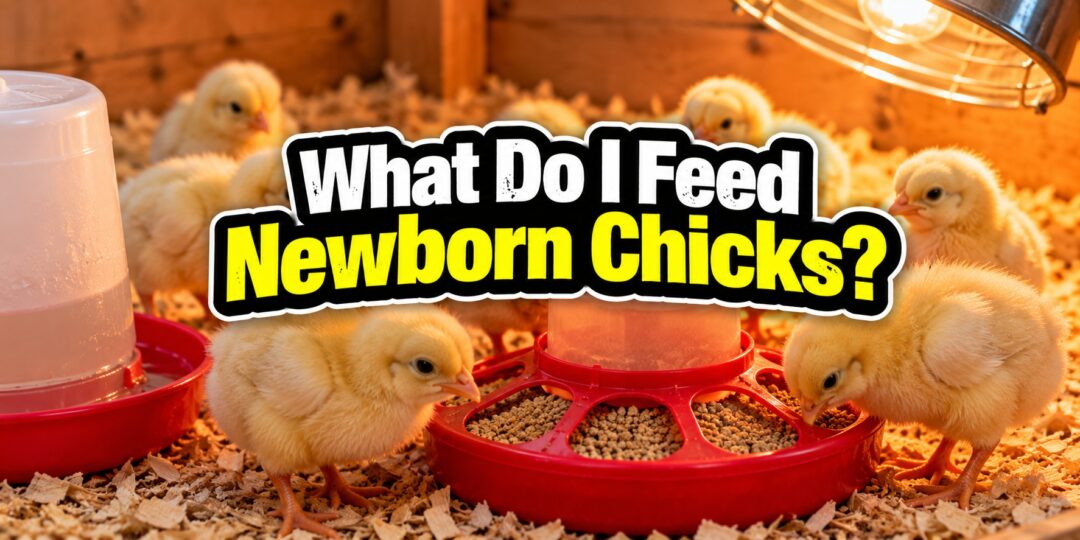
It comes as a mash, crumble, or occasionally small pellets, and crumble is usually the easiest for tiny beaks to manage in those first weeks. Keep it available at all times rather than rationing it; chicks eat frequent small meals throughout the day rather than a couple of big ones.
Medicated vs. Non-Medicated Starter: Which Do You Need
This tripped me up my first time at the feed store. Medicated starter contains a coccidiostat, typically Amprolium, which helps prevent coccidiosis, a common and sometimes deadly intestinal parasite in young chicks. It is not an antibiotic, and it does not affect the safety of eggs or meat later on.
If your chicks were already vaccinated against coccidiosis at the hatchery, check with them about whether medicated feed is still recommended, since some vaccines and medicated feed can work against each other. For most home flocks buying unvaccinated chicks, medicated starter is a reasonable, inexpensive layer of protection, especially if you’re brooding on the ground rather than in a fully sanitized setup.
Protein Content: Why 18 to 22 Percent Matters
Chicks are growing at an incredible rate in these first weeks, and protein is the building block for that growth. Too little protein and you’ll see slower, weaker development. Feed formulated for a completely different life stage, like layer feed, is the opposite problem, and it’s a serious one, covered in detail below.
Stick to a bag specifically labeled as chick starter or start-and-grow, and don’t overthink it beyond checking that the protein percentage falls in the recommended range for your breed’s purpose, whether that’s egg production or meat.
Teaching Chicks to Eat and Drink
Chicks don’t automatically know where their food and water are, especially newly hatched ones. I gently dip each chick’s beak toward the water when I first place them in the brooder, just enough for them to get the idea, and do the same with the feed.
Watching one chick figure it out is usually enough for the rest of the group to follow along quickly, since chicks are naturally curious and tend to copy each other’s behavior.
Water Setup for Newborn Chicks
Water matters just as much as feed in these early days. A small waterer, roughly a quart-sized jar-style unit, is appropriate for the first week for a small group of chicks, scaling up to larger founts as they grow.
Keep the water at room temperature rather than cold straight from the fridge, and place a few clean marbles or small pebbles in the base of the waterer for the first few days, since chicks can and do accidentally drown in even a shallow dish of open water. Check and refresh the water daily, since chicks will kick bedding and droppings into it constantly.
Do Newborn Chicks Need Grit?
If you’re feeding a complete commercial starter and nothing else, chicks don’t need added grit, since the feed is already finely ground and doesn’t require the same mechanical breakdown in the gizzard that whole grains or treats do. The moment you introduce any treats or scratch, even in small amounts, that changes.
Once you do start offering treats, a small dish of chick-sized grit becomes necessary, since it helps their gizzard grind up anything that isn’t part of the complete feed.
The Big Mistake: Never Feed Layer Feed to Chicks
This is the single most important warning I can give you, and it’s worth repeating clearly. Layer feed’s calcium content is formulated for adult hens producing eggshells, and it is genuinely dangerous for young, growing birds. Feeding layer diet to an immature chicken can cause improper bone formation, kidney damage, and death.
If you have both chicks and laying hens on the same property, this means keeping their feed completely separate, which usually means separate housing until the chicks are old enough to transition. It’s a genuinely easy mistake to make if you’re not paying close attention to which bag is which.
When Can You Start Giving Treats?
I know it’s tempting to want to give a tiny chick a little treat right away, but hold off. Diluting a complete starter feed with grain, table scraps, or other treats too early creates a nutritional imbalance during exactly the window when chicks need the most consistent, complete nutrition.
Most keepers wait until chicks are at least a couple of weeks old before offering any treats at all, and even then, treats should stay a small minority of their overall diet, with the complete starter feed doing the heavy lifting.
Foods to Avoid Entirely
- Anything moldy, which can introduce toxins that seriously harm young chicks.
- Avocado, which contains a compound that’s toxic to poultry.
- Raw, dried beans, which contain a compound that’s toxic until properly cooked.
- Salty, sugary, or heavily processed table scraps, which offer little nutritional value and can cause digestive upset.
- Anything hard enough to pose a choking risk to a very small bird.
Pasty Butt: The Feeding-Related Problem to Watch For
Pasty butt is when droppings stick to and build up around a chick’s vent, and if it’s not caught early, it can actually block the vent entirely and become fatal. It shows up most often in the first week or two of life, often tied to stress, chilling, or inconsistent access to water.
Check your chicks daily for the first couple of weeks, and if you spot it, gently soften the buildup with a warm, damp cloth and clear it away carefully rather than pulling at dried material, which can injure delicate skin. Keeping water consistently available and the brooder temperature stable goes a long way toward preventing it in the first place.
Transitioning to Grower Feed
Around 6 weeks of age, most egg-laying breeds are ready to move from starter to a grower feed, which contains somewhat less protein, generally in the 16 to 18 percent range, appropriate for their slower growth phase heading toward maturity.
Make this switch gradually if you can, mixing the two feeds together for a few days rather than swapping abruptly, which tends to go over more smoothly than an overnight change.
My Feeding Routine Now
These days, my setup is simple: a quality medicated or non-medicated starter, depending on the batch of chicks and their vaccination status, available at all times, fresh water checked at least twice a day, and zero treats until they’re a few weeks old. I keep a small bag of chick grit on hand for once treats do start, and I keep starter and layer feed stored in completely separate, clearly labeled containers so there’s never a mix-up.
Common Mistakes I Made My First Time
I offered a tiny treat far too early out of sheer excitement, not realizing I was diluting the balanced nutrition they actually needed. I also didn’t realize how quickly a shallow waterer could become a drowning hazard until I found a chilled, soaked chick that thankfully recovered after some careful warming.
The mistake I’m most glad I avoided, mostly through luck rather than planning, was keeping chick feed and layer feed in identical unlabeled bins early on. One accidental scoop from the wrong bin could have been genuinely dangerous, and it’s a risk I take seriously now.
Building a Simple Feeding Checklist
Before chicks ever arrive, I now run through the same short checklist every time: starter feed on hand and clearly labeled, waterer filled with room-temperature water and marbles in the base, brooder pre-warmed and tested for temperature, and layer feed stored somewhere completely separate. It takes ten minutes and prevents nearly every mistake covered in this article.
Common Questions About Feeding Newborn Chicks
Can I Make My Own Chick Starter Instead of Buying It?
It’s possible, but genuinely difficult to get right, since a properly formulated starter balances protein, amino acids, vitamins, and minerals in specific ratios that are hard to replicate at home with raw ingredients. For nearly every backyard keeper, a quality commercial starter is worth the cost, both for convenience and for the consistency it guarantees.
How Much Should Newborn Chicks Be Eating?
Rather than measuring exact amounts, keep feed available at all times and let chicks self-regulate. They eat small amounts frequently throughout the day, and appetite naturally increases as they grow, so a consistently available supply matters more than a precise daily quantity in these early weeks.
Do Chicks From a Broody Hen Need the Same Feeding Approach?
Largely yes, though a broody hen will naturally show her chicks where to eat and drink, removing the need for you to demonstrate it yourself. Still provide a proper chick starter rather than assuming the hen and chicks will get adequate nutrition from foraging alone, especially in the first few weeks.
What If My Chicks Aren’t Eating?
A chick that seems completely uninterested in food or water for more than a few hours after being shown where it is deserves a closer look. Check that the brooder temperature is correct, since a chilled or overheated chick often won’t eat normally, and make sure the feed and water are easily accessible and not too far from where the chicks are clustering for warmth. If several chicks in the group are showing the same disinterest, it’s worth reassessing your whole brooder setup rather than assuming it’s isolated to one bird.
Raising Your Own Chickens Is Only the Beginning
Learning how to raise chicks successfully is about more than knowing which bag of feed to buy.
It’s about becoming capable of producing more of what your family needs with your own hands—a kind of practical independence that used to be ordinary knowledge.
Our grandparents knew how to raise animals, preserve food, grow what they ate, repair what broke, make useful things from basic materials, and get through difficult times without depending on a store for every solution.
Much of that knowledge has quietly disappeared.
The Lost Skills of Independence brings these practical, old-fashioned skills back together so you can start learning them before you actually need them.
Inside, you’ll discover forgotten methods and self-reliance skills designed to help you become less dependent on modern conveniences and more capable of providing for yourself and your family.
Because raising a healthy flock is valuable, but imagine combining that knowledge with dozens of other practical skills that help you produce, preserve, repair, improvise, and make better use of what you already have.
You don’t need to abandon modern life.
You simply need to know how to manage when modern life stops doing everything for you.
Final Thoughts
Newborn chicks need surprisingly little to thrive: a quality starter feed with the right protein level, consistent clean water, warmth, and patience before introducing treats. Skip the layer feed until they’re actually laying, watch for pasty butt in those first couple weeks, and you’ll give your chicks the strong, healthy start every new flock deserves.
You may also like: 
Why Your Chickens Might Be Poisoning Their Own Eggs
Build THIS and Winter-Proof Your Whole Garden (Video)
Aged Chicken Manure – What It Is, How to Make It, and How to Use It Safely
How Many Eggs Does a Chicken Lay a Day?
How Long Do Chicken Eggs Take to Hatch? A Complete Incubation Guide
Chicken Diseases: How to Identify, Treat, and Prevent Them in Your Backyard Flock