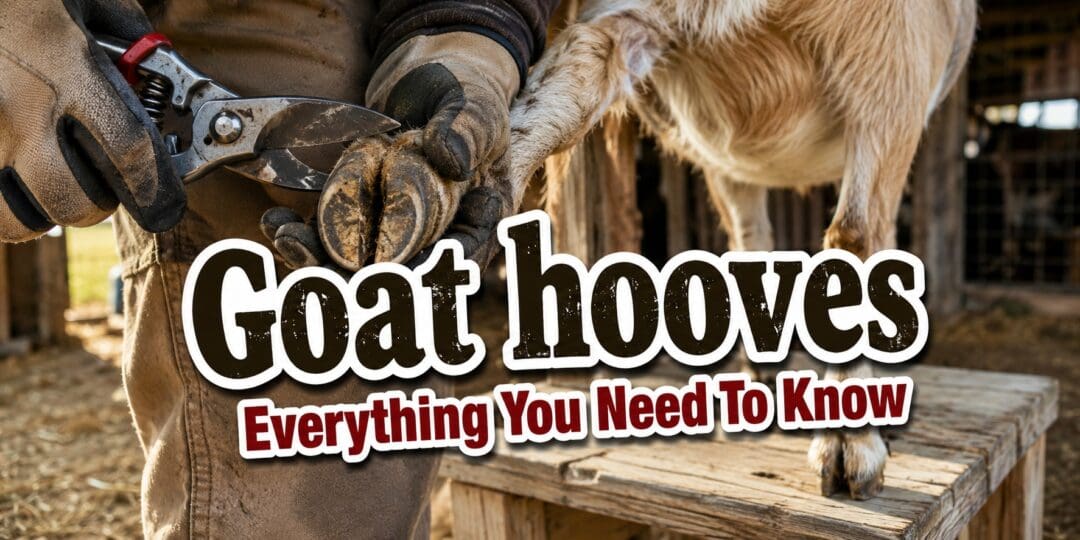
If you keep goats, managing their hooves is one of the non-negotiable maintenance tasks that comes with the territory. Neglect it and you will have lame goats, potential infections spreading through your herd, and animals that cannot move, graze, or thrive the way they should. Stay on top of it and it becomes a straightforward routine that takes a few minutes per animal and keeps your whole herd healthy and comfortable.
This guide covers everything a homesteader needs to know about goat hooves: how they are structured, why domestic goats need regular trimming when wild goats do not, how to trim correctly step by step, what tools work best, and how to recognize and deal with the most common hoof problems including foot rot, foot scald, and laminitis.
For a detailed technical overview of goat hoof anatomy and care fundamentals, Michigan State University Extension provides a solid reference used widely by small ruminant producers throughout the country.
Understanding Goat Hoof Anatomy
Before you pick up a pair of trimmers, it helps to understand what you are working with. Goat hooves are more complex than they look from the outside.
The Cloven Hoof
Goats have a cloven hoof, meaning the foot is split into two main toes that work independently of each other. Each toe has its own hard outer wall, a sole on the bottom, and a soft inner pad. The split between the toes creates a natural crevice that, in wet or muddy conditions, readily traps manure, dirt, and moisture. That trapped environment is exactly where the bacteria responsible for foot rot and foot scald thrive.
Dewclaws
Higher up on the back of the pastern, goats also have two smaller hooves called dewclaws. These do not make contact with the ground during normal movement and are not used for walking, but they do assist with traction on steep terrain. Dewclaws grow slowly and rarely need trimming in most homestead situations. On older goats that spend a lot of time on soft ground, they can occasionally become overgrown enough to curl inward and cause discomfort, in which case a light trim is warranted.
The Coronary Band
The coronary band is the soft tissue at the top of the hoof wall where the hoof meets the leg. New hoof horn grows from the coronary band downward, similar to the way a fingernail grows from its base. Any injury or infection that affects the coronary band can cause permanent disruption to hoof growth, resulting in ridged, irregular, or deformed hooves. Protecting the coronary band during trimming is important.
Why Domestic Goats Need Regular Trimming
In the wild, goats spend their lives traversing rocky slopes, hard-packed ground, and abrasive terrain. That constant contact with rough surfaces naturally wears the hoof down at roughly the same rate it grows. On a homestead, most goats live on pasture, soft soil, straw bedding, or other surfaces that provide almost no natural wear. The hoof keeps growing but never gets worn back down. Left untrimmed, the walls begin to fold outward or inward over the sole, creating a pocket that traps moisture and debris against the soft tissue of the foot. That folded-over growth is how hoof rot gets started, and it is entirely preventable with routine trimming.
How Often to Trim Goat Hooves
The honest answer is that it depends on your goats and your setup. A goat that has access to rocky ground, gravel paths, or hard dry terrain will naturally wear its hooves down and may need trimming only every six to eight weeks. A goat that lives on lush soft pasture or spends significant time in a barn stall may need trimming every four to six weeks.
Rather than following a rigid calendar schedule, learn to read your goats’ hooves. Check them regularly and trim when the walls begin to show visible overgrowth or folding. The key rule is that more frequent shorter trims are far easier and less stressful for both you and the goat than infrequent heavy correction trims. An overgrown hoof that has been neglected for months requires significantly more work to restore to proper shape, and the correction may need to happen across multiple sessions to avoid cutting too deep.
New goat owners should check hooves at least once a week until they develop an eye for how quickly their specific animals grow. Each goat will have its own growth rate influenced by breed, diet, mineral balance, age, and environment. Keeping brief records of trim dates and any observations is a good habit that helps you spot patterns and identify animals that consistently need more frequent attention.
Tools You Need for Hoof Trimming
You do not need a large investment in equipment to trim goat hooves effectively. A minimal kit gets the job done on most homestead herds.
Hoof Trimmers
The most important tool is a sharp pair of hoof trimmers. Dedicated goat hoof trimmers are available at farm supply stores and online. Many experienced goat keepers prefer spring-loaded bypass pruning shears, which offer excellent control, require less hand strength, and work particularly well for smaller breeds like Nigerian Dwarfs where standard goat trimmers can feel bulky. Whatever style you choose, sharpness matters more than brand. A dull blade requires more force, increases the risk of slipping, and makes clean cuts on tough overgrown horn much harder. According to the eXtension Goat community resource, keeping tools clean and sharp is one of the most practical things you can do to improve the quality of your trimming.
Hoof Pick
A hoof pick or stiff brush is used to clean out packed dirt, manure, and debris from the hoof before trimming. You cannot trim what you cannot see. Starting with a clean hoof lets you assess the actual shape and condition of the hoof accurately and spot any problems before you start cutting.
Hoof Knife or Rasp
A hoof knife allows for finer paring work on the sole and tight areas around the toe. A small rasp or file is useful for smoothing rough cut edges after trimming, which reduces the risk of cracks forming at the trimmed wall. Neither tool is strictly essential for routine maintenance trimming, but both become useful when dealing with significantly overgrown or problem hooves.
Protective Gloves
Hoof trimmers are sharp and goats can move unexpectedly. A pair of sturdy work gloves protects your hands and gives you a better grip on the hoof. This is especially important when you are learning, before the motion becomes second nature.
Blood Stop Powder and Wound Spray
Even experienced trimmers occasionally cut too close. Keep blood stop powder (or cornstarch in a pinch) and a wound spray on hand. Blood stop powder stops minor bleeding quickly when applied with light pressure to the cut surface. It is not a sign of failure to need it occasionally. It is a sign that you are trimming close enough to actually accomplish something.
A Stanchion or Milking Stand
A stanchion or milk stand is not a trimming tool per se, but it makes hoof trimming dramatically more manageable, especially if you are working alone. A goat locked into a stanchion with its head occupied by grain is a goat that stays relatively still. Working on a goat that is being held by a second person or haltered at a fence post works too, but the stanchion is the most practical setup for regular solo maintenance.
Step-by-Step: How to Trim Goat Hooves
The goal of every trim is the same: a flat, level sole with the hoof wall trimmed even with the bottom of the foot, at an angle that matches the natural slope of the pastern above it. When you set a correctly trimmed hoof down, the coronary band at the top of the hoof should run roughly parallel to the ground.
- Secure the goat on the stanchion or with assistance, and offer grain or hay to keep the animal occupied. Allow a moment for the goat to settle before you begin.
- Lift the hoof and clean it thoroughly with a hoof pick or stiff brush. Remove all manure, packed soil, and debris from the sole, the walls, and the crevice between the toes. Take a moment to inspect what you are looking at before cutting anything.
- Begin trimming the outer wall of each toe. Start at the toe and work back toward the heel using small, controlled cuts. Follow the natural contour of the hoof wall. The goal is to bring the wall down so it is level with, or just slightly proud of, the sole surface.
- Check the sole. After trimming the walls, the sole should be nearly flat. If excess sole material is present in the back of the hoof, trim it back carefully. You are looking for a slight natural concavity to the sole, not a deep cup. Stop before you reach pink or soft tissue.
- Trim between the toes. The growth in the center crevice between the two toes often accumulates extra material. Clean this out and trim any overgrowth that is folding over or bridging the gap.
- Check the angle. When you set the foot down, the hairline at the coronary band should run parallel to the ground. If one side sits higher than the other, take a little more from the higher side.
- Smooth the edges with a rasp if available. Rounded edges at the cut wall surface are less prone to chipping and cracking than sharp right angles.
- Repeat for all four hooves, observing the goat’s movement briefly at the end to confirm comfort.
As Hobby Farms notes from experienced dairy goat keepers, the bottoms of all four trimmed hooves held together should look clean and even, and when set down the coronet should line up parallel to the ground. That visual check is a reliable quick confirmation that the trim is correct.
If You Cut Too Deep
Pink tissue visible in the sole means you are close to the sensitive inner tissue. Stop. If you see blood, apply blood stop powder or cornstarch to the cut, press briefly with a clean cloth, and allow the bleeding to slow before continuing on other hooves. A small amount of blood is common, especially on overgrown hooves where you have more to remove. It is not a crisis. Keep the area clean and monitor the goat for signs of soreness over the next day or two.
Trimming Tips That Make the Job Easier
- Trim after rain or on damp days when hooves are naturally softer. Dry, hard hooves require significantly more effort and blade strength.
- Handle your goats’ feet from a young age, even before trimming is necessary. Goats that are accustomed to having their hooves touched and lifted are far more cooperative during trims.
- Do not attempt to correct severely overgrown hooves in a single session. Taking too much at once risks cutting into sensitive tissue. Do a partial correction, allow a few weeks of recovery, and finish the job in the next trim.
- Disinfect your blades between animals, especially if any goat in your herd has shown signs of hoof rot. Cross-contamination spreads infection quickly.
Common Goat Hoof Problems
Regular trimming is primarily preventive, but it also gives you a close-up look at each hoof on a routine basis. That regular inspection is how you catch problems early, before they become serious.
Overgrown Hooves
The most common hoof problem on the homestead is simple overgrowth, which is entirely a management issue. Overgrown hooves curl inward or outward at the walls, sometimes dramatically enough to give the classic curled elf-toe appearance. The hoof wall folding under the sole traps moisture and manure against the soft tissue of the foot, which sets the stage for infection. Overgrown hooves also alter the goat’s weight distribution, placing abnormal stress on the pastern and knee joints and causing a shuffling, uncomfortable gait. The fix is corrective trimming, done gradually over multiple sessions if the overgrowth is severe.
Foot Scald
Foot scald is caused by the bacterium Fusobacterium necrophorum, which is naturally present in ruminant feces and persists on grazed pasture. The infection is superficial, affecting the soft skin between the toes rather than the hoof horn itself. It appears as redness, swelling, or white, irritated tissue in the interdigital space. Affected goats typically hold the foot up or walk with an obvious limp. Foot scald is most common during wet weather and on muddy ground, when persistent moisture softens and damages the skin between the toes, allowing bacterial entry. According to NC State Extension, cases of foot scald peak in spring during wet conditions with temperatures above 50 degrees Fahrenheit.
Treatment involves cleaning and drying the affected foot and applying a topical disinfectant such as diluted iodine or zinc sulfate solution to the interdigital space. Keeping affected animals on dry ground and out of wet pasture during treatment speeds recovery. If multiple animals are affected, a footbath with 10 percent zinc sulfate solution can help treat the whole herd. Foot scald that is caught early responds well to treatment. Left untreated, it frequently progresses to the more serious condition of foot rot.
Foot Rot
Full foot rot requires the combined action of two bacteria: Fusobacterium necrophorum and Dichelobacter nodosus. F. necrophorum creates the initial tissue damage, and D. nodosus produces enzymes that break down the connective tissue holding the hoof horn to the underlying sensitive tissue. The result is a separation of the hoof wall from the sole, with a foul-smelling decay beneath. The smell is distinctive and unpleasant. Foot rot causes significant pain and affected animals may be severely lame, refuse to put weight on the foot, or graze on their knees to take pressure off infected feet. The Alabama Cooperative Extension System notes that foot rot can cause serious economic losses if it establishes itself in a herd and is not aggressively managed.
Treatment requires trimming away all separated and infected hoof horn to expose the infected tissue to air and allow treatment to reach it. After trimming, affected animals should stand in a medicated footbath of 10 percent zinc sulfate or copper sulfate solution for at least five minutes. For severe or non-responding cases, systemic antibiotic treatment prescribed by a veterinarian is often necessary. Foot rot is contagious. Any new animals joining your herd should be quarantined, trimmed, and inspected before joining the main herd. D. nodosus can survive in soil for several weeks, so moving treated animals to a clean pasture after treatment is part of an effective control strategy.
Laminitis and Founder
Laminitis in goats is an inflammation of the sensitive laminar tissue inside the hoof wall. It is most commonly triggered by sudden dietary changes, particularly grain overload, though it can also result from severe systemic infection or metabolic stress. In early or mild cases, the main visible symptom is overgrown, layering hooves with walls that begin separating from the underlying tissue as abnormal hoof growth occurs. In severe cases, goats show obvious signs of foot pain, may walk on their knees, and the hooves may feel warm to the touch. According to the eXtension Goat community resource, severe founder can cause permanent hoof deformity.
Prevention is the best approach: introduce dietary changes gradually, avoid sudden access to large amounts of grain or lush legume pasture, and maintain consistent feeding routines. Mild cases respond to removing the dietary trigger and supportive care. Severe or recurring laminitis warrants veterinary evaluation.
Hoof Abscesses
A hoof abscess is a pocket of infection inside the hoof structure, usually caused by a foreign object penetrating the soft sole tissue or bacteria entering through a crack or wound in the hoof wall. Abscesses can cause sudden, severe lameness, often in a single foot. The hoof may be warm and the goat may be extremely reluctant to bear weight. Mild abscesses sometimes drain on their own. More established abscesses benefit from soaking the hoof in warm water with Epsom salt to soften the tissue and encourage drainage, followed by careful paring to create a drainage channel. Severe or non-resolving abscesses require veterinary attention.
Prevention: Keeping Goat Hooves Healthy Long-Term
Most hoof problems on the homestead are preventable with consistent management. The following practices form the foundation of a hoof health program.
Dry Bedding and Pasture Management
Persistent moisture is the single biggest environmental risk factor for goat hoof problems. Keep barn floors and bedding as dry as possible. Remove wet or soiled bedding regularly and replace with fresh, dry material. In muddy seasonal conditions, provide areas of dry ground, gravel, or concrete where goats can stand and move without being constantly in mud. Adding gravel or coarse aggregate to high-traffic areas around waterers and feeders significantly reduces the moisture exposure that predisposes hooves to infection.
Mineral Nutrition
Hoof horn quality is directly influenced by mineral nutrition, particularly zinc and copper. Zinc hardens the hoof horn and helps it resist bacterial penetration. Copper supports the integrity of connective tissue throughout the hoof structure. Goats on deficient diets grow soft, poor-quality horn that cracks easily and provides less resistance to infection. Providing a loose goat-specific mineral supplement free-choice, or ensuring mineral balance in a total mixed ration, supports hoof horn quality from the inside out. Do not use sheep minerals for goats, as they are formulated with lower copper levels that are insufficient for goat health.
Regular Inspection and Trimming
Consistent trimming at appropriate intervals is the most reliable preventive tool available. A well-maintained hoof has no folded walls to trap debris, no long crevices to hold moisture, and no pockets where bacteria can establish themselves protected from air and treatment. Building hoof trimming into your regular herd maintenance calendar, rather than doing it reactively when you notice a problem, keeps you consistently ahead of issues.
Biosecurity for New Animals
Foot rot bacteria, particularly D. nodosus, travel with animals. Any goat coming onto your property, whether purchased, borrowed for breeding, or returning from a show, should be quarantined, trimmed, and inspected before joining your herd. A single infected animal introduced to a clean herd can establish foot rot across your entire operation. Once D. nodosus is present in your soil, complete eradication is very difficult.
Footbaths as Preventive Tools
In wet climates or during persistently damp seasons, running your herd through a footbath containing 10 percent zinc sulfate solution once a month or more frequently during high-risk periods significantly reduces foot rot and foot scald incidence. The footbath container should be deep enough to submerge the entire hoof and positioned so goats must walk through it naturally, such as at a gate or entrance. Animals should have dry ground to stand on for at least 30 minutes after the footbath so the solution can dry on the hoof surface.
Breed Differences in Hoof Care
Not all goats need the same level of hoof attention. Understanding your breed’s natural tendencies helps you calibrate your maintenance schedule.
Mountain breeds such as Alpines, Saanens, and Toggenburgs were developed on rocky alpine terrain and typically grow faster, harder hooves that need more frequent trimming when kept on soft lowland pasture. Meat breeds like Boers tend to have tougher, harder hooves and often manage well on a six to eight week trim cycle. Miniature breeds such as Nigerian Dwarfs and Pygmy goats have smaller, more delicate hooves that require precise trimming technique but are generally manageable with standard pruning shears rather than full-sized hoof trimmers. Dairy breeds tend to grow hooves at a moderate rate and are typically very accustomed to handling, which makes trimming sessions easier.
Individual variation within breeds is significant. Some goats in any breed will grow hooves faster than their herdmates. Regular observation rather than a fixed universal schedule is always more accurate than breed generalizations alone.
When to Call a Veterinarian
Most routine hoof trimming and the management of minor hoof issues is well within the capability of any attentive homesteader. There are situations, however, where professional evaluation is the right call. The eXtension Goat community recommends consulting a veterinarian or extension specialist any time more aggressive treatment is needed or when herd-level foot rot is not responding to standard protocols.
- Foot rot that does not respond after two to three weeks of consistent treatment.
- Severe lameness with no obvious external cause, which may indicate an abscess, fracture, or joint infection.
- Any hoof injury involving the coronary band.
- Suspected laminitis, particularly in productive dairy animals or pregnant does.
- Herd-wide lameness affecting a significant percentage of animals simultaneously.
- Any situation where you are uncertain about the cause of the problem.
Veterinarians who work with small ruminants can prescribe systemic antibiotics for severe foot rot, provide radiographs to assess joint involvement in laminitis cases, and offer guidance on herd-level management strategies when problems recur or spread.
Learn the Traditional Homestead Skills Modern Farmers Forgot
Healthy livestock starts with timeless knowledge. The same practical wisdom that helps you raise stronger goats, grow better food, preserve your harvest, and become more self-reliant has been passed down through generations of Amish families.
The Amish Ways Book is packed with proven, practical techniques for homesteading, food preservation, animal care, gardening, and living more independently using simple methods that still work today.
Whether you’re just starting your homestead or looking to expand your skills, this guide is an invaluable addition to your library.
👉 Discover The Amish Ways Book today and learn the practical skills that never go out of style!
Summary: Healthy Goat Hooves Start with Consistent Habits
Goat hoof care is one of those homestead tasks that rewards consistency above everything else. The goats with the best hooves are almost always the goats whose owners handle their feet regularly, trim on schedule, and catch small problems before they become large ones.
Understanding what a healthy hoof looks like, what each part of the anatomy does, and what the early signs of common problems look like puts you in a position to manage your herd confidently without calling a vet for every minor issue. That knowledge is built through practice, observation, and handling your animals regularly.
Trim on schedule. Keep bedding dry. Provide good mineral nutrition. Inspect every hoof at every trim. Quarantine new animals before introducing them to your herd. Do those five things consistently and hoof problems on your homestead will be the exception rather than the rule.
You may also like:
How to Get 295 Pounds of Extra Food for Just $5 a Week (Video)
The $0.5 Livestock Feed That You Can Make at Home
Livestock Guardian Dogs: The Silent Protectors Every Homestead Needs
What Livestock My Grandparents Raised During The Great Depression