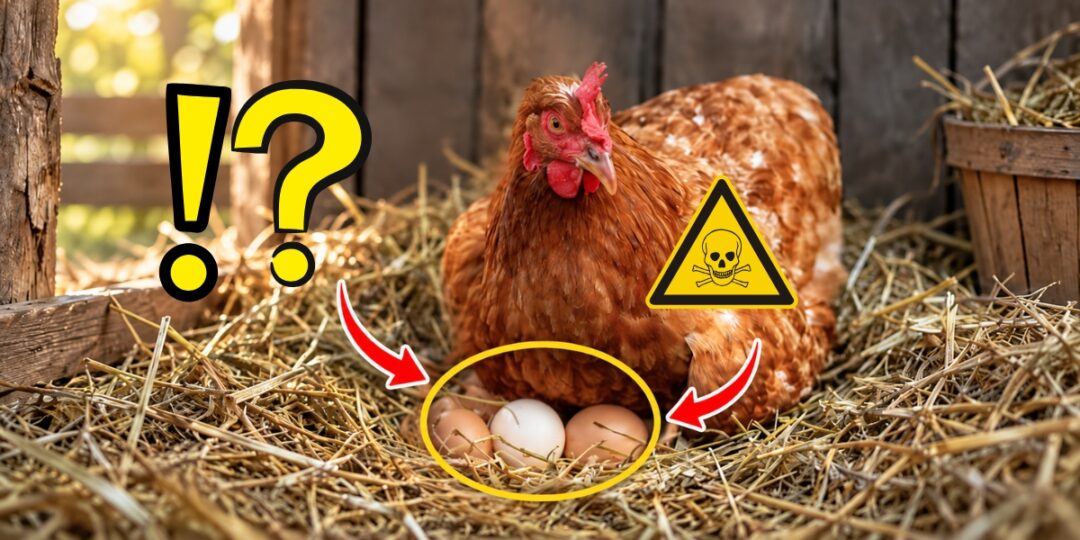
You walk out to the coop in the morning, open the nest box, and there they are. Warm eggs from your own hens. You know what those birds eat, where they spend their days, and how you care for them. That’s a big part of why people keep chickens in the first place.
There is one thing, though, that can make its way into a backyard egg without giving you much of a warning. It doesn’t change the color, the smell, or the way the egg looks when you crack it into a pan.
And in this case, your hens can pick it up themselves while doing exactly what chickens are supposed to do: scratching, pecking, digging around for bugs, and spending half the day with their faces in the dirt.
This is something dangerous you need to be aware of, but once you know where the trouble usually comes from, it’s fairly easy to cut down the risk.
The One Thing Store Eggs Actually Beat You On
It pains me a little to say it, but store-bought eggs can have one advantage over backyard eggs.
Studies have found much higher lead levels in some backyard eggs compared with commercial ones. One study from Sydney found that backyard eggs averaged around 40 times more lead than eggs bought at the store. A Boston University study found the same general pattern in the U.S., with homegrown eggs testing higher than commercial eggs.
The difference makes more sense when you look at how the chickens live.
Backyard hens spend their days scratching through soil. They dig holes, hunt for bugs, take dust baths, pick through bits of grass, and swallow small amounts of dirt along the way. Commercial hens generally don’t have the same contact with backyard soil, so they don’t have the same opportunity to pick up lead from it.
There’s also something interesting about where the lead ends up. Researchers have found that most of it collects in the yolk, while the egg white stays nearly clean.
So if you have lead in your eggs, you probably won’t see anything unusual. The yolk will still look rich and yellow. The egg can smell completely normal. You can cook it the same way you always do and have no clue anything is there.
You surely know what a spoiled egg smells like. If you ever had the misfortune to smell one, that rotten, sulfur-like smell is now imprinted in your brain forever. A pretty traumatising event, if you ask me…
But did you know there’s a method that lets you check if eggs are still good and you don’t even need to crack their shells?
I know this might not sound like much, but having an option that allows you to avoid that horrendous smell is a big win for the homesteading community.
But the biggest win of all is that this method also keeps you away from food poisoning. Getting salmonella from a fresh egg is terrible, but getting salmonella from an old egg where it had time to multiply is even worse!
A contaminated egg that’s three weeks old is a bigger risk than the same egg fresh…
See how to avoid old eggs and protect yourself from food poisoning →
How It Goes From the Dirt Into an Egg
Watch a chicken forage for five minutes and you’ll see how easily this happens.
She scratches backward with her feet, pecks at whatever appears, grabs a bug, moves a leaf, takes another bite, and keeps going. Along with the bugs, seeds, and little pieces of plant material, she swallows some soil.
If that soil contains lead, she swallows that too.
Some of the lead enters her bloodstream, and from there it can make its way into the eggs.
Age can matter too. Younger hens tend to absorb more lead than older birds because they’re still growing. Researchers have also found higher levels in eggs from chickens kept around older homes, which makes old lead paint an obvious suspect.
Where Lead Can Hide Around an Old Homestead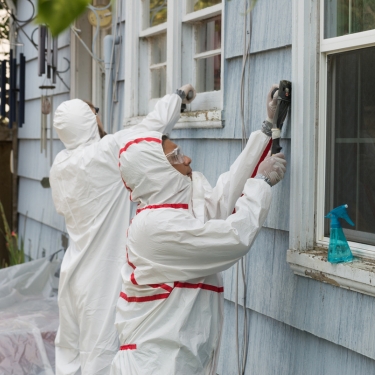
If you live on an older property, the soil has a history. Sometimes you know that history. Sometimes you don’t.
Old paint is one of the easiest places to start looking. Buildings painted before 1978 may contain lead paint. That includes houses, barns, sheds, garages, and older chicken coops.
This is why building a new coop is always a better option than using the old one. The chances of finding out what type of paint the former owners used are slim.
When you build your own coop, you’re the one making all decisions. The type of paint, the type of wood, how the coop is designed. I want to mention this because I once bought a coop from TEMU and it was one of the biggest disappointments of my life.
At first it looked ok, but in two months it was already destroyed. It couldn’t withstand one storm.
Also, most of the coops you can find online come from China. This is why they are so cheap. And this wouldn’t be a problem, but China has some regulations that might allow the manufacturers to use toxic compounds. For example, environmental testing organizations (such as IPEN) have found toxic flame retardants in consumer plastic items. This means you might gracefully avoid lead poisoning but allow other harmful chemicals near your home and chickens.
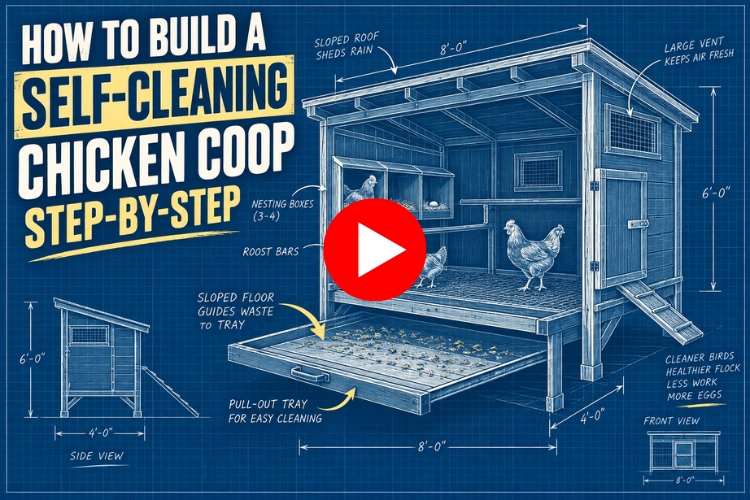
If you want to build your chicken coop the good old school way, you can always build an Amish coop. Why? These guys have been doing it for hundreds of years and they adapted their construction method to fit how chickens live best.
One trick I discovered about them is that they make modular chicken cops that can be extended easily once your flock grows.
See how to build the Amish chicken coop yourself →
Old orchard ground is another one that people don’t always think about.
Growers used lead arsenate on fruit trees for decades. The lead and arsenic settle into the soil, and they can stay there for a very long time. If part of your property used to be an orchard, especially an old one, that ground may still carry what growers sprayed there years ago.
Then there are places people used for shooting.
If someone spent years plinking cans or sighting in rifles in the same corner of the property, bullet fragments and lead shot may still be sitting in the dirt. Turn a flock loose there and the birds will scratch through it without knowing the difference.
Land near old roads can carry lead left over from the days of leaded gasoline. Fill dirt can be another unknown because you may have no idea where it originally came from or what was mixed into it.
Old burn piles deserve attention too. People used to burn all sorts of things: painted lumber, treated wood, batteries, and whatever else needed to disappear. Some of those materials leave unwanted stuff behind in the ash.
When “Safe for the Garden” Isn’t Enough
This is where things get a little confusing.
Say you tested the garden soil and the results looked fine. You’ve been growing tomatoes, beans, squash, and everything else there without a problem. It seems reasonable to assume the same ground should also be fine for chickens.
But this is not necessarily true.
The guideline commonly used for residential garden soil sits around 300 milligrams of lead per kilogram of soil. Researchers studying chickens found that soil needs to stay below about 117 milligrams per kilogram to keep lead in eggs under the safety benchmark.
That’s a pretty big difference.
Chickens interact with soil differently than a tomato plant does. They scratch in it, dust-bathe in it, peck food off it, and swallow bits of it every day.
So if you’re planning to test a place where you plan to keep hens, it helps to look at the lead number itself instead of stopping at “garden safe.”
How to Keep the Feed Safe
Now that you know the whole context and how dirt gets contaminated with lead, you might be wondering what all of this has to do with the feed.
Well, lead is only one thing that can contaminate the eggs. But there’s also mold.
Chicken feed and scratch grain can grow mold when they get damp and sit for too long. Some molds produce toxins known as mycotoxins. Aflatoxin and vomitoxin are two that often show up in discussions about contaminated corn and other grains.
Hens fed with moldy corn have been found to have mycotoxin residue in the eggs. As the amount of contaminated feed increased, the amount of residue in the eggs went up too.
Meanwhile, the hens themselves may start feeling the effects. Mycotoxins can reduce egg production, lead to thinner shells, and weaken a bird’s immune system. What makes this frustrating is that the flock may not look obviously sick at first.
Feed doesn’t always grow a thick coat of fuzzy mold either. So it might be hard to spot.
If you notice the feed clumps or if it sticks on the inside of the bin you keep it in, you should definitely take a closer look. Also, don’t ignore sour or musty smells. They can indicate mold too.
How Do You Know If Your Hens Are Contaminated?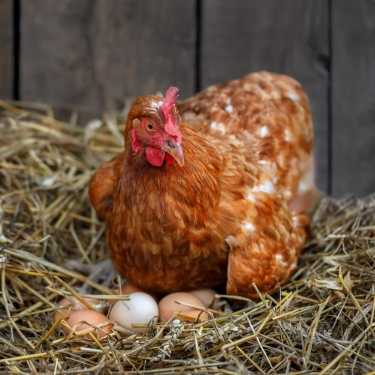
A soil test is a good place to start. County extension offices often offer testing for somewhere around $15 to $30, and you can ask specifically about lead. If you’re still choosing where to put a new coop or run, testing before you build makes things much easier.
Feed is more of an everyday check. Look for the signs I told you more about above and things should be alright.
You can also have eggs tested directly for lead. Some labs offer that service, although it usually costs more than testing the soil.
How to Keep Lead Out of Your Eggs
If you discover that the ground around your coop is questionable, you don’t need to move the coop. Covering bare soil can make a big difference.
Put down clean wood chips, mulch, straw, or clean soil so your hens scratch through that material instead of constantly digging into the older dirt below. They’ll work through it over time, of course, so you’ll need to add another layer when it starts getting thin. This is probably the most accessible approach.
It also helps to stop throwing feed straight onto bare dirt. Use feeders. These make it much easier to separate food from dirt.
Also, look around the run for obvious places you’d rather not have the flock digging. Old painted walls, building foundations, burn piles, former orchard ground, and old shooting areas are all places you may want to fence off.
If an old coop or shed has paint flaking onto the ground, clean up the chips instead of letting the hens find them first.
Calcium matters as well. Keeping free-choice oyster shells available helps hens build strong eggshells, but good calcium intake can also reduce the amount of lead that makes its way into the eggs. The hen’s body reaches for calcium first. Also, the Amish have an interesting way of bringing calcium into the diet of their laying hens. See how they do it here.
Final Thoughts
Indeed, keeping chickens gives you more control over the food you bring into the kitchen, but this also brings in more responsibility.
So, if you live on an older property, it’s worth learning what you can about the area where the hens spend most of their day. You never know what stood there before your chicken coop.
In the end, give your chickens clean ground to scratch, decent feed to eat, and a dry place to store it, and you’ve taken care of most of what matters.
You may also like: 
How the Amish Treat Chicken Parasites Naturally (Video)
What Happens When You Let Chickens Free Range Full Time
Should You Paint Your Chicken Coop Blue? Here’s the Truth
How to Raise Chickens for Reliable Egg Production