If you have been thinking about adding sheep to your homestead but dread the idea of annual shearing, worrying constantly about parasite loads, or dealing with a flighty breed that requires intensive management, Katahdin sheep deserve your full attention. This American-developed hair breed is arguably the most practical sheep for small-scale meat production, and it was practically built for the kind of low-input, high-output operation that self-sufficient homesteaders want to run.
They shed their own coat. They twin routinely. They lamb without much help. They graze hard and convert pasture efficiently. And they do it all with less chemical intervention than most other breeds. This guide covers the breed from history through daily management so you know exactly what you are getting into before you buy your first pair.
Breed History and Background
The Katahdin is a relatively young breed, developed in Maine starting in the 1950s by Michael Piel, a sheep farmer and amateur geneticist who set out to create a low-maintenance meat sheep suited to American conditions. Piel crossed imported African Hair Sheep, which had no wool coat and strong parasite resistance, with several British meat breeds to build in muscle and growth rate. Later, crosses with the St. Croix hair sheep improved coat-shedding consistency and hardiness.
Piel named the breed after Mount Katahdin, the tallest peak in Maine. The Katahdin Hair Sheep International organization was founded in 1986 to maintain the breed registry and advance selective breeding standards. Today, Katahdin sheep are the most registered hair sheep breed in the United States and have spread throughout North America, the Caribbean, and Central America.
The official breed registry and resources are maintained by Katahdin Hair Sheep International (KHSI), which oversees registration, performance data, and the National Sheep Improvement Program (NSIP) estimated breeding values for the breed.
Physical Characteristics
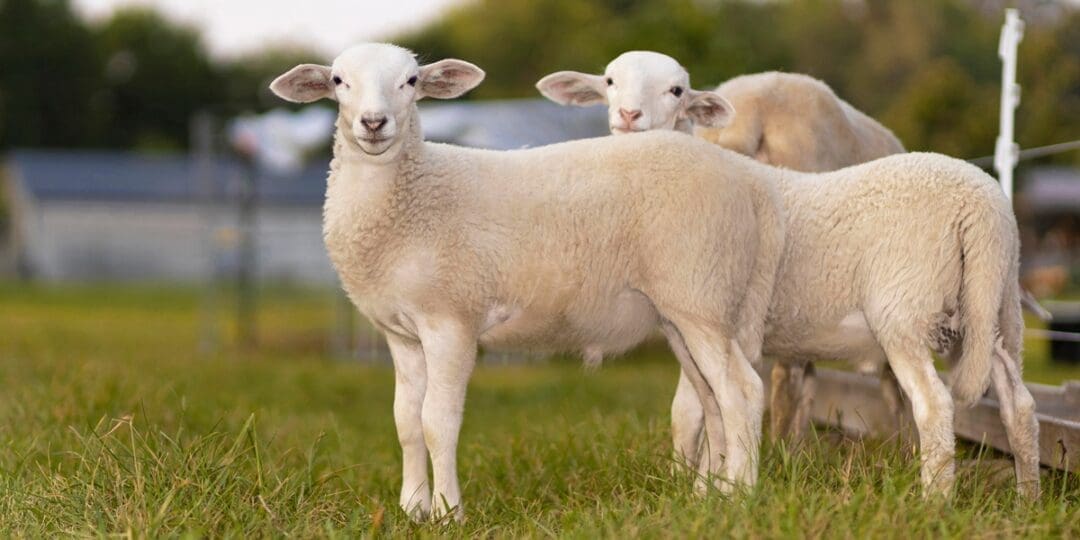
Katahdins are a medium-sized sheep with a muscular, well-built frame suited to meat production. Mature ewes typically weigh between 120 and 185 pounds. Rams range from 180 to 250 pounds. The breed has heavy muscling through the hindquarters and loin, thick legs, and good depth of body, all traits that translate to an efficient meat carcass.
The defining physical trait of the Katahdin is its hair coat. Unlike wool breeds, Katahdins grow a mixed coat in fall and winter consisting of coarse outer hairs and a softer wooly undercoat. As days lengthen and temperatures rise in spring, that coat sheds completely without any human intervention. What you are left with is a short, slick summer coat that requires nothing from you. No shearing, no crutching, no wool handling.
Color varies. White is the most common, but Katahdins come in solid or patterned brown, black, tan, and red as well. Color has no bearing on production traits, so selection is purely personal preference. The face is open and clean, with no wool around the eyes, which reduces the risk of wool blindness that affects some fleece breeds. Ewes are polled (hornless). Rams are typically polled as well, though some carry a genetic tendency to develop scurs, small non-functional horn growths.
Why Katahdins Make Sense for Homesteads
No Shearing Required
This is the single biggest practical advantage for a homestead operation. Shearing wool breeds requires either the skill to do it yourself, which takes years to develop, or hiring a professional shearer, which is increasingly difficult to arrange in many regions and costs $10 to $20 or more per animal. Katahdins eliminate that cost and labor entirely. The coat management workload for a Katahdin is essentially zero.
Strong Parasite Resistance
Internal parasites, especially barber pole worm (Haemonchus contortus), are the primary killer of sheep on small farms, particularly in warm and humid climates. Most wool breeds require frequent deworming on a calendar schedule, which drives up costs and promotes drug-resistant worm populations. Katahdins have genetically inherited resistance to internal parasites from their African and Caribbean hair sheep ancestors, meaning they mount a more effective immune response to worm burdens than most wool breeds.
This does not mean Katahdins are immune to parasites. It means your management burden is lower, your deworming costs are reduced, and when you do need to treat, you have more room to use a targeted, selective approach rather than blanket treating the whole flock. Animals that consistently require heavy deworming should be culled rather than kept for breeding, which over time selects a flock with stronger resistance.
Prolific and Easy Lambing
Mature Katahdin ewes routinely average more than two lambs per lambing. Twins are the norm, triplets are common, and quads happen. Ewe lambs bred for the first time at 7 to 9 months of age regularly produce twins. That productivity per ewe dramatically improves your meat output from a given number of animals and a given acreage.
The ewes are also attentive, capable mothers with good milk production who rarely reject their lambs and rarely need lambing assistance. If you manage a small flock and cannot be present around the clock during lambing, Katahdins are far more forgiving than high-strung or heavily developed wool breeds that frequently need intervention.
Mild-Flavored Meat
One of the most common reasons people avoid sheep meat is the strong, gamey flavor associated with older wool-breed mutton. Katahdin lamb and mutton is significantly milder and more similar to beef in flavor profile because hair sheep carry less lanolin in their tissues. The meat is lean, well-muscled, and palatable to people who claim not to like lamb. If you are raising meat for your own table, that matters.
Climate Adaptability
Despite being developed in Maine, Katahdins thrive in a wide range of climates, from the cold northern states through the heat and humidity of the Gulf Coast. Their ability to grow a heavier coat in winter and shed it in summer gives them the flexibility to handle both. They are not as cold-hardy as some northern breeds, and in extreme climates they do benefit from windbreaks and dry shelter, but they are far more adaptable than most purely tropical hair sheep breeds.
Fencing and Shelter
Fencing
Fencing is where you need to invest seriously before you bring sheep home. Katahdins will test and exploit weak spots in fencing, and a sheep that escapes is a sheep at risk of predator attack or vehicle collision. Standard field fence with woven wire at 4 feet high works well for containing ewes and lambs. Adding a single strand of electric wire at nose height along the inside of a perimeter fence trains sheep to respect boundaries quickly.
For rotational grazing paddocks, temporary electric fencing with step-in posts is practical, low cost, and easy to reconfigure as you move animals through the rotation. Sheep respect electric fence well once they have been trained to it. A portable energizer powered by solar or battery runs temporary paddocks without requiring underground wiring.
Ram pens require heavier construction. A ram in rut is more determined than a ewe, and a 220-pound ram pressing against standard field fence will test it. Woven wire with wood or metal posts set in concrete at the corners is the minimum standard for a ram containment area.
Shelter
Katahdins do not need an elaborate barn. A three-sided loafing shed oriented away from prevailing winds gives them a place to escape rain, wind, and extreme heat. The critical requirement is dry footing. Sheep are susceptible to foot rot when forced to stand on wet ground for extended periods. A loafing area with packed gravel or coarse aggregate under a roof gives them a clean, dry place to rest.
For lambing in cold climates, a small enclosed lambing pen inside a barn where newborns can be kept dry and protected from drafts for the first 24 to 48 hours significantly reduces newborn mortality. The University of Wisconsin Extension has practical housing and lambing pen layout guides that apply directly to small flock operations.
Feeding and Nutrition
Pasture as the Foundation
Katahdins are efficient grazers that convert pasture to meat well. A rough working estimate is 6 to 8 Katahdin sheep per acre, though your actual carrying capacity depends entirely on your pasture quality, rainfall, soil fertility, and whether you are managing rotationally or continuously. Continuous grazing on a single pasture will degrade both forage quality and parasite load over time. Rotational grazing is strongly recommended.
Rotate sheep off a paddock before grass is grazed below 3 to 4 inches. Moving earlier rather than later gives the pasture time to recover and forces sheep to graze the tops of plants where parasite larvae concentrations are lowest. Let each paddock rest for at least 30 days, longer in cool or dry conditions when regrowth is slow.
Hay
When pasture is unavailable or insufficient, which happens during drought, winter, and late pregnancy, good quality grass hay is the baseline feed. Mixed grass hay works well for maintenance. Ewes in the last month of pregnancy and the first month of nursing benefit from adding alfalfa hay or a small amount of grain to support the energy demands of developing and feeding lambs. Do not overfeed grain to dry ewes or rams, as excess energy causes fat deposition and can cause reproductive problems.
Minerals
Free choice loose mineral formulated specifically for sheep is non-negotiable. Cattle mineral should not be substituted because it often contains copper levels that are toxic to sheep. Selenium deficiency is widespread in many regions of the United States and causes white muscle disease in lambs, so confirm whether your area is selenium-deficient and supplement accordingly. Your county extension office or a veterinarian familiar with small ruminants can advise on regional deficiencies.
The National Academies of Sciences Nutrient Requirements of Small Ruminants is the authoritative reference for sheep nutrition if you want to get into the specifics of ration formulation for different life stages.
Water
Sheep need access to clean, fresh water at all times. Water consumption increases significantly during hot weather, in late pregnancy, and during lactation. A ewe nursing twin lambs in summer heat can drink several gallons per day. Automatic waterers or clean troughs checked and refilled daily are both workable. Keep troughs clean and algae-free, as sheep will refuse fouled water and quickly become dehydrated.
Breeding and Lambing
Breeding Season
Katahdins, like most sheep, are seasonally polyestrous, meaning ewes cycle primarily in fall as day length decreases. The primary breeding window runs from September through January in most of the United States. Fall breeding produces spring lambs, which are born when pasture quality is at its peak and lambs can gain weight rapidly on grass. This aligns with the traditional Easter and spring lamb market if you are selling.
Katahdins have more year-round breeding flexibility than many wool breeds due to their Caribbean and African heritage. Accelerated lambing programs, where ewes are bred to lamb three times in two years rather than once annually, are feasible with good nutritional management and are worth considering if you want to maximize meat production from a small ewe flock.
Ram to Ewe Ratio
One ram can cover 25 to 35 ewes during a normal 45-day breeding season. For a small homestead flock where keeping a ram full-time is not practical, leasing a ram for the breeding window or using AI (artificial insemination) are both options. If you do keep a ram, house him separately from ewes outside of breeding season to prevent out-of-season pregnancies and to give yourself control over your lambing calendar.
Be aware that rams in rut can become aggressive toward humans, including people they were previously calm with. Even a small Katahdin ram can cause serious injury. Maintain alert body language around rams during breeding season and never turn your back on one.
Gestation and Lambing
Gestation in sheep is approximately 147 days, just under five months. Mark your breeding dates so you can anticipate lambing and increase monitoring in the final two weeks of pregnancy. Ewes will show signs of impending labor including a relaxed, sunken appearance at the tailhead, a distended and waxy udder, and behavioral changes like separating from the flock.
Most Katahdin ewes lamb without assistance. If a ewe has been in active labor for more than 30 to 45 minutes without delivering, intervention is likely needed. Have clean gloves and lubricant on hand and know how to reposition a malpresented lamb before your first lambing season, or have a relationship with a veterinarian or experienced shepherd you can call. Problems are rare with Katahdins but not unknown.
Colostrum consumption within the first two hours of life is critical for lamb survival. If a lamb is not nursing, strip some colostrum from the ewe and tube-feed the lamb. A lamb that does not receive colostrum in the first few hours has sharply reduced immunity and survival odds.
Health Management
Parasite Monitoring with FAMACHA
The FAMACHA system is a practical field tool for targeted selective treatment of barber pole worm in sheep. A trained observer checks the color of the lower eyelid mucous membrane against a color chart with five scores. Pale or white eyelids indicate anemia from heavy worm burden and signal that the animal needs deworming. Pink or red eyelids indicate adequate red blood cell levels and no treatment is needed. Only treating animals that actually require it slows the development of drug-resistant worm populations and reduces your chemical costs significantly.
FAMACHA certification training is available through many state extension services and through the American Consortium for Small Ruminant Parasite Control (ACSRPC), which also provides deworming decision guides, fecal egg count protocols, and drug resistance information.
Vaccinations
The core vaccination for sheep is CDT, which covers Clostridium perfringens types C and D (overeating disease) and Clostridium tetani (tetanus). Ewes should be vaccinated four to six weeks before lambing so they pass immunity to lambs through colostrum. Lambs receive their primary CDT series at 4 to 8 weeks of age with a booster three to four weeks later. Annual boosters for the whole flock are standard management.
Additional vaccinations like soremouth (contagious ecthyma) or caseous lymphadenitis (CL) may be recommended depending on regional disease prevalence. Consult a local veterinarian or your state veterinarian office to understand what is relevant in your area before buying stock.
Hoof Care
Katahdin hooves grow more slowly than many wool breeds and typically need trimming two to four times per year, less often in dry conditions and more often during wet seasons when hoof growth accelerates. Overgrown hooves fold under and trap debris, creating anaerobic conditions where foot rot bacteria thrive. Check hooves at every handling and trim when you see folding or overgrowth.
Foot rot and foot scald are bacterial infections that cause lameness and significant productivity loss. Foot rot has a distinctly foul odor and causes the hoof to separate and rot from the inside. Treatment involves trimming affected tissue, topical zinc sulfate, and often injectable antibiotics. Chronic foot rot cases are best culled rather than carried, as the bacteria persist in soil and infect other animals.
Common Health Problems to Watch For
- Bottle jaw: soft fluid swelling under the jaw indicating severe anemia from barber pole worm. Treat immediately.
- White muscle disease: selenium deficiency in lambs, causing weakness and inability to stand. Prevent with adequate selenium supplementation.
- Enterotoxemia (overeating disease): rapid-onset illness or sudden death from dietary shifts. Prevent with CDT vaccination and gradual feed transitions.
- Pregnancy toxemia (ketosis): occurs in late-pregnancy ewes carrying multiple lambs and not receiving enough energy. Supplement aggressively in the final 6 weeks of pregnancy.
- Pinkeye: contagious bacterial eye infection causing tearing, squinting, and corneal clouding. Treat with antibiotic eye ointment and isolate affected animals.
Predator Protection
Do not underestimate predator pressure. Coyotes are the primary threat across most of the United States, but domestic dogs kill more sheep annually than coyotes in many regions. Bears, mountain lions, bobcats, and eagles targeting lambs are additional threats depending on your location.
Electric fencing as the perimeter line significantly reduces predator access. Woven wire perimeter fencing with one or two strands of electric at the top and bottom is more reliable than either alone. Bringing the flock into a secure barn or pen at night is the most effective protection for a small flock in a high-predation area.
Livestock guardian dogs (LGDs) are the standard protection tool for larger or more vulnerable flocks. Great Pyrenees, Anatolian Shepherds, and Kangals are the most commonly used breeds. A well-bonded LGD that has been raised with the flock from puppyhood and trained properly will actively deter and confront predators. They are not pets and should not be treated as such. The investment in a quality LGD is significant, but one successful predator event that kills multiple animals quickly erases a season of profit.
The USDA National Agricultural Library has a solid collection of resources on livestock guardian animals including breed selection, bonding protocols, and management guidelines.
Meat Production and Processing
Growth Rate and Finish Weight
Katahdin lambs are moderate growers. On good pasture with no grain supplementation, lambs can reach 70 to 90 pounds live weight by 4 to 5 months of age. Adding grain in the final weeks before slaughter accelerates finish and improves carcass quality. For the home freezer, a lamb slaughtered at 80 to 100 pounds yields roughly 35 to 45 pounds of usable meat depending on cut choices.
Katahdins are naturally lean, which suits the current preference for lower-fat red meat but also means lambs do not carry much fat cover at lighter weights. If you are finishing for a niche market that wants heavy fat-covered carcasses, you will need to push heavier weights or cross with a terminal sire breed like Suffolk. For home use and direct-market sales, the lean Katahdin carcass is generally an asset.
Home Processing
Sheep are one of the most approachable large animals for on-farm slaughter and processing. The carcass is manageable in size, the hide slips off cleanly, and the carcass can be broken down on a standard farm table without specialized equipment. Many homesteaders who have processed chickens and pigs find sheep a straightforward next step. If you have never processed a lamb before, find an experienced mentor for your first animal or take a hands-on butchery course rather than attempting it cold from written instructions alone.
Buying Your First Katahdins
What to Look For
Buy registered stock from a reputable breeder if you plan to sell breeding animals or want access to NSIP performance data. For a straight meat flock, commercial-grade animals are less expensive and perfectly suitable. Either way, look for animals with clean, complete coat shedding, good body condition, sound hooves, clear bright eyes, and no signs of bottle jaw or anemia. Ask the seller about the herd’s deworming history and whether FAMACHA is used. A seller who cannot answer basic parasite management questions is a seller to avoid.
Start with ewes and a shared or leased ram if you are new to sheep. Adding a full-time ram before you understand flock management well enough to keep him separate and manage his behavior safely is an unnecessary complication early on. Two to four ewes is a practical starting flock that gives you enough animals to learn from without overwhelming your infrastructure or budget.
Price Expectations
Registered breeding-quality Katahdin ewes typically sell for $300 to $600 depending on genetics, age, and production records. Commercial ewes without papers run $150 to $300. Ram lambs and yearling rams with strong genetic credentials can run considerably higher. Weaned feeder lambs headed for the freezer sell for considerably less. Prices vary significantly by region and season, with the highest prices typically in fall when breeding demand peaks.
Where to Find Them
The KHSI member directory at katahdins.org is the most reliable starting point for finding registered breeders. State sheep producer associations and local farm networks are also good sources. Livestock auctions are an option but give you less health and management history on the animals you are buying.
Katahdins vs. Other Hair Sheep Breeds
Katahdins are not the only hair sheep option, and it is worth understanding where they sit relative to the other common breeds.
- Dorper: South African origin, excellent growth rate and muscling, some shedding issues in northern climates. Often crossed with Katahdins to improve growth rate while maintaining shedding reliability.
- Croix: Caribbean origin, smaller frame, exceptional parasite resistance, moderate meat production. Better suited to hot humid climates than cold ones. Often used in Katahdin breeding programs to improve parasite resistance.
- Barbados Blackbelly: Very small, lean, and parasite-resistant. More of a novelty breed than a practical meat breed for most homesteads.
- Mouflon and Corsican: Primarily game and hunting ranch animals, not practical homestead meat breeds.
For most homesteads in the continental United States that want a practical, no-shear, low-input meat sheep, Katahdins are the most balanced option. The Dorper-Katahdin cross is popular for those who want faster growth rate at the cost of slightly more coat management variability.
Grow More Food Without More Land
One of the biggest mistakes new homesteaders make is assuming they need huge acreage to produce meaningful amounts of food. The truth is that smart design matters far more than raw land size. A well-managed small space can outperform poorly used acreage every single season.
That is exactly why so many self-sufficient families are turning to the 4FT Pocket Farm system.
Designed specifically for people who want maximum food production from minimal space, the system shows you how to build highly productive compact growing areas capable of producing an impressive amount of vegetables, herbs, and calorie-dense food even in small backyards.
For homesteaders raising livestock like Katahdin sheep, this matters more than ever. Efficient gardens help offset feed costs, improve food security, and create a more complete self-reliant system where meat, vegetables, medicinal herbs, and preserved food all work together.
Inside the program, you’ll learn:
- compact high-yield growing methods
- space-saving garden layouts
- low-water production systems
- soil-building techniques
- ways to grow more food in less time
- practical approaches designed for real-world homesteads
Because resilience is not about owning endless land. It is about producing as much as possible from the land you already have.
Click here to learn more about the 4FT Pocket Farm System!
The Bottom Line on Katahdin Sheep
Katahdin sheep are about as close to a low-drama, high-return livestock species as you will find on a small homestead. They shed their own coat. They lamb with minimal help and raise twins without much fuss. They graze efficiently, resist parasites better than most breeds, and produce mild-flavored lean meat that works on almost any table.
They are not no-work animals. You still need solid fencing, dry shelter, year-round water, loose minerals, parasite monitoring, and vaccinations. Predator pressure is real and has to be managed. Lambing requires attention even if intervention is rare. But relative to wool breeds, and relative to the amount of food they put in your freezer, Katahdins are an honest trade. For a self-sufficient operation that wants meat production without a full-time management burden, it is hard to make a better choice.
You may also like:
An Ingenious Eggshell Remedy and 25 Others Made from Things People Usually Throw Away (Video)
Valais Blacknose Sheep: The Complete Ownership Guide for Homesteaders
Top 7 Best States to Be Self-Sufficient
Freeze Dried Cheese: The Complete Guide to Storing Cheese for 25+ Years