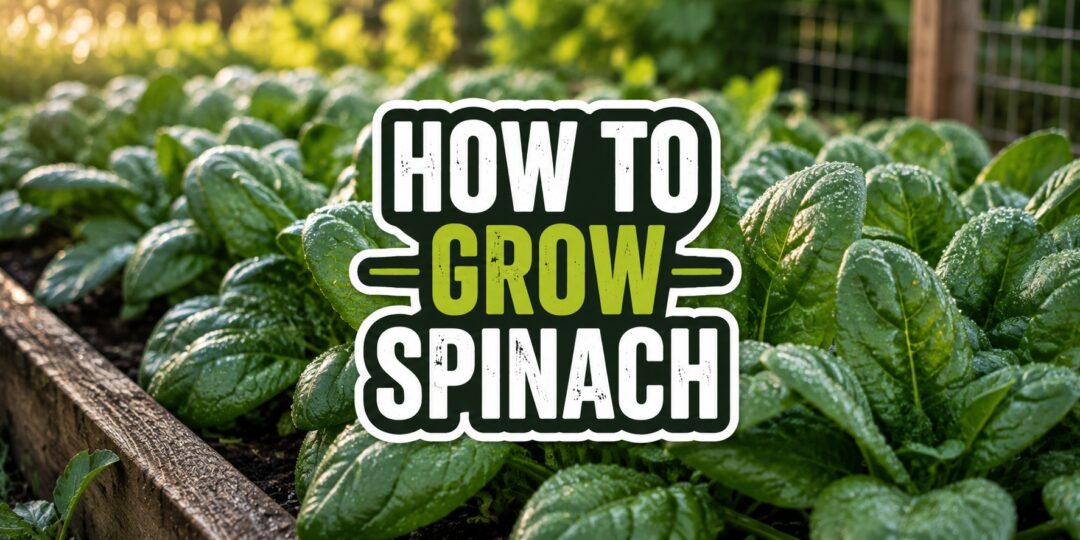
Spinach is one of the first things I plant every spring, and one of the first things I lose to bolting if I’m not paying attention. It’s a fast, nutrient-dense crop that rewards a little planning, and punishes procrastination by turning bitter and running to seed the moment the weather warms up.
This guide covers everything I’ve learned growing spinach season after season, backed up by the same guidance university extension services give commercial growers, so you get a full harvest instead of a few sad, bolted plants.
Spinach Basics: What It Needs to Thrive
Spinach is a cool-season crop, and that single fact drives almost every decision you’ll make growing it. According to Clemson Cooperative Extension, spinach can survive temperatures as low as 20 degrees Fahrenheit without injury, making it one of the most cold-hardy vegetables you can grow, while heat and long summer days push it straight into bolting.
- Sunlight: Full sun in spring and fall, but tolerates partial shade (4 to 6 hours) especially useful for delaying bolting in warmer weather
- Soil: Fertile, well-drained sandy loam rich in organic matter
- Soil pH: 6.0 to 7.0, and spinach is notably sensitive to acidic soil
- Days to maturity: Roughly 28 to 55 days depending on variety and conditions
Choosing a Spinach Variety
Spinach comes in three leaf types: smooth-leaf (flat, easy to clean, common in bagged store spinach), savoy (crinkled, more cold-hardy, but soil catches in the crinkles), and semi-savoy, which splits the difference and is what most home gardeners end up growing.
- Bloomsdale: Semi-savoy, slow bolting, a longtime standard variety
- Tyee: Semi-savoy, fast growing, very slow to bolt, resistant to downy mildew
- Melody, Olympia, Teton: All reliable, widely available varieties suited to most home gardens
If bolting has been your main frustration, prioritize a slow-bolting or long-standing variety over anything else on the seed packet.
Soil Preparation
Work the soil to a depth of about 6 to 8 inches, and mix in compost or well-rotted manure to boost organic matter. Since spinach is sensitive to acidic soil, a soil test before planting is worth the small cost, and lime should be worked in at least a few months ahead of planting if your results call for it.
When to Plant Spinach
Timing matters more with spinach than almost any other garden vegetable. Utah State University Extension recommends sowing seed once soil temperatures reach 40 degrees Fahrenheit, with germination happening best between 55 and 65 degrees. Seeds planted when soil exceeds 80 degrees will germinate poorly, if at all.
- Spring planting: As soon as soil is workable, typically 2 to 3 weeks before your last expected frost
- Fall planting: 6 to 8 weeks before your first expected fall frost, timed so plants mature about 1 to 2 weeks after that frost hits
- Succession planting: Sow small batches every 7 to 10 days through your spring window for a longer, staggered harvest instead of one big flush that all bolts at once
In regions with mild winters, a fall-sown crop with 4 to 5 true leaves can overwinter under a heavy mulch layer, giving you an especially early spring harvest.
How to Plant Spinach
- Plant seeds ½ inch deep
- Space rows 12 to 18 inches apart
- Thin seedlings to 3 to 6 inches apart within the row once they have 3 to 4 true leaves
- Thinned seedlings are fully edible. Don’t compost them, eat them
Spinach can also be started from transplants for an earlier harvest, though direct seeding is simpler and works well for most home gardens.
Watering
Spinach needs consistent moisture, roughly 1 to 1.5 inches of water per week, and moisture fluctuations are a direct cause of tough, bitter leaves. Water in the morning so foliage dries before evening, which cuts down on fungal disease. A layer of mulch around the plants helps even out soil moisture and keeps weeds down at the same time.
Fertilizing
Spinach is a heavy nitrogen feeder relative to its size. Work compost or a balanced fertilizer into the soil before planting, then side-dress with a nitrogen-rich fertilizer three to four weeks after planting or at thinning time to keep leaf growth vigorous. Keep fertilizer a few inches away from direct contact with the stems to avoid burning the plant.
Preventing Bolting
Bolting, when the plant sends up a flower stalk and leaves turn bitter, is the single biggest challenge in growing spinach. It’s triggered by a combination of long daylight hours and rising temperatures, which is exactly why timing your planting for cool weather matters so much.
- Choose slow-bolting or long-standing varieties for anything planted later in spring
- Provide afternoon shade during unexpectedly warm stretches
- Keep soil moisture consistent, since drought stress accelerates bolting
- Harvest promptly once plants reach a usable size rather than letting them sit and mature further into warm weather
Common Pests and Diseases
- Aphids: Cause curled, crinkled leaves and can spread viruses. Use insecticidal soap or a strong water spray to knock them off
- Leafminers: Tunnel visibly through leaves. Row covers are the most effective prevention
- Flea beetles: Chew small holes in seedlings and can kill young plants outright. Row covers help here too
- Downy mildew and white rust: The primary fungal diseases affecting spinach. Choose resistant varieties and avoid overhead watering late in the day
- Damping-off: A seedling disease worsened by poor drainage. Raised beds and well-drained soil reduce the risk significantly
Growing Spinach in Containers or Small Spaces
Spinach’s shallow root system and tolerance for partial shade make it one of the better leafy greens for container growing, raised beds, or a sunny windowsill setup. Use a pot with good drainage, at least 6 to 8 inches deep, and keep the same spacing and watering principles from the main garden. If you’re working with very limited space, our guide to closet farming and other small-space growing methods covers additional setups worth considering.
Harvesting Spinach
Start harvesting once outer leaves reach 3 to 6 inches long, picking the oldest outer leaves first and letting the center keep producing. This cut-and-come-again approach can keep a single planting productive for weeks. As long as the central growing point isn’t damaged, you can eventually cut the entire plant to within 2 inches of the soil for a final harvest.
A 10-foot row spaced properly will typically produce 4 to 6 pounds of spinach over a season, according to Utah State University Extension’s yield data.
Storing Fresh Spinach
Rinse and dry harvested leaves thoroughly, since trapped moisture speeds up spoilage. Stored in a plastic bag in the refrigerator at close to 32 degrees Fahrenheit with high humidity, spinach keeps for roughly 1 to 3 weeks, though it’s always best used as fresh as possible.
Spinach’s Warm-Weather Cousins
True spinach simply won’t tolerate summer heat, but a few unrelated plants fill the same culinary role once the weather turns. According to University of Maryland Extension, New Zealand spinach thrives in hot weather and self-seeds reliably, Malabar spinach is a heat-loving vine that produces glossy leaves through summer, and water spinach is a fast-growing, heat-tolerant tropical green. None of these are true spinach botanically, but all three can carry you through the exact season when real spinach gives out.
Common Mistakes
- Planting too late in spring, guaranteeing a rushed harvest before bolting sets in
- Using old spinach seed, which germinates poorly. Buy fresh seed each year
- Letting soil dry out between waterings, which produces tough, bitter leaves
- Skipping a soil test and planting in soil that’s too acidic for spinach to thrive
- Harvesting too late, after plants have already started bolting and turned bitter
Growing Spinach Is Useful. Knowing How to Feed Yourself Without the Store Is a Skill for Life.
Learning when to sow spinach, how to keep it productive, and how to harvest it before it bolts might seem like a small gardening skill. But put enough skills like this together and something much bigger begins to happen: you become less dependent on someone else producing, packaging, transporting, and selling you everything your household needs.
That kind of practical independence is at the heart of The Lost Skills of Independence.
For generations, ordinary people knew how to grow food, preserve a harvest, make useful things from basic materials, repair what broke, and stretch limited resources instead of immediately replacing them. Much of that knowledge gradually disappeared as modern conveniences took its place.
The Lost Skills of Independence is designed to help bring that knowledge back.
It’s packed with practical, old-fashioned know-how for becoming more capable around your home, garden, and property – skills that can be useful during an emergency, but are just as valuable when everything is functioning normally.
Because self-sufficiency isn’t one dramatic survival trick. It’s hundreds of small abilities working together.
Knowing how to turn a packet of spinach seeds into weeks of fresh food is one of them. Knowing how to grow more of what you eat, preserve what you produce, make better use of available resources, and solve everyday problems yourself takes that independence much further.
And the best time to learn those skills isn’t after food prices spike, shelves empty, a storm cuts you off, or another disruption exposes just how dependent your household has become.
It’s while you still have time to practice.
Your grandparents didn’t call these “survival skills.” They simply knew how to do things for themselves.
Frequently Asked Questions
Why does my spinach taste bitter?
Bitterness is almost always caused by heat stress or inconsistent watering. Spinach grown above 75 degrees Fahrenheit is particularly prone to developing an off, bitter flavor.
Can I grow spinach year-round?
Not as true spinach in most climates, since it can’t handle summer heat. Succession planting in spring and fall, combined with heat-tolerant substitutes like Malabar or New Zealand spinach for summer, gets you leafy greens through most of the year.
How do I know when spinach has bolted and is no longer good to eat?
Once a central flower stalk starts forming, the leaves typically turn more bitter and the texture toughens. It’s still technically edible but the quality drops noticeably, so harvest before this point whenever possible.
Does spinach need full sun?
It grows best in full sun during spring and fall, but tolerates partial shade of 4 to 6 hours of direct light, which can actually help delay bolting during warmer stretches.
You may also like:
 Join Our Self-Sufficiency Facebook Group For Unseen Tips And Tricks!
What Every Survivalist Should Grow in His Backyard (Video)
How to Grow Sunflowers from Sunflower Seeds (Complete Guide)
How to Grow Bell Peppers – The Complete Guide From Seed to Harvest
How to Grow Carrots: From Seed to Root Cellar
How To Grow Potatoes In ONLY LEAVES
Bucket Gardening: How to Grow Your Own Food Anywhere
How to Grow an Endless Supply of Food in Thin Air