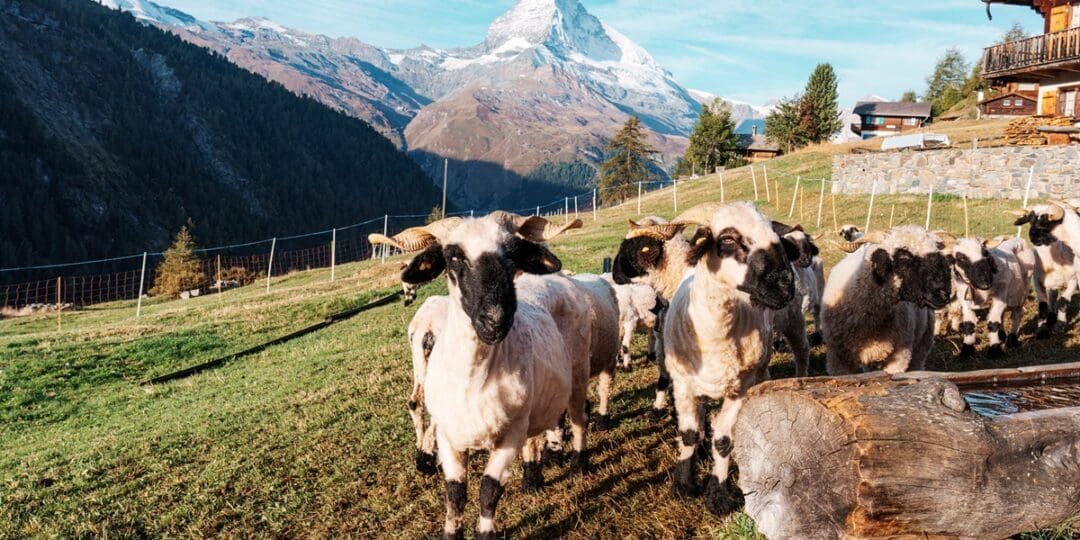
If you have spent any time in farming circles online, you have seen the photos. A round-faced sheep with a black nose, black knees, and black feet, covered in thick spiraling wool that makes it look more like a stuffed animal than livestock. The Valais Blacknose is, by most accounts, the most visually striking sheep breed in the world, and it has moved from a Swiss mountain curiosity to a globally sought-after breed in the span of roughly a decade.
But owning one is a different matter from admiring a photo. Valais Blacknose sheep come with significant costs, specific care requirements, and a steep learning curve for anyone who has not worked with mountain breeds before. They also come with real opportunities: for wool production, for breeding income, for agritourism, and for a level of human interaction that most sheep breeds simply do not offer.
This guide covers everything you need to know before you buy, and everything you need to do after. Breed history, physical characteristics, temperament, housing, feeding, health, breeding, wool, and the honest financial picture of keeping Valais Blacknose sheep on a working homestead.
Breed History and Origins
The Valais Blacknose originates from the Valais canton in the Swiss Alps, a region of high mountain pastures, cold winters, and terrain that would challenge most livestock. The breed has existed in this area for centuries, with written records dating back to the 15th century, though systematic breeding and official recognition came much later. The breed standard was formally established in Switzerland in 1962.
In its home environment, the Valais Blacknose was developed to do one thing exceptionally well: survive and thrive at altitude. The Swiss Alps provided the selective pressure. Sheep that could navigate rocky terrain, tolerate extreme cold, maintain body condition on sparse mountain grazing, and remain calm enough for shepherds to manage on steep slopes were kept and bred. The result is a breed that is physically robust, mentally calm, and extraordinarily well-adapted to difficult conditions.
The breed remained largely unknown outside of Switzerland until the early 2010s, when photos began circulating on social media and demand from international buyers escalated rapidly. The UK received its first imports of pure Valais Blacknose genetics through embryo transfer in 2014, and the British Valais Blacknose Sheep Society was established shortly after. The United States, Australia, New Zealand, and Germany followed with their own importation and breeding programs. Today, graded-up programs using purebred sires on commercial ewes are the most common route to Valais Blacknose ownership outside of Switzerland, since live animal imports remain restricted in many countries due to biosecurity regulations.
Physical Characteristics
The Valais Blacknose is a large, dual-purpose breed valued for both meat and wool. Adults are solidly built with a broad, blocky frame. Rams typically weigh between 80 and 100 kilograms, with ewes ranging from 70 to 90 kilograms. Both sexes are horned, with rams carrying impressively wide, spiraling horns and ewes showing smaller, more upright horn growth.
The defining visual features are the black patches: the nose and muzzle, the area around both eyes, the ears, the knees, the fetlocks, and the feet. These markings are a breed requirement, and the clarity and symmetry of black patches is evaluated in breed shows and registration assessments. The body is covered in open, coarse, white wool that grows heavily over the face, legs, and belly as well as the body. The fleece is thick and long-stapled, growing up to 10 centimeters or more per year.
The face is broad and flat with a distinctively Roman-nosed profile in rams. Ewes have a softer, rounder facial structure. Both sexes have wide-set, calm eyes that give the breed its characteristically docile expression. Lambs are born with the same black markings as adults and are fully wooled from birth, which contributes significantly to their striking appearance and social media appeal.
| Characteristic | Details |
| Origin | Valais canton, Switzerland |
| Type | Dual-purpose (meat and wool) |
| Ram weight | 80 to 100 kg |
| Ewe weight | 70 to 90 kg |
| Fleece weight | 4 to 5 kg per year |
| Staple length | Up to 10 cm per year |
| Horns | Both sexes horned |
| Lifespan | 10 to 12 years |
| Lambing rate | Typically singles or twins |
Temperament and Handling
This is where the Valais Blacknose genuinely stands apart from most sheep breeds, and it matters practically for the homesteader. Valais Blacknose sheep are notably calm, curious, and people-oriented. They are not flighty in the way that many commercial breeds are, and they do not require the same level of working dog management or large-scale handling infrastructure. Sheep that have been regularly handled from birth will approach humans confidently, accept physical examination without significant stress, and tolerate procedures like hoof trimming and shearing with considerably less resistance than most other breeds.
This temperament is not accidental. Centuries of management on narrow Alpine paths, in close proximity to shepherds and working dogs, selected strongly for calm, manageable animals. Panicky sheep on a mountain trail are dangerous to themselves and their handlers. The Valais Blacknose temperament is a functional adaptation, not just a personality quirk.
For the small-scale homesteader, this translates to real practical advantages. Solo handling is feasible for most routine tasks. Children can be involved safely with appropriate supervision. The sheep become genuine farm ambassadors for agritourism operations, and bottle-raised lambs become extremely bonded to their owners, sometimes behaving more like large dogs than livestock.
The main handling consideration is the horns. Both sexes carry horns, and while Valais Blacknose are not aggressive by nature, a startled or uncomfortable sheep can still cause injury with horn contact. Wide handling passages, low-stress yarding techniques, and familiarity with individual animals significantly reduce this risk.
Housing Requirements
The Valais Blacknose is a hardy mountain breed that does not require elaborate housing in most temperate climates. However, the heavy wool coat that protects them in cold conditions can also become a liability in hot, humid environments. Housing needs to be designed with ventilation and shade as priorities, not just shelter from cold and wet.
- Shelter and bedding: A three-sided field shelter or open-fronted barn provides adequate protection in most climates. Sheep need protection from prolonged rain, which can cause fleece rot and foot problems, and from extreme heat. Deep-litter bedding of straw or wood shavings should be cleaned and replenished regularly. Wet bedding is one of the primary contributors to footrot and internal parasite burden.
- Space allowances: As a large-framed breed, Valais Blacknose need more room than smaller commercial breeds. A general guideline for housed sheep is 1.5 to 2 square meters of floor space per adult animal. Overcrowding increases stress, disease transmission risk, and competition for feed. Outdoor grazing space of 0.1 to 0.2 hectares per adult sheep is a workable starting point, adjusted for pasture quality and management system.
- Fencing: Standard sheep netting is adequate for most situations, but horned breeds can get their heads caught in square mesh fencing. Hexagonal wire mesh or woven field fence with smaller apertures reduces this risk. Electric fencing is effective as a training tool and for rotational grazing management. Fence height should be at least 90 centimeters; Valais Blacknose are not particularly prone to jumping but rams can be persistent when motivated.
- Lambing facilities: Individual lambing pens of at least 2 by 2 meters allow ewes to bond with newborns without interference from the rest of the flock. These can be temporary, constructed from hurdles, and dismantled after the lambing season. A heat lamp on a safe overhead mount is useful for cold-weather lambing.
Feeding and Nutrition
Valais Blacknose were developed on mountain grazing that is nutritionally lean for much of the year. This background makes them efficient grazers that can maintain body condition on forage that would leave commercial breeds struggling. It also means they are susceptible to overfed conditions, particularly laminitis and pregnancy toxemia if concentrate feeding is not managed carefully.
- Grazing: Good quality pasture forms the backbone of the diet for most of the year. Rotational grazing, moving sheep between paddocks to allow pasture recovery, improves forage quality and reduces parasite pressure simultaneously. Valais Blacknose will graze a wide range of plant species and do well on mixed pasture that includes grasses, clovers, and herbal leys.
- Hay: During winter or when pasture is insufficient, good meadow hay or grass hay should be available ad libitum. Hay quality matters: dusty or moldy hay causes respiratory problems and is rejected by sheep anyway. A standard large bale of hay weighs approximately 250 kilograms and will feed a small flock of five to six adults for roughly two to three weeks in winter conditions.
- Concentrate feeding: Outside of late pregnancy and lactation, healthy adult Valais Blacknose on good pasture do not require supplementary concentrate feeds. Overfeeding concentrates to non-pregnant animals leads to excessive body condition, which increases lambing difficulties and metabolic disease risk. In late pregnancy (the final six weeks) and during peak lactation, a ewe-specific concentrate at 200 to 400 grams per head per day supports the demands of fetal growth and milk production.
- Minerals: Cobalt, selenium, and copper are the minerals most commonly deficient in sheep, though copper requirements and toxicity thresholds vary by region and soil type. A free-access sheep-specific mineral lick covers most bases, but blood testing through your veterinarian gives a precise picture of what your particular flock on your particular land actually needs. Do not use cattle mineral supplements for sheep as the copper levels in cattle products are toxic to sheep.
- Water: Fresh, clean water must be available at all times. A 70 kilogram ewe in lactation can consume 4 to 5 liters of water per day in warm conditions. Troughs should be cleaned weekly to prevent algae and bacterial buildup.
Health Management
A proactive health program prevents the majority of common sheep health problems. Valais Blacknose are not unusually disease-prone, but like all sheep they are susceptible to a predictable set of conditions that can be managed effectively with good husbandry.
Footrot and foot scald
Foot problems are among the most common and economically significant health issues in sheep worldwide. Footrot, caused by the interaction of two bacteria (Dichelobacter nodosus and Fusobacterium necrophorum), causes severe lameness, welfare problems, and production losses. Regular foot inspection, foot bathing with zinc sulfate solution, and prompt treatment of affected animals are the core management tools. Vaccination against footrot is available in some countries and is worth considering in persistently wet conditions. The heavy wool on the legs of Valais Blacknose can trap moisture around the feet, making regular inspection especially important.
Internal parasites
Gastrointestinal roundworms, particularly Haemonchus contortus (barber’s pole worm), are the primary parasite challenge for sheep in most temperate and subtropical climates. Resistance to anthelmintic drenches is widespread globally, making targeted selective treatment rather than blanket drenching the recommended approach. The FAMACHA system, which assesses anemia by scoring eyelid color, allows identification of animals with high worm burdens that genuinely need treatment, reducing drench use and slowing resistance development. Rotational grazing, avoiding overgrazing of pasture, and not introducing untested animals to the property without quarantine drenching all contribute to sustainable worm management.
Clostridial diseases
Pulpy kidney, tetanus, blackleg, and related clostridial diseases are largely preventable through vaccination. A standard 7-in-1 or 8-in-1 clostridial vaccine given to ewes before lambing passes immunity to lambs via colostrum. Lambs should receive their own primary course at marking age. Annual boosters maintain protection in adult animals. The cost of vaccination is minimal compared to the losses from an outbreak.
Blowfly strike
The dense, open fleece of the Valais Blacknose provides ideal conditions for blowfly strike in warm, humid weather. Female blowflies lay eggs on damp or soiled wool, and the emerging larvae cause rapid, potentially fatal skin damage. Regular crutching (shearing around the breech and tail) significantly reduces strike risk. Chemical prevention treatments applied to the back line provide several weeks of protection during peak fly season. Check animals daily during warm weather and treat any struck animals immediately.
Pregnancy toxemia
Also called twin lamb disease, pregnancy toxemia occurs in late-pregnant ewes carrying multiple fetuses whose energy demands exceed intake. The condition is most common in ewes in poor body condition entering late pregnancy, or ewes suddenly deprived of feed. Feeding management in the final six weeks of pregnancy, including additional concentrate for thin ewes, is the primary prevention. Monitor body condition score throughout pregnancy and adjust feeding accordingly.
Breeding and Lambing
Valais Blacknose are seasonally polyestrous, meaning ewes cycle and breed in response to shortening day length, typically from late summer through winter in the northern hemisphere. Most ewes will come into season from September through February, with peak fertility in October and November. This natural seasonality means that without hormonal intervention, lambing is concentrated in spring, which aligns well with pasture growth and generally favorable weather.
Ram management: Introduce rams to the ewe flock at the start of the breeding season, which in practical terms means six weeks before your target lambing start date (gestation is approximately 147 days). A single mature ram can serve 40 to 50 ewes, though younger rams should be limited to fewer ewes in their first working season. Ram harnesses with raddle crayons allow you to track mating activity and identify which ewes have been served and when, which helps predict lambing dates.
Lambing: Valais Blacknose ewes typically have good maternal instincts and lamb without difficulty in most cases. Singles are common in younger ewes; twins are frequent in mature ewes in good condition. Triplets occur but require careful management to ensure all lambs receive adequate colostrum. Colostrum in the first two hours of life is critical for lamb survival and immunity. Any lamb that has not stood and sucked within two hours should be assisted.
Lamb growth: Valais Blacknose lambs grow well on their dams with good quality pasture available. Creep feeding (supplementary concentrate available only to lambs through a creep gate) accelerates growth and can increase weaning weights meaningfully if early sale is the goal. Lambs are typically weaned at 10 to 14 weeks of age.
Wool Production and Processing
The Valais Blacknose fleece is classified as a medium-grade wool with a micron count typically in the 35 to 38 micron range. This places it on the coarser end of the spectrum, which means it is not suited for next-to-skin fine garments but is excellent for outerwear, rugs, felting projects, and hand-spinning blends. The long staple length, open structure, and characteristic luster of the fleece make it appealing to hand spinners and fiber artists, and raw Valais Blacknose fleeces consistently command premium prices in the craft fiber market.
Shearing is required at least once per year, typically in spring before the weather warms. The thick wool is a significant welfare issue if left unshorn; heavily wooled sheep can suffer heat stress, reduced mobility, and increased blowfly strike risk. Professional shearers charge per head, and the remote location of many small hobby farms sometimes makes it worth learning to shear yourself for a small flock.
Raw fleeces from Valais Blacknose sheep sell well through online fiber marketplaces, at fiber festivals, and direct to hand spinners. Washed and processed roving commands even higher prices. A raw fleece of 4 to 5 kilograms from a well-managed animal in good condition can sell for $40 to $80 USD or more in the craft fiber market, depending on location and presentation.
Graded-Up Programs: Getting Valais Blacknose Genetics Outside Switzerland
For buyers in countries where live imports of Swiss Valais Blacknose are not possible, graded-up or percentage programs provide a route to the breed. These programs use purebred or high-percentage Valais Blacknose rams (or frozen semen) over non-Valais ewes, typically white-faced breeds with a similar body structure such as Texel, Dorset, or Poll Merino. Each successive generation bred back to a purebred Valais Blacknose ram increases the percentage of Valais genetics.
The grading-up scale used in most countries works as follows:
| Generation | Valais Genetics | Designation |
| F1 (first cross) | 50% | Foundation or F1 |
| F2 (second cross) | 75% | Second generation |
| F3 (third cross) | 87.5% | Third generation |
| F4 (fourth cross) | 93.75% | Fourth generation |
| F5 and above | 96.875%+ | Purebred eligible (in some registries) |
The British Valais Blacknose Sheep Society and equivalent organizations in other countries maintain registries and breed standards for graded-up animals. Purchasing registered animals with documented percentage records protects your investment and gives you access to the official marketplace for the breed.
Costs and Profitability: The Honest Picture
The Valais Blacknose is one of the most expensive sheep breeds in the world. Purchase prices for registered animals reflect both the genuine scarcity of high-percentage genetics outside Switzerland and significant demand from buyers attracted by the breed’s appearance and social media popularity. Before buying, it is worth being clear-eyed about the economics.
Purchase costs:
In the UK and US markets, registered purebred or high-percentage Valais Blacknose ewes typically sell for $1,500 to $5,000 USD or more depending on percentage, age, registration status, and show record. Rams command higher prices, with elite stud rams sometimes selling for $10,000 to $20,000 USD or above. F1 and lower-percentage animals are considerably cheaper but do not command the same resale premiums.
Revenue streams:
- Breeding stock sales: The primary income source for most Valais Blacknose operations. High-percentage registered lambs sell well to other breeders building their own flocks. A productive registered ewe producing two lambs per year that sell for $1,500 each generates $3,000 in gross annual revenue from lamb sales alone.
- Wool and fiber: Premium fleece sales to the craft market add $100 to $400 per year per animal when marketed directly rather than through commodity channels.
- Agritourism: The breed’s exceptional appearance and docile temperament make it a natural fit for farm visits, photoshoots, and animal encounter experiences. Some operators charge $20 to $50 per person for guided farm experience sessions. In regions with strong agritourism markets, a small flock of Valais Blacknose can generate significant supplementary income through this channel.
- Meat: Valais Blacknose are a dual-purpose breed and produce well-muscled carcasses. However, given the high cost of breeding stock, selling animals for meat is generally only done with culls and animals that do not meet registration requirements. Premium direct-sale lamb pricing through farm gate or farmers markets is the most profitable outlet if meat is part of the operation.
Ongoing costs:
Feed, veterinary care, shearing, fencing maintenance, and registration fees are the primary ongoing costs. A rough annual cost per adult sheep in the US or UK, accounting for hay, supplements, veterinary care, shearing, and a proportional share of infrastructure costs, falls in the range of $300 to $600 per animal depending on climate, land quality, and management system.
The break-even math works in the breed’s favor for breeders who produce high-percentage registered animals and sell into the active breeding market. It works less well if you are purchasing expensive animals and selling their offspring at commodity prices. Market your animals as registered breeding stock, not as commercial sheep, and the economics shift substantially.
Is the Valais Blacknose Right for Your Homestead?
The honest answer depends on what you want from sheep keeping.
If you want a breed that pays its way through breeding stock sales, rewards careful record keeping and registration, generates agritourism interest, and gives you genuinely enjoyable daily interaction with your animals, the Valais Blacknose is a strong fit. The temperament makes solo management realistic for most routine tasks, the wool has a real market, and the social media appeal of the breed does genuine marketing work for your operation without any effort on your part.
If you want a low-cost entry into sheep keeping, a breed focused primarily on meat production efficiency, or a flock that can largely look after itself on marginal land without much input, the Valais Blacknose is probably not your best starting point. The purchase price is high, the breed does best with attentive management, and the full return on investment takes several breeding seasons to materialize.
For the homesteader who is serious about the breed, willing to invest in quality registered genetics, and prepared to engage with the registration and marketing infrastructure that makes the economics work, the Valais Blacknose offers something genuinely unusual: a sheep that is a pleasure to work with, produces premium products, and has a waiting market for its offspring.
Getting Started: Practical First Steps
If you have decided the Valais Blacknose is for you, here is how to approach it practically:
- Join your national breed society. The British Valais Blacknose Sheep Society, the American Valais Blacknose Sheep Registry, or equivalent body in your country is your primary resource for finding registered breeders, understanding the registration system, and connecting with experienced owners.
- Visit established breeders before buying. See how the animals are managed, ask about health history and vaccination protocols, and assess the temperament of the flock firsthand. A reputable breeder will welcome this and will ask you just as many questions about your setup.
- Start with ewes, not rams. Unless you have a specific breeding program in mind from the outset, beginning with two or three registered ewes and accessing a stud ram through a breeding service or AI program gives you time to learn the breed without the full cost of ram ownership.
- Prepare your infrastructure before the animals arrive. Fencing, water, shelter, and a small handling system including a race and foot bath take time to set up. Having everything ready before your sheep arrive reduces stress for you and the animals.
- Build your health program with your veterinarian. Establish a relationship with a livestock veterinarian familiar with sheep before you need emergency help. Discuss a vaccination protocol, a drench resistance management plan, and how you will handle routine procedures like pregnancy scanning and lamb marking.
The Valais Blacknose is not an entry-level sheep. It is a breed that rewards skill, investment, and genuine engagement. For the right homesteader, it is one of the most rewarding animals you can keep.
If the idea of raising Valais Blacknose sheep caught your attention, it probably means something deeper too: you’re thinking seriously about self-reliance.
Animals like sheep, goats, or chickens are more than just farm animals. They are part of a larger system of resilience. Wool becomes clothing. Meat becomes stored food. Manure builds soil. A small flock can quietly turn a homestead into a productive, sustainable ecosystem.
But livestock alone isn’t enough.
Every homesteader eventually faces the same question:
What happens if supply chains fail, disasters hit, or you suddenly have to rely on the land around you?
That’s where wilderness survival knowledge becomes just as important as farming skills.
The Wilderness Long‑Term Survival Guide was created specifically for people who want to go beyond basic prepping and learn how to survive indefinitely using the natural environment.
Inside, you’ll learn practical skills that most people have completely forgotten:
- How to find and purify water almost anywhere in the wilderness
- How to build long-term shelters using natural materials
- How to identify edible plants and survival foods in the wild
- Primitive hunting, trapping, and fishing methods that work without modern gear
- Fire-starting methods that work even in rain or cold conditions
- How to create tools, cordage, and equipment from natural resources
In other words, the kind of knowledge that turns a dangerous wilderness into a livable landscape.
Many homesteaders keep livestock, grow food, and build skills around their land. But the next level of preparedness is knowing how to survive even if you have to leave that land behind.
That’s exactly what this guide teaches.
You can learn more about it here!
Because whether you’re raising sheep, growing food, or building a homestead, the most valuable skill you can have is knowing how to survive with nothing but the natural world around you. 🌲🔥
You may also like:
An Ingenious Eggshell Remedy and 25 Others Made from Things People Usually Throw Away (Video)
7 Low-Maintenance Animals That Thrive on Small Homesteads (Best Choices for Limited Space)
These Animals Are Stealing Your Chicken Eggs