
Every once in a while, somebody emails me asking the same thing. They want to know where in the country they should move if they are serious about starting a homestead. They want land, fair weather, decent taxes, and neighbors who will not call the county on them for raising a few chickens in the yard.
This is a fair question, and I have thought about it for a long time. There is no single perfect state, and anybody who tells you otherwise is selling something.
But some states do make this life easier than others. These states have it all going for them. Affordable land, good weather, taxes that will not eat you alive, and neighbors who respect what you are doing.
I pulled together seven of them here. I also included some stories of folks already doing this work in each state, because nothing beats seeing it lived out by somebody real.
Tennessee
Tennessee is one of my favorite recommendations for somebody just starting out, and I want to tell you why.
The tax bill is what gets my attention here. A typical homeowner pays around $1,488 a year, which is about half of what folks pay in plenty of other states. Farmland averages around $5,700 an acre. This is not exactly cheap, but I think it’s fair for what you get. 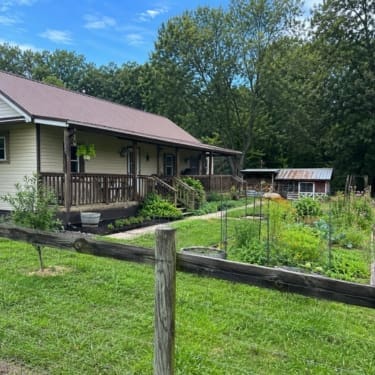
The growing season is long and warm. Summers are warm, but comfortable with temperatures sitting around the 80s, and the rain comes in steady all year. You can grow two or three rounds of vegetables in a single season if you plan it right, plus orchard fruit, nuts, pasture for goats and cows, and just about any medicinal herb you could want to put in the ground.
You may have heard that Carrie Underwood lives on a farm outside Nashville. In an interview not too long ago, she talked about raising chickens, cows, sheep, donkeys, and horses, and keeping a big garden. She said straight out that she thinks her family could feed themselves if supply chains ever fell apart. When somebody with her kind of money and options picks this life, it tells you something about what Tennessee has going for it.
For me, this is the easiest choice for a new homesteader. The land is forgiving, the rain shows up enough, and the rural folks still respect this way of living.
Missouri
You find it in the middle of the country, and that location matters more than you might think.
The thing about having a homestead in Missouri is that it depends a lot on how far your money goes. Pastureland and recreational acreage runs in the $4,500 to $5,700 an acre range, which means you can buy a good piece of land here for what a small suburban lot would cost you in places like California or the Northeast.
The climate gives you four full seasons. Hot summers and real winters, and that contrast is part of why the soil is as good as it is. Corn, soybeans, wheat, hay, and pasture all do well, and the Ozarks down in the south make for beautiful orchard country.
There is a former Army Ranger named Joshua Morris who built a 360-acre off-grid homestead in Missouri called Cold Spring Farm. He has been at it for over twenty years. His home is earth-sheltered, built to handle tornadoes, and runs on a mix of solar, wind, and hydro. He raises goats and cattle, and he keeps a pond stocked with fish.
He has said that watching things fall apart during his deployments overseas is what pushed him to build something that could stand on its own. His place is what a serious Missouri homestead can grow into if you give it time.
Missouri has plenty of water from rivers, lakes, and aquifers, and the hunting and fishing are some of the best you will find anywhere. If you want to be central, productive, and surrounded by people who get rural life, you cannot do much better.
Also, foraging is pretty big in this state. It is especially popular in the Ozarks, river valleys, and wooded parts of the state. Morels, chanterelles, chicken of the woods, pawpaws, persimmons, black walnuts, berries, greens, and various rare medicinal plants, you can find all of them here.
But the question is, do you know how to correctly identify them? One small confusion and you might end up in the hospital or even worse…
If you want to go foraging and stay safe at the same time, you first need to know how to recognize useful plants. This is incredibly easy when you have a full picture guide on hand.
Kentucky
Kentucky surprised me the first time I really looked into it. Here’s exactly why.
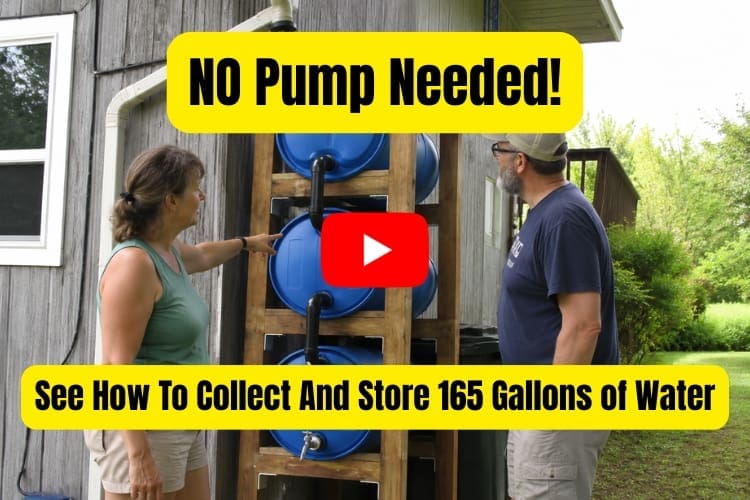
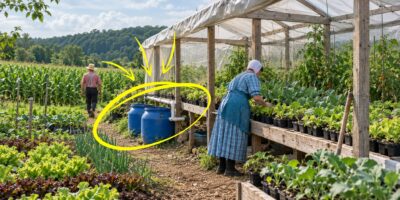
Property taxes are around 0.75 percent. Farmland averages around $5,300 an acre, with pastureland closer to $3,770. Summers stay in the 80s, winters are cool but not brutal, and rainfall is generous, especially in the eastern half of the state. So why not take advantage of all of this rain and build a 3-barrel pressurized rainwater harvesting and purification system? You can see how to build one here.
The rolling hills create little microclimates from one holler to the next, and the spring-fed creeks running through them are a dream if you want to do gravity-fed irrigation or a small hydro setup.
Congressman Thomas Massie lives on a 1,000-acre off-grid homestead up in northeastern Kentucky. He and his family built a 4,400 square foot timber-framed house using wood and stone from their own land. They run the place on solar with a Tesla battery bank, and they have a sawmill and a blacksmith shop on the property.
Massie has said that building it themselves taught the family skills no school could have. His setup is bigger than what most of us will ever build, but the point is that Kentucky still has the kind of land and freedom that lets a place like his exist in the first place.
The state has a long tradition of small farming, bourbon, tobacco, and craft work, and that culture is still going strong. Farmers’ markets and co-ops are easy to find and I am sure you can find many like-minded people.
Idaho
Idaho is the dream state for anyone who wants some privacy, space, and a homestead that feels remote.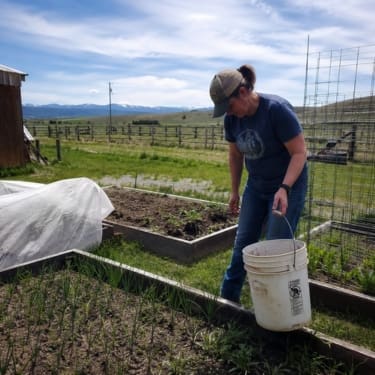
Here is where I want to warn you about things getting expensive. Demand has been heavy for a few years now, and good land is not as cheap as it used to be. That said, property taxes are still low at around 0.50 percent, and if you stay out of the popular valleys around Boise and Coeur d’Alene, you can still find pasture and timber land at fair rates.
The trick is to look at the smaller towns and the more remote counties before they catch up to the rest of the state.
The climate is what they call high desert. Cold winters, warm and dry summers, and big differences depending on where you settle. The northern panhandle gets a lot more rain and is greener than people expect, while the Snake River Plain down south is dry and dusty without irrigation.
A family I read about, Josh and Carolyn Thomas, left Southern California and ended up on 40 acres in northern Idaho with their ten children. They grow potatoes, corn, and wheat, and they keep goats and cattle. The kids rotate through the chores like weeding, feeding animals, and putting up food.
They worked their way into this life slowly, starting from suburban life and picking up the skills one at a time. If you ever wondered whether a big family can really make a go of it on a homestead, look up their story.
Idaho is for folks who want elbow room. The neighbors are far away, the views are big, and the local culture respects independence.
Maine
Maine was called “the homesteading country” long before the word even got trendy.
Maine is going to ask more from you on taxes than the southern states. The effective rate is around 1.02 percent, and a typical tax bill comes in around $3,000 a year.
But the land itself is one of the better deals in the whole Northeast. Farmland averages a little over $3,000 an acre, which is unheard of compared to neighboring New Hampshire or Massachusetts.
The climate is where you need to compromise. Winters are long and cold, but summers are mild and pleasant, and the rain is reliable. About 90 percent of the state is forested, and there are over 3,500 miles of coastline. You get woodland and saltwater within a short drive of just about anywhere you would want to settle.
There is a couple, Linda Tatelbaum and Kal Winer, who left their academic jobs back in 1977 and bought 75 acres in rural Maine. They built a little 16-by-24-foot house by hand and put solar panels up decades before anybody else was doing it. They have never been hooked to the grid.
They raised a child while hauling water and cooking on a wood stove, and they are still living that life today. Almost fifty years on the same piece of land.
The growing season is shorter, but root vegetables, potatoes, berries, and maple syrup all do beautifully here. You can supplement your garden with fish, lobster, deer, and timber. The back-to-the-land movement of the 1970s left behind a culture that still welcomes newcomers who want to live simply.
Vermont
I want to be straight with you about Vermont, because the taxes are no joke and I am not going to pretend otherwise.
The effective rate is around 1.59 percent, and a typical homeowner can pay over $5,000 a year. That is real money coming out of your pocket. The land itself is more reasonable, around $4,100 to $4,400 an acre, and you can find affordable acreage if you look in the Northeast Kingdom or up in the southern mountains. 
So why is it on this list? Because the culture and the local food system in Vermont are some of the strongest anywhere in the country. Farmers’ markets are everywhere, organic agriculture has been the mainstream here for forty years, and the state has homestead exemptions and farm-use valuations that take some of the sting out of those taxes if you actually work your land.
The climate gives you cold winters and warm summers with steady rain. Dairy, sheep, apples, maple syrup, and cold-tolerant vegetables all do well.
A homesteader named Teri Page moved her family to Vermont in 2018 and put up a 20-foot yurt while she built her house with local lumber. She looked at paying around $20,000 to hook up to the grid and decided instead to put that money into expanding her solar setup and staying off-grid.
She has talked about how Vermont’s local food economy means she can buy meat and dairy from neighboring farms while growing her own vegetables and herbs. That is Vermont in a nutshell. You can be independent without having to do every single thing alone. It’s an amazing place for anyone who values community.
If you need some reliable non-GMO medicinal herb seeds, you can get your own pack here. Packaged right here in the U.S., they are an amazing choice for any homesteaders who want to start a herb garden.
Montana
If you want room to breathe, Montana is the answer.
This is also where the land prices made me check the number twice. Farm real estate averages around $1,230 an acre. You read that right. For the price of a single acre in coastal California, you could buy yourself a small Montana ranch.
Property taxes are ok too, around 0.72 percent. The trade-off is that some of this land is going to be remote, dry, and a long way from anywhere, but if you want space without having to be a millionaire to afford it, this is where you find it. 
The climate is split between the Great Plains out east and the Rocky Mountains in the west, so you have options. Eastern Montana has warm summers, cold winters, and supports cattle and dryland wheat. The valleys in the west are cooler and better suited for hay, vegetables, and small mixed homesteads.
Two stories from Montana have stuck with me. The first is Kelsey Vick, who runs the Homemade Montana Homestead. After she saw the empty grocery store shelves back in 2020, she went back to basics.
She cut and peeled her own logs to build fences for her pigs, started raising chickens and rabbits, and taught herself fermenting and canning. She is honest that self-sufficiency is a long road and not something you finish in one season.
The second is Susan Gregersen, who lives off-grid on a 20 acre place near Fortine. She is three miles from the nearest power line. Her whole solar setup cost under $5,000, and it does not run a refrigerator, so she cans her meat, dehydrates her eggs, and built a root cellar instead.
She raised seven children out there and supported her family through her writing. Her story shows you can do this with very little money if you have the right skills and the right attitude going in.
Final Thoughts
Picking a state is not the whole thing about homesteading. I have known plenty of people who built strong, self-reliant lives in places that would never show up on a list like this one.
The land you have is almost always better than the land you are dreaming about, and the work you start today matters more than the work you might start someday in a place that seems perfect.
One More Thing Before You Go
Picking the right state matters, but the land alone won’t build your homestead or save it in case of an emergency. The skills you have are the most important and just think about it: nothing can replace knowledge.
Even if you’re scouting your first property or you’ve been homesteading for years, the checklist is still the same. Don’t let yourself be vulnerable! Being prepared is the best thing you can do for you and your homestead.
Here are five skills every homesteader should master:
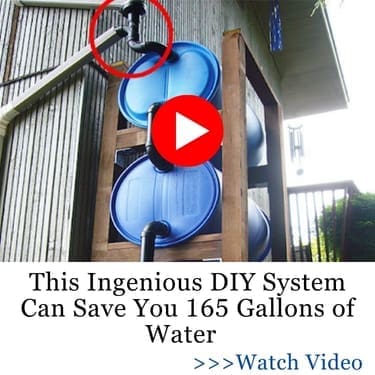
1. A way to catch and store water on your own – No matter where you live, there are still bad years when it comes to rain. A gravity-fed rainwater system that holds 165 gallons and needs no pump is one of the smartest things you can put in your backyard. Get the exact build here.
2. A way to preserve eggs long term – Chickens are one of the best purchases on a homestead. But what are you going to do with all the eggs? One bad heat wave during a blackout can cost you months of work. Hopefully, the Brits had a method back in 1941 that kept eggs good for ten years without refrigeration and this is still a gold staple when it comes to food preservation. You can find the method here.
3. An alternative to antibiotics – Cuts, splinters, sore throat. What are you going to do when the doctor is not around? Knowing how to make something like Amish Amoxicillin from three plants you might already have in your garden is essential. Find the step-by-step recipe + video instructions here.
4. A way to keep food cold without electricity – Meat is precious on a homestead and I am sure you don’t want to see all of it spoil just because your generator malfunctions once. The Amish have been doing it without power for generations. You can get the build for the Amish electricity-free fridge here.
5. A plan for the property line – Rural does not mean safe, and you can’t stand guard at three in the morning. A few traps and alarms in the right spots will take care of your property. Find everything you need to be safe here.
Your homestead is a system that keeps evolving with you. It grows alongside you, and the more skills you bring to it, the more it gives back. I’ve seen people get discouraged because they think they’re behind, or because their neighbor has chickens and a greenhouse and a smokehouse and they’ve barely got a garden going.
Please don’t fall into this trap. Most of us, the ones who choose this path, started from scratch.
I think that what matters the most is your willingness to keep going, to keep learning, and to keep building. Just one of these five skills will already get you a little bit more ahead of where you were last month.
You may also like: 
States That Will Punish You for Harvesting Rainwater. Do You Live In One Of Them?
Off-Grid Water? This Weird Device Is Changing Lives in the Desert (Video)
The Worst States for Living Off Grid
2026 Natural Disaster Map. Is Your Area on the List?
You’re Not a Real Homesteader if You Don’t Grow This…









I live on an island off of Penobscot bay in Maine. I don’t know where you found farm land for $3,000 an acre? I’m going to assume aroostook county? Land within a 2 hour drive from the nearest mainland area runs about at least ten times that. Taxes are insane and state regulations are also. Do not think that Maine is a great place to homestead or raise a family. It is not. I am a generational Mainer and if I had my way we’d be in Missouri or Idaho or the dakotas. The hubs is a commercial lobster fisherman so here we are.