
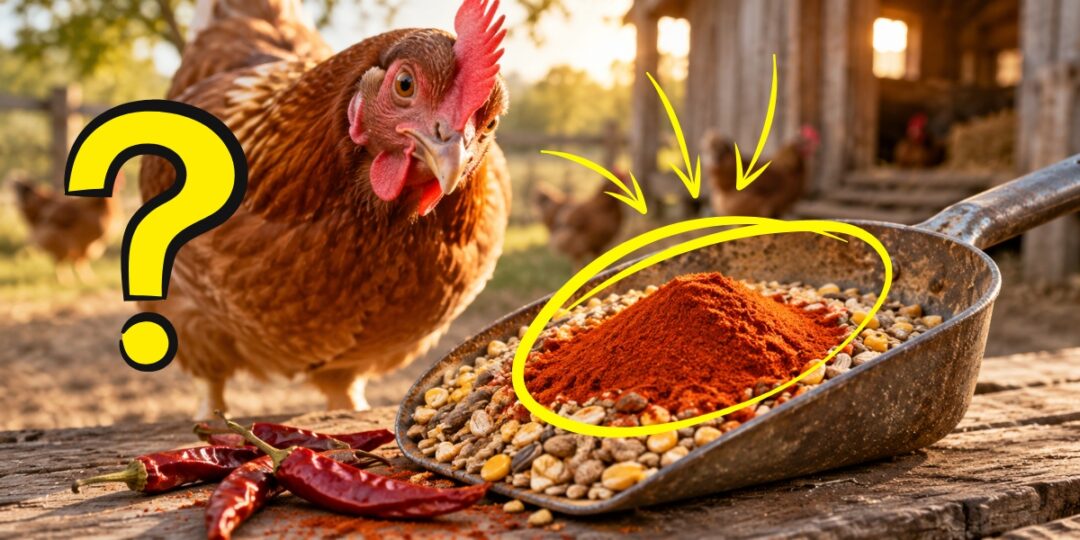
I went down to pick up a rooster and four new hens a while back, from the same old fella I’ve been buying birds from for years. He’s kept chickens his whole life, and there’s not much about them he hasn’t seen.
While he was boxing up my birds, I got to complaining. I told him I was tired of pouring money into powders and additives and the whole parasite routine, every single season, like clockwork. He just laughed a little and told me to put cayenne pepper in their feed.
I thought he was joking. Cayenne pepper? In chicken feed? It sounded a little crazy to me.
But he wasn’t kidding. So I went home, tried it, and I’ve been doing it ever since.
Can Chickens Handle The Burn? 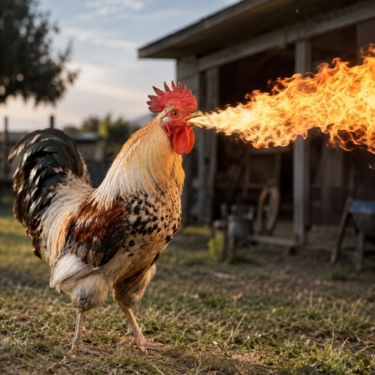
Naturally, this is the thing I asked first. I like my food a little bit spicy, but ask me to eat a whole cayenne pepper and I would politely hand it back to you and ask you to eat it.
So, how come you can, in fact, feed peppers to your chickens? Do they have some special powers that we don’t have? In short, yes. And it’s much simpler than you can imagine.
Chickens don’t taste hot the way we do. You and I bite into a hot pepper and our mouth is on fire, our eyes water, and we’re reaching for a glass of milk. A chicken can eat that same pepper and feel absolutely nothing.
It comes down to how their bodies are put together. The part of us that screams “hot!” when we eat cayenne just doesn’t switch on in a bird. So a chicken will peck away at spicy feed all day and never know the difference.
And that one little fact is what makes the whole thing possible. Because your birds will eat it without a care in the world, the pepper gets to do its stealth work on the inside, which is the real reason I started using it. I’ll come back to that in a minute.
But there’s a funny bonus I didn’t see coming.
Mice and rats aren’t built like chickens. They feel that burn the same way we do, and they hate it. So a little cayenne in the feed bin runs them off, while your hens couldn’t care less.
What I Started Noticing After Doing This For a While 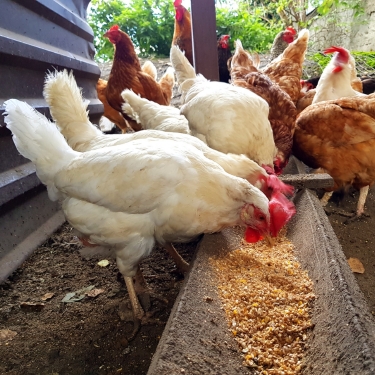
I didn’t expect much when I started. I figured, worst case, I’m out a few spoonfuls of pepper.
I trusted the guy who sold me the chickens. I mean, I’ve known him since Mark and I bought the first hens, and all of his advice turned out to be amazing, but this one, this one sounded really weird to me.
But after a few weeks, I started noticing little things. And they were nice things. Good things.
The first was the eggs. My yolks got darker. That deep orange color you get from a really healthy hen, the kind that stands up tall in the pan. Apparently cayenne carries the same natural coloring that the good foraging plants do, and it shows up right there in the yolk. That was a nice surprise. Also, do you know an egg can look perfectly good and still be spoiled? Yes, this also surprised me, but there’s a method nobody talks about that helps you identify bad eggs without cracking them. Check it out here →
Better safe than sorry…
Also, if you want your eggs to last longer, you’ve probably heard that you shouldn’t wash them. That’s true, but leaving them unwashed will only extend their shelf life so much.
If you want to make eggs last for months, you should definitely see why the Amish use a white powder to coat eggs and why doing this keeps eggs fresh longer.
The next thing was my feed bin. I’d had mice getting into my storage for the longest time, no matter what I did. If I didn’t set up traps (here you can see how I make my traps), they were there.
After the cayenne, they lost interest. I stopped finding droppings in there, and I stopped finding chewed bags. That alone saved me money on wasted feed.
Then, the birds themselves just seemed to be doing well. Good weight, good energy, clean feathers. My flock wasn’t sick to begin with, so I won’t claim some dramatic turnaround. But it seemed to help keep their guts in good shape, and there’s actually some solid research backing that up in poultry. Better digestion, and birds that hold their own.
The biggest change, though, was in my wallet. I slowly stopped reaching for all those extra powders and additives I used to buy on autopilot. And my birds didn’t miss them one bit.
What Nobody Tells You About Deworming
Being a little bit skeptical about all the things you do without being sure of why you do them is actually a healthy habit. Some might call you a conspiracy theorist, but most of the time this is not the case.
If something seems off to you, well, you better try to understand more and see where it leads.
In my case, I can tell you that for years I ran a deworming routine like it was gospel. Every so often, whether my birds needed it or not, I’d dose the whole flock. That’s just what you do, right? That’s what the bag tells you, and that’s what the feed store points you toward.
So, I respected that… I wanted my chickens to be healthy and productive.
But here’s what I found out. Deworming on a schedule, when there’s no actual problem, isn’t just a waste of money.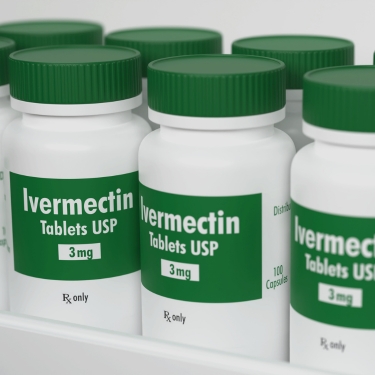
It can backfire.
When you keep hitting worms that aren’t causing any trouble, the worms that survive get tougher, until the day you really need that treatment to work and it doesn’t. The Alabama Cooperative Extension warns against scheduled deworming for exactly this reason.
A university extension office is telling you not to do the very thing the store keeps selling you…
So where does cayenne fit into all this?
This isn’t a cure. If your birds have a real worm problem, cayenne won’t fix it, and you shouldn’t lean on it to. That’s a call-somebody-and-get-a-diagnosis situation.
But what cayenne does is simpler. It’s a supportive practice. It gives your birds a little everyday support that keeps their guts healthy and makes them a less comfortable place for parasites to settle into, so you’re not constantly running to the harsh stuff. It scares off a lot of parasites. It’s prevention.
And the best part? It’s cheap. It’s 100% natural. And if you grow your own peppers, it’s free.
This sits a whole lot better with me than a cabinet full of powders I was buying just because somebody told me to.
But when it comes to your chickens, prevention doesn’t stop here.
Do you know how to recognize a sick chicken?
Maybe you look for the obvious stuff. Maybe you begin to panic when you see a chicken that stays far from the flock and is not doing what the others are doing. Maybe you become concerned when you see it not eating. These are all indeed very concerning signs.
The problem with chickens is that they resemble cats so much when they are sick. These guys won’t let you somehting is wrong until it’s already too late…
And now, ok, maybe losing one sick chicken is not a big deal. You have a dozen more.
But what if that chicken has a very contagious disease?
If you don’t know what’s wrong with it, there’s a very high chance it will spread the disease to the whole flock, infecting them. This is how many homesteads lose their whole egg supply every year.
I found out about this from the same person who told me about this cayenne trick. He told me I should be very careful about sick hens and recognizing the early signs gives you the best chance to save your flock.
He told me that these first signs are rather hard to spot and he recommended this book. Here I found out more about how the Amish keep their chickens and how they manage to take care of them on their farms.
See how to spot a sick chicken →
How I Do It (Step-By-Step)
If you want to try it, it couldn’t be easier. You don’t need any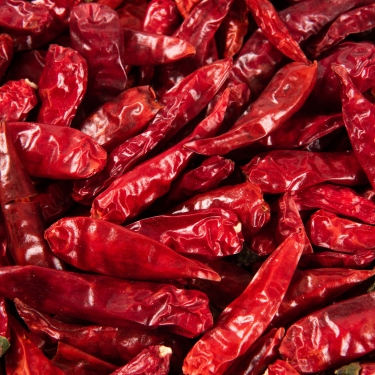 thing fancy.
I use dried cayenne, ground up. You can buy a big jar of it cheap, or you can do what I do now and grow a few cayenne plants each year and dry your own. A handful of plants gives you more than enough for a whole flock, and it costs you next to nothing.
I go with about a tablespoon or two mixed into a gallon of feed. You don’t need to measure it down to the grain. Some old-timers just sprinkle it in until the feed looks a little rusty, and honestly that’s a fine way to eyeball it.
Start slow, though. Don’t dump a big batch in on day one. Mix in a small amount at first so your birds get used to the change, then work your way up to the regular amount over a week or so. Chickens can be funny about new feed, so ease them into it.
You can also shake a little straight into your feed bin or storage container. That’s your rodent insurance, and it’s the same trick doing double duty.
If you grow your own, just let the peppers dry out all the way, then crush them up, seeds and all. The seeds carry a good bit of the good stuff, so don’t toss them.
One more thing. I keep the cayenne going year-round, but I’m especially glad to have it in there through the cold months. You’ll hear it said that cayenne warms the birds up and keeps them laying all winter long.
I can’t promise you that part, but what I can tell you is my flock handles our cold snaps just fine, and I like knowing they’ve got a little something extra in their feed when the weather turns.
We Figure This Out Together
Here’s what I keep coming back to. I’ve been at this a long time, and I still picked up this little trick from an old man boxing up my hens.
No book taught me that one. No company sold it to me.
It came from another person who’d been doing this longer than I have.
And that’s the thing about this life. You can do so much on your own. You can grow your own food, raise your own meat, dry your own peppers, and shrink your grocery bill down to almost nothing. But no matter how much you know, there’s always something you haven’t run into yet. Some little trick or fix that somebody else stumbled onto first.
That’s exactly why we need each other.
The best homesteaders I know aren’t the ones who figured it all out alone. They’re the ones who ask, and who share, and who pass the good stuff along. That’s how these tricks survive. That’s how they made their way to me, and now to you.
So I want to invite you into something.
We have a free Facebook group where people like us can swap what we’ve learned and ask questions and lend a hand.
Just homesteaders helping homesteaders, the way it ought to be.
Come join us, and tell us about your homestead. Tell us about how you do things, because I’d bet you’ve got a lot of interesting stories that can help another homesteader.
This is a group created exclusively for this wonderful community. A group where you can share your thoughts and ideas.
Click here and join our private homesteading group!
Also, if you’ve ever tried this cayenne pepper method before, please share your experience in the comment section below.
You may also like: 
Why Your Chickens Might Be Poisoning Their Own Eggs
Build THIS and Winter-Proof Your Whole Garden (Video)
10 Things I Wish I Knew About My Chickens Before Spring
How to Raise Chickens for Reliable Egg Production
What Happens When You Let Chickens Free-Range Full Time




















Olivia, thank you very much for this article. Much appreciated.
Jeff Anderson, Crane MO
Hello, Jeff! I am glad you liked it. Have you ever tried this method? I am very curious about the results other people got.