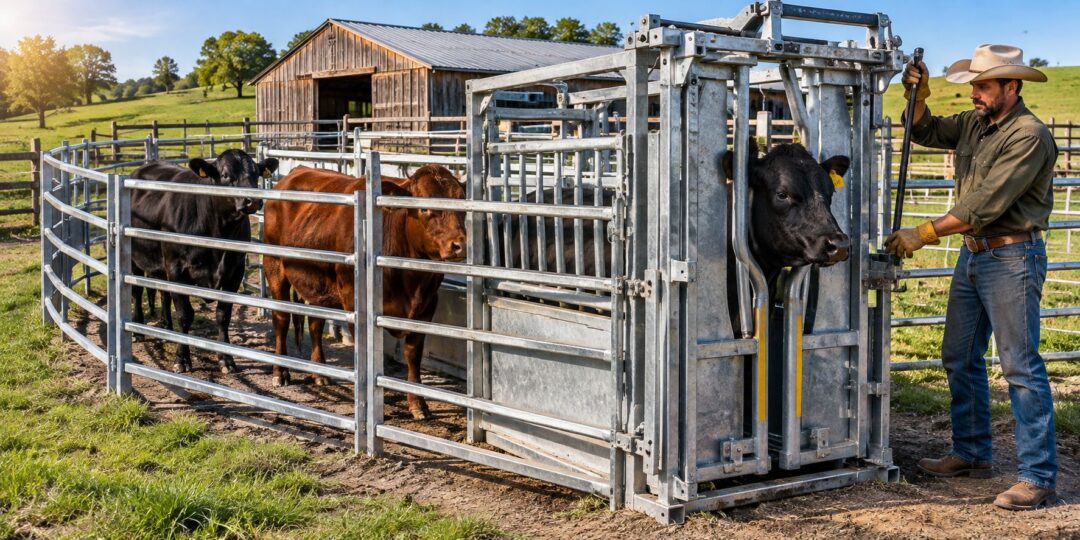
If you’ve ever tried to vaccinate, tag, or sort cattle with nothing but a few cattle panels and a lot of hope, you know how quickly a simple job can turn dangerous. Good cattle handling equipment changes all of that, and companies like 4 Rivers Ranch have built their reputation on it. They manufacture and supply durable, galvanized steel cattle handling systems and ranch equipment designed so one person can operate them, helping ranchers across the country work cattle more safely, efficiently, and easily with heavy-duty, low-labor solutions.
Whether you run a handful of cows on a small homestead or a few hundred head on a working ranch, the right setup protects you, your family, and your animals. It also saves hours of frustration every time you need to doctor a calf, check a cow, or load up for the sale barn.
In this guide, I’ll walk through why handling equipment matters, how cattle actually move, the core components of a good system, what to look for when buying, and how to plan a layout that works for your place.
Why Good Handling Equipment Matters
Safety for You and Your Animals
Cattle are big, strong, and quick, and even a gentle cow can crush a hand or pin you against a fence when she’s scared. Livestock handling is one of the leading causes of injury on farms and ranches, and makeshift pens make the risk much worse.
A well-designed system keeps a solid barrier between you and the animal at the moments that matter most. It also reduces injuries to cattle, such as bruising, broken horns, and leg injuries from slipping or fighting a poorly built chute.
Saving Time and Labor
On many small and mid-sized operations, finding extra help on working day is the hardest part. Equipment designed for one-person operation lets you gather, sort, and process cattle without needing a crew.
When cattle flow smoothly from pen to alley to chute, a job that used to take a full day can often be done in a morning. That means less time away from everything else that needs doing on the place.
Less Stress, Better Performance
Stressed cattle are harder to handle, and stress can also affect weight gain, immune response, and even breeding performance. Calm, consistent handling in a good facility pays off long after the chute gate opens.
Understanding How Cattle Move
Before you buy a single panel, it helps to understand the behavior that good equipment is built around. Much of modern handling design comes from the work of animal scientist Temple Grandin and the low-stress handling movement.
Cattle have a flight zone, which is their personal space. When you step into it, they move away, and when you step out, they stop.
They also have a point of balance, usually around the shoulder. Stepping behind that point moves an animal forward, while stepping in front of it makes the animal back up or turn.
Cattle have wide panoramic vision but poor depth perception, so shadows, puddles, and shiny objects can stop them in their tracks. They also tend to move from darker areas toward lighter ones and prefer to follow the animal in front of them.
That’s why the best systems use curved alleys, solid sides where needed, and good lighting. Equipment that works with cattle behavior instead of against it is easier on everyone.
The Core Components of a Cattle Handling System
Every operation is different, but most complete handling systems include the same basic pieces. Here’s how each one fits into the flow.
Holding Pens and Corral Panels
Holding pens give you a place to gather cattle before and after they’re worked. Kansas State University Research and Extension recommends roughly 14 square feet per head for cattle up to 600 pounds, 17 for 600 to 1,200 pounds, and 20 for animals over 1,200 pounds.
Heavy-duty corral panels let you build these pens in a shape that fits your ground. Panels with multiple horizontal rails and strong connectors hold up much better than light utility panels when a big cow leans into them.
Gates
Gates are where most of the action happens, so they need to swing freely, latch securely, and be easy to operate with one hand. Sorting gates let you split cattle into different pens as they come out of the chute.
Look for latches you can open from either side and gates hung so they don’t sag over time. A gate that drags or sticks will slow down every job you do.
Crowding Tub, Sweep, or Bud Box
The crowding area funnels cattle from a group into single file. A round tub or sweep uses a curved design and a moving gate that pushes cattle forward while letting them circle naturally toward the alley.
A Bud Box is a rectangular pen with a dead end that uses cattle’s natural tendency to turn back past the handler toward the exit. Kansas State’s crowding pen guidelines suggest about 6 square feet per head for lighter cattle, 10 for 600 to 1,200 pounds, and 20 for cattle over 1,200 pounds.
Single-File Alley
The alley leads cattle from the crowding area to the squeeze chute in a line. Many extension designs recommend a working chute at least 20 feet long so it can hold three or four head at once.
Curved alleys work well because cattle can’t see the chute or handler ahead, which keeps them moving forward. Adjustable-width alleys are worth considering if you work both calves and mature cows, since a calf can turn around in an alley sized for a big cow.
Squeeze Chute and Head Gate
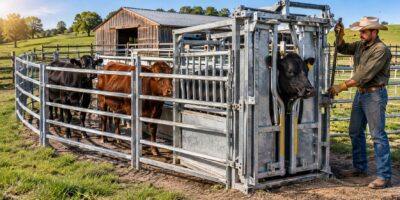
The squeeze chute is the heart of the system, where cattle are safely restrained for vaccinating, tagging, pregnancy checking, and doctoring. A head gate catches the animal’s head, while the squeeze sides hold the body steady.
Good chutes include side access gates for vet work, a tailgate that locks automatically behind the animal, and controls you can reach from one working position. That last feature is what makes true one-person operation possible.
Loading Ramp
A loading ramp lets you move cattle straight from the system onto a trailer or truck. Solid sides, good footing, and a gentle slope help cattle load without balking.
Scales and Extras
Many ranchers add a scale, either under the chute or as a separate platform, to track weight gain and dose medication accurately. Other useful additions include palpation gates, overhead restraint bars, and rump bars.
What to Look For When Buying Cattle Handling Equipment
Galvanized Steel vs Painted Steel
Galvanized steel is coated with a layer of zinc that protects it from rust, which matters a lot for equipment that sits outside in rain, mud, and manure year after year. Painted equipment can look sharp when new, but chips and scratches expose bare steel that will start to rust.
Galvanized equipment usually costs more up front, but it typically needs less maintenance and lasts longer. For most ranchers, that makes it the better long-term investment.
Built for One-Person Operation
If you often work cattle alone, look for systems where you can control the tub gate, alley, head gate, and squeeze from one or two positions. Self-locking gates and back-stops in the alley also prevent cattle from backing up while you move to the next step.
The goal is to keep you out of the animal’s way and on the safe side of the steel at all times. It’s worth asking any manufacturer to walk you through exactly how one person runs their system.
Strength and Build Quality
Check the gauge of the steel, the thickness of the frame, and the quality of the welds. Hinges, latches, and locking mechanisms take the most abuse, so they should feel solid and operate smoothly.
Portable vs Permanent
Portable systems let you work cattle in different pastures and take your setup with you if you move. Permanent installations are usually sturdier and can be designed around your exact property, but they’re harder to relocate.
A Closer Look at 4 Rivers Ranch
4 Rivers Ranch is a good example of what to look for in a cattle handling manufacturer. It’s a family-owned business, and its equipment is manufactured in Gilmer, Texas, with more than 20 years of experience making cattle work safer.
Their equipment is built from galvanized steel and designed around low-labor, one-person operation. The product line covers squeeze chutes, tub and sweep systems, corral panels and gates, loading ramps, feeders, and complete corral designs that work together as a system.
Their chutes feature horizontal bars, which one rancher featured in a regional farm paper noted makes it easier for horned cattle to enter. Dealers describe features such as a parallel-side body squeeze, walk-through head gates, top and bottom vet gates, and a self-locking slide tailgate.
Rather than selling one-size-fits-all setups, 4 Rivers Ranch works with ranchers to design systems around their herd and property, then supplies them through a network of distributors. That combination of durable materials, practical design, and support is exactly what to look for no matter which brand you choose.
Planning Your Layout
Start by choosing a well-drained, level site that’s easy to reach with a truck and trailer. Mud is one of the biggest enemies of safe handling, so avoid low spots and plan for good drainage around the chute and alley.
Think about how cattle will naturally flow from pasture into your holding pens. Locating the facility where cattle already like to gather, near water or a familiar lane, makes the first gather much easier.
Avoid pointing the alley or chute directly into the rising or setting sun, since cattle often refuse to walk into bright glare. Shade, lighting, and solid sides can all help keep cattle moving.
If your budget is limited, start with the essentials, usually a good chute, head gate, and a few heavy panels. Many systems are modular, so you can add a tub, alley, and loading ramp as your herd and budget grow.
Budgeting for the Right System
Cattle handling equipment is a real investment, but it’s one you’ll use for decades. Quality systems can last for many years, so it’s worth buying the best you can afford rather than replacing cheap equipment every few seasons.
When comparing prices, look beyond the sticker. Consider durability, warranty, how much labor the system saves, and what a single serious injury to you or a family member could cost.
Ask manufacturers and distributors about delivery, setup, and financing options. Many will also help design a layout that fits your budget now and leaves room to expand later.
Maintaining Your Equipment
Even the toughest equipment needs a little care. Walk your system before every working day and check hinges, latches, and locking mechanisms for wear or damage.
Grease moving parts as recommended, clear manure and mud away from the chute floor and gates, and tighten any loose bolts or connectors. Small problems like a sticking latch are easy to fix before they turn into a dangerous failure in the middle of a job.
Safety Tips When Working Cattle
- Plan the job first: know what you’re doing with each animal before they enter the chute.
- Never stand in a gate’s swing path: a gate hit by a moving cow can strike with tremendous force.
- Keep an escape route: always know where you’ll go if an animal turns on you.
- Move calmly and quietly: use your body position and the flight zone rather than shouting or prods.
- Don’t overcrowd the tub: fill it about halfway so cattle have room to turn and move into the alley.
- Work rested and alert: fatigue leads to mistakes, so take breaks during long processing days.
Final Thoughts
Good cattle handling equipment isn’t a luxury. It’s one of the best investments you can make for your safety, your herd’s health, and your own time and sanity on working day.
Start by understanding how cattle move, then choose durable, well-designed components that let you work them calmly, ideally on your own. Whether you buy from 4 Rivers Ranch or another reputable manufacturer, the right system will make every job safer and easier for years to come.
You may also like: 
Cleaning the Chimney: A Complete DIY Guide for Homeowners
How To Build A Small Root Cellar In Your Backyard With Only $400 (Video)
The Fall Homestead Checklist: 10 Tasks to Finish Before Winter
The #1 Rule to Make Your Woodstove Use Less Wood
How to Build a Pioneer Potato Clamp
Ranking the Best (and Worst) Firewood in the U.S.A
Homemade Window Cleaner: Simple Recipes That Actually Work