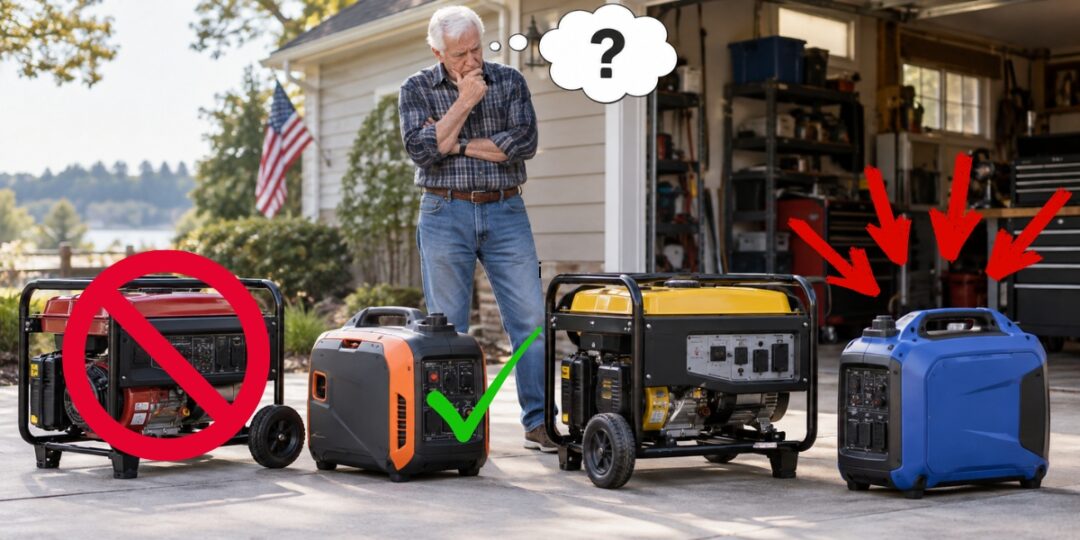
Keeping the power on a homestead can be a real challenge. Especially when you have many appliances, such as a freezer, a well pump, a water heater, or even an AC system.
Most of the time, a generator would cover all of that, but only if you have the right one. Every homestead has different needs and finding a generator that fits those needs is how you make sure you have enough power to keep things running smoothly.
The number on the box and the number your homestead actually needs are two different things.
Nobody at the store will walk you through the difference.
They want you to buy the most expensive generator.
They don’t care about your needs…
The good thing is that you don’t need to understand how electricity works to buy a good generator. The most important thing is to make a list of the things you can’t live without.
Track What You Need On A Regular Day 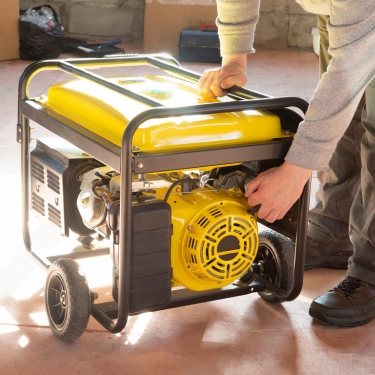
The first thing I’d do is make a simple list of what you use during an ordinary day.
You don’t have to write down every lamp, charger, and tiny appliance in the house. Start with the bigger things and anything you use often.
That could include your well pump, refrigerator, chest freezer, washing machine, lights, internet equipment, shop tools, barn equipment, fans, and whatever else is part of your normal routine.
There are two numbers worth knowing.
Watts, or kilowatts, tell you how much power something needs while it is running. Kilowatt-hours, usually written as kWh, tell you how much electricity you use over time.
For example, a 1,500-watt heater may be easy for a decent-size generator to run. But if that heater stays on for eight hours, it uses 12 kWh. Now you are talking about a lot of generator run time and a lot more fuel.
That is why off-grid homes often use propane, wood, or another fuel for heating, cooking, or hot water. You can run those things on electricity, but doing it from a generator every day can get expensive fast.
Make a table of everything you regularly power on your homestead. Write down how many watts each item uses, how long you normally run it, and its estimated daily use in kWh. This will show you how much electricity you need each day.
If you want a more complex guide about how to do this and how to choose a great generator for your homestead, you can find a lot of useful information here.
I know this is presented as a bug-in guide, but don’t let this deceive you. The homestead life resembles buging-in in so many ways.
Both lifestyles make you rely less on the system and both of them are based on creating a functional system in a limited space.
So, there’s a lot of information that is similar.
What might work for a prepper focused on bugging in might work very well on your homestead too.
Click here and find out more about what type of generator fits your homestead the most.
Find Your Biggest Load
You also don’t need to add up every appliance you own and assume they will all be running at once. What really matters is your worst-case combination. Think about which appliances might realistically be on at the same time and, together, use the most power.
Maybe the refrigerator and freezer are running, the well pump kicks on, and you are using a saw in the shop. Your generator needs to handle moments like that without struggling.
Motors make this a little trickier.
A refrigerator, freezer, pump, or power tool can use much more electricity for a second or two when its motor starts. Once it gets moving, the power demand drops. That short startup surge is what catches a lot of people.
So don’t size your generator using running watts alone. Look at startup watts too, especially for your biggest motors.
Your well pump deserves extra attention. Check the pump label or control box for its voltage, horsepower, and amperage.
Many deep-well pumps use 240 volts. If yours does, the generator needs to supply 240 volts. A big 120-volt generator still won’t run a 240-volt pump.
Something the society we live in wants us to forget is that not every item we own needs to be electrically powered. People managed to live without electricity for a big chunk of our history. Also, there are present-day people still relying on basic devices that use zero electrical power. The best example of this is the Amish community.
All the appliances they use for their day-to-day life don’t need a power outlet.
And there’s a huge misconception: Some say they live hard lives.
But this is not true!
The Amish have most of the devices we own. The only thing is that theirs are more reliable. In case of a power outage, they are the winners. Their farms will work very well even after the grid goes down.
Why?
Because they are not dependent on electrical power.
If you want to become more self-sufficient and bring a little bit of Amish knowledge and engineering inside your home, you can try some simple but efficient DIY projects such as the Amish off-grid washing machine, the zero-electricity AC system, the buried fridge, or the Amish pneumatic heating system.
All of these are electricity-free alternatives for your daily needs.
These are the things that could make you more independent.
👉 Click here to see more and get the instructions for all of these amazing projects
Bigger Isn’t Always Better
It is tempting to solve all of this by buying the biggest generator you can afford. That sounds safe, but it can create another problem.
A large generator still burns fuel when you are barely using any of its capacity. If most of your day is spent powering a fridge, freezer, and a few lights, running an oversized engine for those small loads can be wasteful.
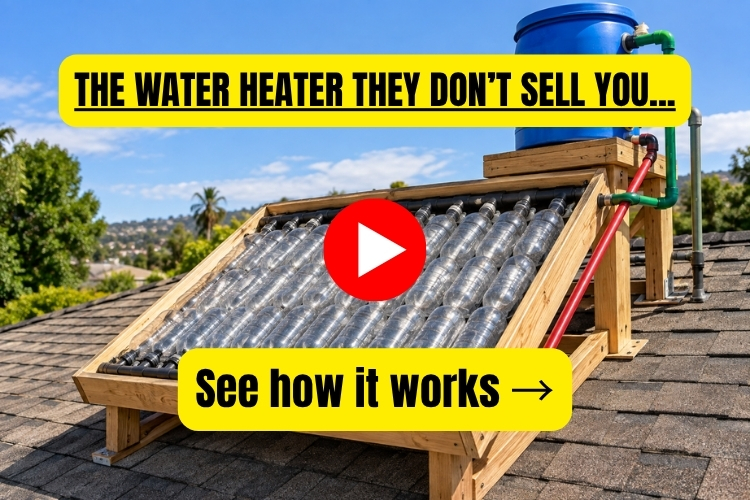
You want enough extra capacity that the generator is not working at its limit every time the pump starts, or you turn on a tool. But you also don’t want a huge machine drinking gasoline all day while hardly doing anything. See how to make a DIY multifunctional pump for daily use here. Move water around the homestead with no effort and no electricity!
There is no perfect size for every homestead. The right one depends on your peak load, your normal load, and how you plan to use the generator during the day.
That’s why taking a little time to figure out your actual electricity use before shopping can save you money later.
Make Sure It Is Built for Your Homestead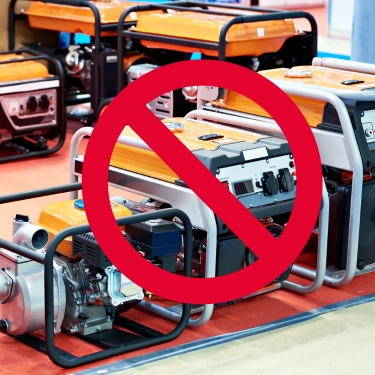
Please be very careful about this one! A generator can have plenty of wattage and still be the wrong machine for daily off-grid use.
Some generators are made mostly for emergencies. They are expected to run during an outage and then sit for weeks or months. If yours is going to run for hours every day, check how the manufacturer describes its intended use.
Larger generator sets may be rated for standby power or prime power. Prime-rated units are made for long-running use with changing electrical loads. Portable gasoline generators don’t always use those labels, so read the manual. Look at the recommended run time, maintenance schedule, warranty, and any limits on continuous use.
If I were depending on one every day, I would care a lot about an hour meter, easy oil changes, common replacement parts, and whether someone nearby can actually repair it.
Those boring details matter a lot after the first few hundred hours. A cheap generator stops feeling cheap pretty quickly if you’re fixing it and searching for spare parts left and right.
Is Gasoline The Right Choice?
Gasoline generators are easy to find, easy to refuel, and often cheaper to buy than larger diesel setups.
But gasoline can have some serious drawbacks if you use it every day…
A generator built to use during a short outage can go through several gallons in a day, depending on the model, load, and how long it runs.
Now think about that over a week.
Also, you need somewhere safe to keep fuel, a way to bring more home, and a plan for keeping it fresh. Gasoline does not store forever.
Fuel stabilizer helps, but I still wouldn’t want old gas sitting around indefinitely.
The thing is that storing gasoline can get quite confusing… And the worst part is that you can’t just take advice randomly from YouTube videos or articles written by anonymous writers. You don’t know if that advice is good and taking bad advice about storing gasoline… well, that sounds like a disaster.
When I started learning more about this, I wanted to get my advice from a reliable source. And this is how I stumbled upon Michael Major. This guy has been working as an engineer for Boeing, and right now he has dedicated his entire life to developing off-grid projects meant to help people become more self-sufficient.
He knows a thing or two about how it works and his guide helped me learn more about how to properly store my emergency gas canisters. You can watch this video to see more.
If you expect to run the generator heavily all year, compare gasoline with propane or diesel before buying.
Gasoline can work fine. Just remember that buying and storing fuel will become part of your normal routine.
A dual-fuel model can also be useful. Gasoline often gives you a little more output, while propane is easier to store for long periods.
Having both options gives you some flexibility if one fuel is hard to get or you simply don’t want to keep a large amount of gasoline around.
Regular Generator or Inverter?
If you are going to run the generator every day, this is an important question you need to ask yourself.
Why?
Because of the noise a generator can produce.
Traditional portable generators are usually cheaper for the amount of power you get. They are common, simple, and a good choice if you mainly want plenty of wattage without spending too much.
But they are also loud.
An inverter generator can change its engine speed as your electrical load changes. When you are only using a little power, the engine can slow down. That usually means less noise and better fuel economy at lighter loads.
Inverter models also provide clean, stable power for computers, internet equipment, chargers, and other electronics.
The downside is price. Larger inverter generators can get expensive.
So, you should think really good what you want from your generator.
Do You Need a Generator That Runs 24/7?
Here’s an interesting thing many people simply ignore when they are looking to buy a generator. If your generator is your main power source, that doesn’t mean it needs to run 24 hours a day.
Batteries can make a big difference in this case.
You can run the generator during the heavier part of the day and charge a battery bank at the same time. Then shut the generator down and let the batteries handle smaller loads such as lights, the refrigerator, and electronics.
That saves fuel, cuts down on noise, and gives the engine a break.
You don’t need solar for this to work, although adding solar later can reduce generator hours even more. It also lets you group your heavy jobs together. You might pump water, do laundry, use tools, and charge the batteries during the same few-hour window.
If you want to try solar, but you’re afraid of the initial investment, you can try a trial DIY solar project to see if this is suitable for you.
Then you can shut the generator off and enjoy some quiet while also saving some fuel.
For someone living off-grid full-time, I’d seriously consider this instead of planning to keep a gasoline generator running from morning until night.
Before You Buy It, Make Sure You Have a Place to Run It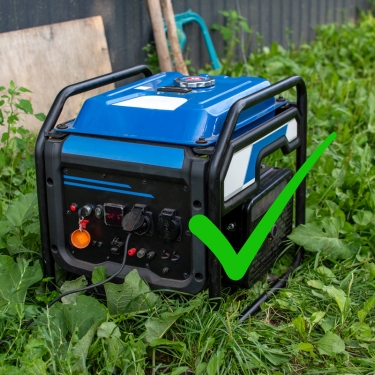
A generator you use every day deserves a better setup than an extension cord through the kitchen window. If it feeds your house, cabin, barn, battery system, or several circuits, have the electrical side set up correctly for your system.
The exhaust matters just as much. Portable generators produce carbon monoxide, which you cannot see or smell. Keep the generator outdoors and well away from doors, windows, and vents. Don’t run it in a garage, barn, shed, or enclosed porch just because it seems protected there.
If you build a roof or weather cover for it, follow the manufacturer’s clearance and ventilation rules.
The CPSC recommends keeping a portable generator at least 20 feet from the home, with the exhaust pointed away from occupied areas.
And keep working carbon monoxide alarms inside the house.
What I Would Look For
If I were choosing a gasoline generator for an off-grid homestead, I wouldn’t start with the biggest wattage number on the box.
I’d start with my normal routine.
What needs to run? What might run at the same time? How much does the well pump need when it starts? Do I need 240 volts? How many hours a day will this generator realistically be running?
If your setup is fairly modest, you don’t necessarily need a huge generator. Something like the Honda EU3200i can make a lot of sense for a smaller off-grid homestead. It gives you 2,600 running watts, it’s much quieter than a traditional generator, and it can slow the engine down when you’re not using much power, which helps save fuel.
It’s especially useful if you’re running things like a refrigerator, freezer, lights, electronics, and smaller tools. Just keep in mind that it’s a 120-volt generator, so if your homestead has a 240-volt well pump or other large 240V equipment, you’ll need to look at a bigger model.
Even more, there’s a thing you should not forget about… No matter what type of generator you have on your homestead, it will always be vulnerable to EMPs. These things happen naturally during severe storms and they can mess up your entire electrical system if you’re not taking the right protection measures.
Also, any electronic device you own is EMP-sensitive.
Most people talk about building Faraday cages, but the only problem with these is that they are not the most practical thing… Putting the generator in a “cage” sounds insane, right?
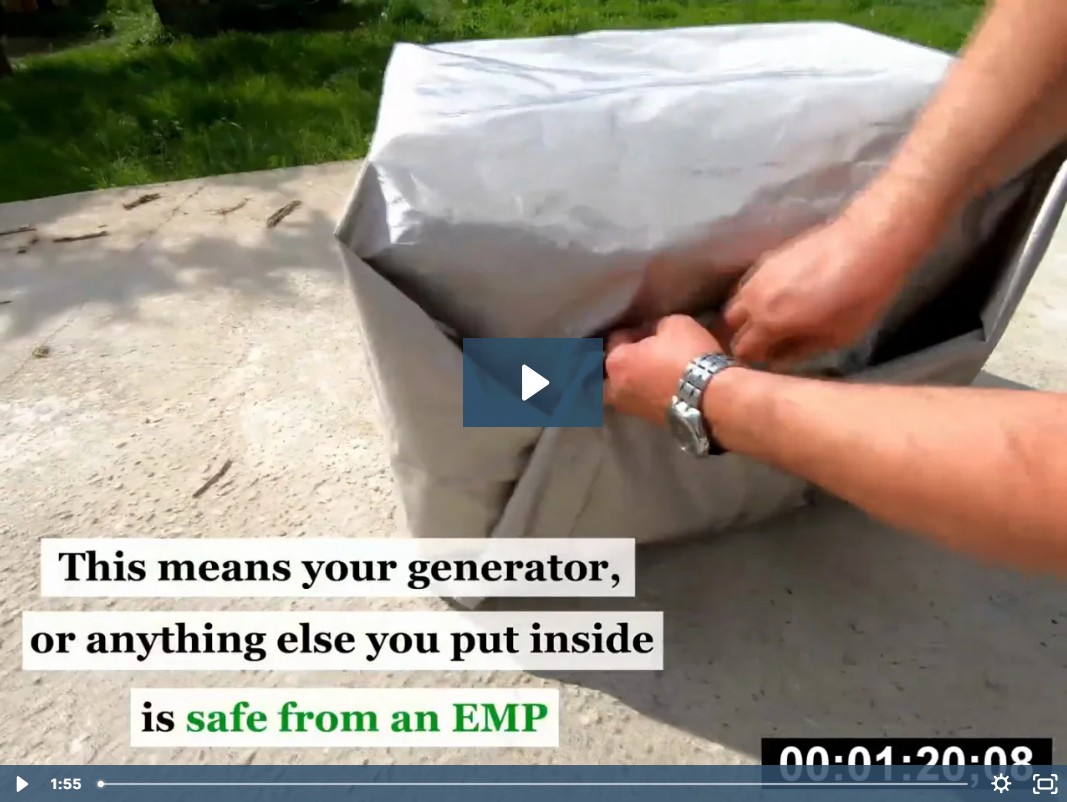
If you want a more elegant solution for this, something that gets the job done quickly with no effort, check out the EMP Cloth.
At 15 feet long by 3.5 feet wide, the EMP Cloth is designed to fully cover any type of home generator, including diesel, solar, gasoline, propane, and virtually any other type of generator. And you can also use it for any other electronics that you have.
See the actual product and how it works in this video →
You may also like: 
7 DIY Projects Using Cinder Blocks
How to Thrive in the Wilderness With No Special Equipment (Video)
The Real Cost of Starting a Homestead (And How to Cut It)
How to Get TV Reception When You’re Miles From a Tower
11 Scam Items Homesteaders Fall For