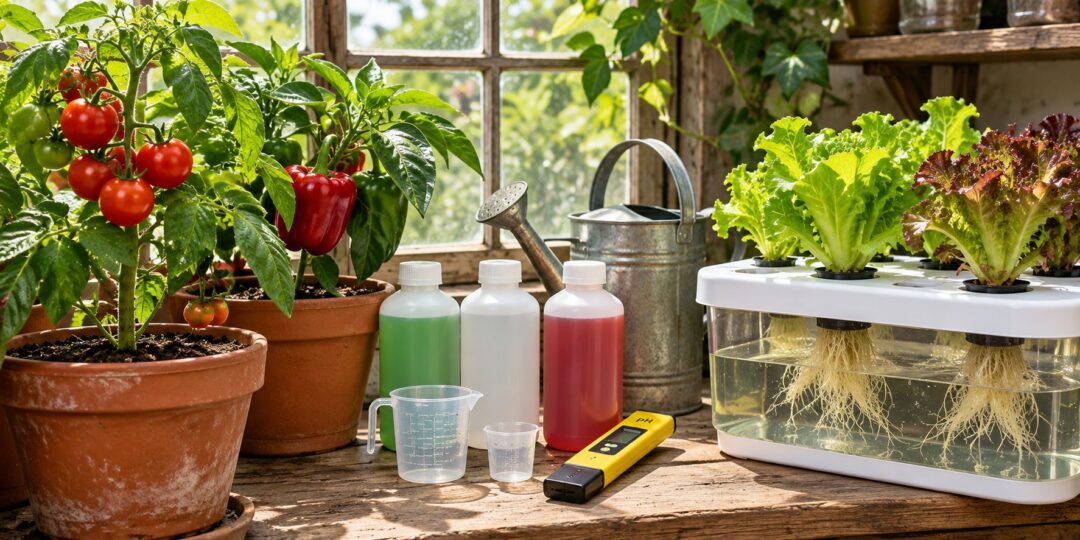
Feeding plants well is one of those skills that separates a garden that just survives from one that truly thrives, and the products you choose make a real difference. Growers who want a proven system often turn to established brands like Humboldt County’s Own, whose humboldt county nutrients include high-performance base nutrition systems, bloom boosters, and specialized additives for soil, coco, and hydroponic growing. Their formulations are built to help growers support healthy plant development, enhance quality, and optimize growth and yields through every stage, from early vegetative growth to flowering and fruiting.
Whether you’re growing tomatoes in raised beds, herbs on a windowsill, or lettuce in a homemade hydroponic setup, the basic rules of plant nutrition are the same. Plants need the right elements, in the right amounts, at the right time, in a form their roots can actually take up.
In this guide, I’ll cover what plants really need, how to read a fertilizer label, how feeding changes between soil, coco, and hydroponics, and how to use base nutrients, bloom boosters, and additives without overdoing it.
What Plants Actually Need
Plants need 17 essential elements to complete their life cycle. Carbon, hydrogen, and oxygen come from air and water, and the rest come from your soil, growing medium, or nutrient solution.
Primary Macronutrients: N, P, and K
Nitrogen (N) drives leafy, green growth and is a building block of chlorophyll and proteins. It’s the nutrient plants need most during vegetative growth, which is why leafy greens love it.
Phosphorus (P) is central to energy transfer inside the plant and supports root development, flowering, and seed formation. Potassium (K) regulates water movement, strengthens stems, and plays a big role in fruit quality and disease resistance.
Secondary Macronutrients
Calcium, magnesium, and sulfur are needed in smaller amounts than N, P, and K, but they’re still essential. Calcium builds strong cell walls, and a shortage is behind problems like blossom end rot in tomatoes and peppers.
Magnesium sits at the center of every chlorophyll molecule, so a deficiency often shows up as yellowing between the veins of older leaves. Sulfur helps plants build proteins and gives crops like onions and garlic their distinctive flavor.
Micronutrients
Iron, manganese, zinc, copper, boron, molybdenum, chlorine, and nickel are needed only in tiny amounts. Even so, a shortage of any one of them can stunt growth or cause strange leaf symptoms.
In soil, many micronutrients are already present. In soilless mixes and hydroponics, though, your nutrient product has to supply every one of them, which is why complete, well-balanced formulas matter so much indoors.
How to Read a Fertilizer Label
The three numbers on a fertilizer label, such as 10-10-10 or 2-2-6, show the percentage by weight of nitrogen, phosphate, and potash. A product labeled 0-6-4, for example, contains no nitrogen, 6 percent phosphate, and 4 percent potash.
Higher numbers don’t automatically mean a better product. They simply mean the product is more concentrated, so you use less of it, and liquid nutrients often have low numbers because they’re designed to be diluted in water.
Always check the rest of the label for secondary nutrients, micronutrients, and other ingredients like kelp or humic acids. These can tell you far more about how complete a product is than the three big numbers alone.
Feeding Through Different Growth Stages
Plants don’t need the same nutrients all season long. Matching your feeding to the growth stage is one of the easiest ways to improve results.
Seedlings and Young Plants
Seedlings live off the energy stored in their seeds at first, so they need only very light feeding. Too much fertilizer at this stage can burn tender roots, so I start at a quarter to half strength once the first true leaves appear.
Vegetative Growth
During vegetative growth, plants are building leaves, stems, and roots, so they need plenty of nitrogen along with balanced amounts of everything else. This is the stage where a grow-focused base nutrient does most of the work.
Flowering and Fruiting
When plants start flowering, their demand shifts toward more phosphorus and potassium and somewhat less nitrogen. Too much nitrogen during this stage can lead to lush leaves but fewer flowers and fruit.
This is where bloom formulas and bloom boosters come in. Used properly, they help plants put their energy into flowers, fruit, and overall quality.
Soil, Coco, and Hydroponics: How Feeding Differs
Soil Gardening
Healthy soil is a living system full of organic matter, microbes, and stored nutrients. Because soil buffers nutrients and pH, it’s the most forgiving medium for beginners.
Before you add anything, consider a soil test through your local Cooperative Extension office. It tells you exactly what your soil is missing, so you’re not guessing or adding nutrients you already have plenty of.
Outdoors, most vegetables do best in slightly acidic to neutral soil, generally around pH 6.0 to 7.0. Compost, well-rotted manure, and targeted fertilizers can then fill any gaps the test reveals.
Coco Coir
Coco coir, made from coconut husks, holds water well while staying airy, which roots love. It contains very few nutrients of its own, so you have to feed it much like a hydroponic system.
Coco also tends to hold onto calcium and magnesium, so many growers use buffered coco and a nutrient program with extra calcium and magnesium. Most growers aim for a pH of roughly 5.8 to 6.5 in coco.
Hydroponics
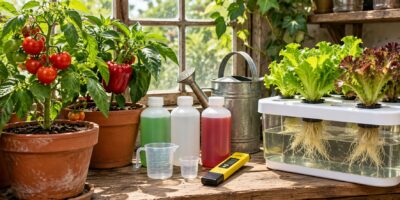
In hydroponics, plants grow with their roots in water or an inert medium, and every nutrient comes from your solution. That gives you precise control and fast growth, but it also means mistakes show up quickly.
Most hydroponic crops do best with a nutrient solution pH of around 5.5 to 6.5, where nutrients stay most available. An inexpensive pH meter and an EC or PPM meter, which measures the strength of your solution, are essential tools.
Types of Horticultural Products and How to Use Them
Base Nutrients
Base nutrients are the foundation of any feeding program and supply the macronutrients and micronutrients plants need every day. Many come as two-part or three-part systems, which let you adjust the ratio of each part as plants move from vegetative growth to flowering.
Multi-part systems exist partly because certain elements, like calcium and sulfates, can react and become unavailable when concentrated together in one bottle. Keeping them separate until they’re diluted in water keeps everything available to the plant.
Bloom Boosters
Bloom boosters are concentrated supplements, usually high in phosphorus and potassium, used during flowering and fruiting. They’re meant to be added on top of your base nutrients rather than replacing them.
More isn’t always better with bloom boosters. Excess phosphorus can interfere with the uptake of other nutrients like zinc and iron, so follow the label and the manufacturer’s feeding schedule closely.
Specialized Additives
Additives cover a wide range of products, including kelp and seaweed extracts, molasses and carbohydrate supplements, humic and fulvic acids, beneficial microbes, and silica. They’re designed to support specific aspects of plant health, such as root growth, stress tolerance, or soil biology.
Additives can be useful, but they work best on top of a solid base program. If plants are showing problems, check your basics like pH, feeding strength, light, and watering first before adding something new.
A Closer Look at Humboldt County’s Own
Humboldt County’s Own is a good example of a family-owned company built around both hands-on growing and plant science. It began in the early 1990s when founder Phil Leavitt started formulating nutrients for his own garden in a tractor shed in Northern California, and neighbors soon wanted to know what he was using.
In 2002, the Leavitts opened Eel River Hydroponics in Fortuna, California, and began sharing their formulations more widely. Today the company is run by Phil’s son Nathan, and its products reach growers nationwide.
Their Deep Fusion line is a three-part base system, with Grow (2-2-6), Bloom (0-6-4), and Micro (5-0-1) that growers adjust as plants move through their life cycle. The base nutrients include molasses and kelp, and the Micro bottle supplies two forms of chelated iron, EDDHA and DTPA, so iron stays available across a wider range of pH conditions.
Alongside their base nutrients, they offer bloom boosters such as Sonic Bloom (0-51-34) and Crystal Burst (0-15-15), as well as a range of specialized additives. Everything is mixed and bottled in-house in Humboldt County, every batch is numbered for traceability, and finished products go to an independent lab for regular testing.
They also provide a feeding schedule and nutrient calculator, which is exactly the kind of support that helps growers dial in the right amounts at each stage. Whichever brand you use, that kind of guidance makes a big difference.
Common Feeding Mistakes to Avoid
- Overfeeding: too much fertilizer causes nutrient burn, with crispy brown leaf tips and edges, and can damage roots.
- Ignoring pH: when pH drifts too high or too low, plants can’t absorb nutrients even if they’re present.
- Mixing products in the wrong order: with multi-part systems, add each part to water separately and stir between additions.
- Skipping flushing or runoff checks: salts can build up in containers, so check runoff and flush with plain water when needed.
- Using bloom boosters too early: save them for flowering and fruiting, when plants actually need the extra phosphorus and potassium.
- Over-applying outdoors: excess fertilizer can wash into streams and groundwater, so feed only what your plants and soil test call for.
Reading Your Plants for Deficiencies
Plants often tell you what they need through their leaves. Mobile nutrients like nitrogen, phosphorus, potassium, and magnesium can move from old leaves to new growth, so their deficiencies usually show up first on older, lower leaves.
Immobile nutrients like calcium, iron, and boron can’t move easily, so shortages typically show up on new growth. Yellowing new leaves with green veins, for example, often points to an iron problem, which is frequently caused by a pH that’s too high.
Before reaching for another bottle, check your pH and feeding strength. Many apparent deficiencies are really lockout problems caused by pH or salt buildup rather than a true lack of nutrients.
Indoor vs Outdoor Gardening: Key Differences
Indoor gardens rely completely on you for light, water, and nutrients, which makes precise feeding more important. Containers and soilless media also have limited reserves, so plants depend on regular, well-balanced feedings.
Outdoor gardens benefit from natural soil life, rain, and larger root zones, so they often need less frequent feeding. Building healthy soil with compost and organic matter over time reduces how much you need to add each season.
In both cases, start with lower doses than the label maximum and increase gradually while watching how your plants respond. It’s much easier to fix underfeeding than to undo damage from overfeeding.
Final Thoughts
Good plant nutrition comes down to understanding what your plants need, matching your feeding to their growth stage, and choosing quality products that fit your growing method. Whether you grow in garden soil, coco, or a hydroponic system, a consistent program and careful observation will take you a long way.
Start with a solid base nutrient, add bloom boosters and additives thoughtfully, keep an eye on pH, and let your plants guide your adjustments. Do that, and you’ll see healthier growth, better quality, and bigger harvests season after season.
You may also like: 
Cleaning the Chimney: A Complete DIY Guide for Homeowners
How To Build A Small Root Cellar In Your Backyard With Only $400 (Video)
The Fall Homestead Checklist: 10 Tasks to Finish Before Winter
The #1 Rule to Make Your Woodstove Use Less Wood
How to Build a Pioneer Potato Clamp
Ranking the Best (and Worst) Firewood in the U.S.A
Homemade Window Cleaner: Simple Recipes That Actually Work