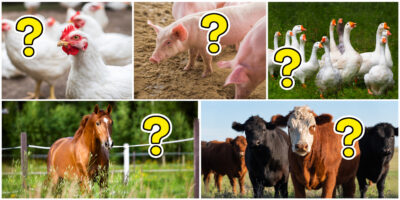
If you ask a couple of homesteaders what animal gives you the cheapest meat, you’ve got yourself on a battleground. It’s one of the hottest debates I hear, and everybody seems to have a different answer.
I want to settle things for good. One and for all. The only thing is that doing this is not that easy…
Your cheapest option might be somebody else’s most expensive mistake. Let that sink in.
Feed prices change from county to county. So do processing fees. Your land, your climate, and what you’ve already built make a difference, too.
But some animals will always be a better choice than others. This is what I’m focusing on here.
So, if you want to keep livestock and have cheap meat, these should be your first choices.
How Much Does the Meat Really Cost?
Before you decide an animal produces cheap meat, look at what you spend raising it and how much meat you get back.
Add up the cost of the animal, feed, supplies, and butchering. Include a little for housing and equipment, too. Then divide that total by the pounds of meat you actually put in your freezer.
That’s your cost per pound. And remember, your time matters too, even if you don’t put a dollar amount on it.
Cornish Cross Chickens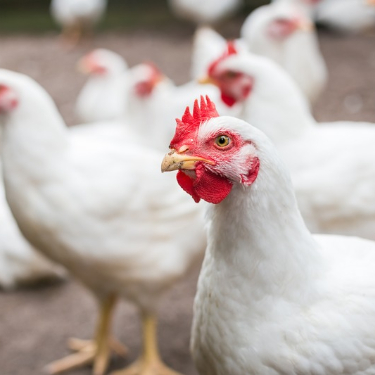
I keep a variety of chickens, but Cornish Cross are the ones I choose when I want chicken in the freezer without waiting half the year. In just six to eight weeks, they get big enough for processing. They turn feed into meat far more efficiently than ordinary laying breeds.
Now, one interesting thing is that when it comes to chickens, the feed is where the money goes. I plan the whole batch before the chicks arrive: feed, brooder heat, a safe place to grow, and a processing date.
Here’s a useful reality check. One cost breakdown for raising ten meat chickens estimates 63 pounds of dressed chicken from ten chicks, allowing for one loss. The cost comes to $3.54 per pound, including processing and a share of equipment, but not labor.
I’ve been growing chickens for some time now. I wouldn’t call myself an expert yet, but I know a thing or two.
After paying too much for feed, here’s how I managed to cut feed costs dramatically. It’s incredibly easy and I want to show you exactly how I did it.
First of all, I grew a mini-pasture for my flock. If you ever noticed your chickens eating random plants while they were roaming free, be sure they’ll love this grass patch idea.
I planted some well-known “chicken plants” such as alfalfa sprouts, borage, lemongrass, or dill. These offer chickens a lot of nutrients they need that can’t be found in dry feed.
Also, this fresh addition of sprouts and greens boosts the chickens’ immune systems, supports organ health, and deters pests such as mites. This means less money spent on medications too.
Do you know what I noticed after just a couple of weeks of this diet? The yolks of my eggs had a beautiful deep yellow color and a richness I’ve never seen before.
Also, simply looking at how happy my chicks were to eat fresh food convinced me that this was the right move.
Obviously, to start doing this, you need the right plants. And to get the right plants, you need the right seeds. This is where I get mine.
All of these chicken-friendly plants are hardy and low-maintenance. Plant in spring for summer foraging, or in late summer for fall and winter greens.
👉 Ready to make your chickens healthier and more productive? See more here.
Meat Rabbits
If you’ve only got room for a few hutches, rabbits are a good choice. They can live in small spaces and good meat breeds such as New Zealands and Californians grow quickly. A typical fryer rabbit reaches around five pounds live weight at about ten weeks.
But what makes rabbits so valuable is, well, their ability to multiply fast. With healthy breeding stock, you can raise several litters a year using the same cages. That means you only pay once for the setup and then you get more meat. This is good business if you ask me!
One thing to keep in mind is that breeding rabbits need pretty considerable feeding even when they don’t have a litter growing. This is how they get so big. They eat a lot.
The cages, hay, pellets, and summer cooling cost too, even if you only pay once.
Feeder Pigs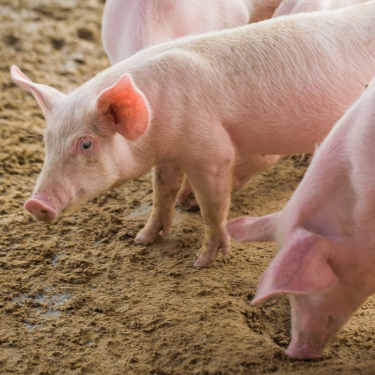
They are a top choice among American homesteaders because you can keep one pig or two pigs without much space and they produce a LOT of meat.
A pig can put an impressive amount of pork in your freezer. Never underestimate it.
Also, buying a young feeder pig and raising it to market weight lets you skip the year-round cost of keeping breeding stock.
A 250-pound pig, for example, might give you around 125 pounds of pork after slaughter, chilling, and cutting, depending on the cuts you choose.
Pigs eat a lot, and feed usually makes up the biggest part of the bill. You’ll also need good fencing and maybe a butcher who can take the animal when it’s ready. In case you are not planning to do the job alone. Even if you don’t need a butcher, you’ll still need some help. Pigs are big and powerful animals.
So, what do you get from one pig? To start with, pork belly, pork shoulder, pork chops, or tenderloin. Amazing right?
The only problem is that a single pig can occupy your freezer all winter long…
Having food is great, but when you have too much and nowhere to store it, this is where things might start bothering you.
Now, you might think that if you manage to have that much meat, you could easily buy a new freezer. Fair. But that’s some good money you could have used otherwise.
Let’s change the perspective a little bit and see things from a more self-sufficient point of view.
Big companies would die to make you buy one more useless product. They’re doing their best to trick you at this exact moment.
Personally, I don’t like the thought of that. It makes me feel like my privacy is being invaded.
This is why I started to look in the past. Literally, people from 100 years ago had no freezer. But they had pigs, they had chickens, they had livestock they used to butcher.
The thing that was different was the preservation method.
Smoking meat was a big thing back then. So why not use this good old tested method and preserve your food in a more frugal way?
To start doing this, all you need is a smokehouse. Yeah, I know that telling you this right now might sound like an impossible task. But in reality, this is far from the truth. Building your own smokehouse is one of the simplest DIY builds you could try on a homestead. And the benefits of owning such a thing surpass any type of effort.
Also, you might already have half of the materials needed in your backyard.
If you want something solid that is simple to build and will last you for years, you can try the Amish Smokehouse Build. This is their traditional smokehouse. They still use it today and its best feature is the compact size and how well it keeps the smoke inside.
👉 You can see the full instructions for the Amish Smokehouse here.
It’s a full guide with all that you need for the build, from detailed instructions to photos.
But if you feel like a video would help you more than written instructions, no problem. Here, you can see how the smokehouse is built live by an ex-Amish who left the community and started homesteading on his own.
See more below.

Broad-Breasted Turkeys
One backyard keeper shared the costs of raising three turkeys in 2026: $221.61 total, or $4.10 per pound. The keeper said the birds weren’t cheaper than store-bought turkey, but the quality of meat and the way they lived made it worthwhile.
Holiday grocery prices are insane during this time… Especially for meat.
Broad-breasted turkeys give you more meat per bird than chickens, and they grow much faster than heritage birds.
Commercial turkeys typically dress out at around 80% of live weight. But that’s a whole carcass, though, not a pile of boneless turkey breast.
Keeping them is not that expensive, but you’ll need a serious coop.
And when I say serious, I really mean it. Turkeys are not like chicken. These birds are big and they need space.
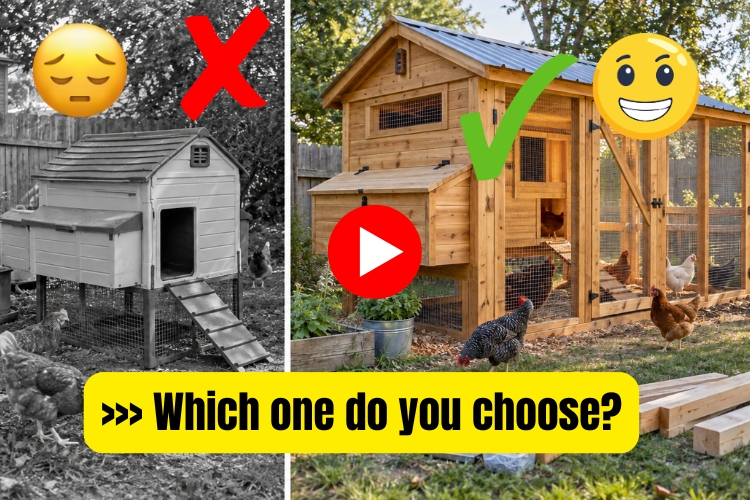
The thing is that no matter what birds you keep, the coop makes a difference. I know I’ve told you this story before, but one time I needed a new coop and since I didn’t want to build a new one I decided to take the most popular shortcut and order one online.
What could go wrong?
A lot of things…
My “Temu coop”, as I like to call it, was one of the most disappointing purchases of my life. It was cramped, and the plastic was so bad. One storm and the coop got destroyed.
In the end, I still had to build my coop. But now, I’ve had this coop for three years and it’s amazing. During these years, I modified it however I liked and now it’s basically an upgraded coop that is easier to clean and has more space for my birds.
If you want to build the perfect coop, the secret is simple. You need to adapt it for your yard and for your birds. Doing this is easier when you have the right plans for it.
Here, you can find some incredible plans and step-by-step instructions for various backyard buildings, from sheds to gazebos and even chicken coops. They’re all made by experts and the best thing is that you can build them however you want.
If you need more space, they are made in such a way that you can modify everything easily if you want to add a new feature like I did, again, easy work.
Click here and see how to build the most durable chicken coop.
Pekin Ducks
These fellas are some of the cutest birds you could possibly have around your homestead. They’re silly, and they always make me happy.
But there are some downsides. These ducks are very, very messy. You’ll have to work a lot.
The brighter side is that they grow quickly. And they are a great source of meat if that’s what you’re looking for. Also, they have good eggs.
On a regular homestead, you can expect Pekins around 6 to 7 pounds live weight at 7 to 8 weeks!
Ducks dress out at roughly two-thirds of their live weight, so that could mean about four to five pounds of dressed bird, bones included. Not bad for such a short growing season.
So, a strong candidate for anyone who likes duck meat.
Geese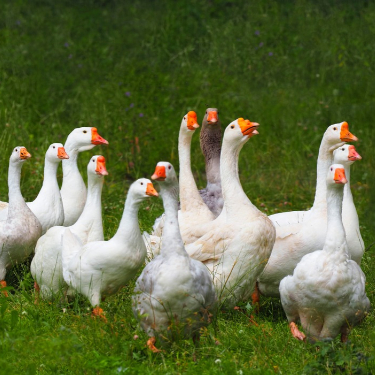
This list wouldn’t be complete without the “evil cousin” of ducks.
Here’s the biggest advantage these birds give you when it comes to money. Most meat birds rely heavily on the feed you buy. But not Geese. On good pasture, they can get much of their food from grazing. If you’ve got grass to spare, this will cut your feed bill by half.
Of course, you can’t just turn goslings loose and expect them to raise themselves. Young birds need proper nutrition, and grown geese need extra feed when the grass runs short. There’s still shelter, fencing, and predator protection to think about.
Meat breeds such as Embden and utility Toulouse geese can produce huge birds that will cover your meat needs for a good price.
Hair Sheep
If you want to start raising sheep, you need a healthy pasture and some solid fencing. Once you have these two, a few lambs raised through the grazing season are a good idea financially.
But if you need to buy most of their feed, I would advise you yo not to get into this. It will cost you too much.
Katahdins are the best ones to start with. They shed their coats naturally, so you don’t have to shear them every year.
Something that might cost you is parasite prevention. They can cause serious trouble, so you need to take that into account.
For a beginner, buying feeder lambs may be simpler than keeping breeding ewes all year. A 130-pound lamb, for example, can give you around 48 pounds of take-home cuts.
So Which One Is Actually Cheapest for You?
If I were you, the first thing I’d check before getting any animal on this list is the cost of feed and the price of the livestock itself.
Write down those numbers, estimate the pounds you’ll take home, and see what each pound costs. If you already own a coop or pasture fence, count only a reasonable share of that expense, not the full price again.
Then think about what your household will actually eat. Cheap meat doesn’t help if it sits in the freezer because nobody wants it.
You should also read: 
7 Low-Maintenance Animals That Thrive on Small Homesteads
Full Guide: How to Barter Just Like the Amish (Video)
The $0.5 Livestock Feed That You Can Make at Home
Should You Paint Your Chicken Coop Blue? Here’s the Truth