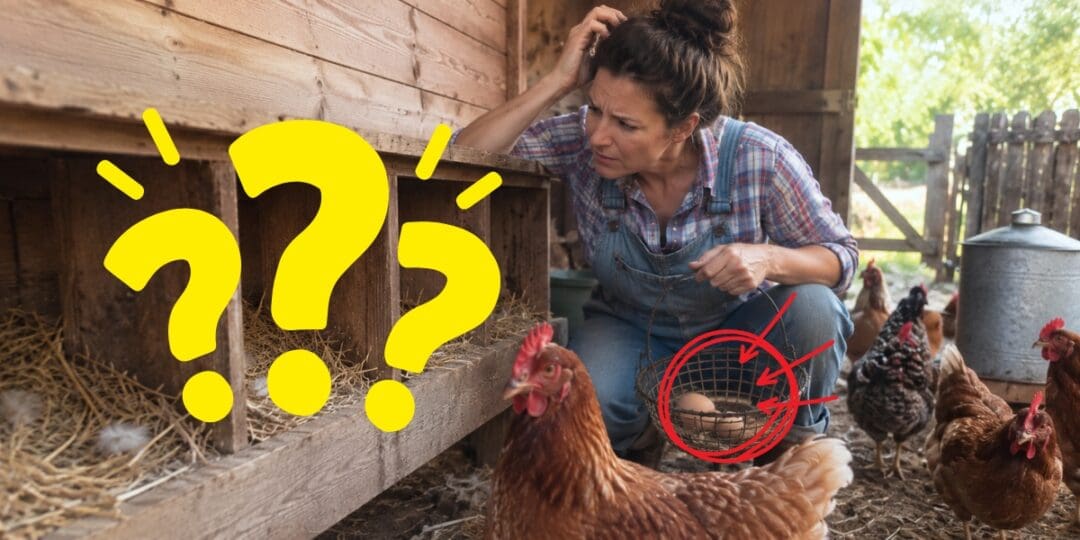
You wake up and it’s a beautiful morning. As usual, you grab your basket or bucket and go to the chicken coop to gather the eggs. You lift the nest box lid, and there is nothing in there.
The same thing keeps happening days in a row and you can’t understand what’s wrong. Why are your hens suddenly not laying eggs?
The reality is that there are a couple of common reasons that can explain this and I am here to tell you more about them and also offer you some solutions.
Most of these things are very easy to identify once you know what to look for.
So, here’s why your hens stopped laying eggs! Ready?
What a Normal Hen Actually Gives You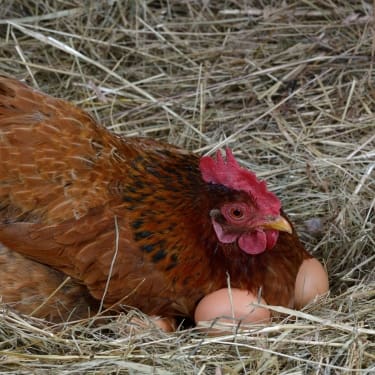
Start here, because sometimes the hens are fine and the expectation is off.
A pullet lays her first egg around 18 to 20 weeks. Heritage and heavy breeds take longer, often 24 weeks and sometimes closer to six months, so a quiet 22-week-old bird is usually just young. She peaks around 35 weeks at better than nine eggs in ten days, holds that for a couple of months, then eases off.
Breed matters more than anything you do. A White Leghorn averages about 265 eggs a year. Most backyard breeds come in well under that, and the fluffier and fancier the bird, the worse she usually lays.
If you want to know everything about raising chickens, this is one of the most valuable and most complete resources out there.
It has everything you need, from what breeds to choose to how to set up the coop properly or how to take care of sick hens.
👉 Check it out here and see if it might help you on your homesteading journey
Three Questions That Narrow It Down
Did the whole flock quit, or just one hen? A whole flock points to light, heat, water, feed, or illness. One bird points to broodiness, molt, age, or a nest you have not found.
Was it overnight or over a few weeks? A slow fade in late summer or fall points to day length or molt. An overnight stop points to water, a bad scare, or sickness.
Are there feathers on the floor? Feathers everywhere means molt. Bare patches in one spot mean something else.
Always Start by Searching the Yard
This is one of the most common things that happens when you start to notice that there are no more eggs where they were supposed to be.
Sometimes your hens never stopped laying eggs in the first place; instead, you just stopped finding them.
Most of the time this happens when your hens decide to lay their eggs in some other place. I once lost track of a hen and after two weeks I found 19 eggs behind a stack of feed bags. So shut the flock in the run for two or three days and see what shows up. If the eggs come back, you have a hidden nest to find.
Here is why she does it, because this surprised me. A hen gets a narrow window to lay. Her hormones start the nest hunting an hour or two before the egg is ready, and if she cannot settle into a box in that window, the urge passes and she drops the egg wherever she stands.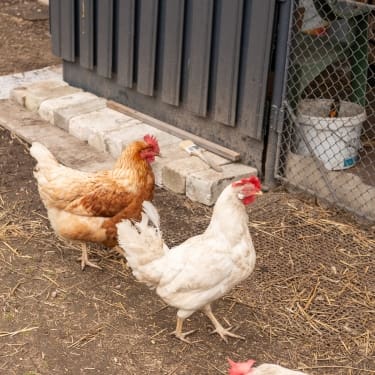
So anything blocking her at the wrong moment sends that egg elsewhere. Too few boxes, a bossy hen parked in the only good one, and so on.
Then she remembers the spot that worked. To break the habit, keep them shut in until mid-morning since most hens lay before noon, add a box, and darken it with a feed sack.
Shell fragments or dried yolk on a beak mean an egg eater instead, and snakes, skunks, and rats take their share too.
In case you’re struggling with predator attacks, this is the first thing you need to sort out.
Besides killing your chicken, the presence of predators stresses them out and makes them lay fewer eggs. Your flock is aware something is not wrong and that they are in danger. This creates a huge amount of stress for them.
👉 Click here and see how to make predators never cross your property ever again!
You’ll find two types of solutions and you are the one choosing what works best for you.
Some solutions are harmless and just make the predators understand that your property is dangerous and they should stop messing with you, and the other path is the definitive solution that literally makes them disappear for good.
The Two-Minute Check That Tells You Who Quit
You can pick up a hen and tell whether she is laying right now. Tuck her against you with her head pointed down so she settles, then feel just below the vent for two small pointed bones, called the pubic bones.
A laying hen – Those bones sit at least two finger widths apart and feel flexible, and her vent looks large, moist, and a little oblong.
A hen who has quit – The bones sit one finger width apart or less and feel stiff, and her vent looks small, dry, and puckered up.
Her legs tell you even more. A yellow-legged breed like a Rhode Island Red, Leghorn, or Wyandotte borrows that pigment to color her yolks, so the longer she lays, the paler she gets. She fades in order: vent first, then the eye ring, ear lobe, beak, bottom of the foot, shank, hock, and the tops of the toes last.
When she stops, the color returns in that same order. So if one hen has bright yellow legs while her sisters look washed out, she has been off the job a while and you found the hen you were looking for. But remember that this one will not work on white or slate-legged birds.
Short Days Aren’t for Egg Production
Hens can read the direction daylight is moving and this makes a big difference in egg production.
Starting 22 June every year, the days start to shrink and this affects hens and slows down egg production. When you want the maximum amount of eggs, the day length has to be above 12 hours, and 14 to 16 hours works best.
So, when winter is near, all you have to do is put a light on a timer. The folks at Oregon State University Extension point out that it only needs to be bright enough to read a newspaper by, and the bulb type does not matter. Set it on the morning end so your birds still roost at natural dusk, and once you start, stay with it, because even a single day off knocks production back.
Letting them rest through winter with no light is fine too. That is what I do with my older hens since they are more tired and produce fewer eggs anyway.
If you want to be fully off-grid, you can also do things like the Amish and make your own coop lamps. These are basically candle or oil lamps you can use inside your coop. The only thing you need to be careful about is that you need to place them somewhere up on the walls so the hens have no chance of tipping them over.
They use no electricity and the fact that you can make them yourself is a big step toward a self-sufficient homestead.
If you want to see how to make these lamps and also other Amish lighting techniques and devices, you can find full instructions here.
Be Careful About Molt
Once a hen passes about 18 months, she molts every fall. She drops her old feathers and grows a new set. It’s normal for laying to stop while that happens, because feathers are almost pure protein and she is not able to also build the eggs. All of her resources are focused on growing the new set of feathers.
This usually lasts between eight and sixteen weeks. Some hens finish fast, while others are still growing feathers well into December.
You cannot rush it, but hopefully you can make it easier. Switch to a feed in the 20 to 22 percent protein range while she regrows, then go back to layer feed once the new feathers fill in. Go easy on handling too, since pinfeathers are tender.
A Broody Hen Can Stop Your Entire Coop from Laying 
A broody hen flattens herself in the box, puffs up, growls at you, and refuses to move. If you try to slide a hand under her, you will feel a hot bare patch on her breast where she pulled the feathers out herself.
This aggressive stance might scare the other hens and stop them from using the boxes.
Never let eggs accumulate in the nest because this triggers her. Also, if she’s already settled in, lift her out and block the boxes for several days. A crate with a wire bottom works too, since air moving under her cools her off. She gives it up inside a week or two.
Too Much Heat
Everybody talks about how cold affects hens, but heat is much worse for a laying flock. Once the temperature in the coop reaches past 85°F, hens cut back on feed to hold their body temperature down, and less feed means fewer eggs.
Also, the heat makes them pant heavily and this throws off the balance a hen needs to build shells. So, during hot summers you might notice the shells are thinner, and the eggs break more easily.
The solution is to keep the run shaded. Protect the waterers from the sun, prop your vents to move air across the roost, and feed in the cool hours since digesting a full crop makes body heat.
Electrolytes help too, but get them going before the hot spell hits. They do very little for a bird who is already down.
One thing that helped me big time was using an AC in the coop.
Obviously, I am not talking about your basic AC, but you can make a DIY AC that works incredibly well for small spaces and rooms.
I have one in the coop, and I also have another one that I move around depending on what I’m doing. If I have work to do in the shed, I take it with me, or I simply keep it in my kitchen when I am cooking and it gets very hot.
Click on the video below and see more info about how to build this device →

Not Providing Enough Water
This is one detail even experienced homesteaders miss, but it’s the fastest way to lose eggs on your homestead. A hen who goes even a few hours without fresh water can quit for weeks afterward.
In summer, watch the temperature of the water itself. A hen’s body runs around 105°F. If the water is warmer than that, the hen will simply stop drinking it.
Winter is also risky. A waterer that freezes overnight leaves your whole flock thirsty until next morning. So break the ice twice a day or use a heated base.
Also, make sure you keep the container clean too. Algae and fouled water make your hens drink much less water than they really need. 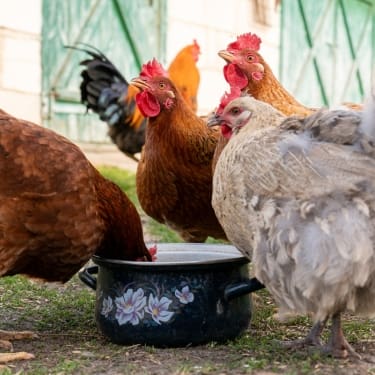
The best thing you can do is change the water daily or even more times per day in the summer. Unfortunately, this can get complicated if you live off-grid during a drought. Hot summers when drought alerts are active are the most dangerous. You never know for how long you’ll have water. And maybe you have a well, but it can go dry. Or you have some water stored in some barrels, but once again that water will not last forever.
So, what can you do when water becomes your biggest concern? What can you do when the lack of water is your biggest fear?
This has been a huge problem in the homesteading community, but this is a community of resourceful people who don’t give up. This is a community that finds solutions, and this is how the Water Freedom System was born.
This is a clever device that is as resourceful as the community that created it. The mechanism it uses is simple: it pulls the water that is present in the air around it and turns it into water. And the thing is that if you’re not living in the middle of the desert, there is a degree of humidity in the air. So, the Water Freedom System takes advantage of that and helps you get free water.
Compared to a regular dehumidifier you can get from Amazon, this one is built to be used outside. And also, it’s bigger because it is created to gather considerable amounts of water.
From everything I found on the market, this might be the most efficient solution to never have water problems during the summer.
Parasites
Nothing slips past you as easily as parasites, because the birds look normal until the problem is bad.
Northern fowl mites live on the bird and gather around the vent. What you have to do is part the feathers and look for specks moving fast, plus black grit at the base of the shafts.
Then you have red mites. These hide in coop cracks by day and feed at night, so check the roost bar ends after dark with a flashlight. Treat the birds and the coop together, then again 7 to 10 days later, since mite eggs that survive the first round hatch and start it over.
Also, worms are a huge problem. You can’t see them and they drain a hen from the inside. The only sign is a bird who eats well and stays thin. For this, your vet can run a fecal sample.
Older Hens
Usually, a hen lays well for about two to three years, and after that production falls off no matter what you do. Her molts come more often and last longer, and some older hens develop oviduct problems that end laying for good.
If you notice a hen that strains in the box, stands like a penguin, and passes nothing, then you might be dealing with an egg-bound hen that needs help the same day. In this case, you can give your hen a lower-body warm Epsom Salt Bath to relax her muscles. Also, you can gently apply some vegetable oil around the vent to make the egg come out easier.
If these things are not working and the hen doesn’t pass the egg in 24h this is a vet job.
You can’t fix an old hen, but you can prepare in advance. Add a few pullets every year or two rather and you should be good.
Keep a Two-Week Egg Log
Hang a small notebook and a pencil by the coop door. Every day when you collect, write down the date, the egg count, the high temperature, and anything odd such as feathers on the floor, a hen sitting tight in the box, a dog in the yard at 2 a.m.
Two weeks of that will give you the answer, and a year of it teaches you your own flock’s rhythm.
Final Thoughts
As you can see, many times, the answer turns out to be something ordinary. Shorter days, a molt, a broody hen, a frozen waterer, a hidden nest behind the feed bags.
So work through the simple things in order before you let yourself worry. A hen who takes a break is doing what her body was built to do, and she comes back on her own once whatever stopped her clears up.
You may also like: 
Should You Paint Your Chicken Coop Blue? Here’s the Truth
See How the Amish Make Their Famous Canned Chicken (Video)
What Happens When You Let Chickens Free Range Full Time
How $20 Can Feed Your Chickens All Spring
How to Raise Chickens for Reliable Egg Production