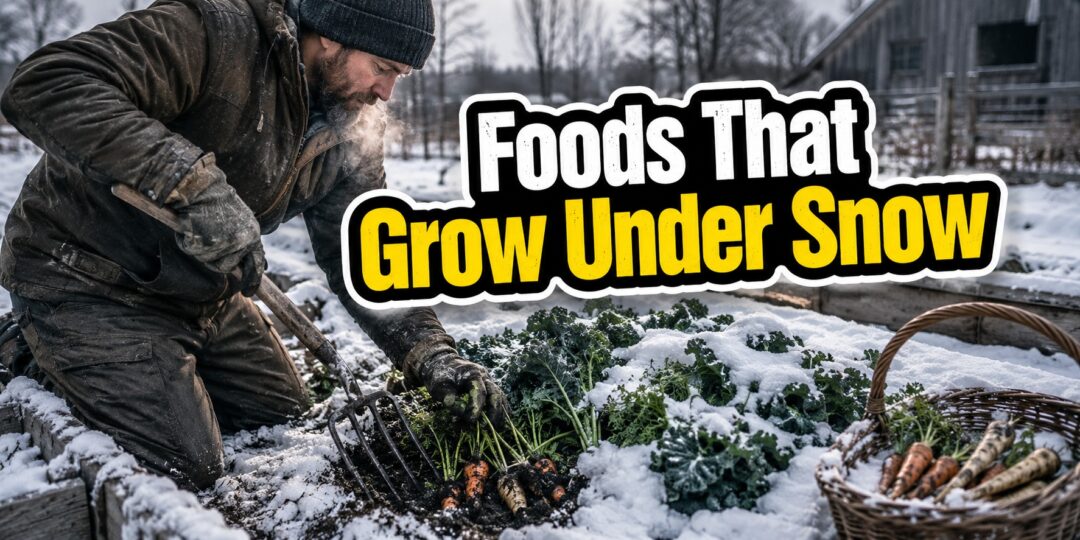
The first winter I left carrots in the ground past the first snowfall, I figured I had just lost the crop. I was wrong. When I finally dug through eight inches of snow in January, out came carrots that were sweeter than anything I had pulled in October.
That discovery changed how I plan my garden every fall. A handful of crops do not just survive under snow, they actually keep improving while the rest of the garden sleeps. This guide covers which foods do that, why snow makes it possible, and how to set your own garden up to keep feeding you well into winter.
How Snow Actually Protects Your Crops
Snow looks like the enemy of a garden, but it works more like a blanket. University of Minnesota Extension notes that snow is 90 to 95 percent trapped air, and the air pockets inside a snow layer hold steady around 32 degrees Fahrenheit no matter how cold it gets above the snow line.
That trapped air is what keeps soil and roots from freezing solid even when the thermometer drops well below zero. NDSU Extension reports that soil a foot deep can sit at 31 degrees while the air above measures just 4 degrees, and that gap is almost entirely the work of insulation from snow and the soil itself.
Snow does more than trap heat. NC Cooperative Extension points out that melting snow releases small amounts of nitrogen into the soil, moves moisture into the ground slowly instead of running off the way heavy rain does, and even helps knock back overwintering pest populations before spring.
Root Vegetables That Keep Growing Under Snow
Carrots are the classic example, and for good reason. Cold weather triggers root vegetables to convert stored starches into sugars as a natural antifreeze response, which is why a carrot pulled from under snow in January tastes noticeably sweeter than one harvested in September.
Parsnips do the same thing, arguably even better, since plenty of gardeners consider parsnips barely worth eating until they have taken a hard frost or two. Beets and turnips follow the same pattern on a smaller scale, with their tops dying back under snow while the roots stay alive and usable underground.
Jerusalem artichokes are the toughest of the bunch. Their tubers survive winters that would kill almost anything else in the garden, and I have dug them out of half-frozen ground in February with a mattock when nothing else in the garden was even visible.
Leafy Greens That Shrug Off a Snow Cover
Kale is probably the best-known cold season green, and Oregon State University Extension lists it among the vegetables that can withstand heavy frost below 28 degrees Fahrenheit, alongside spinach, collards, and Brussels sprouts. Cold exposure actually improves kale’s flavor the same way it does carrots, converting starches to sugar and mellowing out the bitterness that shows up in warmer weather.
Spinach is nearly as tough. The leaves may go limp and lie flat against the ground under a hard freeze, but the crown stays alive under snow cover and bounces back green and edible almost as soon as it thaws.
Corn salad, also called mache, might be the single hardiest leafy green available to home gardeners. It germinates in cool soil, tolerates temperatures well below what would kill lettuce, and stays harvestable under a foot or more of snow in most winters.
Alliums and Other Crops That Overwinter Well
Garlic planted in fall is built for this. It needs a period of cold dormancy to form proper cloves, and a covering of snow protects the shallow roots from the freeze-thaw cycles that cause most winter damage in the garden.
Leeks handle snow and hard frost about as well as any vegetable I grow. Their long, narrow growth habit sheds snow weight easily, and the white shank underground stays protected and harvestable through most winter conditions.
Brussels sprouts actually improve with cold exposure the same way kale does. A stalk left standing through a few snowfalls often produces sprouts with a noticeably milder, sweeter flavor than an early fall harvest gives you.
Helping Snow Do Its Job
Snow works best as insulation when it has help getting there and staying put. Oregon State University Extension recommends mulching beds with yard debris, cardboard, or newspaper before the cold sets in, since a mulch layer warms the soil and gives snow something to bind to instead of blowing off in the wind.
Row covers and cold frames extend what snow alone can do, especially for crops sitting right at the edge of their cold tolerance. A simple hoop tunnel with row cover fabric traps additional heat underneath while still letting snow pile on top, effectively doubling the insulation your crops get for the cost of some hoops and fabric.
If your winters bring more freeze-thaw cycling than steady snow cover, lean harder on mulch instead. Consistent insulation matters more than raw cold tolerance, since it is the freeze-thaw cycle, not the cold itself, that damages roots and heaves plants out of the ground.
What Snow Cannot Do
Snow is a helpful insulator, not a guarantee. NDSU Extension warns that roots can still be injured or killed once soil temperatures drop below 10 degrees Fahrenheit, and a thin or patchy snow layer will not prevent that in a genuinely hard freeze.
Dry soil going into winter is another vulnerability that snow cannot fully offset, since moist soil holds heat far better than dry soil no matter how much insulation sits on top of it. Watering your beds well before the ground freezes for the season gives whatever snow arrives something better to work with.
Harvesting From Under the Snow
Mark your rows before the first real snowfall, since a foot of snow erases every visual cue you were relying on all season. A few tall stakes at the row ends save you from digging blind or slicing into crops you cannot see.
Dig with a garden fork rather than a shovel when the ground is partially frozen, since a fork is less likely to cut through a root before you even know it is there. Brush snow away first with your hands or a broom rather than digging straight through it, so you are not compacting snow into ice on top of the bed.
Harvest what you need for the next few days rather than pulling everything at once. Vegetables left in the ground under snow keep better than almost anything you could store indoors, so the garden itself becomes your root cellar for as long as the ground stays workable.
Common Mistakes to Avoid
- Assuming all vegetables handle snow the same way; tender crops like lettuce and most herbs will not survive what kale and leeks shrug off
- Skipping mulch and expecting bare soil under snow to insulate as well as a properly mulched bed
- Letting soil go into winter bone dry, which undercuts the insulating value of any snow that falls later
- Harvesting an entire bed at once instead of digging only what you need, losing the natural in-ground storage snow cover provides
- Forgetting to mark rows before the first snowfall and damaging crops while digging blind later in the season
❄️ Keep Your Garden Feeding You – Even When the World Doesn’t
Growing food through winter is just one piece of true self-reliance.
Imagine knowing how to preserve harvests without electricity, build simple tools instead of buying them, collect and store water safely, make everyday household essentials from scratch, repair what breaks, and use the practical skills that helped families thrive long before modern conveniences existed.
The Lost Skills of Independence is packed with forgotten, step-by-step techniques that can help you become more resilient, save money, and rely less on fragile supply chains. Whether you’re a gardener, homesteader, prepper, or simply someone who values practical knowledge, it’s filled with timeless skills you can put to use immediately.
Inside, you’ll discover traditional methods for:
- Growing and preserving more of your own food
- Building useful projects with simple tools
- Making natural household products and everyday essentials
- Harvesting and storing water
- Cooking, heating, and living more efficiently off the grid
- Reviving forgotten techniques that still work today
If you enjoyed learning how snow can become an ally in the garden, you’ll love discovering hundreds of other practical skills that can make your home and family more independent all year long.
Final Thoughts
Snow is not the end of the growing season, it is a tool most gardeners never learn to use. The right combination of cold-hardy crops, a little mulch, and patience with a garden fork can keep you harvesting real food long after everyone else has put their garden to bed for the year.
Start small if this is new to you. Leave one row of carrots or a bed of kale in the ground this year, let the snow do its work, and see for yourself what a January harvest actually tastes like.
You may also like:
Join Our Official Facebook Group For More Homesteading Tips And Tricks
The Silent Stockpile Killer. Do You Have It In Your Pantry? (Video)
Organic Gardening: The Complete Guide to Growing Food Without Chemicals
How To Grow Food for a Year in Just 4 Square Feet
How Much Money I Saved in a Year By Growing My Own Food
How to Grow Sunflowers from Sunflower Seeds (Complete Guide)