
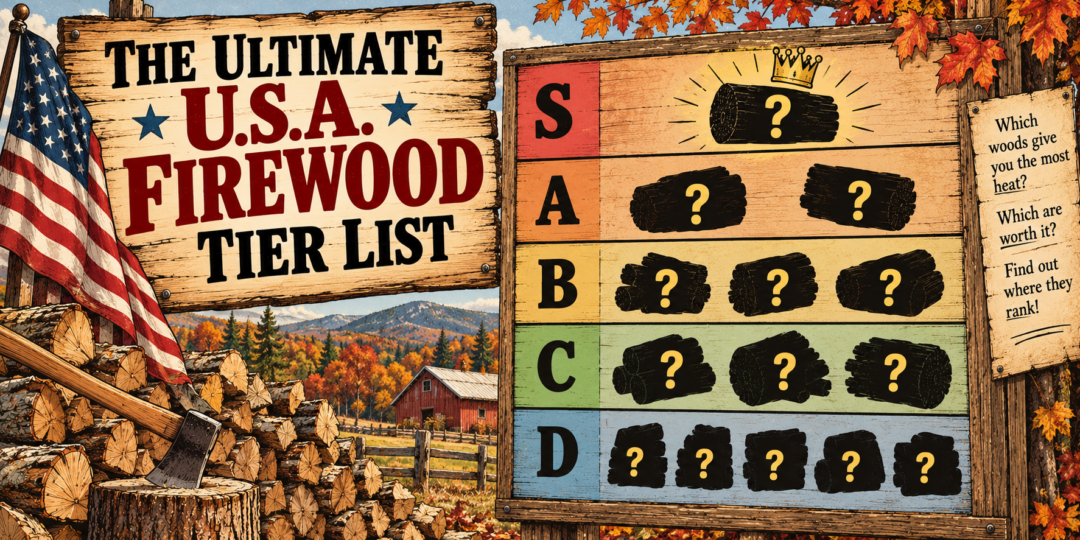
Buying firewood can be frustrating when you’re not sure what you’re getting. A load might look like a good deal, but after an evening of feeding the stove, the house still feels cold. It’s enough to make you wonder whether you bought the wrong wood or got scammed.
I’ve ranked these woods from worst to best based on how much heat they give you, how safe they are to burn, and what they cost. Those are the things I care about when I’m buying firewood, and I’m guessing you do, too.
Before we get into the rankings, though, don’t put off buying wood until the first cold snap. Once those storm forecasts start coming in, prices can jump 30 to 40%. By then, you’re stuck picking through whatever’s left on the lot.
So, get it sorted out while the weather’s still warm and the good wood is still cheap.
A Few Terms You’ll Want to Know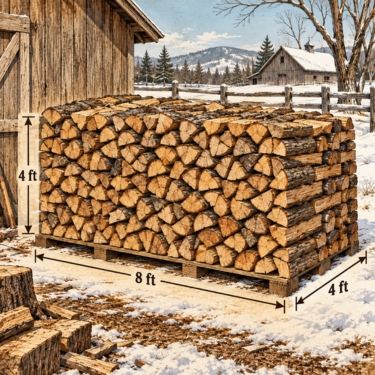
A few terms come up whenever you’re talking about firewood. They’re worth knowing before you compare woods or call someone about a load.
Cord: A full cord is a stack 4 feet tall, 8 feet long, and 4 feet deep. That’s 128 cubic feet altogether, counting the wood and the air between the pieces. It’s the standard measurement used for selling firewood.
Face cord: This stack is also 4 feet tall and 8 feet long, but it’s only as deep as the pieces are cut. Depending on their length, you might be getting just a third of a full cord.
BTU: This is how heat is measured. A rating of 24 million BTUs per cord tells you how much warmth a full cord of that wood can put out. A higher number means a hotter, longer-lasting fire.
Creosote: The tarry buildup inside a chimney that comes from burning wet or smoky wood. It can catch fire, so it isn’t something to ignore.
Where you live matters, too; use this list to compare what’s available around you rather than worrying about wood you can’t get.
Also, dryness matters more than the ranking. Utah State’s forestry extension points out that green wood can be half water by weight. Your fire has to use heat to boil that water off, and wet wood also leaves far more creosote in the chimney. Properly seasoned B-tier wood, burned in a clean stove, will serve you better than oak that’s still wet inside.
D Tier: Wood for When You Don’t Have Much Else
These woods will get you through a pinch, but I wouldn’t want to rely on them for a whole winter. They’re down here at the bottom for a reason.
Cottonwood
Being easy to split and usually free helps, because cottonwood doesn’t have much else going for it as firewood. It burns fast and can get punky and stringy. If one comes down on your property, use it during the milder parts of spring or fall. There’s no reason to waste it, but it wouldn’t be my first choice to buy.
Willow
Willow holds a lot of water and takes a while to dry. After all that waiting, you still end up with a smoky fire that doesn’t give you much warmth or leave good coals. I’d rather use it for garden stakes.
Poplar and aspen
Both are light woods that dry quickly and burn quickly. They’re fine for taking the chill off a spring morning, when you don’t need the fire going for hours. Try using them overnight, though, and you’ll find yourself adding wood every half hour.
Basswood
It catches easily, which makes it useful for kindling. You won’t get much heat or much of a coal bed from it, so there’s little reason to make it your main firewood.
As you can see, all of this wood is not the best at keeping a fire alive, but it’s amazing at starting it. And every expert homesteader knows that the way you start a fire is half the battle.
Fun fact: Even excellent, dry hardwood can burn badly if the fire never gets hot enough at the beginning…
So, knowing how to get the fire going is actually a huge part. The problem is that sometimes you don’t have the best starters or the best conditions. But if you take a step back and look at it, our forefathers used to start fires in the middle of the winter with the worst wood possible.
If you want to know more about how they were doing it and also see how to start a fire even in the pouring rain, click here.
| Wood | Heat (million BTUs/cord) | Seasoning | Splitting | Worth knowing |
|---|---|---|---|---|
| Cottonwood | ~16 | 6–12 months | Easy | Burns fast, can go punky |
| Willow | ~17 | 12 months | Easy | Smoky, weak coals |
| Poplar / Aspen | ~15–18 | 6 months | Easy | Shoulder season only |
| Basswood | ~14 | 6–12 months | Easy | Almost no coals |
C Tier: The Softwoods
I like having pine, spruce, and fir in the kindling box. They catch quickly and smell great while they burn. Relying on them for all your heat takes a little more thought, though.
Softwoods have plenty of resin, which pops and spits sparks as it burns. Without a screen in front of an open fireplace, one of those embers could end up on your rug. Softwoods also build up creosote faster than hardwoods. In one comparison, a chimney burning oak ended the season with roughly seventy-five percent less creosote than one burning pine.
Pine and spruce
Both are useful for getting a fire started, but they burn through quickly. You’ll go through a lot trying to keep the house warm, and spruce doesn’t leave much of a coal bed.
Douglas fir
Douglas fir is a better option for heating, especially out West, where hardwood can be hard to find. It puts out a good amount of heat for a softwood. There’s more smoke than I’d like, but in the Pacific Northwest it may be the best wood available to you.
| Wood | Heat (million BTUs/cord) | Seasoning | Splitting | Worth knowing |
|---|---|---|---|---|
| Pine | ~15–16 | 6–12 months | Easy | Sparks, creosote, use a screen |
| Spruce | ~15–16 | 6–12 months | Easy | Sparks, weak coals |
| Douglas fir | ~20–21 | 12 months | Easy | Smokes, but strong for a softwood |
B Tier: Wood You Can Count On
I’d be happy to have any of these stacked up for winter. They won’t give you the most heat on this list, but they’ll do the job for sure.
Silver and red maple
These are the softer maples. They split easily and burn cleanly. You just won’t get the same long burn you’d get from the hard maple we’ll get to in A tier.
Birch
Birch burns nicely and that papery bark is about as good as natural firestarters get. Don’t leave it sitting around in unsplit rounds, though, because it rots fast that way. Split it soon after cutting and stack it off the ground.
Elm
You’ll earn your heat splitting this stuff by hand. Its twisted, interlocking grain makes the job miserable. Once you’ve got it split and dry, though, elm burns steadily and leaves excellent coals.
Have a hydraulic splitter? No? Then it’s worth considering. If you live on a homestead and process your own firewood every year, a splitter is one of those tools that can pay for itself in saved time, saved effort, and a much wider choice of wood. This means you won’t always pay more money for the wood that is easier to process by hand.
If you don’t know what to choose, because yes, there are plenty of options, I want to make things easier for you.
This is a reliable wood splitter that sits in a comfortable price range. There’s no need to pay thousands of dollars if you want good results, and this splitter is the proof. This is exactly what makes it so popular across American homesteads.
Cherry
I’ve got a soft spot for cherry. The heat is moderate, but it’s easy to split and hardly smokes. Then there’s the smell it leaves in the house. I’d happily bottle that if I could, and I’m always pleased to have a stack of cherry around.
| Wood | Heat (million BTUs/cord) | Seasoning | Splitting | Worth knowing |
|---|---|---|---|---|
| Silver / Red Maple | ~19–20 | 12 months | Medium | Burns faster than hard maple |
| Birch | ~20–21 | 12 months | Medium | Rots fast if left in the round |
| Elm | ~20 | 12 months | Difficult | Brutal to split by hand |
| Cherry | ~20 | 12 months | Easy | Moderate heat, but a joy to work with |
A Tier: The Really Good Stuff
Most winters, this is the wood I’m burning. You get plenty of heat and coals that stay hot, without being hard on your stove or chimney.
Red oak
There’s a reason red oak is such a standby for American firewood. It burns hot and leaves coals that can still be glowing when you’re having breakfast. But you can’t rush the drying. Give it a year and a half to two years before it goes in the stove.
Sugar maple
This is hard maple, and you’ll notice the difference from the softer maples. It burns incredibly well, splits easily, and leaves excellent coals. I wouldn’t pass it up.
Beech
I’ll put it right up there with the best for heat. The coals last a long time, too. You’ll work harder to split it and wait longer for it to season, but it’s worth the trouble.
White ash
There’s a lot to like here. White ash splits easily, burns cleanly, and dries faster than oak. Sadly, the emerald ash borer has killed a lot of ash trees across the country. That does mean there’s plenty of cheap standing dead ash available right now, as long as you’re willing to go cut it.
This is the wood that warms your home while also cooking your food. If you’re living on a homestead and you’re still using gas, you’re missing out a lot, especially in the winter.
Why? Because heating your home while cooking is one of the best ways to save money and rely less on the system.
This is why I have an Amish stove. The Amish know very well what they’re doing and they are also incredibly efficient.
So, it’s easy to see why owning a stove that is also very good at keeping the room warm is one of the biggest wins of the homestead life.
For me, it’s one of the best investments I ever made.
| Wood | Heat (million BTUs/cord) | Seasoning | Splitting | Worth knowing |
|---|---|---|---|---|
| Red Oak | ~24–25 | 18–24 months | Medium | Slow to dry, be patient |
| Sugar Maple | ~25 | 12 months | Easy | Hard to beat for the price |
| Beech | ~27 | 18–24 months | Difficult | Tough to split, slow to season |
| White Ash | ~24 | 12 months | Easy | Lots of cheap dead ash available |
S Tier: The Best of the Best
Given the choice, these are the woods I’d have stacked by October. When you can get them, they’re the best firewood choice in the entire U.S.A.
White oak
I’d put white oak just ahead of red oak. It’s a little denser and burns even longer. For low, steady heat that lasts through the night, I don’t think you can beat it. Like other oaks, it needs a year or two to dry, so give yourself enough time.
Shagbark hickory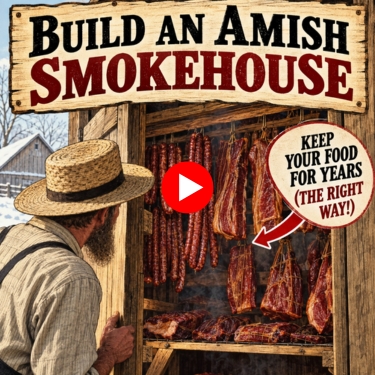
This wood gives you plenty of heat. Splitting it is hard work, but you also get the best cooking smoke in America. Set a few chunks aside for the smoker. It more than deserves a spot up here.
If you don’t have a smoker but you wish you did, well, you don’t need to spend money on a brand new smoker. Instead, you can build one yourself.
When people think of a smoker, they might believe it’s a complicated device, but it really isn’t. A DIY smoker is easy to make and it can be done in one afternoon. Even more, you might already have 75% of the materials somewhere in your shed.
And since I’ve been talking about the Amish, why not build an Amish smokehouse? If you ever wondered why the Amish smoked meat you buy from the farmers’ market is so good, the answer is all about how their smoker is built. They use a specific type of wood that is less porous and keeps the smoke where it should be. Even more, they have a secret technique that keeps the fire smoking for days in a row without wasting too much wood.
This is the beauty of homesteading life: you are free to build whatever you want and then use it to your advantage.
Why buy smoked meat from the store, full of additives and preservatives, when you can make the 100% organic and healthy version in your backyard?
If you want to build the ultimate Amish DIY smokehouse, you can find the full step-by-step instructions and plans here.
Black locust
People don’t always expect this one to rank so high, but it burns hot for a very long time and leaves coals that seem to go on forever. It’s hard to split and throws an occasional spark, but it’s one of the best heating woods on the entire continent. That same rot resistance that slows the burn also makes it the best fence-post wood you’ll ever cut.
Osage orange
You might know this one as hedge. This is by far the hottest firewood in America, but you need to be careful with it. The sparks fly like a Roman candle, and it can burn hot enough to overfire your stove. Use a good stove, mix it with milder wood, and never leave it burning in an open fireplace. Handle it with care, and nothing else beats it.
| Wood | Heat (million BTUs/cord) | Seasoning | Splitting | Worth knowing |
|---|---|---|---|---|
| White Oak | ~26–29 | 18–24 months | Medium | Needs long seasoning |
| Shagbark Hickory | ~27–28 | 12–24 months | Difficult | Hard to split, great for smoking |
| Black Locust | ~28 | 18–24 months | Difficult | A few sparks, superb coals |
| Osage Orange | ~33 | 12 months | Tough | Throws sparks, can overfire a stove |
Buying Firewood Without Paying Too Much
Now you can say for sure that you know your firewood, untfortunately you can still end up paying too much for it.
How to avoid this?
Make sure you know how much wood you’re actually buying. This trick never fails.
Remember the face cord? A seller gives you a price for a “cord,” and you’re picturing a full 4-by-4-by-8 stack. Then the truck arrives with a face cord, only a third of what you expected. Sometimes somebody’s trying to pull a fast one, but not always. Terms like “rick,” “rank,” and “country cord” don’t have any legal meaning in most states, so two honest people can use the same words and mean different amounts. Ask for the exact dimensions before you buy, then stack and measure the wood when it arrives.
And don’t leave the buying until the last minute. Green wood is cheapest in spring, so buy it then and season it yourself over the summer. You’ll get the lowest price of the year and know it’s dry by the time winter arrives. Wait until November, and you’ll pay top dollar after everybody else has already picked through the wood.
Get It Split and Stacked
You don’t need a woodshed full of Osage orange to stay warm. Plenty of people do just fine with ash and red oak, plus a little cherry because they enjoy burning it. I’d happily spend a winter that way.
Getting your wood early and drying it properly matters more than where it sits on this list. Well-seasoned B-tier wood in a clean stove will give you more than an S-tier log that’s still wet inside.
Now it’s time to take a look and see what you’ve got. Get the wood split and stacked somewhere the sun and wind can reach it. Looking at a full woodshed in the fall takes a lot of the worry out of winter. The cold can show up whenever it likes, but it won’t bother you because you’re ready.
This is the self-sufficient mindset!
You may also like: 
Leftover Firewood? Here’s What to Do With It
If you see this plant in your garden, DO NOT step on it! (Video)
How to Get Smoke Smell Out of Wood Furniture
Top 7 Best States to Be Self-Sufficient
Worst Mistakes You Can Make When Buying Land
















There are many left out, seems this is for the East Coast , We have Almond, and Douglas Fir: The most common and efficient softwood, providing excellent heat output and steady flames when properly seasoned.
Oak (Oregon White/California Black): A premium hardwood with high BTU output, ideal for cold nights due to its density and long burn time.
Madrone: Highly prized in Northern California and Oregon for its extreme density, intense heat, and clean burn, though it can be difficult to split.
Maple (Bigleaf): Offers a balanced heat output, burns cleaner than many softwoods, and seasons faster than oak or madrone.
Alder: An abundant soft hardwood that is easy to split and burns hot, though it has a faster burn rate than dense hardwoods.
Thank you for this useful reply! This is really valuable information.
Nice