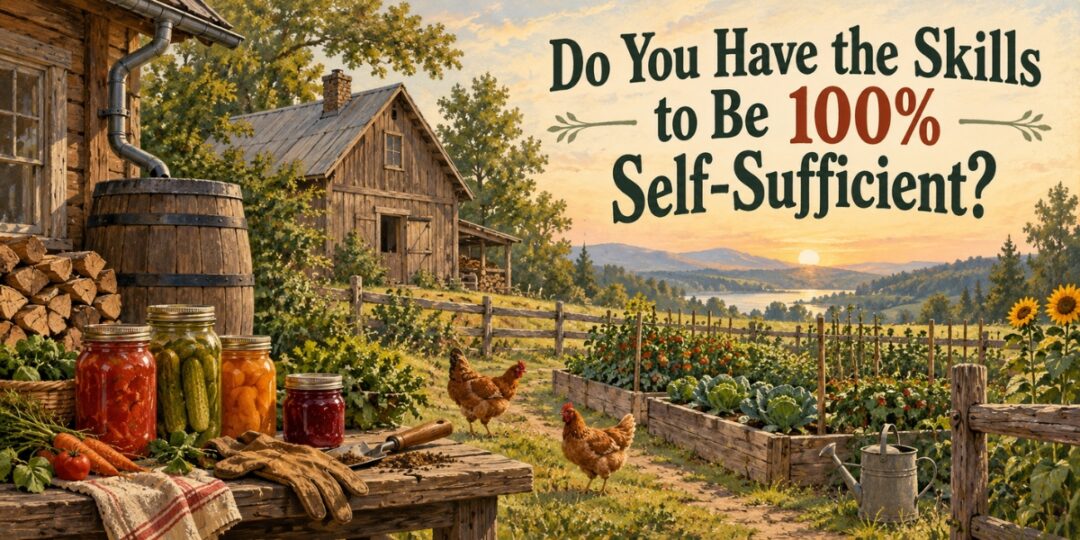
I’ve been homesteading for a while, and I’ve learned one big lesson I want to share: There’s always something else you can buy for a homestead.
Maybe a better tool. Maybe a bigger dehydrator. Or another raised bed. Or some clever gadget that promises to save time.
I’ve bought plenty of those things over the years, and some were worth every dollar. But the longer I did this, the more I noticed that a real self-sufficient person is the one who knows what to do when the easy option isn’t available. The one who can take care of themselves when things go down.
That was what made me curious about this collection of practical self-sufficiency skills.
Why?
Because I wasn’t looking for another book telling me to grow tomatoes or keep a pantry.
I wanted ideas I could actually use around a working homestead: ways to grow more, waste less, store food longer, make better use of water, and handle more jobs myself.
And that’s what I found here.
This Is What Self-Sufficiency Actually Looks Like
Most homesteading books follow a single path.
You get a gardening book, a canning book, a chicken book, or a DIY book. That’s fine when you need to go deep on one subject, but real homesteading isn’t separated into individual categories.
Everything you do affects the whole system.
Your garden affects your pantry. Your water setup affects your garden. Your storage affects what you decide to grow. A good repair can save you from replacing something that still has years left in it.
The Lost Skills of Independence moves through all of that.
Here I found home and property projects, food-storage ideas, water systems, gardening projects, and repair skills.
You can see the kind of skills collected in the book here, but the short version is that it covers much more of a homestead than I expected.
The Two Projects I Tried First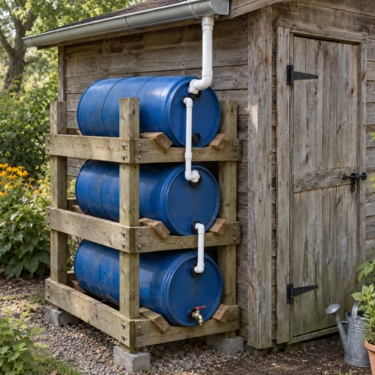
In the same week I got the book, I decided it was time to try some of the projects. I was so excited about them all that I needed to take a step back and pick something that made sense for my homestead.
The first was the self-watering raised garden bed.
I’ve built raised beds before, so the basic construction wasn’t something new for me. What I found interesting was the watering side of it. Anyone who has kept a garden going through a hot summer knows how quickly watering turns into a daily job that keeps you tied to your property, unable to leave for a weekend.
I just loved the instructions presented in this book. They give you a good starting point without making the project more complicated than it needed to be. You’ve got a list of all you need and then instructions and illustrations that show you how to get the project done.
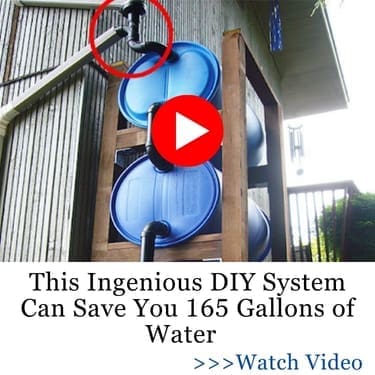
After the self-watering garden beds, the 3-barrel water harvesting system felt like the obvious next project. These two go along very well together, and this is why I decided to build them in a pair.
I’ve collected rainwater before, usually in the simplest possible way. One barrel, one downspout, done.
The three-barrel setup solved the storage problem for me. Every time there was a significant rain, I was only thinking about how much water I lost just because I didn’t have a way to store it properly.
This is the magic of The Lost Skill of Independence.
This is not just a collection of unrelated DIY ideas like most books related to this subject are.
This is a collection of small systems that make your property work better.
Your Garden Can Do a Lot More Than You Thought
The garden section is where I spent the most time.
Not because everything in it was new to me. It wasn’t. I’ve gardened long enough to have opinions about compost, raised beds, watering, and pests.
What I liked was how many different approaches were packed together.
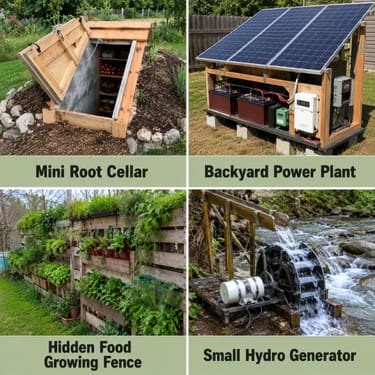
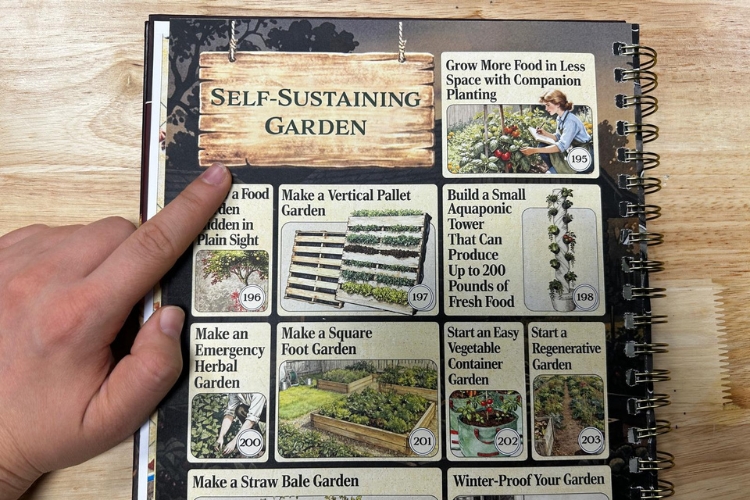
There are ideas for companion planting, vertical growing, container gardens, square-foot gardening, regenerative growing, straw-bale beds, dwarf fruit trees, composting, homemade fertilizer, organic insect control, greenhouses, and ways to use fences and other overlooked spaces to grow food.
That last part is so important if you don’t have a huge piece of land.
A homestead doesn’t become productive just because it has acreage. Small places can produce a surprising amount of food because every empty corner has a job.
That’s why the small-space growing ideas in this section stood out to me. They give you things you can adapt to the ground you actually have.
For example, you can see how to build a vertical pallet garden. This is a huge upgrade that can double your harvest if you live on a smaller homestead or an urban homestead.
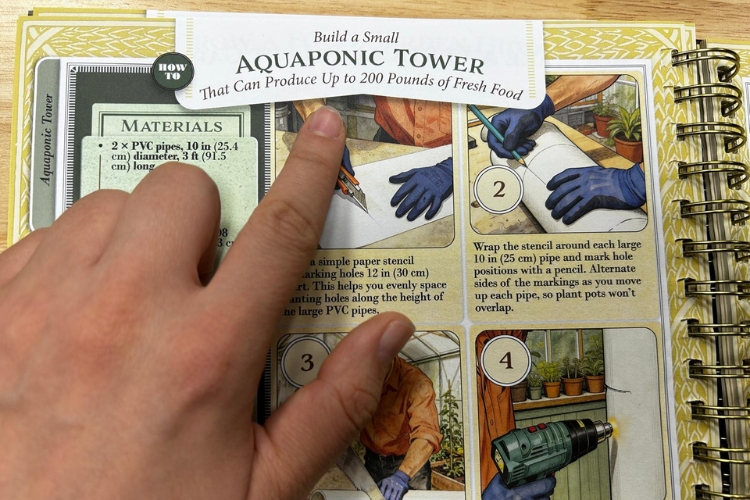
Another thing that caught my eye is the aquaponic tower. This is one of the best things you can have in a small garden. The problem is that if you want to buy one, it will cost you $1000. But what nobody tells you is that you can build a DIY version out of a PVC pipe for just $50!
And I think that’s an important part of self-sufficiency that sometimes gets lost online.
You don’t necessarily need more land. You need to get better at using the land you already have.
Growing Your Own Food Is Only Half the Job
So, you’ve got the garden that gives you the food. Now you need to preserve it, store it, and cook it.
That’s why I was glad the food chapter in The Lost Skills of Independence goes beyond gardening.
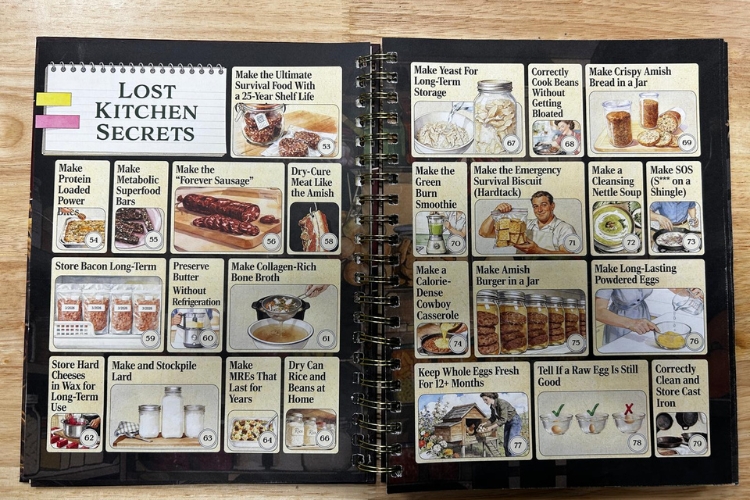
It also gets into dry-curing meat, preserving butter, making bone broth, storing bacon, making lard, keeping hard cheese longer, storing yeast, long-lasting foods, and preserving eggs.
A garden makes you less dependent on the produce aisle. Knowing what to do with the harvest is what helps you to not depend on the whole supermarket.
If old food-storage methods interest you, some of the more unusual kitchen skills in the book are worth a look. These are skills that were popular for hundreds of years, but now barely anyone knows about them. This is sad, but it’s also what gives you an advantage.
Another thing is that I like having these things in a physical book.
I use the internet as much as anyone, but there’s something different about having the instructions sitting on the counter beside you.
Owning them in a physical book is the safer option.
What would happen if tomorrow there was no internet? Well, not much if you have a physical copy of all the things you use.
They Just Don’t Make Books Like This Anymore
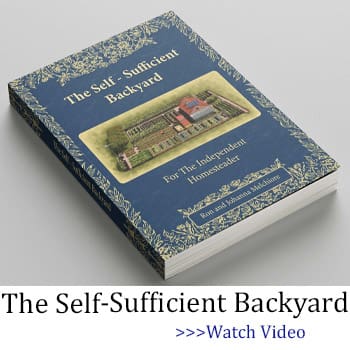
What makes The Lost Skill of Independence unique is how it approaches the whole self-sufficiency thing. You can see it written on the cover: Be ready for anything life throws at you!
This is a guide that offers you a clear solution to the most common difficulties you can encounter while homesteading. This is not just a book presenting you with a bunch of random, unrelated projects.
You’ve seen it with the projects I tried. They make a very good pair and they help you solve the watering issue most of us have to deal with during the summer.
If you pay attention to how the book is organized, you can see that it covers The Three Main Pillars of Homesteading: growing food, preserving food, and DIY projects. 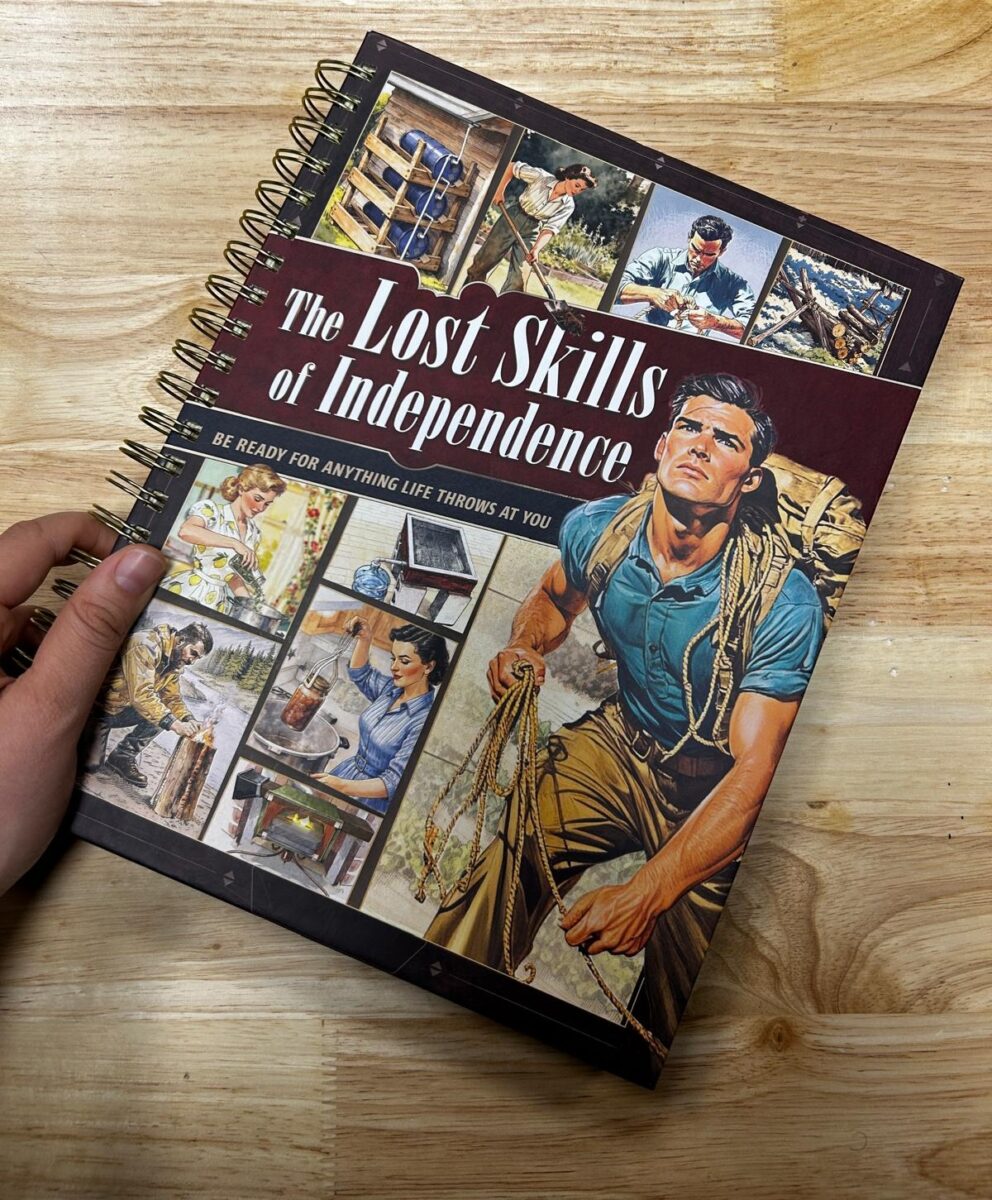
When you want to be less dependent on the system and live an independent life, these are the things you need to master.
In The Lost Book of Independence, you find a chapter dedicated to each one of these pillars.
This is what I appreciated the most. The attention they gave to how real people approach self-sufficiency, the real-life advice, and the practical projects.
Also, I think this is the most beautiful book I got in the last few years. All the illustrations are carefully drawn and they all have that vintage look I just love. This is the star of my bookshelf when it comes to looks.
It’s a book you can easily see was crafted with a lot of care and I truly appreciate this. Most of the books you can get today all look the same…
But not this one.
What I Didn’t Like About It 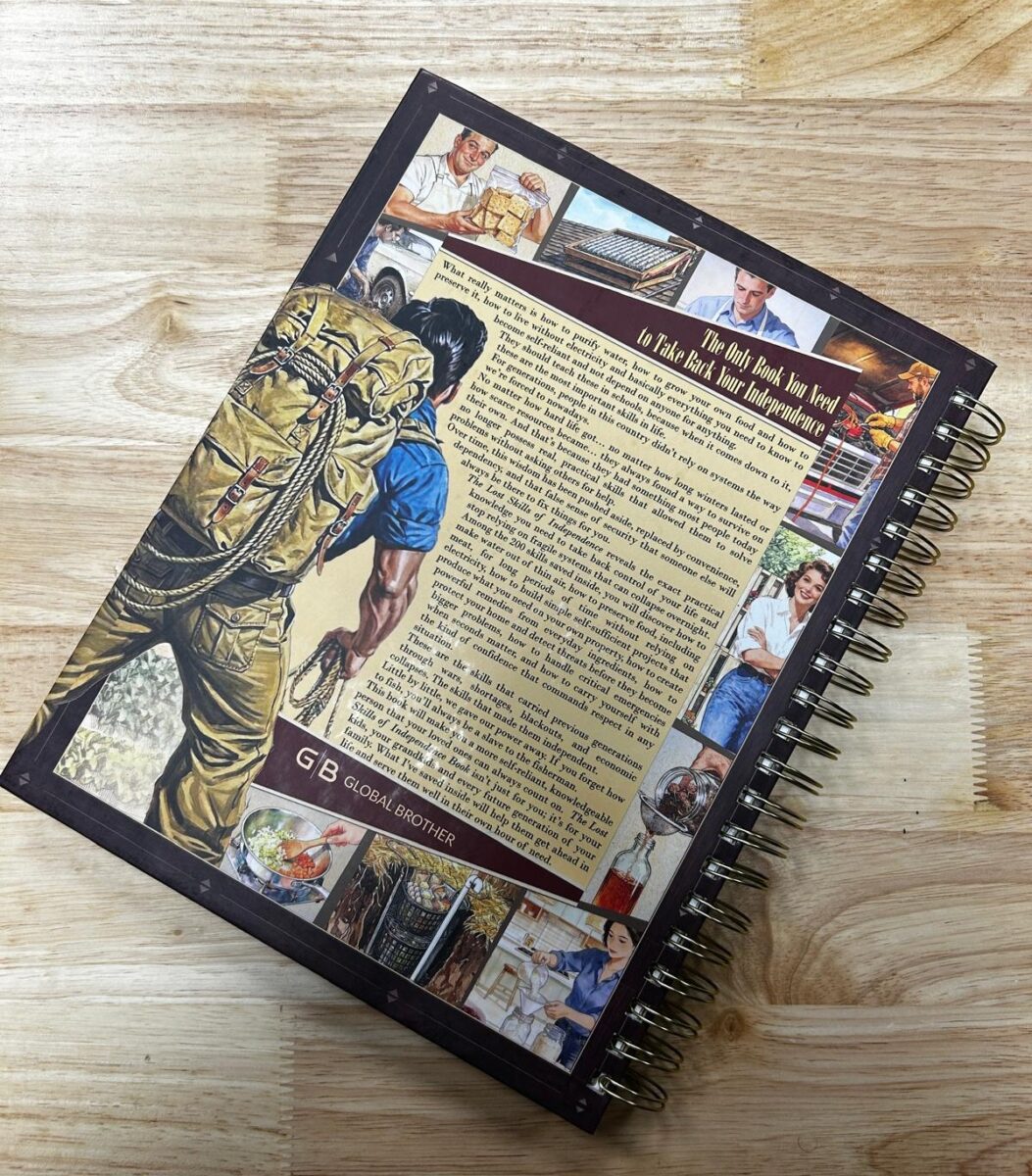
To be honest, the first thing I didn’t like about this book is the spiral binding.
It doesn’t have that traditional old-reference-book look I usually like on my shelf. Once I actually started using it, though, I understood the choice. Being able to leave the page open while you’re measuring, cutting, or working with dirty hands is very useful.
Maybe this is just a personal preference, but I had to mention it.
Also, you probably won’t use all 200 skills. Yeah, this book has 200 skills inside. This sounds spectacular, but in reality there is a good chance you won’t need all of them.
What made it interesting for me was the homesteading part I told you about. Hopefully this is more than half the book, so I would say it’s still a good choice for anyone interested in that.
So, Is It Worth It?
For me, yes.
It earned a place because I’ve already gotten something useful out of it, and there are still pages marked for later.
That is usually how I judge a practical book. If I read it once, nod a few times, and put it on a shelf forever, it wasn’t much use. If I end up taking it from the shelf because I’m checking an illustration or thinking about the next project, that’s what adds real value for me.
The book treats homesteading the way I’ve come to see it after years of doing it: not as one big act of “going off-grid,” but as a lot of smaller skills that add up.
Grow a little more. Waste a little less. Store food better. Catch water. Fix something yourself. Learn another way to keep things working.
Do enough of those things and your homestead slowly depends less on everything outside the gate.
This offers you options.
And around a homestead, options are worth quite a bit.
You Also Get Three Extra Guides
The main book would have been enough for me to work through for a while, but it also comes with three extra guides.
The one that immediately fits the homesteading side is How to Become Self-Sufficient on a 1/4 Acre of Land.
I like the premise because a lot of people hear “self-sufficient” and picture a huge farm. Most of us are working with whatever piece of ground we actually have, and learning to get more from a small property is a much more useful conversation.
There’s also Wild Edibles & Medicinal Herbs You Can Forage for or Find Around Your House and The Patriot’s Bug-In Guide.
For a homesteader, the three make sense alongside the main book rather than feeling like random extras thrown into the box.
The main thing about this book is that it offers you 200 skills you can learn and use whenever you need them.
If this sounds like the type of information you’d like to own in physical format, then you can take a closer look at The Lost Skills of Independence here.
The current edition is also being offered with the three bonus guides and a 60-day money-back guarantee.
This means you can get it and see for yourself if you like it or not, with no pressure.
I got it for the gardening and self-sufficiency project and decided to keep it.
You may also like: 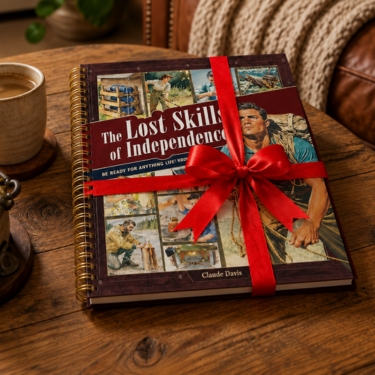
The Real Cost of Starting a Homestead (And How to Cut It)
Upgrade Your Homestead in 3 Simple Steps (Video)
DIY White Oil for Your Homestead
5 Surprising Ways to Reuse Graywater Around the Homestead
7 Trees You Don’t Want Growing on Your Property