
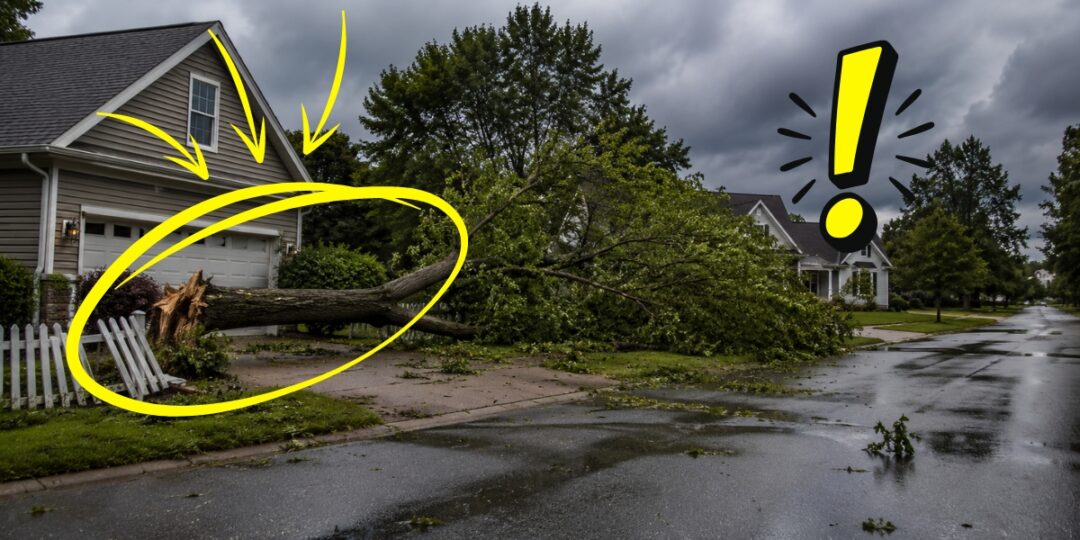
When you buy a piece of land, you usually inherit whatever the people before you decided to plant. Then, over the years, you add a few trees of your own.
The problem is, some trees don’t show their bad side until years later.
And here I am talking about trees that cause real problems, not just racking a few extra leaves in fall. Some trees will send roots into places they don’t belong, make it harder to grow a garden, spread all over the property, fall apart in storms, or even cause trouble for livestock and pets.
A lot of them are much easier to deal with when they’re still young. So before you decide to leave that little volunteer tree growing along the fence line, take a closer look.
Here are seven trees I’d think you should be wary of.
Tree of Heaven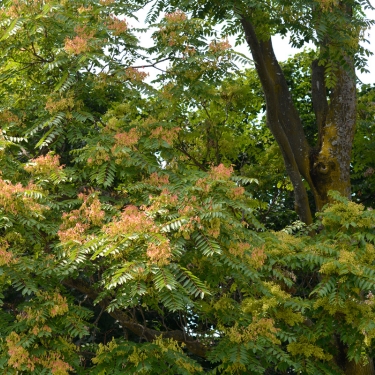
For a tree with such a nice name, this one can be a real nuisance.
Tree of heaven grows incredibly fast and doesn’t seem too picky about where it puts down roots. You’ll find it beside old barns, along fence lines, coming through cracks in pavement, and popping up in places where practically nothing else wants to grow.
The bigger problem is what happens underground.
The tree produces chemicals that can make it harder for nearby plants to grow. Once it gets established, it also spreads aggressively through its root system. Simply cutting the trunk down usually isn’t enough. If the roots are still alive, the tree can respond by sending up a whole crop of new shoots.
You can go from dealing with one tree to dealing with twenty.
There’s another reason I wouldn’t want one near an orchard or vineyard. Tree of heaven is a major host for the spotted lanternfly, an invasive insect that feeds on a long list of plants, including grapes and fruit trees.
So if you spot one while it’s still small, that’s the time to deal with it. Once the roots have had a few years to spread, you’re in for a much bigger job.
Black Walnut
Black walnut is a little different because I wouldn’t automatically call it a bad tree.
It’s native, the nuts are useful, the lumber can be valuable, and a mature walnut is a beautiful thing to have on a piece of land. If I already had a healthy one, I certainly wouldn’t cut it down just because it made this list.
I would, however, pay attention to what’s growing around it.
Walnut trees produce juglone, a natural substance found in the roots, leaves, hulls, and other parts of the tree. Some plants tolerate it just fine. Others don’t.
Tomatoes are probably the example most gardeners know, but peppers, potatoes, eggplant, and several other garden plants can struggle when they’re growing too close to a walnut.
The frustrating part is that the affected area can reach farther than the branches themselves. You may think your vegetable garden is far enough away and still have walnut roots working their way underneath it.
If you’ve got a big walnut, just don’t put your main vegetable garden right underneath it. Give your crops plenty of distance. Also, you can use the walnuts to make walnut pesto. This is an amazing recipe I recommend because it makes my fall days more special and adds a little bit of magic to my cooking.
But please be careful. There’s one tree you should NEVER mistake for the black walnut. This lookalike is toxic, but every year Americans end up in the hospital because they think they are dealing with a black walnut. I know it sounds scary, but differentiating them is easy.
You can find the complete guide here.
Callery Pear (The Bradford Pear)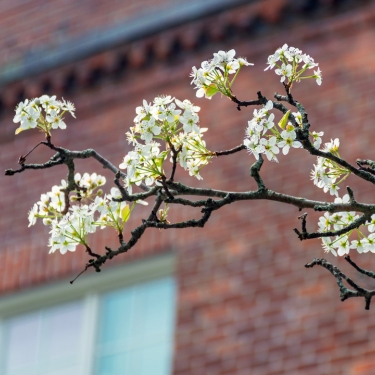
You’ve probably seen this tree hundreds of times even if you never knew what it was called.
Every spring, Bradford pears are covered in white flowers. For years, they were planted around subdivisions, shopping centers, driveways, and roads because they grew quickly and looked tidy.
They also have a smell that’s hard to forget once you’ve noticed it.
But the bigger problem comes later.
Bradford pears tend to develop a lot of branches coming out from roughly the same point on the trunk. When the tree is young, that doesn’t look like much of an issue. But give it fifteen or twenty years, though, and those weak branch unions start becoming a huge problem.
A strong wind, heavy rain, ice, or one bad storm can split the tree right down the middle. And this can cause lots of property damage.
Several states have already restricted or banned the sale of Callery pears, and NC State Extension has a good rundown of the problems with them.
If you’ve got a young one in a bad location, I’d replace it before it gets big enough to become an expensive removal job.
Weeping Willow
Willows are beautiful and I understand why people plant them. One willow tree beside a pond? It looks perfect!
But there’s a reason you need to be careful about where you put one. Willows love water, and their roots are very good at finding it. Unfortunately, they don’t know the difference between a pond and a leaking pipe.
If there’s a small crack or weak point in a sewer or septic line, willow roots may work their way toward the moisture. Once roots get inside, they can continue growing until they start destroying your pipes.
That doesn’t mean you can never grow a willow.
Just give it room.
A damp corner of the property, well away from the house and anything important underground, is a much better place for one than twenty feet from your septic tank.
Also, the bark of the willow tree has powerful medicinal uses. Aspirin is made out of a compound that is found in the bark of the willow tree.
Now, you won’t be able to make aspirin at home, but you can make remedies out of willow tree bark. For example, you can prepare an anti-inflammatory syrup you can use for various pains, from headaches to joint pains. You can find the full recipe, step-by-step here.
This is one of those forgotten remedies people used for hundreds of years, but nobody knows about it anymore.
* This recipe contains aspirin-like compounds and is not recommended for those on blood thinners, pregnant women, or children.
If you were planning to use it for joint pain, there is a simpler ready-made alternative. This arnica-based salve is what saved my joints. It combines the analgesic effects of arnica with the anti-inflammatory properties of St. John’s Wort and is one of the most efficient joint pain treatments I ever used.
What I liked the most about it, besides it’s effetiveness, is that it’s made from 100% organic plants. Everything is handmade, and everything comes from a real homestead garden.
Chinaberry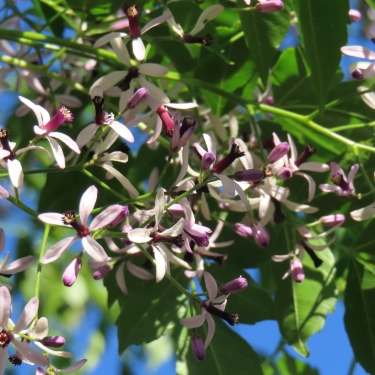
If you live in the South, there’s a good chance you’ve seen chinaberry before.
It’s a fast-growing tree with plenty of shade, and in fall and winter it’s easy to recognize by the clusters of yellowish berries hanging from the branches.
Those berries are one of the reasons I’d be careful with this tree around animals.
Chinaberry contains toxic compounds, with the fruit being a particular concern. Dogs, cattle, sheep, poultry, and other animals can become sick after eating enough of the berries or other parts of the tree.
Most animals aren’t going to stand there happily eating chinaberries all afternoon. The fruit isn’t especially appealing.
But hungry animals do strange things.
So, I would never let this tree near my chickens or other livestock.
Eastern Red Cedar
Eastern red cedar isn’t a bad tree at all when it’s growing in the right place. It’s native across much of the country, makes a useful windbreak, provides food and cover for wildlife, and its rot-resistant wood has traditionally been used for things like fence posts.
The concern is cedar-apple rust.
This fungal disease uses junipers, including eastern red cedar, and apple or crabapple trees during different parts of its life cycle.
On cedar, it can produce strange orange, jelly-like growths during wet spring weather. Spores from infected cedars can then spread to susceptible apple trees, where the disease causes spotting on leaves and fruit and can reduce the quality of the crop.
That doesn’t mean you should automatically remove every cedar anywhere near an apple tree. The spores can travel considerable distances, so simply cutting down one nearby cedar may not solve the problem.
If you grow apples, it’s more useful to be aware of the disease and choose resistant apple varieties when possible. I wouldn’t avoid eastern red cedar altogether, but I would think about where I’m planting it if an orchard is part of the plan.
But if you’re not concerned about this fungal disease and you’re not growing apples near it, I suggest you keep it. Why? Because it’s a wonder of natural medicine.
Red Cedar has been used for centuries by Native Americans for various medicinal purposes. The bark is used to treat skin problems such as boils, ringworm, fungal infections, sores, and swellings by making a paste or infusion. A strong decoction of the leaves can relieve sore muscles and joints, and a weak tea is used for arthritis. It also helps with dandruff, warts, fungal, yeast, and viral skin infections. Red Cedar stimulates the immune system by enhancing white blood cell function.
If you want to see how to use Red Cedar to make remedies, you can get a full collection of recipes here.
Mimosa, or Silk Tree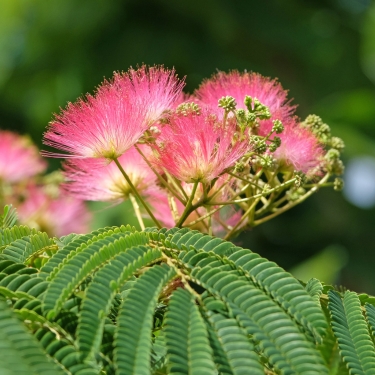
Mimosa trees are easy to like at first. Those fluffy pink flowers are beautiful, but the tree comes with more trouble than it may be worth.
The wood is fairly weak, so branches can break in storms, and the tree produces lots of seeds that can sprout along fences, sheds, and other disturbed areas. Mimosa is considered invasive in many parts of the United States, and even after the main tree is removed, new shoots can sometimes come back from the stump or roots.
It’s also fairly short-lived and can attract pests like webworms. For a tree planted mostly for its flowers, I’d rather choose something that stays where I put it.
Did You Know You Can Eat 3 of These 7 Trees?
There’s one old use for certain tree bark that most people today would never guess.
During hard times, people found a way to turn what looked like an ordinary part of a tree into something that could help stretch their food supply. It became known as bark bread, and the story behind it is much more surprising than the name makes it sound.
In Sweden and Finland, when grain supplies ran short, people stretched what flour they had with pine bark. It became especially important during severe food shortages.
But nowadays, this is no longer the famine food it used to be. Actually, nowadays people have forgotten about this great recipe. This is such a shame…
That’s why I think it’s good to know that if you have Weeping willow, Eastern red cedar, or Black walnut, you can eat the bark of these trees.
Click here and see how to prepare the ancient bark bread →
Final Thoughts
You don’t need to walk outside with a chainsaw after reading this. Several trees on this list can be useful in the right place. Black walnut can be valuable, eastern red cedar is excellent for wildlife and wind protection, and a willow can be perfect beside a pond.
The only thing you need to be aware of is which trees are prone to causing problems. Being able to identify them early will save you a lot of cash.
When you’re walking your property, pay attention to fence lines, field edges, ditches, and forgotten corners around sheds and barns. Those are often the places where volunteer trees get established without anyone noticing.
You may also like: 
Medicinal Trees You Walk Past Every Day
The Silent Stockpile Killer. Do You Have It In Your Pantry? (Video)
12 Trees Every Homesteader Should Plant In Their Backyard
DIY Tools You Can Make from Bark, Rocks and Trees
How To Tell A Dead Tree From A Healthy One


















The Pawlonia, or Chinese Empress, tree is also one that should be on this list as it looks beautiful when it flowers, but sends its roots in every direction along the surface, will destroy lawns, driveways and walks, sending up new trunks all over the yard. It also actually grows faster and more healthily if you cut it down to the ground. I did that and it grew straight up nice and strong over 20 feet in one season. If you want to become a tree farmer it earns very high prices for its light, strong wood. But do not plant one in your yard.
Yah, great stuff…thanks for this great information.
Glad you liked it!