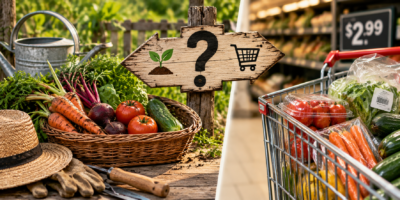
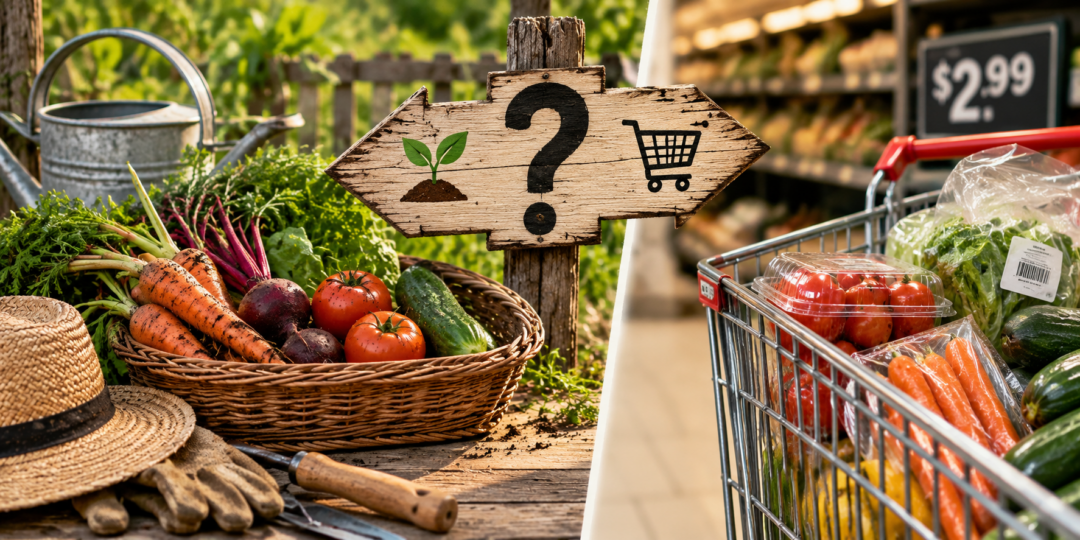
You’ve probably heard it a hundred times: grow your own food and you’ll save a fortune.
And sure, a good garden can absolutely save you money. I’m not arguing with that. But there’s another side to it that doesn’t get talked about nearly as much.
Some crops take up a big chunk of your garden, keep you busy for months, and then reward you with something you could’ve picked up at the grocery store for a couple of dollars.
I’ve grown every crop on this list at one point or another, and some of them I still grow today. But if your main goal is to cut the grocery bill, they’re not always the best use of your space.
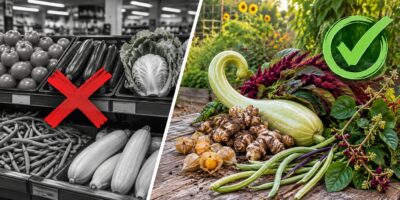
So, before you give away half the garden, here are nine crops that usually cost more to grow than to buy.
And yes, there are still a few good reasons to grow some of them anyway.
Potatoes
Potatoes feel like they belong on every homestead.
They’re fairly easy to grow, they store well, and digging them up is honestly one of my favorite garden jobs. There’s something about turning over a forkful of dirt and finding potatoes underneath that never gets old.
The problem is the price.
A 10-pound bag of potatoes at the grocery store only costs a few dollars, sometimes even less. To grow that same amount yourself, you’re using quite a bit of good garden space that could’ve gone toward tomatoes, peppers, or another crop worth 4 or 5 times as much per pound.
Then you have the cost of seed potatoes.
Most years, you’ll want fresh certified seed potatoes rather than planting whatever you happen to have sitting in the pantry. It helps keep disease out of your soil, but it’s another expense that chips away at the savings.
That doesn’t make potatoes a bad crop. Far from it.
They’re just not the money-saver people sometimes imagine they are. Grow them because you enjoy having your own potatoes. Just don’t expect the potato patch to make a huge dent in your grocery bill.
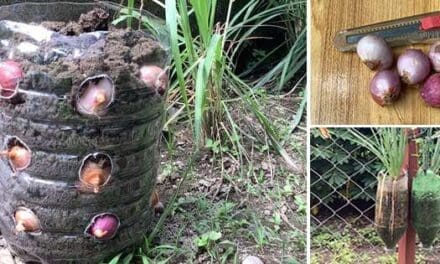
Also, if you want to try something different that takes no space in the garden, you can try this secret Amish technique.
This is a method some remote Amish communities have been using for hundreds of years and is one of the smartest things I’ve heard about in a long time.
The idea is simple: they somehow managed to grow potatoes in thin air.
Click here to see how they do it →
Dry Beans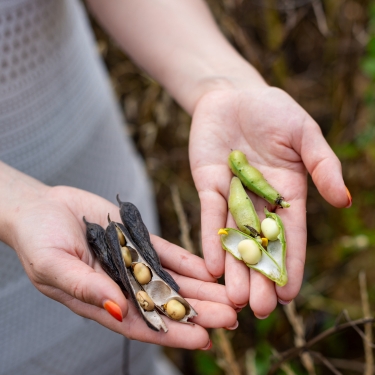
Seeing jars of home-grown dry beans lined up in the pantry is for sure something satisfying and a big achievement for any gardener. They look like the symbol of food security.
But the problem starts when you actually run the numbers.
University of Missouri Extension says you can expect about 20 to 25 pounds of dry beans from 100 feet of planted row.
That’s a lot of garden row.
You have to plant it, weed it, wait through the whole growing season, harvest everything, dry the pods, and then sit there shelling beans. At the end of all that, you’ve produced an amount of beans you could probably buy in bags for somewhere around $40.
Dry beans are already one of the cheapest sources of protein in the grocery store, which makes them pretty hard to compete with.
There are still good reasons to grow them. Maybe you’re saving seed. Maybe you’ve got an old variety you love that you can’t find in stores.
But if you’re growing beans purely to save money, dry beans are a tough one to justify.
Wheat and Other Grains
This one might surprise you. Growing wheat in a backyard garden is a reality, and if you’ve never done it before, it’s actually an interesting project.
But if you’re frugal, I need to tell you this: It’s not a very economical idea.
The Maine Organic Farmers and Gardeners Association points out that about 10 square feet of wheat can produce roughly 1 pound of grain.
That’s an area about the size of a kitchen table.
And what do you get from it?
Roughly 1 pound of wheat, which becomes about 1 pound of flour, which is enough for around 1 small loaf of bread… Kind of disappointing if you ask me…
Think about how much good garden ground that is for 1 loaf. And harvesting the wheat isn’t the end of the job. You’ve still got to cut it, dry it, thresh it, winnow it, and finally grind it into flour.
Meanwhile, store-bought flour costs somewhere around $0.50 a pound.
Growing grain can still be worth doing because you want to learn the skill or because you want to make sure you’ll have flour in case of an emergency and don’t depend on the store.
Also, since we were talking about bread, I want to tell you that if you want to make good bread, you don’t even need an oven. You don’t even need to wait for dough to rise.
Before I started baking my own bread, I believed making bread was a tedious job that took you a whole day… I was very wrong.
There’s one interesting recipe I’ve heard about that’s perfect if you want fresh bread fast. All you need is some flour, salt, lard, and water; then you can start.
You mix the lard with flour first, then you add the water. You know you did a good job if it looks like regular dough. After this step, you can add herbs or dried fruits, if you want. Then, you’ll take the dough and wrap it around a stick.
After this, the process is simple. You either bake the bread in a pan, or you simply keep it on top of a fire outside, just like our forefathers did in the wild. They called it Bread on a Stick, and it’s one of my favorite ways to make bread quickly.
If you want more practical recipes like this one, this cookbook is worth checking out. It’s actually where I “stole” this recipe from, and out of all the cookbooks I have, this is probably the one I reach for the most.
You can find it here for a nice discount →
Sweet Corn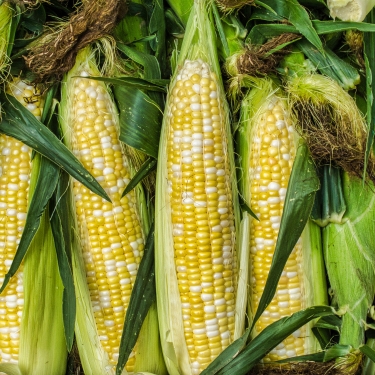
Corn eats garden space. There’s really no way around it.
Each stalk usually gives you 1 or 2 ears, and after that, the plant is finished for the year.
You also can’t just stick a few corn plants in 1 long row wherever you’ve got room. Corn is pollinated by the wind, so it needs to be planted in a block of several shorter rows if you want the ears to fill out properly.
Skip that part and you can end up with those sad, half-filled ears with kernels missing all over them.
If you’re trying to grow enough corn for a family, that block can take over a pretty decent part of the garden for what turns into a fairly short harvest. This is not worth it for someone who doesn’t have acres to work with.
I still grow some.
Corn picked from the garden and eaten 20 minutes later is hard to beat, and that’s enough reason for me to give it a little space.
But if we’re talking strictly about dollars per square foot, corn is one of the poorest returns in the garden.
Storage Onions
Onions have a strange way of looking more economical than they really are. Maybe it’s because they’re small. A neat bed of onion plants doesn’t feel like it’s using much space.
But those plants can sit there for 100 days or more.
During that time, you’re watering, weeding, and keeping that bed occupied for a crop that has very little value per pound.
Basic yellow onions can cost around $1 per pound at the store.
Once yours are ready, the work isn’t quite over either. They need to be cured properly before storage, then checked from time to time because some will inevitably soften or rot before you use them.
So the real harvest isn’t necessarily everything you pulled out of the ground. It’s whatever is still good when you finally need it.
For a crop you use constantly, growing a few onions is convenient. But if your goal is to make every square foot save money, storage onions aren’t doing much heavy lifting.
Carrots
Carrot seed is cheap. Unfortunately, that’s about the easiest part.
They can take their time germinating, which means keeping the top layer of soil consistently moist while you wait. Once they come up, they usually need thinning. If the soil is compacted, rocky, or full of clumps, you can end up with short, twisted, or forked roots instead of the long carrots you were expecting.
And thinning carrots has to be one of the least satisfying garden chores there is. You spend all that time crouched over seedlings, carefully pulling out perfectly healthy little plants so the others have enough room.
Then you walk into a grocery store and find a bag of carrots for around $1! That’s hard to compete with…
The better argument for home-grown carrots is quality, especially later in the year. Carrots harvested from cool fall soil can be noticeably sweeter than the ones that have been sitting in storage and shipping crates.
So if flavor matters to you, keep growing them.
Cabbage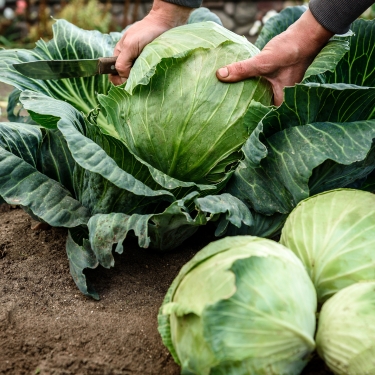
Cabbage would be easier to defend if so many things didn’t want to eat it before you do.
Cabbage worms show up. Aphids show up.
Then you’ve got a large plant occupying valuable garden space for months while you wait for 1 head to form in the middle.
After all that, you may be looking at a cabbage worth around $1 at the grocery store. That’s not a very impressive return.
Where cabbage starts making more sense is when you’re growing it for preservation.
If you’re planning to turn a big harvest into sauerkraut or another fermented food for winter, then you’re not just comparing 1 cabbage with 1 cabbage at the store anymore. You’re growing a preservation crop and putting up food for months ahead.
Also, if you want to make the best sauerkraut out there, here you can find a full video dedicated to that.
An ex-Amish decided to share the secrets he knows with the American homesteading community and since you’re part of this community as our reader, you have the chance to be one of those who find out how the Amish manage to make some of the best preserves in the whole country.
Now getting back to cabbage. Growing 2 or 3 heads just because cabbage seems like something a homesteader ought to grow and not for preserving?
I’d rather use the space elsewhere.
Celery
Some vegetables make you work for the harvest. But not celery.
It wants a long stretch of cool growing weather, often around 130 to 140 days. It needs consistent moisture. Let the plants dry out and the stalks can become stringy and bitter.
Get the temperature or timing wrong and they may bolt.
In other words, celery can demand your attention for most of the growing season.
And the reward at the end is a bunch of celery that isn’t dramatically different from one you can buy at the grocery store for $2 or so.
For me, that makes celery less of a food-saving crop and more of a gardening challenge.
This is why celery is the only crop I would always prefer to buy from the store. This is not a crop essential for survival, so it will never have a spot in my garden.
Iceberg and Head Lettuce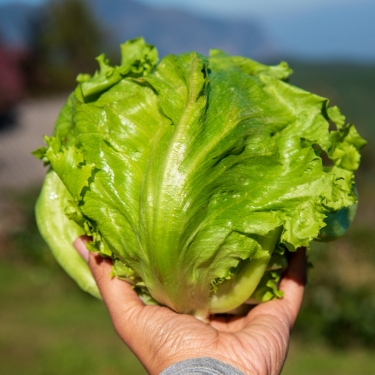
Lettuce belongs in almost every garden. But Iceberg lettuce doesn’t necessarily belong in almost every garden. And there’s an important difference.
Loose-leaf lettuce lets you harvest a few leaves at a time. The plant stays in the ground and keeps producing, so a small patch can give you salads again and again.
A tight head of iceberg doesn’t work that way. You have to wait for the whole head.
During that wait, it needs cool enough weather, steady moisture, and a little luck with pests. Hot weather can make it bolt, and slugs can do a surprising amount of damage before you notice them hiding inside the leaves.
Then, once the head is ready, you harvest it once, and you’re done.
But there’s a trick to grow lettuce easily without using too much space.
👉 See how to grow lettuce without using soil
Why I Still Grow a Few of These Anyway
Of course, price isn’t the only reason any of us grows food.
If saving every possible dollar were the only goal, plenty of things wouldn’t make sense to grow.
There’s also value in knowing where your food came from, what went into the soil, and what was sprayed on the crop, or wasn’t.
And the skill itself has value.
Knowing how to grow potatoes is different from knowing potatoes are available at the grocery store. Knowing how to raise and dry beans is different from having a few bags sitting in the pantry.
A homestead that knows how to produce food has options. So I’m definitely not saying you should never grow anything on this list. As you can see, I grow some of them too.
The point is that you don’t need to grow everything simply because you can.
If something costs $1 at the store and takes up prime garden space for half the year, there’s nothing wrong with buying it and using that space for something that gives you a much better return.
You may also like: 
What Happens If You “Water” Your Garden With Spoiled Milk
The Most Powerful Plants You Should Have When SHTF (Video)
The $0 Garden to Build in 2026
The Screen-Free Adventure That Got My Kid Excited About Nature
You’re Not a Real Homesteader if You Don’t Grow This…