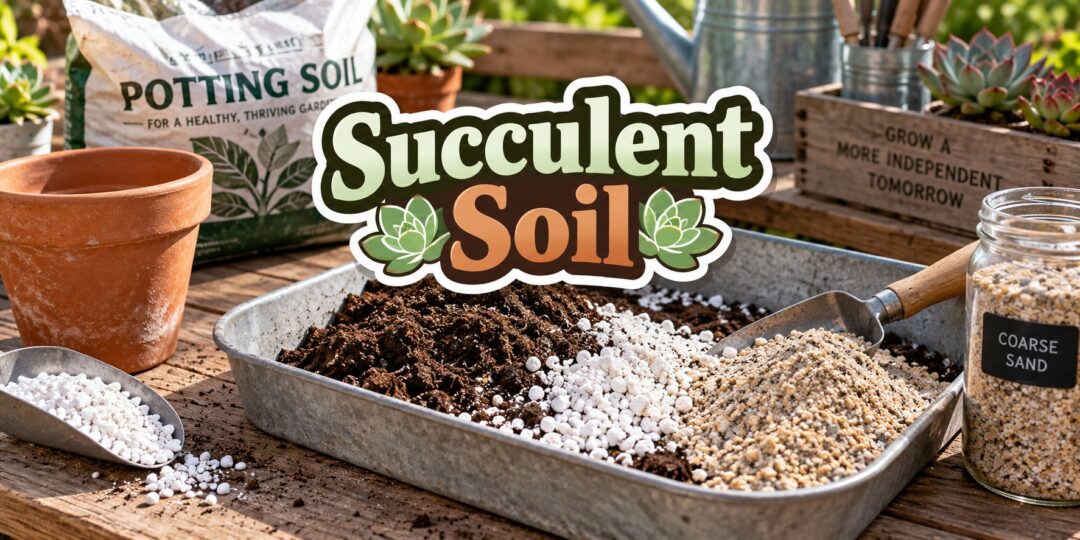
I killed my first three succulents before I figured out that the problem was never the plants, it was the soil I was using. Regular potting soil, the kind that works beautifully for tomatoes and herbs, holds onto moisture for far too long around succulent roots, and that trapped moisture is exactly what leads to root rot.
Succulents evolved in arid, fast-draining conditions, and their roots simply are not built to sit in damp soil for days at a time. Once I switched to a proper gritty mix, I stopped losing plants almost entirely, and the difference was honestly night and day.
What Succulent Soil Actually Needs to Do
Good succulent soil has one job above all others: let water pass through quickly while still holding enough structure for roots to anchor into. University of Minnesota Extension puts this plainly, noting that most cacti and succulents grow in well-drained sandy soil in nature, and that duplicating those conditions indoors matters more than anything else in keeping them healthy.
A mix that stays soggy for more than a day after watering is the wrong mix, full stop. Everything else, the specific ingredients, the exact ratios, the brand of pot you use, exists to serve that one core requirement of fast, reliable drainage.
The Basic Ratio That Works for Almost Every Succulent
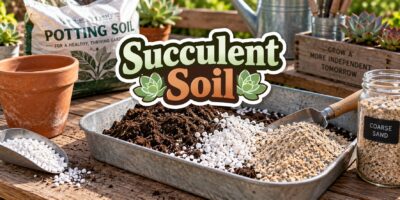
If you only remember one ratio from this entire guide, remember this one. University of Minnesota Extension recommends a mix of one part potting soil and one part coarse sand as usually porous enough for most cacti and succulents grown indoors.
That simple one-to-one ratio has become my default starting point whenever I am mixing a new batch, and I adjust from there depending on the specific plant. It is inexpensive, forgiving, and works for the vast majority of common succulents you are likely to be growing on a windowsill or in a garden bed.
Understanding Organic Versus Inorganic Components
Every succulent soil recipe is really just a balance between two categories of material. Organic components, things like potting soil, compost, peat, or coconut coir, hold onto some moisture and nutrients, giving roots something to actually feed from.
Inorganic components, things like perlite, pumice, and coarse sand, create air pockets and drainage channels that keep the whole mix from compacting into a dense, water-logged block. Neither category alone makes good succulent soil. It is the ratio between the two that determines whether your mix actually works.
Perlite, Pumice, and Coarse Sand: What’s the Difference
These three ingredients get lumped together constantly, but they behave differently enough that it is worth understanding each one. Perlite is lightweight, popcorn-like volcanic glass that adds excellent aeration, though it has an annoying habit of floating to the surface every time you water.
Pumice does the same drainage job as perlite but is heavier and stays put in the soil rather than floating around, which makes it my personal preference whenever I can find it locally. Coarse sand, and I do mean coarse, never fine play sand, adds weight and grit without contributing much organic value, which helps larger pots stay stable and prevents top-heavy plants from tipping over.
The 75/25 Rule for True Desert Cacti
Standard succulents do fine with that one-to-one potting soil and sand ratio, but true desert cacti generally want an even leaner mix. The University of Arizona’s arboretum program recommends that many cacti and other succulents do well in a substrate mix consisting of roughly 75 percent inorganic material and 25 percent organic material, adjusted based on climate and growing conditions.
For anything spiny and desert-adapted, like most true cacti, opuntia, or agave, I lean toward this leaner ratio rather than the gentler one-to-one blend I use for softer-leaved succulents like echeveria or sedum. It is a small adjustment, but it makes a real difference in how quickly the soil dries between waterings.
My Go-To DIY Succulent Soil Recipe
After years of trial and error, here is the batch I actually mix on my own homestead. Two parts standard potting soil, one part coarse sand, and one part perlite or pumice, combined thoroughly in a bucket or wheelbarrow depending on how much I need.
For true desert cacti, I shift that ratio to roughly one part potting soil to three parts combined sand and perlite, moving closer to that 75/25 inorganic-heavy blend. This recipe scales easily, whether I am mixing a single cup for one small pot or a full wheelbarrow load for repotting an entire collection at once.
The Squeeze Test: How I Check My Mix Before Planting
Before I ever plant anything into a fresh batch, I run a simple check that takes about ten seconds. University of Minnesota Extension describes this exact method, recommending you moisten the mixture and squeeze it in your hand, and if the mix is properly porous, the soil should fall apart on release rather than holding its shape like a mud pie.
If my mix clumps together and holds a ball shape, I know I need to work in more sand or perlite before I trust it with an actual plant. This test has saved me from planting into a batch that looked fine dry but would have stayed soggy and compacted once watered.
Adjusting the Recipe for Different Succulent Types
Not every plant in the succulent family wants the exact same mix, and learning these small distinctions has made a real difference in how well my collection performs. Softer, more water-loving succulents like aloe, kalanchoe, and jade tolerate and even prefer a slightly richer mix closer to that basic one-to-one ratio.
True desert cacti, lithops, and other extremely drought-adapted species do better with that leaner, grittier 75/25 blend that dries out faster. Epiphytic cacti, like Christmas cactus and other jungle-dwelling species that naturally grow on trees rather than in soil, actually want a chunkier, bark-heavy mix. Clemson Extension notes that a soilless epiphytic mix developed at Cornell University, built primarily from finely ground bark, peat moss, and perlite, works well for bromeliads, cacti, and similar plants, since these species are not adapted to desert conditions at all despite looking similar to their desert cousins.
Sourcing Ingredients Without Overspending
Building up a stock of perlite, pumice, and coarse sand does not need to be expensive, and I have found the best prices are almost never at a dedicated garden center. Building supply stores often sell coarse sand and pea gravel far cheaper than anything labeled specifically for plants, and the material performs identically once it is washed and dried.
Perlite and pumice are usually cheapest in bulk bags from a nursery supply outlet rather than the small bags marketed directly to houseplant hobbyists. I keep a dedicated bin of each ingredient on a shelf in my potting area, which makes mixing a fresh batch a five-minute task rather than a special errand every time I need to repot something.
Why the Pot Matters Just as Much as the Soil
Even a perfectly mixed batch of succulent soil cannot compensate for a pot with no way for water to escape. University of Minnesota Extension is direct about this, stating that these plants should be grown in pots with drainage holes because excess water trapped in the soil results in rotting and decay in a very short time.
I learned this lesson the hard way with a beautiful ceramic pot that had no hole, and lost a healthy echeveria within a couple of weeks despite using proper soil. If you fall in love with a pot that has no drainage, either drill a hole yourself or use it as a decorative outer cachepot around a properly drained nursery pot instead.
Store-Bought Succulent Soil: When It’s Worth Buying
I mix my own soil for most of my collection, but I will admit that pre-made succulent and cactus mixes have their place. If you only have a handful of plants, buying a small bag is often more practical than sourcing and storing several different bulk ingredients you will not use up quickly.
The catch is that many commercial bagged mixes still contain more organic material, particularly peat, than ideal straight out of the bag. I usually cut a store-bought mix with additional perlite or coarse sand at roughly a one-to-one ratio before using it, which brings even a mediocre bagged product much closer to the drainage performance I actually want.
Mixing Soil for Outdoor Succulent Beds
Everything covered so far applies mostly to container growing, but outdoor succulent beds need their own version of this same drainage logic. If your native soil is heavy clay, no amount of amending a small planting hole will fix the problem, since water simply pools in that improved pocket like a bathtub surrounded by clay walls.
For outdoor beds in heavier soil, I build up a raised mound or berm using the same sand and grit heavy mix described above, rather than digging down into unimproved native soil. This raised approach lets excess water drain away laterally instead of collecting around the roots, which matters even more outdoors where you cannot control rainfall the way you control a watering can.
Common Mistakes I Made When I Started
Using fine sand instead of coarse sand was my first real mistake, since play sand and beach sand pack down tightly and actually work against drainage rather than helping it. Skipping the squeeze test and just eyeballing a mix was another, since a batch that looks properly gritty can still hold far more moisture than expected once it is actually watered.
I also used to reuse potting soil straight from an old bag of vegetable garden mix without amending it at all, assuming succulent soil was just marketing hype rather than a genuine difference in composition. Once I actually compared side by side how quickly an amended mix dried out versus straight potting soil, that assumption disappeared fast.
Reusing and Refreshing Old Succulent Soil
Succulent soil does not need to be tossed and replaced every time you repot, and reusing it responsibly saves both money and material. If the old mix still passes the squeeze test and shows no sign of pest issues or fungal problems, I simply refresh it by mixing in a bit more perlite or sand to restore drainage that may have declined as the organic portion broke down over time.
I do replace mix entirely if I notice a moldy smell, fungus gnats, or any sign of root rot in the plant that was previously growing in it, since reusing compromised soil just sets up the next plant for the same problem. A simple annual refresh, rather than a full teardown, keeps most of my pots performing well year after year.
Watering Habits That Match Your New Soil
Switching to a properly draining mix changes how you need to water, and this catches a lot of people off guard the first time. A gritty mix dries out considerably faster than dense potting soil, which means succulents in a proper mix often need water more frequently than you would expect, not less, despite their drought-tolerant reputation.
The real difference is not how often you water but how thoroughly. I water until liquid runs freely out the drainage hole, then let the soil dry out completely before watering again, rather than giving frequent small sips that never fully saturate or fully dry the mix. This full soak, full dry cycle is what proper succulent soil is actually designed to support.
Building a Long-Term Soil Supply
Once you settle on a recipe that works, it makes sense to mix a larger batch rather than measuring out ingredients every single time you repot. I keep a labeled storage bin of my standard blend already mixed and ready to go, so repotting a stressed plant or starting a new cutting never has to wait on me finding time to measure and combine ingredients from scratch.
A five-gallon bucket of pre-mixed soil lasts me through an entire season of repotting under normal circumstances, and having it ready removes one more excuse for procrastinating on a plant that actually needs attention right away.
Growing Your Own Plants Is Just One Skill Worth Keeping Alive
Mixing your own soil instead of depending on an expensive bag from the store may seem like a small thing. But that mindset—learning how to make, grow, repair, preserve, and provide for yourself is exactly how real independence begins.
Our grandparents and great-grandparents knew hundreds of practical skills that made everyday life possible without constantly relying on stores, delivery services, or modern conveniences. Many of those skills are disappearing, but they can still be learned and put to use today.
Lost Skills of Independence brings that old-fashioned know-how back with practical skills you can use around your home, garden, and homestead.
Inside, you’ll discover forgotten ways to grow and preserve food, become more resourceful around the household, make better use of what you already have, and handle everyday problems with your own two hands.
You don’t need to abandon modern life or own a huge homestead. You simply need to start rebuilding the knowledge that makes you less dependent on everything working perfectly around you.
If you’re already mixing your own soil, growing your own plants, or looking for ways to become more self-sufficient, this is the natural next step.
Don’t just grow plants. Grow the skills that help you take care of yourself and your family.
👉 Discover the Lost Skills of Independence Here!
Final Thoughts
Good succulent soil comes down to a handful of fundamentals that are easy to remember once you understand why they matter: enough inorganic material for real drainage, a pot with an actual hole in the bottom, and a quick squeeze test before you trust any batch with a plant you care about. Whether you buy a bag or mix your own from potting soil, sand, and perlite, the goal stays the same across every recipe variation.
Once you get the ratio right for your specific plants and your specific climate, succulent care becomes remarkably low-maintenance, which is exactly the reputation these plants deserve when they are actually given soil that works with their nature instead of against it.
You may also like: 
7 Natural Amish Soil Boosters You Can Make for Free
How to Make the “Forever Sausage” (Video)
The Black Soil That Doubles Your Harvest
5 Forgotten Soil-Revival Methods That Can Save Your Harvest
Vermicomposting: A Simple Way to Turn Scraps Into Black Gold
7 Things You Should Never Compost: You’ll Regret It Later
Bucket Gardening: How to Grow Your Own Food Anywhere
Vertical Gardening for Self-Sufficient Living