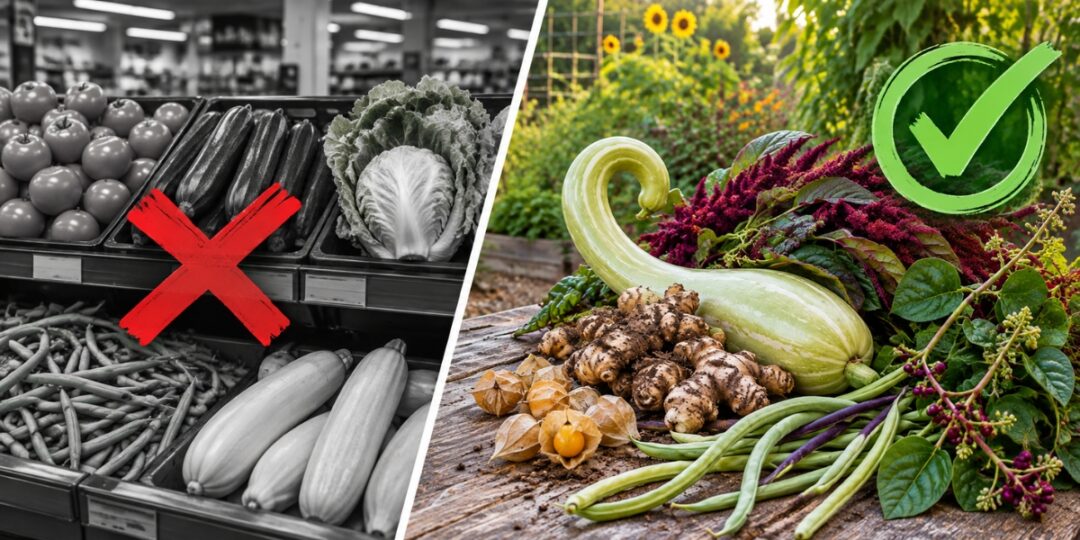
Walk through the produce section at almost any grocery store and you’ll see the same familiar lineup year after year. Tomatoes, green beans, iceberg lettuce, zucchini, a few kinds of squash. It can make you feel like those are simply the vegetables people are supposed to grow.
But grocery stores don’t choose crops based only on taste or how well they grow in a backyard. They need vegetables that can survive picking, packing, shipping, handling, and several days under store lights. If something bruises easily, ripens all at once, looks strange, or doesn’t travel well, it has a harder time earning space on the shelf.
The thing is that none of that matters much when the food only has to travel from your garden to your kitchen.
Some of the crops you rarely see at the store can be incredibly useful at home. Why? Because they have some perks your “usual” vegetables don’t have – some perks that offer your homestead a real self-sufficiency advantage.
What I Mean by a “Weird” Crop
I want to settle this from the start. I’m not talking about plants that need special equipment or you to be an expert gardener to keep alive. “Weird” is really just the term I choose for crops most people don’t see at the store or growing in the yard next door.
They’re only unfamiliar because they never became part of the standard grocery-store lineup, but you might already know about them.
What I like most is that a crop can be a poor fit for a supermarket and still be a great fit for your garden. The only problem is that nobody told you that. And this is why I’m here today. I want to help you have a better garden.
Also, I want to tell you beforehand that I decided to group the crops by the advantage they offer you instead of making a basic list of 10 crops. I think it’s much more useful this way.
I will also include a list at the end of the article, just to make things easier.
So, let’s get started!
These Crops Can Survive Any Summer
If you ever tried to grow lettuce through a hot summer, you probably know how difficult it is. Things seem to go your way and then in 3 days everything falls apart.
But for example, one of the “weird” crops, amaranth, doesn’t mind that heat nearly as much. And the best part? It works as both a leafy green and a grain crop, and it does especially well when temperatures climb. When it’s around 95 degrees and regular greens are struggling, amaranth can keep growing.
If you’re not sure what to do with it, just pick the young leaves and cook them the way you would spinach.
Also, if you want fresh leaves all the time, you can harvest them. Harvest the leaves young and often. Take the tender growth from the top and the plant branches out, much like basil does.
For leafy greens, Malabar spinach is another good option, and so is New Zealand spinach.
Instead of accepting that August means no more greens, you can grow something that actually likes August. I like this approach more.
What I find interesting is that these are the type of crops that don’t even need soil to grow. For example, you can plant Malabar spinach simply in water and it will grow happily. The same goes for your regular salad or other leafy greens. And this is such a great advantage because sometimes soil can be contaminated and you might have no idea about it. In the case of water, you can use, for example, rainwater or any water collected from trusted sources. In this way, you can be 100% sure the food you put on the table is clean and safe to eat.
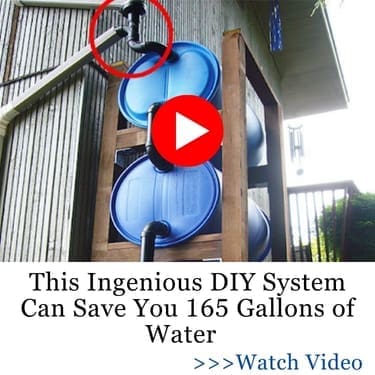
The only problem is how you plant them, because putting spinach in a blue barrel full of water won’t work…
Hopefully there’s an interesting solution that solves this problem and can help you have the most organized soil-free garden.
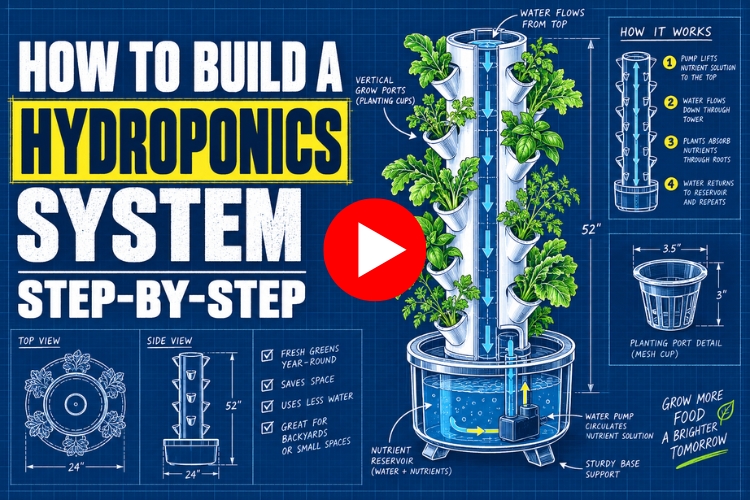
You might have heard about the Tower Garden. This is basically a hydroponic system. I always wanted to buy one, but it costs more than $1000! This is insane for a piece of plastic…
That’s how I decided to build one myself. And the process is actually really, really simple and it costs you much less. Less like in $965 less.
If you want to make your garden more productive and also safer, check this out →
These Crops Grow in Any Soil
Your regular garden vegetables are known to be very productive when everything goes right. Give them rich soil, steady water, and decent weather and they’ll be the most rewarding thing ever. Just imagine how you feel when your tomatoes grow how you wanted them.
But if you miss a few waterings, things can go downhill really fast. Tomatoes, eggplants, salad, lettuce, and so on are kind of fussy. You should still grow them, but if you really want to be self-sufficient, you should have more on your land.
For example, nobody talks about them, but Cowpeas are much more forgiving.
You may know them as southern peas or black-eyed peas. They come from hot, dry conditions, and they’re built for these kinds of conditions. Their taproots can reach several feet into the soil looking for water, which helps them stay alive through dry periods; regular bush beans are not able to withstand them.
They’ll also produce a good harvest even in poor, sandy soil where you might not expect much of a crop.
If you want to give them a try, wait until the ground has warmed in early summer and sow the seeds directly. Giving them extra-rich soil or too much fertilizer can actually work against you because the plants may put more energy into leafy vines and less into peas.
Never miss watering ever again!
Read more about the self-watering garden beds and see how to build them.
Plant Them Once, Then Have Them Forever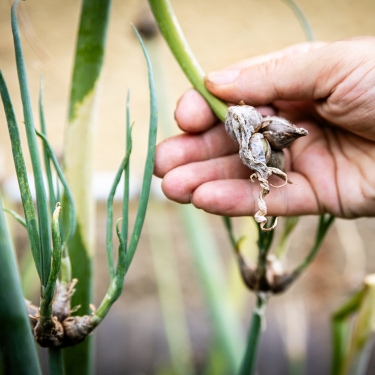
Most vegetable gardening starts over every spring. You buy or save seed, start plants, grow the crop, pull everything out, and repeat the whole process the following year.
But then you have the well-known perennial crops.
Sunchokes are a great example. They’re knobby tubers from a plant in the sunflower family, and they’re native to North America. Plant a few tubers and by fall you can dig up far more than you started with. Leave some behind and they’ll grow the following spring again without you needing to do anything.
An amazing advantage this crop gives you is that the tubers store well right in the ground, so you can dig them as you need them through fall and winter instead of harvesting everything at once.
Also, they’re rich in inulin, a prebiotic fiber that feeds beneficial gut bacteria. Ohio State University Extension also notes that inulin may help alleviate type 2 diabetes.
We wanted a perennial food crop for a while before we planted ours. Someone at the feed store had mentioned sunchokes, but I couldn’t find tubers for sale nearby. I started asking around, and eventually someone in the local gardening group said they had a patch.
Mark drove over and came home with a grocery bag full of tubers. We planted them that fall, and they’ve stayed in the same corner ever since. I haven’t had to buy new tubers or start them again each spring.
Egyptian walking onions and sorrel give you the same basic advantage. Get them established and they come back year after year without making you start from zero every season.
What is interesting about sorrel is that you can get it for free. How? You can easily forage it and then grow it in your garden. You can find it in more places across the country and all you have to do is dig it up and transplant it in your backyard.
And this is available for a lot of “weird” crops. Many of them can be foraged.
If you want a complete guide that helps you identify them and tells you where you can find these crops and how to harvest them, you can find more here.
This is the most complete foraging guide in the USA and is widely appreciated by homesteaders for its accuracy and useful photos.
👉 Get your copy before it’s out of stock again
Some Crops Are More Than Just Food
Garden space is valuable, especially if you don’t have acres to work with. This is why a plant gets a lot more interesting when it can do two or three jobs at the same time.
Cowpeas are one of those plants. You can harvest the protein-rich peas for your kitchen while the plants also pull nitrogen from the air and add it to the soil. Whatever you don’t use, the chickens will happily eat.
In the case of amaranth, harvest the young leaves early, then let some plants mature for grain. The tiny seeds can be cooked a bit like a small pilaf or ground into flour, and the seed heads can go to the chickens.
You can also use the soil worked by cowpeas to help the next crop. Follow them with something hungry, such as corn or a fall bed of greens, and those plants can use the nitrogen the cowpeas left behind.
In a small garden, these extra little jobs the plants do matter. One bed can give you food, help feed your animals, and leave the soil in better shape for whatever you plan to plant next.
These Crops Won’t Let You Down During A Bad Gardening Year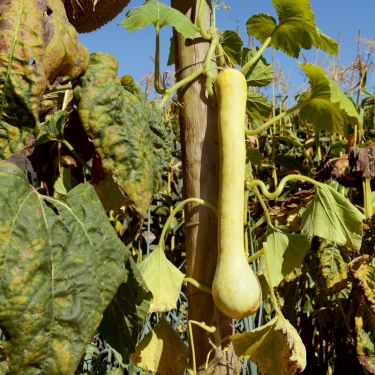
There’s another good reason to mix a few uncommon crops into the garden: they give you some backup.
If everyone in your area grows the same zucchini, squash bugs and vine borers have plenty of places to find it. Once they show up, they can ruin a squash patch surprisingly fast.
Tromboncino and cushaw give you another option. These belong to a different squash family than standard zucchini, and they have thick, dense, almost corky stems that make it harder for squash vine borers to get inside.
Tromboncino has another useful trick too. Pick it young and you can use it like a summer squash. Leave it on the vine to mature and it becomes a winter keeper. In the photo on the right, you can see a beautiful tromboncino.
Growing a few different kinds of crops spreads the risk around. If a pest or disease knocks out one of the usual favorites, you have a better chance of still bringing something into the kitchen.
Also, if you want to try something different, check out the Amish pest spray.
It’s 100% natural and it keeps those annoying bugs out of your garden.
How To Start Growing “Weird” Crops
There’s no reason to turn the garden upside down and order every unusual seed you can find.
Start with the problem you actually have. If lettuce and spinach disappear as soon as summer gets serious, try amaranth or one of the heat-loving spinach substitutes. If dry weather keeps knocking back your beans, give cowpeas some room. If you want a crop that doesn’t need replanting every spring, sunchokes, sorrel, or walking onions may make more sense.
A few of these plants are tough enough that you need to think about where you put them. Why? Because some of them can spread quite easily or cause various problems, like destroying garden beds. This is why I advise you to always give them a place of their own.
And if building garden beds is not on your list of priorities, well, you don’t have to build them. You can always buy them. The only thing is that garden beds are a long-term investment. They are not your regular purchase, and this is why it is so important to get somehting high quality.
The internet is full of various shady offers that cost a lot and offer nothing. I want to make things easier for you and give you a reliable alternative that I’ve tested myself.
This set of galvanized steel garden beds is one of the best options you can find on the market right now. They are built to resist bad weather and offer you all the space you need for a nice garden.
And the best part? They are easy to build. They come with pre-drilled metal sections with clear labels, plus matching bolts and screws included. You can read more about them here.
The Ultimate “Weird Crops” List
Unusual, hardy, and forgotten edibles worth a spot in your garden
Why It’s Worth Making Room for Something Different
You probably didn’t choose the standard garden lineup from scratch. You grew up seeing certain vegetables in stores, seed racks, and other people’s gardens, so those became the obvious things to plant.
The grocery store has different priorities. It needs crops that can handle shipping, storage, and display. Your backyard doesn’t.
You can choose plants because they handle heat, need less water, improve the soil, keep producing longer, or give you more than one use. Sometimes the crop that looks a little odd at first ends up being one of the easiest plants in the garden.
You don’t need ten new crops to find out. Try one or two that solve a problem you already have and watch what happens when the weather turns hot, the rain misses you for a week, or the bugs start working through the usual plants.
Our sunchokes are still in the same back corner where we planted them years ago. I barely think about that bed most of the year. Then fall comes, I take a fork out there, and then I have fresh food until winter.
For something that never made it onto the usual garden list, they’ve earned their space.
You may also like: 
These Crops Will Make You Rich
How to Set Up the 3-Barrel Water Harvesting System (Video)
Never Plant These Vegetables in a Container or Bucket
7 High-Yield Crops for Small Spaces
Plant These Herbs Once and You’ll Have Them Forever