

For years, I had one hard rule on my homestead. Animal manure could go in the garden. Cow, horse, chicken, rabbit, all of it, once it had aged.
But anything that came from a person went straight into the “no, never, not a chance” pile in my head.
So when I first heard folks talking about composting toilets, and putting what came out of them in a garden, I figured they’d lost their minds. It sounded like a fine way to get somebody sick.
And then I sat down and really looked into it. Turns out I was half right and half wrong, and it was the wrong half that surprised me.
So let me walk you through what I found, the same way I’ve been working through it myself. Some of it will put your mind at ease. Some of it you’ll want to pay close attention to.
What’s Actually Happening In There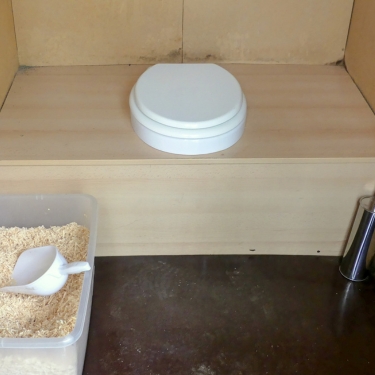
A composting toilet is a compost pile built for the bathroom. That’s the whole trick.
There’s no water and no flushing. You do your business, and then you toss a scoop of something dry on top. Sawdust, wood shavings, coconut coir, peat moss. The same dry things you’d layer into a compost bin out back.
That dry material is essential in this process. It covers everything over, soaks up the wet, and feeds the bacteria that do the breaking down. Those bacteria need air to live, which is why you never want the whole thing packed tight and soggy.
A small fan and a vent pipe pull the smell up and out of the house.
Some of these are self-contained units you buy ready to go. Others are about as simple as a five-gallon bucket and a bag of sawdust, which is how plenty of off-grid folks got started.
Either way, it’s the same biology you already trust out in your garden.
And a lot of them keep the urine separate from the solids. There’s a little divider up front that sends the liquid off into its own container. That one detail matters more than you’d guess, and I’ll come back to it.
So that’s the whole machine. Air, dry carbon, bacteria, and time. If you’ve ever run a compost pile, you already understand most of how one of these works.
Five Things People Get Wrong
There’s a lot of noise around these toilets, and some of it is what kept me away for years. So here are the five things I hear the most.
They all stink
This is the first thing everybody frets about, and I get it.
But a well-run composting toilet doesn’t smell like a bathroom, and it sure doesn’t smell like the outhouse your grandparents had. The dry cover and a little vent fan do the work between them.
When one of these does start to smell, it’s almost always because the sawdust ran low, or the fan quit, or the thing got too wet. Keep it covered and keep the air moving, and every owner I’ve asked tells me the same thing. You stop noticing it.
If you want to add something that makes everything nice, you can try a DIY long-lasting deodorizer.
It’s the same as putting cow manure on the garden
Here’s where I want you to slow down with me, because this is where I was wrong for years, though not in the way you’d think.
It isn’t the same. Human waste can carry viruses, bacteria, and parasites that pass straight from one person to another. Animal manure has its own risks, which is why you age that too, but germs that live in another person are the ones most ready to make you sick.
So the rules around human waste are stricter, and they should be. But you can absolutely get this material to a safe place. It just takes a longer road to get there.
The toilet is the thing doing the composting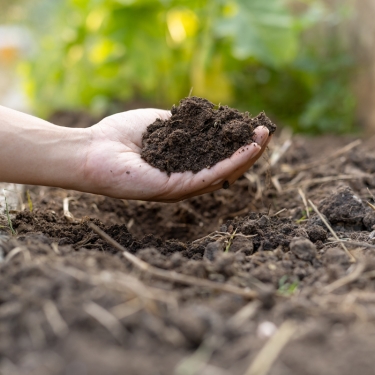
The name fools you, and it fooled me.
That unit in your bathroom starts the process, but it doesn’t finish it. What comes out of the chamber is not finished compost. It’s had a head start and nothing more, and it has not sat anywhere near long enough to be safe.
The real work happens in a second bin outside, where the material ages a good long while before it goes near a plant.
So the toilet you buy is only half the system. The other half is a bin in the yard and a couple of years of doing nothing. Nobody puts that on the box.
Urine is the gross part
It’s the other way around. The pee is the good part.
Urine from a healthy person carries very few of the germs we worry about, and it’s loaded with the nutrients your plants want most. Your urine holds most of the nitrogen and about half the phosphorus in all the wastewater your household puts out.
That’s real fertilizer, and we flush it away by the gallon without a second thought.
It runs on nothing
This is the one that catches people off guard, and it’s worth knowing before you spend the money. Waterless doesn’t mean free of everything.
That vent fan needs power, and it runs around the clock, not just when you’re in there. The draw is tiny, often a few watts off a 12-volt battery (see how to bring dead batteries back to life), so a small solar panel covers it. Some non-electric models vent on their own, but they tend to struggle with a whole family using them full time.
Then there’s the liquid. Even a good unit collects some runoff at the bottom, and that has to drain somewhere you’ve planned for.
So before you buy anything, call your county health department and ask what they want to see. It’s a five-minute phone call and it saves you a world of grief later.
How to Use It in the Garden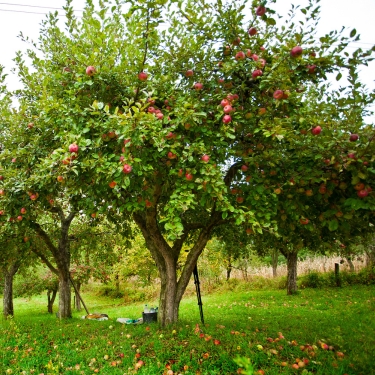
So you’ve done it right and you’ve got finished, aged material. Where does it go?
Your safe bet is anything you won’t be eating right off the ground. Fruit and nut trees. Berry bushes. Flower beds and shrubs. They are all good options.
Feeding it to orchard trees is the approach I like best. The roots pull nutrients up through the tree before anything reaches the fruit, so you’ve got one more layer between the compost and what you eat. That’s a good way to picture the whole idea.
And this isn’t some weird practice. The National Park Service runs composting toilets at backcountry sites around the country, where hauling waste out or digging a septic field just isn’t realistic.
The urine is where it gets interesting for a gardener.
Up in Brattleboro, Vermont, an outfit called the Rich Earth Institute has run the country’s first community-scale pee-cycling program for over ten years. They collect around twelve thousand gallons of urine a year from a couple hundred neighbors. They heat it to kill off anything harmful, the same way milk gets pasteurized, and then they hand it off to local farmers for their hay fields.
And those farmers will tell you the grass comes in noticeably darker green right where they laid it down.
You don’t need a whole program to do a small version of this at home. But there’s one rule you can’t skip. You have to water it down.
Straight urine is too salty, and it’ll burn and stunt your plants instead of feeding them. About five parts water to one part urine works for most vegetables, and you can go a little stronger for heavy feeders like sweet corn. Put it on the soil around the base of the plant, not on the parts you’ll eat. One adult, over a year, makes plenty to matter for a decent-sized patch of garden.
If you want to make your life even easier, you can try transforming your raised garden beds into self-watering garden beds.
The Part You Can’t Skip
Here’s the part I told you to pay attention to. None of this is frightening once you respect it.
Time and heat are what make human waste safe to use. A hot compost pile that holds around 131 degrees for a few days will kill off the dangerous stuff fairly quickly.
But most home setups never get that hot. So they lean on time instead, which means storing the material a good long while before you trust it. A year is a common floor, and some places want more than that. Massachusetts asks that the material sit contained for two full years before it’s cleared for any farm use at all.
Why so cautious? Because it takes very little to go wrong. Something like E. coli can multiply from a single cell into more than a million in about half a day, and it can take only a handful of those cells to make a person sick. That’s the whole reason for the long wait.
Keep the aged solids off your root crops and off any leafy greens you plan to eat raw. Anything that gets cooked before it hits the plate is a safer bet, since heat is one more thing working in your favor. Wear gloves, and keep a set of tools you use for this job and nothing else. Wash up well when you’re done.
Keep your bin away from your well, your creek, and any standing water on the place. E. coli can easily contaminate your water if you’re not careful. And this is how you can compromise a whole stockpile of water.
Hopefully, there are clear signs that might indicate to you your water is contaminated. You can find them here. There’s a whole chapter about how to identify compromised water.
Also, I have one more resource that tells you what the signs of E. coli infection are and even offers you some protocols that might aid you while healing. You can find it here.
If You Don’t Like the Composting Toilet, Try This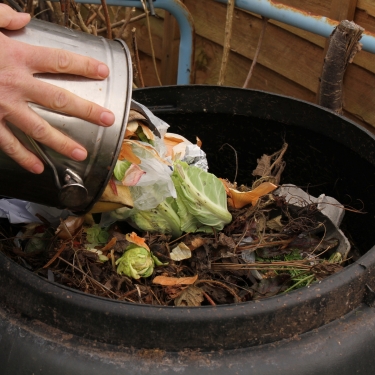
So maybe none of this sounds tempting to you. Maybe the work sounds like more than it’s worth, or maybe the health side still worries you.
That’s fair, and I get it.
But if you skip it entirely, you’re walking away from a nearly free source of fertilizer. And one of the best ones there is.
So, if you still want to give your garden the best, there’s always the classic compost route. And it’s a great one, as long as you do it right.
Compost is simpler and safer, sure. But it still has its rules, and you’ve got to know how to make it and how to use it.
Tossing all your scraps in a bin and calling it done won’t get you there. I’ve tried that, and all I got was a stinky mess.
See how to turn those scraps into the best food your vegetables have ever had →
What I’d Do Next
I’ll be straight with you. I don’t have one yet.
But I’ve stopped saying never, and for me that’s the big shift.
So this might be my next project. If it is, I’ll walk you through the whole thing, the good and the bad, the same way I always do.
Stay tuned!
Also, if you’ve ever tried something like this, please tell me more in the comments. I am extremely curious about your experience.
You may also like: 
Do This Immediately Before You Start Composting
Amish “Powers” You Should Master Before the Next Crisis (Video)
Why You Should Bury Your Cotton Underwear in the Garden
This Is How Your Compost Could Kill You!
How Do You Speed Up Composting



















This may be a dumb question, but at what temperature will composting waste combust? I heard about a guy (friend of a friend) who built what was essentially a three-and-a-half sided cinderblock bunker, facing south, against a rock face on his property. It had a slanted glass “roof” of old, discarded windowpanes. He wanted to pursue the humanure ideal, but also wanted to make absolutely sure his waste heaps got hot enough to destroy harmful bacteria, so he solarized this bad boy.
They certainly got hot enough! The material was always quite moist, so my friend couldn’t say that it “caught fire,” but it steamed, and smoked, and stewed, and the glass above it began to slump, And it never became useful compost–at least, not while my friend was visiting–probably because all of the USEFUL bacteria and stuff were cooked.
So if 131 degrees is the minimum safe temperature, what is the MAXIMUM safe temperature, if you want to produce compost and not poop-soup?
Thanks!