You take a look at your garden and it looks A-M-A-Z-I-N-G!
The tomatoes are heavy and bright red all the way up the vine. The beans have run to the top of their poles and started reaching for each other.
So you stand there a minute feeling pretty good about the whole thing. You’ve made it!
But even with all of these signs, your garden might not be as healthy as you think. Maybe this year’s harvest is good, but this is not a guarantee for the next year.
If you were to run a lab soil test, you would be able to see the pH and the potassium and phosphorus levels. These are things that matter a lot. The living part of your soil decides how much your plants will grow.
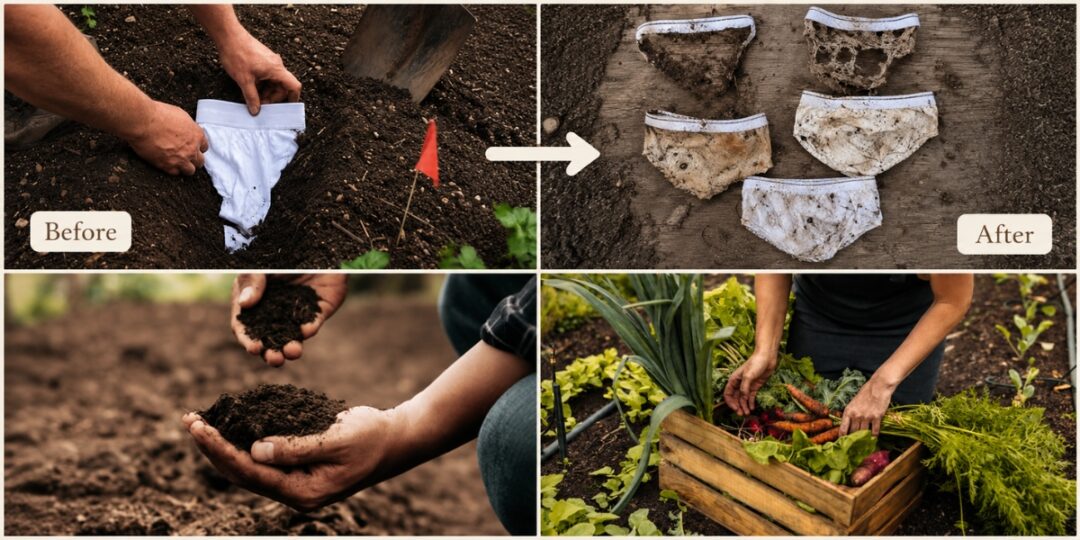
But I want to share something with you: it’s possible to see how “alive” the soil is without using fancy lab tests. There’s a test for this, and it costs about $4. You bury a pair of cotton underwear and come back in two months. I know how that sounds, but this is a real method.
So, ready?
Where This Strange Test Came From
The idea came out of NC State University, from a group called the Amazing Grazing team. They needed a way to show cattle producers what management actually does to soil, and telling a man his soil is alive only gets you a polite nod.
So they buried underwear in rotationally grazed pasture, in continuously grazed pasture, and in tilled cropland. Then they dug it all up and laid it out on a table.
All that remained of that underwear was the waistband. How did this happen?
This got some traction and from there it spread. The USDA picked it up as an annual challenge, state conservation districts run it every summer, and it traveled as far as Australia, where researchers at the University of New England buried pairs out in cotton country to make the same point.
Also, there’s an additional easy testing method you can try in your garden.
It’s called the X-Ray Soil Test, and it tells you exactly the composition of the soil.
Why is this important?
Because your soil type decides your harvest. Plain and simple…
You can’t tell your soil type by looking at the surface. Two gardens on the same street can have completely different dirt a few inches down. That’s where the Soil X-Ray comes in. It tells you the exact anatomy of your soil. This is the secret tool only experienced gardeners know about. But now you can see how to use it too.
So why does this matter for your harvest? Because plants have preferences. Carrots, potatoes, and other root crops want loose soil they can push through, so they struggle in heavy clay. Squash and tomatoes are hungry feeders that do best in loam that stays moist without turning soggy.
Once you know your soil type, you stop fighting your soil and start planting what actually wants to grow there.
👉 Click here and start growing the most bountiful garden you ever had!

What the Cotton Is Actually Telling You
Cotton is nearly pure cellulose. And cellulose is the same material that makes up cornstalks and straw and dead roots and the leaves that pile up under your trees every fall.
So a buried cotton brief is just a meal your soil already knows how to eat, cut into a shape you can measure.
Bacteria and fungi do the eating. They break cellulose down into forms roots can take up, and that same chewing is what builds crumb structure and helps a bed hold water instead of shedding it off the top.
According to the USDA’s Natural Resources Conservation Service, one teaspoon of healthy soil holds more microbes than there are people on the planet. You can’t see them and you can’t count them. But you can watch them eat.
If the crew down there is active, the cotton disappears. If it isn’t, the cotton comes out intact.
The waistband is polyester, so it survives either way. Which is handy, because it helps you find the buried undies easier.
Bring the “Soil Your Undies” Test into Your Garden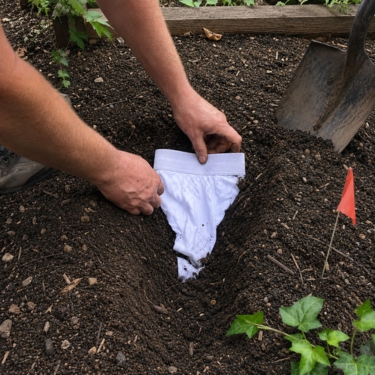
Get 100% cotton – Read the tag. A cotton and polyester blend won’t break down, and you’ll end up with a useless result. Plain white men’s briefs give you the most fabric and they’re the cheapest thing on the shelf. And if you can’t find all-cotton undies, a square cut from an old cotton t-shirt or a piece of unbleached muslin does the same job. Once again, if only the waistband is made out of plastic, this is perfectly fine.
Wait for warm soil – Late May through June works for most of the country. Soil biology barely moves in cool damp spring ground, and if you wait until high summer in a dry year you’ll get nothing either.
Slice, don’t dig – Push a spade straight down and lean it back to open a slot. Lay the underwear in flat, straighten it out so it isn’t bunched, then close the slot with your boot. A big loose hole changes the very thing you’re trying to measure.
Leave the waistband up – Two inches of elastic sticking out of the ground saves you a lot of hunting in August. Protocols disagree on depth, and some run them a foot down while others keep the fabric in the top few inches. What matters more is burying every test spot the same way so your comparison holds up.
Water it if the ground is dry – Use rainwater or well water. City tap water carries chlorine, and chlorine is in there specifically to kill microbes, so you’d be poisoning your own test.
Flag the spot – Use a real marker, not a stick you’ll mow over. And if you have dogs or raccoons or curious hens, bury the whole thing and trust the flag. The Australian crew lost their first pair to a kangaroo.
Mark the calendar – Sixty days is the minimum. Write the dig-up date somewhere you’ll actually see it.
When the day comes, work the soil loose with your hands instead of a shovel so you don’t tear the fabric yourself. Rinse it gently in a bucket and lay it out on a board.
How to Get Chlorine-Free Water All Year Long
This is something you migh be struggling with right now. You know that all that tap water is slowly killing your garden, but you feel like there’s no other real choice out there.
Digging a well? Yes, this can be a good solution, but maybe you don’t have the time, the tools, or the skill to do that.
If you’re not digging a well, what else is left? Catching rainwater. This is less complicated and is actually the most common option of chlorine-free water among homesteaders. But if you want to start doing this, you need a water catchment system and maybe building one from scratch is not your priority.
Ok, these two are the main options, but I want to tell you that there’s one more option out there. Nobody talks about it because not many people know about it.
It might sound a bit unconventional, but after all, you’re reading this in an article telling you about how you should bury your cotton undies in the garden. So, bear with me.
Imagine your basic home dehumidifier. What does this machine do? It pulls water out of thin air. Now, how would it be to have a scaled-up machine like this that does the same job but 10x better? A machine able to generate water you can use in your garden?
This device exists and is nicknamed “The Cloud in a Box.” It is designed for those of you who want to get chemical-free water.
Compared to regular dehumidifiers, this machine is designed to be used outside in your garden. It’s sturdy and can resist bad weather, from rain to drought. Try to do that with a Temu dehumidifier. It will break down in less than a week…
If you want to finally start to treat your garden right and give your plants pure water, this is your chance.
Click here and see how the“The Cloud in a Box” works →
Reading What Comes Back Up
Nothing but the waistband – Your soil is about as biologically active as possibl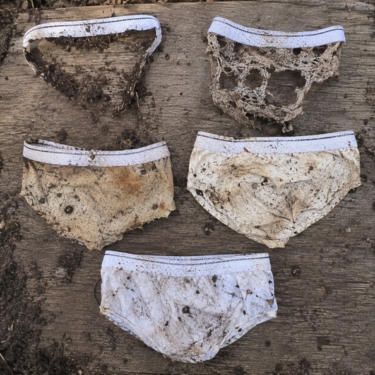 e. Whatever you’ve been doing in that garden, keep doing it.
Lacy and full of holes – Good, active soil. This is what you should be aiming for in a working garden bed.
Stained and soft but still in one piece – Something is happening down there, just slowly. Usually that points to low organic matter, or a bed that dried out partway through.
Looks about like it did going in – Very little activity, or a problem with the conditions. Read the next section before you write the bed off.
You’ll also see colors on the fabric, oranges and browns and blacks and sometimes a purple streak. Those stains come from different bacteria and fungi, and researchers at South Dakota State have been studying that pigmentation as a shortcut for judging microbial activity without a lab. For your purposes, colored stains mean you had company down there.
One smart move that makes your garden beds x3 more productive is upgrading them. And when I say this, I am not telling you to make them bigger.
Among the most important factors that tell you how big your harvest will be is how often you water your garden beds. Homesteaders who follow a consistent watering schedule are the ones who get the biggest harvests.
But let’s be real for a second. You are a regular person. It’s normal to forget to water a garden bed from time to time.
This happens. It’s not a tragedy, and maybe I forgive you for this, and you forgive yourself for missing one “watering appointment”, but your garden won’t forgive you, and you’ll see it when you end up with 5 sad tomatoes instead of 35 beautiful bright red tomatoes…
Ok, so what can you realistically do about this?
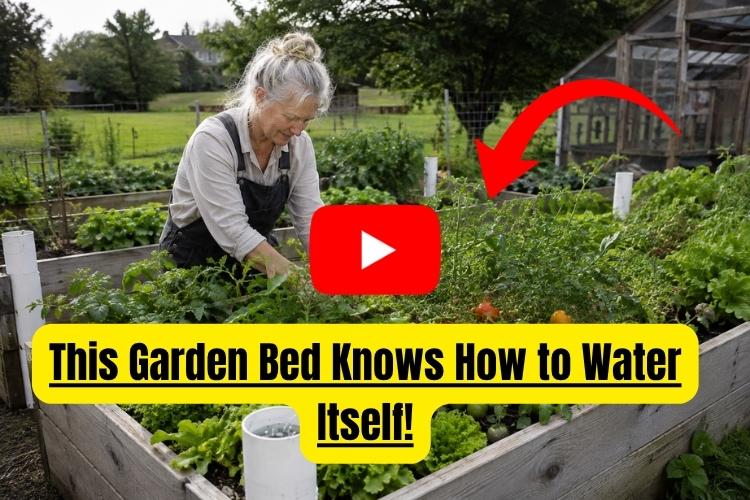
As I said, you can upgrade your garden beds and transform them into self-watering garden beds.
I did that for all of the garden beds I have in front of my house, and it’s been a game changer. Here’s where I keep all my fussy vegetables and they seem happier than ever.
So, do you also want to make your garden happy? Transform your garden beds!
The process is simple and you don’t need fancy materials. Probably the PVC pipes are the most “expensive” thing on the list.
👉 Click here and see how to make your garden beds 300% more productive!
Real Results From Real People
The Dubois County Soil and Water Conservation District in Indiana ran this test in 2017, and theirs are the results I’d point you to, because they got a surprise.
Their project manager buried several pairs on the Vincennes University campus in Jasper that April. Tilled ground, no-till ground, a grass waterway, and the woods. She dug them up in June and almost nothing had happened to them. So she buried fresh pairs in early June and pulled them mid-July, and that time the soil went to work.
The tilled field chewed its pair full of holes. There was nothing else down there worth eating, so the soil life ate the underwear.
And the pair in the woods came out untouched. Not because forest soil is dead, but because the forest floor was already buried in leaves and duff, so the soil life had better food sitting right there and ignored the cotton.
Out in Montana, the same NRCS folks published a comparison I think about often. Five weeks in a garden that had been no-till for twelve years, next to five weeks in a fertilized Kentucky bluegrass lawn. The garden pair came back in shreds. The lawn pair came back wearable.
And in Rhode Island, a conservation district buried pairs on working farms and came back with nothing but elastic bands at a couple of the sites.
The Mistakes That Ruin the Test
How you use water is a big one here. Dry soil shuts microbial activity down almost completely, so a healthy garden that was hit every day by the sun of August will hand you the same sad result as a dead one. Check your test spot when you water the rest of the garden.
Temperature comes next, which is exactly what Indiana ran into that first spring. Cool soil means slow soil.
And then there’s the competing food problem from the woods. If you bury a pair under six inches of fresh wood chips, don’t be shocked when the soil life goes for the chips first.
The bigger thing to understand is that one pair of undies from one bed tells you very little on its own. You need something to hold it up against.
So bury two or three at once. One in your best bed, one in a bed you’re worried about, and one out in the lawn or a corner you’ve never amended. Same day, same depth, same water. Then you’re measuring your own ground against your own ground, and the answers start to make sense.
What to Do If Your Undies Come Back Whole
Stop turning the soil – Tillage tears up fungal networks and burns through organic matter fast. Loosen your beds with a fork instead of flipping them over.
Keep something growing – Living roots feed soil life year-round. Get a cover crop in after your fall harvest instead of leaving bare ground all winter.
Feed it real organic matter – Compost, aged manure, chopped leaves, straw. Bare soil starves the exact thing you’re trying to build.
Keep it covered – Mulch holds moisture and evens out soil temperature, and both of those matter a great deal to microbes.
Mix up what you plant – Different root systems support different soil organisms. A bed with four species in it does better than a bed with one.
Then bury a fresh pair next June and see whether anything changed.
Final Thoughts
I like this test because it hands you something physical. Numbers on a soil report are useful, but they don’t land the way a shredded pair of briefs does when you pull it out of a bed you spent four years building up.
So, if you want an unconventional but reliable way to test your soil, this is the one you should choose. It’s easy to use, and it gives you visible results.
You may also like: 
What Happens if You “Water” Your Garden With Spoiled Milk
NEVER (Ever!) Grow These Plants in Garden Beds (Video)
The Natural Garden Booster Hidden in Most American Kitchens
These 10 Watering Mistakes Waste 50% of Your Water
7 Seeds You Should Never Buy From a Big Box Store