Today I want to share with you something I find really exciting. This is the kind of news any homesteader and gardener would go crazy about.
Did you know that your local library offers you more than just books?
All across America, you can go to the library and get free seeds you can use in your garden.
And the best thing? There are no fees for this. Sometimes you don’t even need a membership.
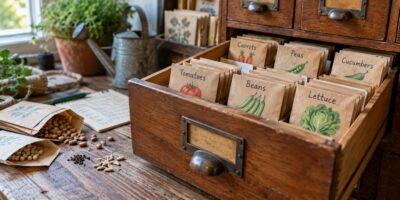
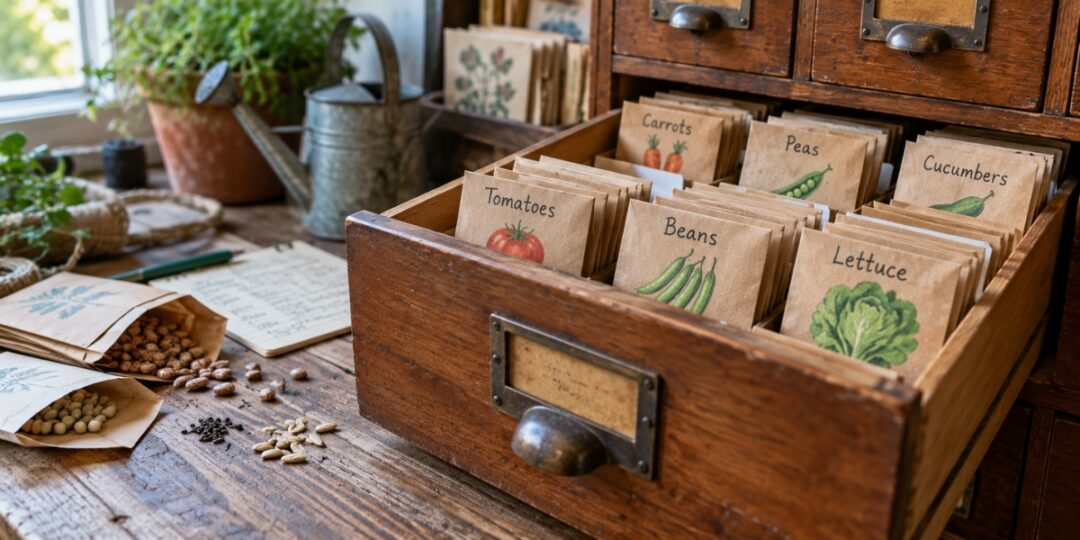
You get access to a catalogue and choose whatever you are interested in. This catalogue is called a seed library.
And this kind of initiative has been around for about 25 years now!
Hundreds of them, in all kinds of states, and the number keeps climbing.
Also, there’s even a part that the government keeps hidden. About 10 years ago, a state agriculture department told one small-town library that handing out donated bean seed broke the law, and for a while it looked like the whole thing might get shut down for good.
Today I want to tell you what you can do to get access to seed libraries around you.
What’s the Deal With All of This?
This is basically a collection of various seeds that you can take home with you. You browse what’s in the drawers, you take what you want, you plant it at home.
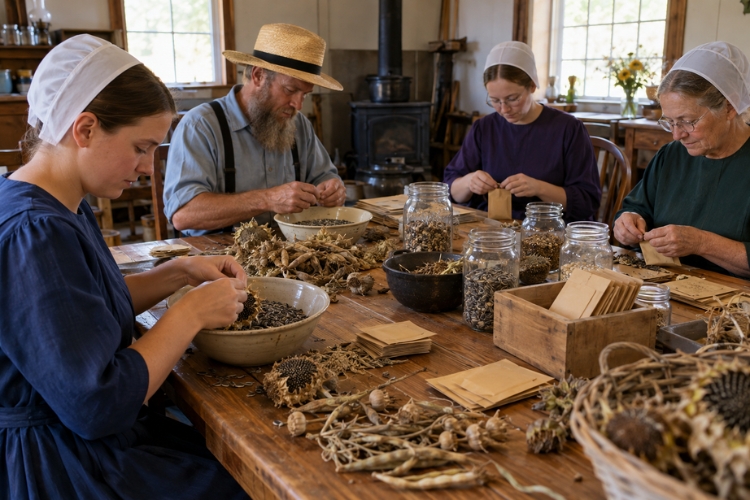
At the end of the season, you’re encouraged to save seed from what you grew and bring some back so the collection keeps going. This is why it’s called a library. You take what you need, and then, if possible, it’s nice to bring some back.
But you’re not required to. Rebecca Newburn, who helps run the Seed Library Network, puts it plainly: you’re encouraged to learn seed saving, but there’s no obligation to return anything you borrowed.
You’ll find them in community centers and food pantries and county extension offices too. The public library is just the most common home for them, because libraries already know how to track these kinds of things.
And these are not tiny operations. Phoenix Public Library put seeds on the shelf at one branch back in 2014, and now gives out around a thousand packets a month across nine of its branches.
The 2014 Incident
In June of 2014, the Joseph T. Simpson Public Library in Mechanicsburg, Pennsylvania got a letter from the state Department of Agriculture. They claimed that the brand new seed library, which had opened that spring, violated the Pennsylvania Seed Act of 2004.
To keep handing out seed the neighbors donated, the library would have to do what a commercial seed company does. Get licensed. Label everything to state standards. Test every seed packet for germination and for whether it was true to the variety on the label.
And then a county commissioner told the local paper that agri-terrorism was a very real scenario. This is such a strange thing to say about a drawer of seeds in a small-town library.
The library couldn’t do any of that, so they stopped taking donated seed back in, and the program carried on handing out only commercially packaged, labeled seed.
But the story didn’t end there.
Gardeners, farm groups and a few lawyers got organized. So, in 2016, the Pennsylvania Department of Agriculture clarified that seed libraries and other noncommercial seed exchanges are not subject to the licensing, labeling and testing rules in the Seed Act at all.
Other states went further and rewrote their laws outright. Minnesota went first in May of 2015, Nebraska followed a week later, Illinois in August of 2016, and California the month after that with a bill people called the Seed Exchange Democracy Act. North Carolina already covered seed libraries under a blanket exemption for nonprofits, and Alaska added one too.
The truth is, those seed laws weren’t written out of spite.
They exist so a farmer who takes fifty pounds of seed can hold somebody accountable when it turns out to be the wrong variety or it doesn’t come up. The problem was pointing all of that at small, local seed libraries.
Meanwhile, the shelves just kept filling. Michigan runs a program where seed libraries across the state all grow one shared variety, and sign-ups went from about 200 libraries in 2023 to 331 in 2025. Down in Tucson, Pima County Public Library circulated 8,444 packets its first year in 2012, and about 28,000 by 2016.
What Type of Seeds Can You Get
Every seed library writes its own rules, and the limits run all over the place, so you should ask before you make any plans.
Some let you take three packets a week. Some allow eight packets for the whole year. Pima County lets cardholders check out ten a month. Scott County in Minnesota asks you to keep it to around ten a day and doesn’t require a card at all. Albuquerque allows thirty packets a calendar year if your card is in good standing.
Packets are small, and you should expect that going in. A lot of libraries count out roughly ten seeds per packet, sometimes fifteen. They’re splitting donated seed as far as it will go.
Also, the seed selection changes through the year.
Think of this as a handful of free packets to experiment with. It’s a good way to trial three new tomato varieties, or to get a short row of lettuce going, or to try something you’d never spend money on. But it won’t cover a whole garden.
What About the Seeds You Can’t Find at the Library?
One thing you probably won’t find at every seed library is a good selection of medicinal herbs.
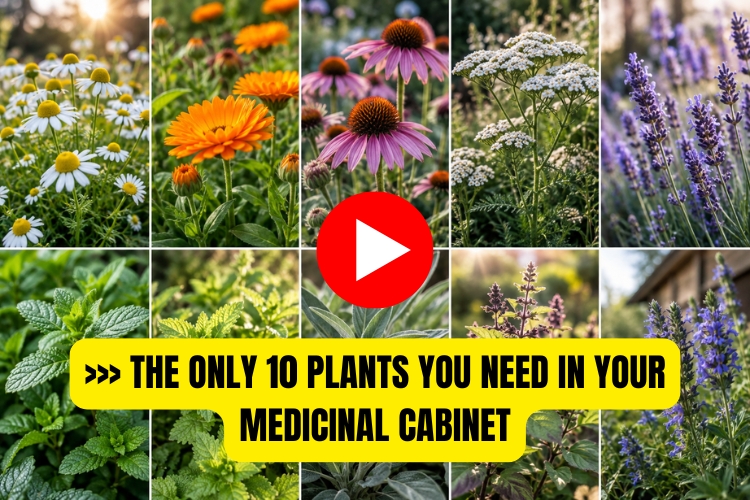
Plants like chamomile, calendula, echinacea, and yarrow are the plants people come in asking about, and the libraries never have them in stock.
These are herbs you can grow right outside your door and use to make your own herbal teas, salves, and other traditional preparations. Instead of buying everything ready-made, you can harvest these plants yourself, dry them, and keep a supply on hand for whenever you need it.
There’s actually a Medicinal Garden Kit that brings together seeds for 10 of these herbs. What caught my attention is that it also comes with a guide showing you how to grow, harvest, and prepare each one.
You can see all 10 plants included in the kit here.
Where Are All the Seeds Coming From
The seeds in those drawers come mainly from two places.
Leftover commercial seed – Seed companies donate stock from the previous season that they can’t sell anymore. It’s packaged, labeled, and in most cases still perfectly good, because seed doesn’t expire on a date the way milk does. Stored somewhere cool, dark, and dry, a lot of varieties stay viable for years.
Seeds from people from the community – These are the seeds people from the local community donate to the library. What is great about this is that most of these donated seeds are adapted to your area. This means the plants that gave them survived the soil, humidity, and temperature of the place you live in. They are adapted to the climate already, so the chances of them growing into healthy plants are higher.
But there’s a catch here, and the good libraries say so themselves. Nobody germination-tested that neighbor seed. Pima County’s own material tells you straight out that community-grown seed may not meet state germination or labeling standards.
But you can test them at home. Take 10 seeds and put them in a mist pepper towel. Let them germinate. If 7 out of 10 seeds germinate, you’re good to go. It’s a good batch.
How to Find the Nearest Seed Library
Start by checking your local library. Your librarian will know, and if your branch doesn’t have one, they usually know which branch in the system does.
Call your county extension office next. Extension and Master Gardener volunteers help run a lot of these programs, and they’ll know about the small ones that never show up online.
After that, check the volunteer-run seed library map. It’s useful for spotting one a county or two over, though I’ll warn you the data isn’t complete and it isn’t live, so a library can exist without appearing on it.
Don’t stop at your own county line either. If you already drive to the next town for feed or groceries, swing by their branch while you’re there, because library systems next door will usually issue you a card.
And if you’re out in the country, ask whether the seeds travel. In Cleveland County, North Carolina, the library put seeds on the bookmobile for people who couldn’t make the drive into town, and the number of packets they handed out nearly doubled in two years.
If Your Town Doesn’t Have One
Surprisingly, you can start one yourself, and it costs less than you’d guess. The prices are somewhere between $300 and $500 to set a seed library up at a new branch, and that’s for a city system. A volunteer group in a small town can do it for less.
Talk to your librarian first, since they’ll need to agree to house it. The good part is, they often say yes faster than you’d expect.
Ask around for an old card catalog or a filing drawer. Write to seed companies in the fall and ask about donating leftover stock, because that’s how plenty of collections get started.
Then pull in your extension office or your local garden club for the seed-saving classes, since the classes are what keep people coming back the next year.
Read This Before You Give Seeds Back
If you do decide to return seed, you want to do it right, because bad donations cause real problems for the next person who wants to take some seeds.
First, only save from open-pollinated or heirloom plants. Never save from a hybrid. Hybrid seed won’t come true in the next generation, and somebody is going to plant it expecting the tomato in the picture.
Second, start with the crops that stay true on their own. Oregon State Extension puts lettuce, beans, peas, peppers, eggplant, and tomatoes at the top of the easy list, because they mostly pollinate themselves.
And saving seed is just one of those things that used to be completely normal. But this isn’t the only gardening habit worth keeping around.
I was looking through The Amish Ways, and one section explains why some Amish gardeners put circles of wood ash around their plants. The reason is actually incredible!
There are also other simple vegetable growing methods in there that rely more on what you already have than on buying another product. These guys are peak resourcefulness.
Maybe you won’t use every old Amish method out there, but most of them have a good reason they survived that long.
Third, label the envelope before you drop it off. Variety name, the year you harvested it, and a note about where the seed came from originally. Libraries ask for exactly that, and they usually toss an unlabeled envelope of mystery seed.
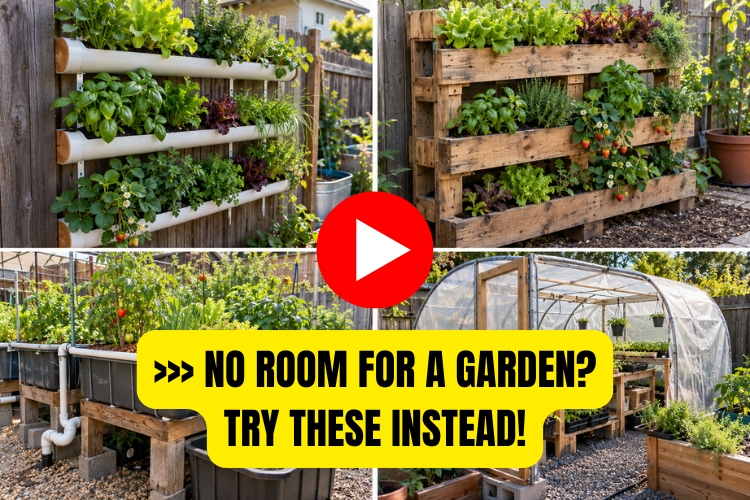
What If You Don’t Have Room for a Real Garden?
The part nobody tells you when they hand you a packet of free seeds is that seeds are the cheap part.
Beds, soil, watering, fencing, greenhouse supplies, and everything else can add up pretty fast.
But you also don’t have to build the kind of garden you see in magazines.
I was looking through the gardening section of The Lost Skills of Independence, and some of the setups are meant for exactly this problem. There are vertical gardens, pallet gardens, self-watering setups, small greenhouses, and other ways to squeeze more food out of the space and materials you already have.
Take a look at what you can build when you don’t have acres of good garden ground!
One Last Thing
I like these programs because there’s nothing complicated about them. Somebody grows a good bean, saves the seed, and leaves it in a drawer for the next person. That’s it. That’s the whole system, and it worked for a few thousand years before anybody printed a catalog.
I find programs like these a real proof of community collaboration and, somehow, the backbone of survival.
This is why I want to hear if you have any stories about seed libraries. Have you tried them? Tell us more in the comments section below!
You may also like: 
7 Seeds You Should Never Buy From a Big Box Store
See How to Pull Fresh Water From the Ground With a Simple PVC Hand Pump (Video)
DIY Natural Noise-Canceling Walls
How to Make Bricks at Home: Step-by-Step Guide
7 Everyday Things That Attract Flies (Get Rid of Them ASAP)