Canning is by far one of the staples when it comes to homesteading.
Let’s say you have a beautiful garden and you had a great harvest this year. What is the next thing you do? All the surplus gets canned so you have self-produced food all year long.
Everybody talks all the time about how awesome canning is, but nobody mentions how hard the job can be, especially if you’re alone or have no one to help you.
This is a reality, but it wasn’t always like this.
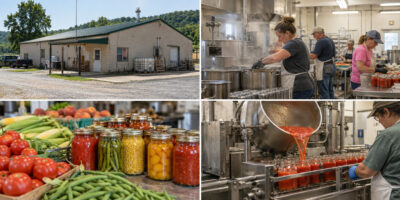
A whole town used to put up its food together in one big shared kitchen. Somebody experienced ran the equipment, and the neighbors worked elbow to elbow.
Sounds wonderful, right?
The thing is that a lot of those buildings never closed. You might have one sitting in your county right now, and nobody ever told you.
What Is a Public Cannery
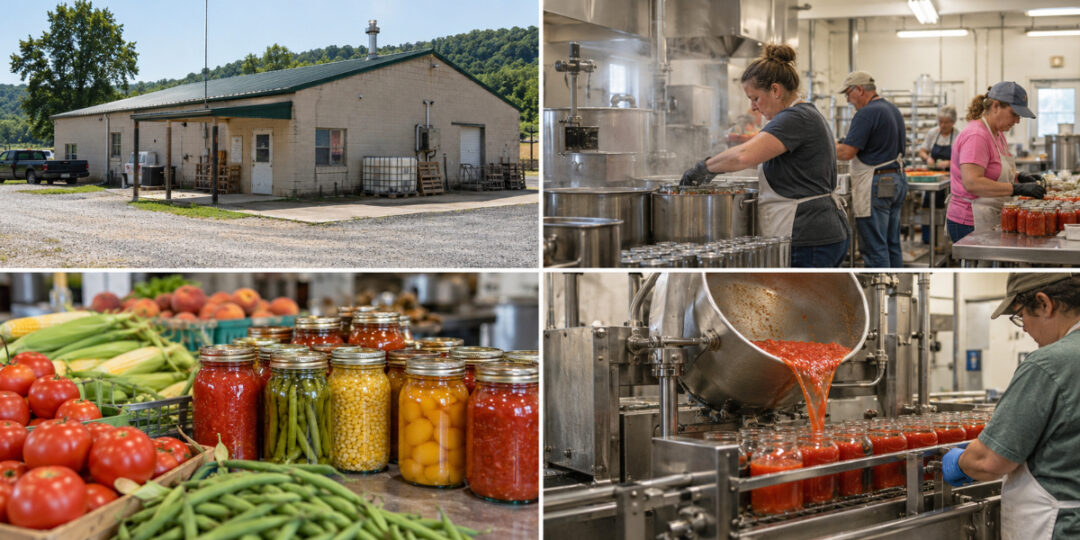
Basically, it’s a shared kitchen with commercial equipment, where you bring your own produce and put it up yourself.
Most of the time, a county runs it, or a school district, or sometimes a small nonprofit that refused to let the doors close. You pay a small fee, you do the work, and you drive home with your food.
They came out of the war years. The government pushed families to grow their own during both world wars, but nobody was able to handle that volume at home. This is how states stepped in and built the public canneries.
By 1943, Americans were putting up more than four billion jars a year at home and in those county plants!
At the peak, there were over 3,800 of them scattered across the country.
Georgia alone had 383 school canneries by 1942, and better than two dozen of those schools still run one today. Virginia had around 120 and still has about a dozen going. Florida, Tennessee, Idaho, and Wisconsin have them too.
Why You Should Choose a Public Cannery
The reality is quite harsh. These canneries run on thin budgets and stubborn people.
One Virginia county has come close to closing its plant at least four times. In another town, when the funding got cut, the neighbors took the building over, fixed the equipment themselves, and have run it on private money ever since. Wythe County lost its boiler in the fall of 2025 and couldn’t do any canning at all until the county replaced it the next summer.
These places are amazing, but you need to keep in mind that the community that uses them is what keeps them alive. The government won’t give them bigger budgets if no one shows up to use their services.
This is why it’s so important that we, the homesteading community, show up and help these places grow.
I’ve talked to many people about public canneries. Everybody told me they want one in their state or county. People love the idea because you can do a better and faster job for a couple of dollars. A job that would take you days at home, you can finish in just a couple of hours in a cannery.
Before we go any further, there’s one more thing I want to share with you, especially if you don’t have a public cannery anywhere near you.
I’ve always homecanned my harvest and food and I know all the hardship you might encounter during the process, from cans that aren’t sealing properly to food that doesn’t remain as tasty over time.
When it comes to canning, the Amish really know what they’re doing. They’ve been preserving their own food this way for generations, and over the years, they’ve picked up plenty of little tricks and secrets that make a real difference.
This is why I want to share a collection of videos where a former Amish man shows you how to can food the Amish way, how to make it last longer, how to preserve its flavor, and how to avoid the little mistakes that can ruin a whole batch.
Get the Amish canning videos here at 83% off, plus 4 FREE bonuses!

The Equipment You Find Inside
This is something you might never have seen in your life. Hard to picture it until you step inside.
Big steam kettles, some holding fifty gallons. Steam blanchers. Commercial juicers. Corn creamers. Mechanical pea and butterbean shellers that do in ten minutes what your hands do in an afternoon.
These are industrial machines you can use if you ever decide to visit a public cannery. Machines that will let you preserve all your harvest in a couple of hours, not days in a row!
A lot of plants also seal metal cans, and they sell you the cans. This is amazing because metal cans have some amazing advantages compared to glass. They don’t break that easily, and you can stack them in the pantry so easily. Also, it’s even cheaper than buying new lids every year.
How Much You Need to Pay for All of This
This is the part that nobody can believe when they hear about public canneries.
Why?
Because these prices are too good for what this type of facility offers.
Below, I’ll drop a list of more public canneries across the US and how much they charge so you can get the idea.
Union County, Georgia – 50 cents a jar, pint or quart, Tuesdays and Thursdays, July through October, by appointment.
Thomson High School, Georgia – $1.25 per quart can, and the students will shell your peas while you wait.
Perry, Georgia – no charge at all to use the plant; the state listed it. You bring the produce and your jars.
Carroll County, Virginia – a $10 season fee if you live in the county, then 20 cents a pint jar and 25 cents a quart, with a specialist on site who walks you through the whole thing.
Franklin County, Idaho – $12.50 a day or $30 for the season, plus the cost of the cans.
But these numbers move a little every season. This is why I advise you to call before you go.
When Can You Find Them Open
The Virginia canneries usually open around the Fourth of July, when the tomatoes and squash and string beans start coming in heavy. Down in Georgia, they often start earlier, some of them the first week of June. After that, the season moves the way your garden moves.
August brings beets and carrots and corn. October brings apples and pumpkins and black-eyed peas. And by the end of November, the gardens are mostly finished.
Most of these places sit in old cinder block buildings with no heat in them at all, so they shut down when the weather turns. One longtime operator in Virginia said it better than I could. They stay open until the pipes freeze.
Depending on where you live, the dates shift by a few weeks. So, ask about the calendar early.
Can You Also Preserve Meat?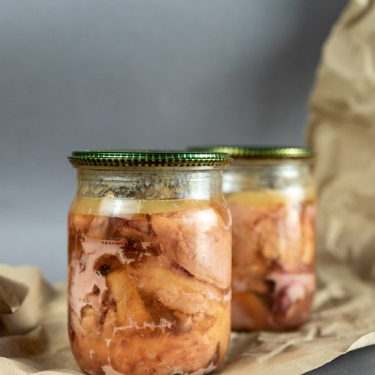
Not all of them handle meat, but there are a few that do and mosst than centrally you’ll need an appointment if you want to can meat.
This happens because these plants follow state agriculture rules for it. The Eastanollee cannery in Georgia keeps a whole separate side of the building just for it.
Several Virginia canneries take deer, and one has volunteers who come in and put up venison stew for families who need it.
What About Preserving Meat Without Canning?
Now, preserving meat is a little trickier than preserving vegetables. Get the pressure or processing time wrong when canning meat, and you could end up with botulism. And the scary part is that you can’t always tell something is wrong just by looking at the jar.
But there’s another old-fashioned way of preserving meat that has less risk. Most homesteaders know about it, but avoid it because they think it’s complicated: smoking and drying.
But here’s something worth remembering.
People were preserving meat long before pressure canners were invented.
And one of the ways they did it was with smokehouses.
I think this is one of those old skills that deserves a comeback. Especially if you’re raising your own animals or hunting for meat. After all, you’ve already put so much work into getting that food. The last thing you want is to waste any of it.
And don’t imagine you need some big, expensive building to start smoking your own meat.
Just look at this old Native American smokehouse design.
It’s a simple setup you can build right in your backyard, using basic materials.
Imagine having your own little smokehouse out back. You could be smoking venison from your last hunting trip, homemade bacon, or even fish you caught yourself.
And I don’t know about you, but the thought of that slow wood-smoked flavor makes me hungry already!
Want to build one yourself?
See the Native American smokehouse design and the illustrated building instructions here.
How to Find the Nearest Public Cannery
A woman named Bee Patrick, up in Virginia, told Virginia Living magazine she figured every cannery around her had closed years ago. Then she saw a news segment about one still running in the next county over. She took a day off work and showed up with a half bushel of string beans and some peaches off a neighbor’s tree.
The woman sitting on the porch opened the screen door and invited her inside, “We’ve got a new one!”
She went home that afternoon with sealed cans and said she’d be back the next week with squash.
And this is the thing: these places are still there. They just don’t advertise.
This is the best way to start your search:
Your county extension office – Start here. They either run the plant, help staff it, or know who does.
The ag teacher, if you’re in Georgia – Call the high school ag department or the FFA advisor. The state keeps a list of food processing centers with contacts and hours on it.
The county offices, if you’re in Virginia – Ask for the county administrator or public works, because several canneries there run on the county budget.
Try to find info on the internet – Type your county name plus “canning plant” or “county cannery.” Searching the word cannery by itself just brings up fish plants and museums.
Facebook – Half these places post their hours there and nowhere else.
How to Prepare for Your First Canning Session
The first and most important thing you need to do is figure out what the public canneries supply. Call them and see if they are offering or selling you jars. Or how things are working.
Many of them just let you use their machinery and offer you some guidance. This means you should bring everything else from home. Bring your recipe and every single ingredient it calls for, including the salt and the vinegar and the sugar.
Don’t forget to wash your produce at home. This is the easiest way to make sure things will run smoothly.
Also, get there early. A lot of plants stop taking produce in by 10:30 or noon, even though they stay open later, because they need the rest of the day to finish what’s already inside.
What a Cannery Really Buys You
In reality, your stove and your equipment are the ones setting limits on how much you put up.
Your garden, even if you live in a small space, can give you a ton of food. And this probably already happened to you. This is how you might end up desperate in the fall to give away your harvest to neighbors.
And I get it because buying a pressure canner at home is a serious investment. Many of them are too expensive for a normal American family.
Then there is also the time you spend doing all the canning work. For some people, it can take a whole week. This is some precious time you could have used in some other way.
And last but not least, canning is one of the safest ways to keep food for a long time. In a scenario where the grid goes down, your canned food is the first thing that will keep you alive after your water provisions.
A public cannery makes all of these things easier. It’s cheap and lets you put up dozens of cans. Even more, all the cans you make there are 100% safe. And considering the industrial canning process, these cans might also have a longer shelf life than the ones you make at home.
Why Start Planning Next Year’s Garden Now
Growing your own food starts long before you put the seeds in the ground and start taking care of your plants.
It actually starts when you buy your seeds.
This is why you want good-quality seeds. After all, you can’t expect a good harvest if you don’t give your plants a good start. And I think this is one of the first things every gardener needs to understand.
Now, it might sound counterintuitive, but right now is actually the perfect time to start planning next season’s garden.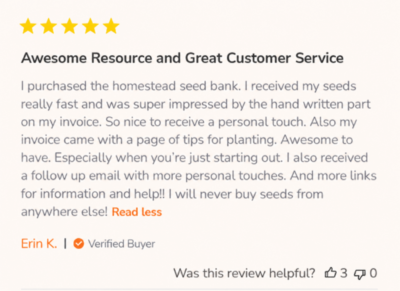
Why? Because this is a good time to get your hands on the best seeds you can find.
Once early spring comes around, everybody starts looking for seeds. People are all trying to get the best varieties, and the most popular ones can sell out pretty quickly.
And buying seeds in spring isn’t always the best idea. You might end up waiting weeks for your order, only to have your seeds delivered when it’s already too late to plant them on time.
So why not get them now and have everything ready for next spring?
And if you’d like to get some good-quality seeds, you’re in the right place.
I want to show you something called the Homestead Seed Bank.
It’s a collection of 25 different varieties of non-GMO, non-hybrid seeds, including tomatoes, carrots, beans, cucumbers, peppers, and other vegetables you can grow right in your backyard.
What I like about these seeds is that they come from a trusted source. SeedsNOW is an American, family-owned and operated small business located in Southern California. Their reviews are positive and farmers all around the U.S. recommend them. They also deliver really fast.
If you’d like to have your own Homestead Seed Bank ready for next spring, you can get it here:
👉 Get Your Own Homestead Seed Bank
You may also like: 
12 Signs Your Canned Food Has Gone Bad
How to Collect Clean, Drinkable Water from Plants (Video)
9 Plants That Grow With No Water
What We Learned After Our First Year of Total Self-Sufficiency
7 Things You Never (Ever!) Need in Your Pantry