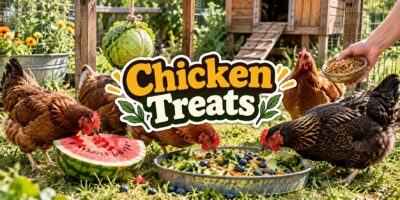
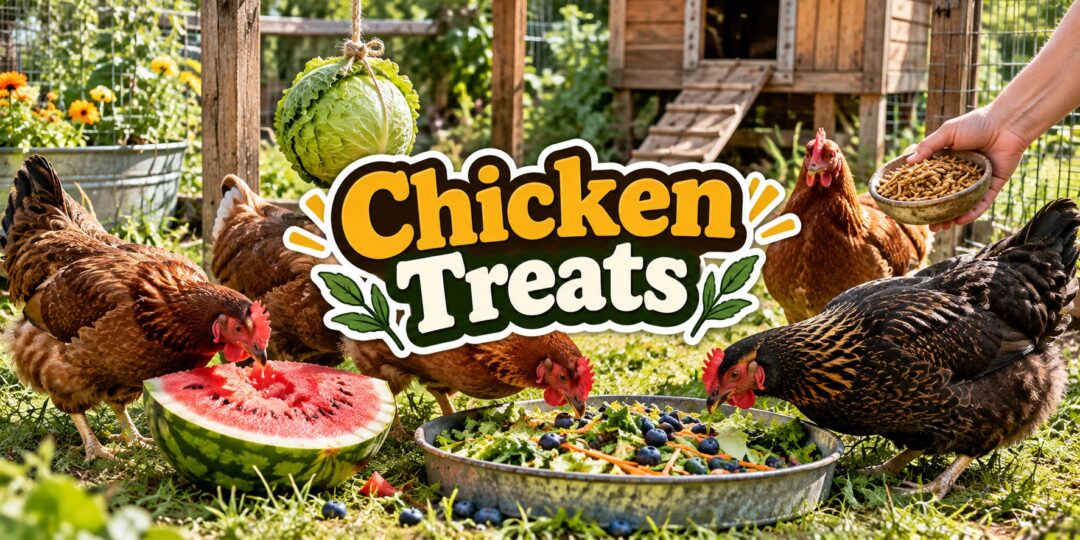
Walk out to the run with a bowl in your hand and watch what happens. Every hen in the yard comes sprinting, wings out, like you are carrying gold.
Treats are one of the joys of keeping chickens. They make birds easier to handle, help you check on the flock up close, and turn kitchen scraps and garden extras into eggs instead of trash.
But treats can also do real harm when they crowd out a balanced diet or include foods chickens should never eat. Here is how I handle treats on the homestead: how much to give, which foods are worth it, which to skip, and seven simple DIY treats you can make from what you already have.
The 10 Percent Rule
The single most important thing to know about chicken treats is that they are extras, not meals. Purina’s poultry nutritionists recommend that at least 90 percent of a hen’s diet come from a complete feed, with treats making up no more than 10 percent.
In practical terms, Purina notes that a laying hen eats roughly 1/4 pound of complete feed a day, about half a cup, so treats should stay at or under about 2 tablespoons per hen per day. For a flock of six, that is roughly 3/4 cup of treats spread across the whole group.
The reason is simple: complete feed is carefully balanced for protein, calcium, vitamins, and minerals, and treats dilute that balance. The University of California Cooperative Extension advises treating table scraps like a treat rather than the main diet, and avoiding fatty foods, since chickens do not need much fat.
Scratch Grains Are the French Fries of the Coop
Scratch is the classic chicken treat, but it is not a meal. University of Georgia Extension stresses that scratch grains should never be used as the only feed for poultry and should not be considered a balanced diet.
University of Kentucky poultry specialist Jacquie Jacob, quoted in Hobby Farms, compares scratch grains to French fries. Her advice is to feed them in the afternoon after the birds have eaten their complete feed, and only as much as they can finish in 15 to 20 minutes.
That is the routine I follow with all treats: complete feed first thing in the morning, treats in the afternoon. Our main chickens guide covers choosing feed, grit, and daily rations if you are just getting started.
The Best Chicken Treats From the Homestead
The best treats are the ones you already have: garden extras, healthy kitchen scraps, and protein you can raise yourself.
Garden Greens and Weeds
Leafy greens are my flock’s everyday favorite. Purina notes that dark leafy greens can result in darker, richer yolks, and lists lettuce, kale, turnip greens, and chard as great options.
Weeds count too. Dandelion, chickweed, clover, and purslane pulled from the garden are free, fresh, and keep birds busy for an hour, as long as nothing has been sprayed.
Fruits and Vegetables
Most garden vegetables make good treats, including squash, cucumbers, pumpkins, broccoli, beets, and carrots. We have a whole article on whether chickens can eat carrots, including how to serve them safely.
Fruit is a hit but higher in sugar, so I keep it to small amounts. Purina lists watermelon, strawberries, and blueberries as healthy snacks when fed in moderation.
Protein Treats
Protein treats are especially welcome during the fall molt, when hens are regrowing feathers. Dried mealworms and black soldier fly larvae are easy to store and send hens into a frenzy.
You can also raise protein yourself. If you keep a worm bin from our vermicomposting guide, a handful of extra red wigglers makes a prized treat, and scrambled or hard-boiled eggs, fully cooked, are another protein boost that uses up cracked or extra eggs.
Grains and Kitchen Scraps
A small scoop of scratch grains, cooked oatmeal, cooked rice, or plain pasta all make good occasional treats. Bread is fine in small amounts too, and our article on whether chickens can eat bread explains the limits.
The key with scraps is quality. If you would not eat it because it is moldy or spoiled, your chickens should not either.
Foods You Should Never Feed Chickens
Chickens will eat almost anything, which is exactly why you need to be careful. UF/IFAS Extension and UC Cooperative Extension both flag several foods to keep out of the run:
- Avocado: UF/IFAS explains that persin can cause breathing problems, weakness, and heart issues in chickens and recommends avoiding avocados entirely.
- Chocolate and caffeine: These are toxic to birds and should never go in the scrap bucket.
- Green potatoes and peels: UC Extension lists green areas of potatoes among foods to avoid, and UF/IFAS warns against green peels and spoiled potatoes.
- Raw or dried beans: UC Extension specifically lists raw beans as something to avoid, so cook beans thoroughly or skip them.
- Moldy or rotten food: UF/IFAS’s rule is simple: if it is too moldy for you to eat, it is too moldy for your chickens.
- Salty, fatty, and heavily processed food: UF/IFAS notes that too much salt can lead to dehydration and kidney damage, so skip chips, fast food, and heavily salted leftovers.
- Alcohol: UF/IFAS says chickens should never be given alcoholic beverages or heavily fermented foods.
- Cold-damaged rhubarb: Purina warns that rhubarb damaged by severe cold can contain a high concentration of oxalic acid, which can be fatal to chickens.
UF/IFAS also notes that onions are usually not harmful in small amounts but should not be a regular part of the diet. When in doubt, leave it out.
Seasonal Treat Strategy
Summer: Cool, Watery Treats
Hot weather changes the rules. University of Arizona Extension notes that hens eat less during heat waves, so it is important to limit treats and extras, especially scratch grains, and to focus on treats that add water without filling birds up.
Arizona Extension suggests frozen watermelon or chopped fruits and vegetables frozen into a block to keep hens cool and busy. Mississippi State University Extension agrees that fruits and vegetables frozen in water-filled ice trays make an acceptable hot-weather treat, and recommends feeding the balanced diet early in the morning before the day heats up.
Winter: Energy and Entertainment
Cold months are when scratch grains earn their keep. Many keepers toss a small handful of scratch in the late afternoon so birds go to roost with a full crop, and a scoop of warm cooked oatmeal on a frosty morning is a favorite in our coop.
Winter is also when boredom sets in for birds stuck inside. A hanging cabbage or a treat ball gives them something to peck at besides each other.
7 Easy DIY Chicken Treats
None of these need special ingredients. Just remember that all of them count toward the 10 percent treat limit.
1. Frozen Fruit and Veggie Blocks
Chop watermelon, cucumber, berries, and leafy greens into small pieces, pack them into a silicone muffin pan, top with water, and freeze. Set a block or two in a shady spot on hot afternoons.
2. Hanging Cabbage Tetherball
Drill a hole through the core of a cabbage, thread a rope through it, and hang it at about the height of a hen’s back. The flock gets greens and exercise in one go, and it keeps them busy for hours on long winter days.
3. Garden Salad Bowl
Pick a bowl of weeds, beet tops, chard, and lettuce from the garden, chop them roughly, and scatter them in the run. It is the cheapest treat on the homestead and one of the healthiest.
4. Mealworm and Seed Suet Cake
Melt rendered lard or beef tallow, stir in scratch grains, mealworms, and a few sunflower seeds, and press the mixture into a muffin tin to harden. Serve one cake in a suet cage during cold snaps, and keep these out of the summer menu since they are high in fat.
5. Sprouted Grains
Soak wheat, barley, or oats overnight, rinse twice a day in a sprouting tray, and serve when the sprouts are about an inch long. Sprouts bring fresh greens to the run in the dead of winter when the garden is asleep.
6. Harvest Day Pumpkins
After the fall harvest, split a pumpkin or winter squash in half and let the flock work through the seeds and flesh. Toss the shell in the compost when they are done.
7. Scrambled Egg Breakfast
Scramble a couple of cracked or extra eggs with chopped greens, cook them through, cool, and serve. It is a nice protein boost during molt and uses up eggs you cannot sell or store.
How to Serve Treats the Right Way
- Feed complete feed first: Give treats in the afternoon, after birds have eaten their regular ration.
- Spread treats out: Scatter treats in several spots so lower-ranking hens get a share instead of being chased off by the boss hen.
- Clean up leftovers: Remove uneaten fresh food before nightfall so it does not spoil or draw rats and raccoons to the coop.
- Keep calcium separate: Treats do not supply enough calcium for strong shells, so many keepers offer crushed oyster shell free-choice in its own dish for laying hens.
- Wait on young birds: Purina suggests waiting until the first egg to introduce treats, since growing birds need every nutrient in their starter-grower feed.
- Watch the flock: Thin-shelled eggs, falling egg production, or overweight hens can be signs that treats are crowding out real feed.
Keep Yourself Healthy Too
Treat time is also cuddle time for a lot of families, so a quick word on hygiene. The CDC warns that backyard poultry can carry germs like Salmonella even when they look healthy and clean.
The CDC recommends washing your hands with soap and water after touching birds, eggs, or anything in their area, and not kissing or snuggling poultry or eating and drinking around them. It also advises supervising children closely, and says children younger than 5 should not touch chicks, ducklings, or other poultry.
I keep a bottle of hand sanitizer by the coop door and a pair of boots that never come inside the house. It takes a few seconds and keeps treat time fun for everyone.
Common Questions About Chicken Treats
Can chickens have treats every day?
Yes, as long as the daily total stays small. A little bit of greens or a pinch of mealworms each afternoon is better for the flock than a big pile of scraps a few times a week, because it never crowds out their complete feed.
Are store-bought chicken treats better than homemade?
Not necessarily. Bagged mealworms, larvae, and scratch are convenient and keep well, but fresh greens and garden extras are usually healthier and cost nothing, so I use a mix of both.
Can I feed my chickens meat scraps?
Chickens are omnivores and will happily eat small amounts of plain cooked meat or fish. Trim off heavy fat, skip anything salty, seasoned, or spoiled, and keep portions small so they do not replace feed.
Why did my hens stop laying after I started giving treats?
Treats are rarely the only cause, since molt, short days, heat, and age all slow laying. If production drops after you increase treats, though, cut back to the 10 percent guideline and make sure the flock is eating its layer feed first.
Do treats help tame chickens?
Absolutely. Hens quickly learn that you bring good things, and a few mealworms from your hand is one of the fastest ways to build trust with a skittish flock, just remember to wash up afterward.
Your Chickens Are Just the Beginning: Rediscover the Lost Skills of True Independence
Raising backyard chickens, growing your own food, and turning kitchen scraps into nutritious treats are wonderful steps toward self-sufficiency. But imagine taking that independence even further.
What if you knew how to preserve your harvest without relying on electricity, make everyday necessities from scratch, reduce your dependence on grocery stores, and keep your household running when modern conveniences suddenly disappear?
These aren’t new survival tricks. They’re the forgotten skills that helped our ancestors thrive with far fewer resources than we have today.
And they’re exactly the kind of practical knowledge you’ll explore in The Lost Skills of Independence.
This valuable guide is designed for people who want to reconnect with traditional self-reliance and build a household that’s better prepared for whatever the future brings.
Discover the value of:
- Growing and producing more of your own food: Build on your backyard chicken-keeping experience and learn to make better use of the resources around you.
- Traditional food preservation: Explore time-tested methods for making your harvest last longer and reducing dependence on refrigeration.
- Making everyday essentials from scratch: Rediscover resourceful household practices that can reduce unnecessary spending.
- Reducing waste and stretching supplies: Learn to see kitchen scraps, garden leftovers, and ordinary materials as valuable resources.
- Preparing for unexpected disruptions: Develop practical skills that become especially valuable during power outages, shortages, and emergencies.
- Passing down forgotten knowledge: Reconnect with the resourcefulness that once made families more independent and resilient.
The most valuable thing on your homestead isn’t your chicken coop, your garden, or even your emergency stockpile. It’s what you know how to do with them.
You don’t need a massive farm, expensive equipment, or years of experience to begin. Every new skill brings you one step closer to a household that wastes less, produces more, and depends less on outside systems.
Your chickens already turn garden extras into fresh eggs. Imagine what else you could accomplish by bringing generations of forgotten knowledge back into your everyday life.
Don’t wait for the next shortage or emergency to discover how much you’ve come to depend on modern conveniences.
Final Thoughts
Chicken treats are one of the simplest pleasures of homestead life, and one of the easiest ways to turn garden extras and kitchen scraps into eggs. Keep treats to about 10 percent of the diet, steer clear of the short list of dangerous foods, and match your treats to the season.
Do that, and your hens will stay healthy, productive, and very happy to see you coming with that bowl.
You may also like: 
Why Homesteaders Are Hanging Garlic in Their Chicken Coops
What Doctors Do to Keep Their Immunity High (Video)
How to Cook Chicken Feet: A Homesteader’s Guide From Cleaning to Plate
Why Your Chickens Might Be Poisoning Their Own Eggs
Aged Chicken Manure – What It Is, How to Make It, and How to Use It Safely