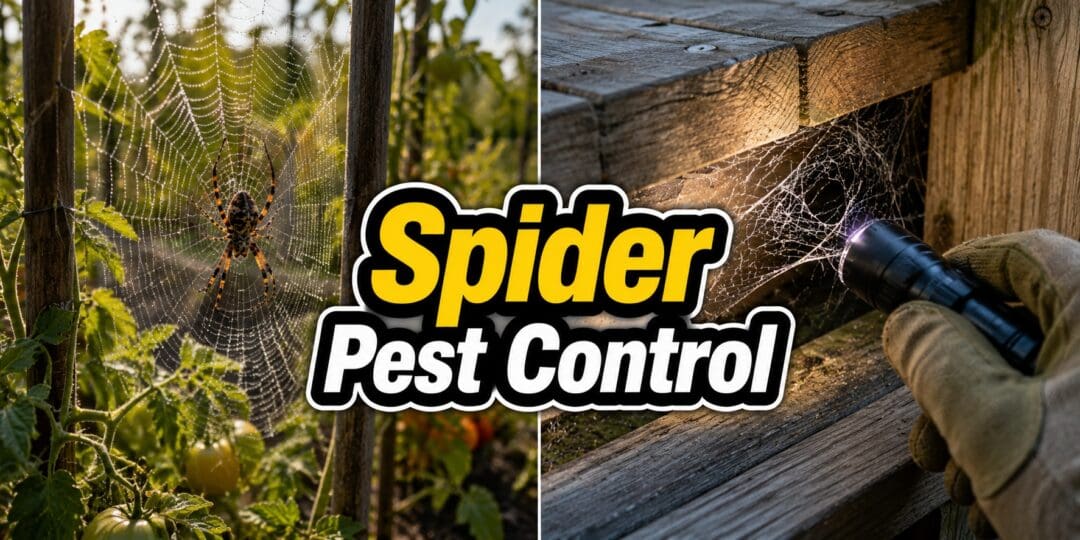
Spiders occupy a genuinely complicated position in the homesteader’s world. They are, by any practical measure, some of your most valuable allies against garden pests, mosquitoes, flies, and the dozens of other insects that make outdoor life and food growing more difficult. At the same time, certain species can pose real safety risks to your family and livestock, and an unchecked indoor population is something most people reasonably do not want to tolerate regardless of their ecological sympathies.
Effective spider pest control is not about eliminating every spider from your property. It is about making a clear-eyed distinction between the beneficial species you want to protect and encourage, the nuisance species you want to redirect away from your living spaces, and the genuinely dangerous venomous species that require immediate and thorough action. That distinction shapes every decision in this guide.
According to the UC Marin Master Gardeners, spiders are among the most ecologically important predators in garden and agricultural ecosystems, consuming enormous quantities of pest insects throughout the growing season. The same spiders you are considering eliminating may be protecting your vegetable garden more effectively than any commercial spray.
Why Spiders Are on Your Homestead in the First Place
Before reaching for any control method, it is worth understanding what draws spiders to a property and what keeps them there. Spiders are not attracted to humans, human food, or human structures for their own sake. They follow their food supply. If you have spiders, you have insects. Addressing the root cause rather than just the symptom produces more durable results.
Food: The Primary Driver
Spiders are obligate predators. They eat insects and other small invertebrates, and they establish themselves wherever their prey is abundant. Bright outdoor lights that attract moths and other night-flying insects around a porch or barn door create exactly the conditions that support large spider populations at those entry points. Aphid colonies on vegetable crops draw predatory wasps and beneficial insects, but also spiders that feed on those insects. A persistent indoor spider population almost always indicates a persistent indoor insect population. Find the insects and you have found the reason the spiders are there.
Shelter and Undisturbed Spaces
Spiders prefer dark, undisturbed areas that provide both hiding space and web attachment points. Woodpiles, stacked lumber, cluttered storage areas, boxes that have not been moved in months, dense ivy or shrubs against the house foundation, and deep leaf litter under hedges are all prime spider habitat. Cluttered barns, garages, basements, and attics attract and sustain spider populations far more readily than clean, organized spaces. The single most effective long-term spider control measure on a homestead is aggressive reduction of undisturbed clutter and harborage areas.
Entry Points
Spiders do not need large gaps to enter a building. Gaps around utility pipes, cracks in window or door frames, torn screens, gaps at the base of exterior doors, and spaces around cable or electrical entry points all provide access. Most indoor spider populations begin as outdoor populations that find their way inside through these openings. Exclusion is a permanent solution in a way that chemical repellents and traps are not.
The Essential First Step: Know What You Are Dealing With
The most important thing to establish before taking any action is whether the spiders on your property include venomous species. For the vast majority of homesteaders in North America, the answer is no, and this knowledge should significantly shape your response. Treating a harmless garden spider population as a threat equivalent to a black widow infestation leads to unnecessary use of pesticides, elimination of beneficial predators, and wasted effort.
Common Non-Venomous Spiders You Are Probably Seeing
Of the more than 3,500 spider species identified in the United States, only a small fraction are considered medically significant. The Texas A&M IPM Action Plan for Spiders is explicit: unless spiders are venomous, they can be left in place to help with biological pest control. The following are the most common species you are likely to encounter:
- Orb weavers: The large, colorful, round-bodied spiders that build the classic circular webs in garden plants and fence lines. Completely harmless to humans and extraordinarily effective at catching flying pest insects. Among the most ecologically beneficial garden spiders.
- Wolf spiders: Large, hairy, fast-moving brown spiders that hunt on the ground without building webs. Alarming in appearance but harmless. They are active predators of ground-level pest insects including beetles, crickets, and cockroaches.
- Jumping spiders: Small, compact, often colorful spiders with large forward-facing eyes. Fast movers that hunt by sight. Non-venomous and completely harmless to humans despite their active presence around windows and doors.
- House spiders: The small brown spiders responsible for the dusty cobwebs in corners, basements, and window frames. Harmless nuisance species. Their webs are untidy but the spiders themselves pose no threat.
- Crab spiders: Flat, wide-bodied spiders often found on flowers where they ambush pollinators and other insects. Beneficial garden predators. No meaningful threat to humans.
- Cellar spiders (daddy long-legs): The long-legged, small-bodied spiders that hang in loose webs in basements and corners. Despite persistent folklore, their venom is not particularly potent and they present no meaningful risk to humans.
Venomous Spiders: Identification and Geographic Range
Two groups of spiders are genuinely medically significant in the United States and warrant serious attention when found on a homestead: widow spiders and recluse spiders.
Black widow spiders (Latrodectus species): Black widows are found throughout the United States. The adult female is the medically significant sex and is identified by her shiny black body and the distinctive red hourglass marking on the underside of her rounded abdomen. She typically measures about one and a half inches across including legs. Black widows prefer dark, undisturbed locations: under rocks, inside woodpiles, in the corners of sheds and garages, and under outdoor furniture. Their webs are irregular, messy, and close to the ground. Black widow venom is a neurotoxin that causes significant pain and can require medical treatment, particularly in children and older adults. Anti-venom is available and fatalities are rare with prompt treatment. Seek medical attention immediately after any suspected black widow bite.
Brown recluse spiders (Loxosceles reclusa): Brown recluses are found primarily in the central and southeastern United States, roughly from Nebraska to Texas eastward through the Southeast. They are medium-sized, uniformly light to dark brown spiders identified by the violin-shaped marking on the cephalothorax, the head and chest section. Despite widespread fear of brown recluses, they are genuinely reclusive and bites typically occur when the spider is accidentally pressed against skin inside clothing or bedding. Their venom has necrotic properties that can cause significant tissue damage in a small percentage of bites and requires medical evaluation.
Spider Pest Control Indoors: A Layered Approach
Effective indoor spider control is built on three layers in order of permanence and effectiveness: exclusion first, habitat reduction second, and active deterrents and removal third. Addressing only the third layer produces temporary results that require constant repetition. Building all three layers produces durable long-term reduction.
Layer 1: Exclusion
Exclusion means sealing the pathways spiders use to enter your home. This is the most permanent and cost-effective spider control measure available and, once done properly, it simultaneously reduces entry by all other household pests.
- Inspect the entire perimeter of the house foundation and seal all gaps larger than a quarter inch with caulk or expandable foam. Pay particular attention to gaps around utility pipe penetrations, cable entry points, air conditioner conduit, and exterior faucet connections.
- Check and replace weather stripping on all exterior doors. A gap at the base of a door wide enough to see light through is wide enough for most spider species.
- Inspect all window screens and replace any with tears, holes, or frames that do not seat fully in the window frame.
- Check where the house meets the foundation, particularly where wood framing sits on concrete or masonry, as this junction often has gaps that are overlooked.
- Seal gaps around the attic access hatch, vent openings to the crawlspace, and any gaps where pipes or wires pass through interior walls.
Layer 2: Indoor Habitat Reduction
Spiders establish indoor populations in areas that provide both shelter and food. Reducing these conditions makes your home systematically less hospitable regardless of what enters through any remaining gaps.
- Declutter all storage areas aggressively. Cardboard boxes stored directly on the floor of a garage or basement are ideal spider habitat. Replace cardboard storage with sealed plastic totes wherever possible.
- Move stored firewood, lumber, and other materials well away from the house exterior. A woodpile stacked against the foundation is a direct pipeline for spiders and the insects they follow into the house.
- Vacuum regularly in spider-prone areas: basements, attics, closets, behind large appliances, and under furniture that is rarely moved. The vacuum removes both spiders and the insects that support them.
- Remove spider webs immediately and consistently. A spider whose web is repeatedly removed will eventually relocate. Consistent web removal also prevents egg sacs from hatching and dramatically multiplying the local population.
- Address any indoor insect infestations directly. Persistent indoor fly, moth, or ant problems are the food source that sustains indoor spider populations. Treating the prey population treats the predator population.
Layer 3: Active Deterrents and Removal
Once exclusion and habitat reduction are in place, several active methods help manage any remaining spider activity.
Peppermint Oil Spray
Peppermint oil is the most consistently documented natural spider deterrent and the one with the most supporting practical evidence. The volatile compounds in peppermint oil interfere with spider chemoreception, disrupting their ability to navigate using chemical signals and discouraging them from establishing in treated areas. Mix 15 to 20 drops of pure peppermint essential oil in one cup of water in a spray bottle and apply to window frames, door frames, basement entry points, and anywhere you regularly see spider activity. Reapply every week or two as the scent fades. Citronella, tea tree, and eucalyptus oils have similar reported effects though less consistent supporting evidence than peppermint.
An important note on essential oils and pets: tea tree oil and citrus oils are toxic to cats if ingested or applied in high concentrations. If you have cats, use peppermint or lavender oil instead and avoid applying these sprays to surfaces where cats walk and subsequently groom.
White Vinegar Spray
A diluted white vinegar spray, approximately half vinegar and half water, repels spiders through its strong acetic acid scent. Apply to the same areas as essential oil sprays. Vinegar is entirely pet-safe, inexpensive, and can be used more liberally than essential oils. It is less persistent than oil-based repellents and requires more frequent reapplication. Vinegar also serves double duty as a cleaning agent and surface disinfectant for the areas you spray.
Diatomaceous Earth
Food-grade diatomaceous earth (DE) is a powdered fossilized algae whose microscopic sharp edges cut through the waxy exoskeleton of insects and spiders on contact, causing dehydration and death. Apply a thin layer along the base of walls, in the gaps around entry points, under appliances, and in any area where spiders are regularly seen. DE is effective against both spiders and the insects they prey on, making it a two-layer control measure. Use only food-grade DE rather than pool-grade diatomaceous earth, which has a different chemical treatment and should not be used around humans or pets. Apply while wearing a dust mask as the fine particles can irritate the respiratory tract. Avoid applying in damp areas where DE loses effectiveness.
Glue Traps
Non-toxic sticky glue traps placed along walls, in corners, and behind furniture catch spiders passively and serve two purposes: they reduce the population and they identify which areas have the highest spider activity, helping you focus exclusion and deterrent efforts more precisely. In brown recluse management specifically, the Illinois Department of Public Health recommends deploying large numbers of glue traps, 50 or more in an average home, along walls and behind furniture to both reduce the population and map activity hotspots. Keep glue traps out of reach of children and pets.
Houseplants That Deter Spiders
Several common houseplants with strong aromatic properties are reported to discourage spider activity in the rooms where they grow. Lavender, mint, lemon balm, eucalyptus, and rosemary all release volatile compounds that spiders find unappealing. Growing these plants in pots near entry points and on windowsills serves double duty as both a deterrent and a useful herb garden resource. The deterrent effect is mild and not a primary control strategy on its own, but it adds a pleasant and low-maintenance layer to a comprehensive approach.
Spider Pest Control Outdoors and in the Garden
Outdoor spider management requires a fundamentally different mindset from indoor management. In the garden and across the broader homestead, spiders are primarily beneficial and should be managed rather than eliminated. The goal is to reduce spider presence in specific problem areas, such as around the barn door, under the porch, or in the children’s play area, without disrupting the garden populations that are actively working for you.
Spiders as Garden Allies
The ecological value of garden spiders to a homestead cannot be overstated. A single orb weaver rebuilds its web daily and catches every flying insect that passes through that section of garden in a 24-hour period. Wolf spiders work the ground layer of the vegetable beds, hunting cucumber beetles, aphid-tending ants, caterpillars, and other soil-level pests with no chemical input required from you. Crab spiders on flower heads intercept the insects that pollinate but also the insects that damage petals and seed pods. Removing these predators creates a vacuum that pest insects fill faster than beneficial predators can be reestablished.
The practical takeaway for homesteaders is this: do not spray broad-spectrum insecticides in or around productive garden beds unless you have a specific, identified pest problem that cannot be managed otherwise. These sprays do not discriminate between pest insects and the spiders that feed on them. Every insecticide application to your garden beds resets the predator population while pest insects, with their higher reproduction rates, recover first.
Managing Spiders Around the Homestead Perimeter
The area around barns, sheds, outbuildings, and the house exterior is where outdoor spider management is most warranted. Dense vegetation immediately against the building wall, stacked lumber or equipment, deep mulch piled against the foundation, and debris accumulations all provide outdoor spider habitat that is uncomfortably close to areas where people and animals spend time.
- Maintain a clear, vegetation-free zone of at least six to twelve inches around all building foundations. Grass, ground cover, or mulch pressed against a foundation wall creates both spider habitat and a moisture problem that damages the structure.
- Keep firewood, brush piles, and stacked materials at least ten feet from the house. Wood stacked against an exterior wall is the number one source of black widow spiders finding their way into homes in regions where black widows are present.
- Remove leaf litter and debris accumulations from under porches, decks, and exterior stairs regularly. These are prime harborage areas for widow spiders.
- Turn off exterior lights you do not need or switch to yellow or amber bulbs that attract fewer night-flying insects, which in turn reduces the spider population at those locations.
- Use sodium vapor or LED amber outdoor lighting rather than white or UV-emitting lights near doors. White and UV light attracts the greatest volume of flying insects and the spiders that follow them.
Natural Outdoor Sprays
For managing spider activity around specific outdoor areas where people frequently work or gather, a tobacco juice and mint soap spray is a traditional approach with documented repellent effects. Soak one package of pipe tobacco in a gallon of boiling water until cool. Strain, then combine one cup of the tobacco water with half a cup of mint-scented dish soap in a hose-end sprayer. Apply to the problem area. This mixture repels spiders, mosquitoes, and many other pests. Be selective about where you apply it, as it will also affect beneficial insects in treated areas. Do not apply near beehives, flowering plants in active pollination, or in pond or water garden areas.
Managing Venomous Spiders on the Homestead
Black widows and brown recluses require a different and more thorough approach than nuisance species. The goal with venomous spiders is reduction or elimination in areas where humans and animals have regular contact. Tolerance is not the appropriate strategy.
Black Widow Control
Black widows prefer dark undisturbed spaces close to the ground: underneath woodpiles, inside hollow block wall cavities, in the corners of outbuilding floors, inside garden gloves left in the shed, and under outdoor furniture that is rarely moved. The most effective black widow management combines regular inspection, habitat reduction, and glue traps.
Inspect all areas where you regularly reach without looking using a flashlight before putting your hands in or under anything in black widow territory. Get in the habit of shaking out garden gloves, boots, and any clothing left in the garage or shed before putting them on. Move and reorganize storage areas regularly so that undisturbed spaces do not accumulate. In areas of heavy black widow activity, a residual insecticide applied by a licensed pest control operator in cracks, voids, and along the base of foundation walls provides more thorough control than DIY methods alone.
If bitten by a black widow, seek medical treatment immediately. Effective anti-venom is available and prompt treatment prevents serious complications. The California Poison Control Hotline for venomous spider bites is 1-800-222-1222.
Brown Recluse Control
Brown recluse management requires particular attention to clutter reduction and sticky trap deployment. The Illinois Department of Public Health’s brown recluse resource provides the most thorough guidance available on this species: seal all cracks and crevices, eliminate all clutter including stored cardboard boxes, place stored clothing and linens in sealed plastic bags, and deploy glue traps in large numbers along walls and behind furniture.
Brown recluse bites are most commonly accidental: reaching into a drawer, putting on a shoe left in the garage, or rolling onto a spider in bedding. The preventive measures of checking footwear and clothing before wearing, keeping storage areas organized and minimally cluttered, and moving stored items regularly are the most practical protection. Store all clothing and bedding in sealed bags or airtight containers in areas where brown recluses are present. Treat the bed frame legs with sticky tape or vaseline if you have a significant infestation, as brown recluses do not jump but will climb any vertical surface.
Suspected brown recluse bites should be evaluated by a healthcare provider. Clean the bite site thoroughly, apply ice to reduce swelling, and monitor closely. A small percentage of brown recluse bites develop necrotic tissue damage that requires medical management. If the wound does not improve or begins to worsen after 24 to 48 hours, seek medical attention.
When to Call a Professional
Most spider situations on a homestead can be managed effectively with the methods described in this guide. There are specific situations where professional pest control is the appropriate call:
- You have confirmed black widow or brown recluse spiders inside living spaces, particularly in areas accessible to children.
- A venomous spider population is large enough that you are encountering spiders regularly despite active management efforts.
- You have identified egg sacs from venomous species and are not confident you can locate and remove them all. A single brown recluse egg sac can release hundreds of spiderlings.
- Indoor spider populations persist despite thorough exclusion work and habitat reduction, suggesting an entry point or harborage area you have not located.
- You have had a bite that required medical attention and want to ensure the source population is fully addressed.
A licensed pest control professional can accurately identify the species present, locate harborage areas and entry points you may have missed, and apply professional-grade residual treatments in structural voids and foundation perimeters where general consumer products cannot reach. For venomous species specifically, professional evaluation and treatment is a reasonable investment in household safety. The Texas A&M IPM program recommends professional involvement for confirmed venomous species infestations that have not responded to exclusion and cultural controls.
A Practical Spider Management Calendar for the Homestead
Spider populations on a homestead follow seasonal patterns. Working with those patterns rather than reacting to them after populations build reduces the total management burden.
Early Spring
Inspect and seal all exterior gaps and cracks before spider activity increases with warming temperatures. Check and replace worn weather stripping and window screens. Clear winter leaf litter and debris from around foundations and outbuilding walls. Organize winter storage areas and replace cardboard boxes with sealed plastic totes.
Late Spring and Summer
This is peak spider season. Inspect woodpiles, outbuilding corners, garden storage areas, and other harborage zones regularly. Remove webs as they appear. Maintain the vegetation-free zone around building foundations. Vacuum basements and crawlspaces monthly. Apply peppermint or vinegar sprays to entry points every two weeks.
Autumn
Spiders seek protected overwintering sites in late autumn, which drives both indoor and outbuilding infestations. This is the highest-risk period for spiders entering living spaces. Intensify exclusion checks as temperatures drop. Deploy glue traps in basements, garages, and utility rooms to monitor for activity. Clear firewood into the house daily rather than stockpiling large amounts indoors.
Winter
Maintain DE applications along baseboards and in basements. Continue regular vacuuming in spider-prone areas. Inspect stored clothing and equipment before using after long periods of undisturbed storage. This is a good time to do deep-clean organization in storage areas that will be used again in spring.
Summary: A Balanced Approach to Spider Management
Effective spider pest control on a homestead is not about eliminating every spider. It is about understanding the difference between the valuable garden predators working in your favor, the nuisance species that can be redirected through exclusion and deterrents, and the small number of genuinely dangerous species that warrant thorough, systematic action.
The foundation of any effective program is habitat reduction and exclusion: reducing the clutter, undisturbed spaces, and structural gaps that allow spider populations to establish and grow. Deterrents, traps, and natural repellents are the fine-tuning layer applied to a well-maintained foundation. Chemical intervention is a last resort for specific, confirmed venomous species in living areas.
The orb weaver stringing its web between your tomato cages overnight is catching moths that would otherwise lay eggs in your crops. The wolf spider moving through your vegetable bed is hunting cucumber beetles. Work with these animals where possible, manage them where necessary, and reserve serious intervention for the small number of species that genuinely require it.
You may also like:
Join Our Facebook Group for More Tips, Tricks, and Guides on Homesteading And Gardening
Cut Down On Your Bills In 2026 With These Easy Amish Projects (Video)
Apple Orchard Pests: How to Identify, Prevent, and Control Them
How Much Does Pest Control Cost? What You’ll Pay vs. What You Can Do Yourself
Replace Your Harmful Pesticides With THIS
Deterring Unwanted Pests with Lemon and Baking Soda