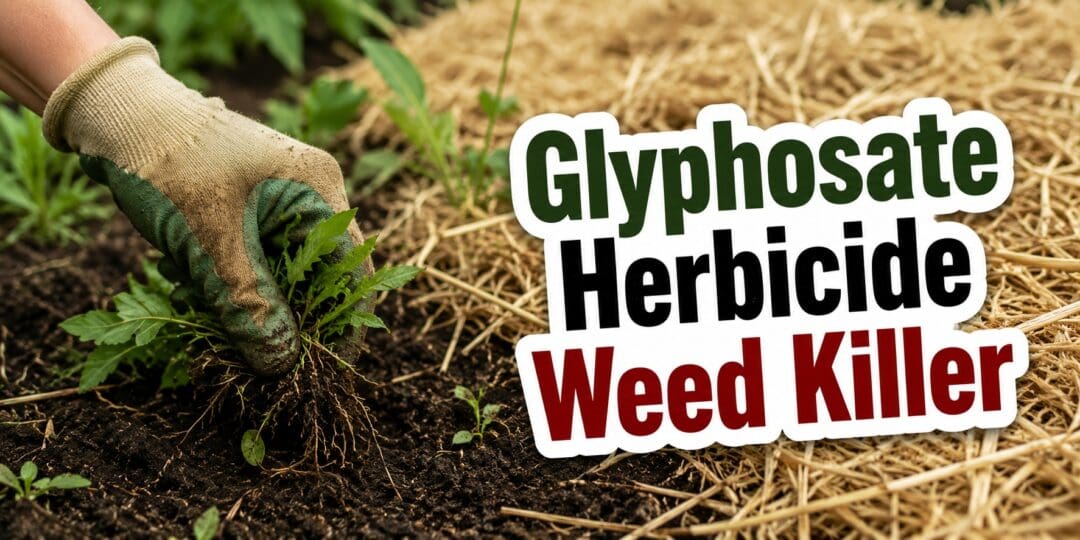
Glyphosate is the active ingredient in many of the most widely used weed killers on the market, most famously Roundup. It is a broad spectrum, non selective herbicide, meaning it kills almost any plant it touches rather than targeting a specific weed species. For decades it has been the go to solution for clearing garden beds, driveways, fence lines, and large agricultural fields. But for homesteaders and self sufficient growers trying to build healthy, chemical free soil, understanding exactly what glyphosate does and what it leaves behind matters a great deal.
The U.S. Environmental Protection Agency classifies glyphosate as one of the most heavily used herbicides in the country, applied across both agricultural and residential settings since the 1970s. Its popularity comes from its effectiveness and relatively low cost compared to manual weeding or other chemical alternatives.
How Glyphosate Works
Glyphosate kills plants by blocking an enzyme called EPSP synthase, which plants need to produce certain amino acids essential for growth. Without this enzyme functioning properly, the plant cannot make the proteins it needs to survive, and it dies over the course of several days to two weeks. Because this enzyme pathway, known as the shikimate pathway, does not exist in humans or animals, manufacturers have long marketed glyphosate as having low toxicity to people and pets compared to older herbicides.
It is absorbed through the leaves and stems of a plant and then moves through the plant’s vascular system down into the roots, which is why it is effective against persistent perennial weeds that regrow from root systems, not just the leaves you can see above ground.
Health and Environmental Concerns
Glyphosate has become one of the most debated chemicals in modern agriculture. In 2015, the International Agency for Research on Cancer classified glyphosate as a probable human carcinogen, a conclusion that conflicts with assessments from several other regulatory bodies that have found insufficient evidence of cancer risk at typical exposure levels. This disagreement has fueled lawsuits, label changes, and ongoing scientific debate.
The National Institutes of Health notes that exposure risk depends heavily on the level, frequency, and method of contact, with occupational exposure for those who handle and spray it regularly being a greater concern than occasional consumer use. Beyond human health, there are also questions about glyphosate’s impact on soil microbial life, pollinators, and nearby waterways when it runs off after rain.
- Glyphosate can persist in soil for weeks to months depending on soil type, moisture, and microbial activity.
- Repeated use has led to glyphosate resistant weeds in many agricultural regions, reducing its long term effectiveness.
- Runoff into ponds, streams, and wells is a documented concern near treated fields and gardens.
- Some studies suggest glyphosate can disrupt beneficial soil fungi and bacteria that support healthy plant roots.
Where Glyphosate Shows Up on the Homestead
Many self sufficient growers do not realize how often glyphosate enters their property indirectly. It is commonly used along roadsides, utility easements, and neighboring farmland, which means runoff or drift can reach your own soil even if you never apply it yourself. It is also present in some commercial compost, mulch, and hay if the source material was treated with glyphosate before harvest, since the chemical can survive composting in small amounts and still affect sensitive plants like tomatoes and beans.
If you are building raised beds or sourcing soil amendments, it is worth asking suppliers directly whether their hay, straw, or manure comes from glyphosate treated fields, especially if you have had unexplained stunted growth or leaf curling in sensitive crops after applying a new batch of compost.
Safer Alternatives for Weed Control
Reducing reliance on glyphosate does not mean giving up control of your garden or property. Many homesteaders successfully manage weeds using a combination of mechanical and natural methods that protect soil health over the long term.
- Thick layers of mulch, such as straw, wood chips, or cardboard, smother weeds by blocking sunlight.
- Hand weeding or hoeing on a regular schedule prevents weeds from establishing deep root systems.
- Vinegar based herbicides with high acetic acid concentration can burn back young weeds, though they are less effective on established roots.
- Flame weeding with a propane torch attachment kills weeds on contact without chemical residue.
- Cover crops and dense planting reduce bare soil where weeds typically take hold.
According to Cornell University’s College of Agriculture and Life Sciences, integrated approaches that combine cultural, mechanical, and minimal chemical methods tend to produce more sustainable long term weed control than relying on any single herbicide application.
Grow the Way Generations Did
Healthy soil doesn’t come from a bottle. For generations, Amish families have produced abundant gardens using simple, time-tested methods that build fertility naturally—without relying on synthetic herbicides or expensive chemical inputs.
The Amish Ways reveals practical, proven techniques for creating healthier soil, growing stronger crops, preserving harvests, and living a more self-sufficient lifestyle using traditional methods that still work today.
The Bottom Line
Glyphosate remains one of the most effective and widely available weed killers, but it comes with real tradeoffs in soil health, ecosystem impact, and ongoing scientific debate about long term safety. For a self sufficient property where healthy soil, clean water, and food safety are the priority, leaning on mechanical control, mulching, and targeted natural alternatives is generally the more sustainable path, with chemical herbicides reserved as a last resort for the toughest, most persistent infestations.
You may also like:
The Vinegar Weed Killer Recipe Every Homesteader Should Know
The 10 Wild Foods That Saved Me When I Was Homeless (Video)
Weed Killer Safe for Pets – The Complete Guide to Pet-Friendly Weed Control
67 Methods to Get Rid Of Weeds Naturally
How To Grow A Weed-Free Garden
RM43 Weed Killer – What It Does And Why Many Homesteads Are Choosing Another Path