Once you commit to storing your own water, whether for drinking, irrigation, livestock, or just backup security, you’ll run into the same question almost immediately: what tank should I actually buy? Plastic dominates this market for good reason, but not every plastic tank is built the same way or rated for the same use, and the label on the tank often says less than you’d expect.
This guide covers how plastic water tanks are actually made, the certifications that matter versus the ones that are mostly marketing, how to pick the right size and shape, and the maintenance that keeps a tank safe for years rather than months.
Why Plastic Dominates the Water Tank Market
Compared to steel, concrete, or fiberglass, plastic tanks win on almost every practical measure a homeowner cares about. They’re lightweight enough to move and install without heavy equipment in most residential sizes, they won’t rust or corrode the way metal does, they resist cracking better than concrete in freeze-thaw climates, and they cost meaningfully less than fiberglass or stainless steel for the same capacity.
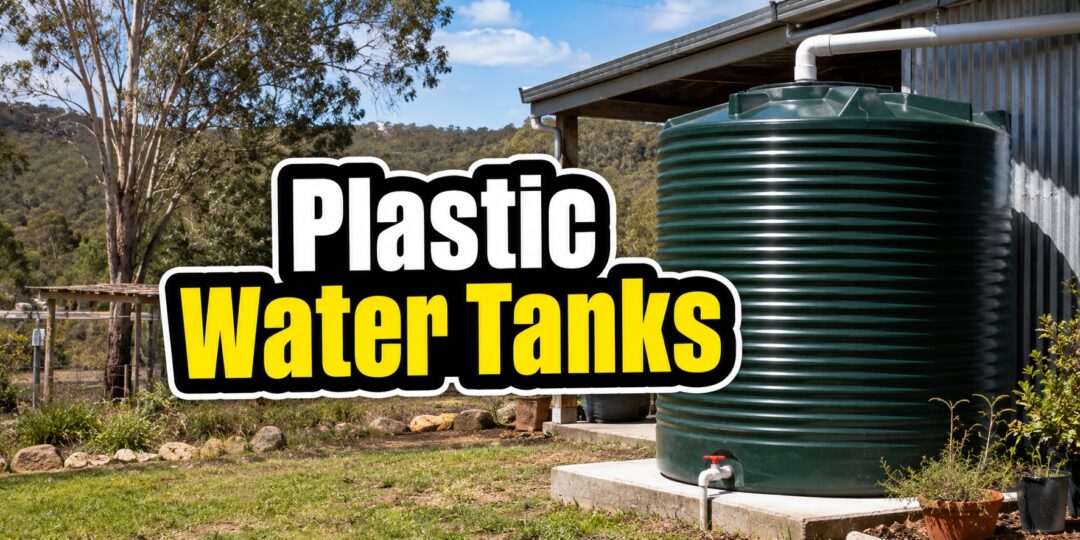
Most plastic water tanks are manufactured through rotational molding, a process where powdered plastic resin is heated and rotated inside a mold until it forms a single, seamless shell with no welds or seams to fail. That seamless construction is a big part of why a well-made poly tank can last decades with minimal maintenance.
None of this means plastic wins every comparison outright. Steel and fiberglass tanks generally handle very large capacities, in the tens of thousands of gallons and up, more efficiently than plastic, and concrete cisterns can be built to essentially any custom size and last indefinitely with proper upkeep. For most residential and small farm applications under a few thousand gallons, though, plastic remains the practical default, which is exactly why it’s the material you’ll encounter most often when shopping.
The Plastic Resin That Actually Matters: HDPE
High-density polyethylene, universally shortened to HDPE, is the resin behind the overwhelming majority of water tanks on the market, from small rain barrels to tanks holding tens of thousands of gallons. HDPE is prized for this use because it holds up well to sunlight exposure with the right additives, resists impact without becoming brittle, and doesn’t react with water the way some other plastics can under certain conditions.
You’ll occasionally see linear low-density polyethylene or cross-linked polyethylene used for specialty or heavy-duty tanks, but for a standard residential or small farm water tank, HDPE is what you should expect to find, and what most manufacturers default to.
FDA Food-Grade Resin vs. NSF/ANSI 61 Certification
This is the single most misunderstood distinction in the entire plastic water tank market, and it’s worth getting right before you buy anything meant for drinking water.
Food-grade resin refers to the raw plastic material itself meeting FDA regulations for contact with food and drinking water. That’s a real and meaningful standard, but it only describes the material going into the mold, not the finished tank.
NSF/ANSI 61 is a separate, more rigorous standard that tests the finished, fully assembled tank, fittings and all, to confirm it doesn’t leach contaminants into stored water above safe limits. According to NSF, the organization that maintains the standard, NSF/ANSI 61 establishes minimum health-effects requirements for chemical contaminants and impurities indirectly imparted to drinking water from products, components, and materials used throughout a drinking water system, not just the tank body alone.
- A tank made from FDA-compliant resin is not automatically NSF/ANSI 61 certified
- If you intend to store water for drinking, look specifically for NSF/ANSI 61 certification on the product listing or spec sheet, not just a food-grade resin claim
- Tanks intended for irrigation, fire reserve, greywater, or livestock water generally don’t need NSF/ANSI 61 certification, since that standard specifically addresses potable water safety
Reading the Recycling Number
Most plastic containers, including water tanks, are stamped with a small recycling triangle containing a number from 1 to 7 that identifies the resin type. For water storage, the number 2 inside that triangle indicates HDPE, the material you actually want. This isn’t a substitute for checking NSF/ANSI 61 certification on anything meant for drinking water, but it’s a quick, useful first filter when evaluating an unfamiliar container, especially secondhand ones like reused food-grade barrels.
Avoid repurposing containers stamped with other resin codes for long-term water storage, since some plastics were never engineered for this use and may behave unpredictably over months of water contact.
Above-Ground vs. Underground Tanks
Above-Ground Tanks
The simpler and far more common option for residential use. Above-ground poly tanks install quickly on a properly prepared pad, are easy to inspect and maintain, and cost significantly less than an underground installation since there’s no excavation involved. The tradeoff is visibility and exposure to temperature swings and sunlight.
Underground Tanks (Cisterns)
Burying a tank protects it from freezing, UV degradation, and keeps it out of sight, but it comes with real added cost and complexity. According to Texas A&M AgriLife Extension’s rainwater harvesting guide, underground storage containers cost more to excavate and maintain, and the need to pump water back out of them adds further ongoing cost compared to a gravity-fed above-ground system.
Not every poly tank is rated for burial. Underground-rated tanks are typically built with reinforced walls or ribbing specifically engineered to handle soil pressure from the sides, which a standard above-ground tank isn’t designed for.
Choosing the Right Size
Sizing a water tank comes down to matching your storage capacity to your actual need, whether that’s drinking water reserves, irrigation demand, or livestock consumption.
- Drinking water reserves: A commonly used baseline is one gallon per person per day for drinking and basic hygiene, though many households target more once cooking and additional hygiene needs are factored in
- Irrigation systems: Sizing depends on your catchment area (typically your roof), local rainfall patterns, and your landscape’s water demand, which can be calculated in detail using rainfall and evapotranspiration data for your specific region
- Livestock and homestead use: Add up daily consumption across all animals and multiply by how many days of reserve you want on hand
For our full breakdown of exactly how much stored water you need per person and the common mistakes people make sizing their reserves, see our guide on water storage myths.
It’s worth actually running the math rather than guessing. Texas A&M AgriLife’s rainwater harvesting worksheets, for example, walk through converting your roof’s square footage and local monthly rainfall into gallons of realistic harvestable supply, then comparing that figure against your landscape or household demand month by month. A tank that looks generously sized on paper can still run dry during a summer demand spike if the underlying supply and demand numbers were never actually calculated against each other.
Color and UV Protection
Tank color isn’t just an aesthetic choice. Opaque, dark-colored tanks, commonly black, dark green, or dark blue, block sunlight from penetrating the stored water, which is exactly what you want, since sunlight combined with dissolved nutrients is what allows algae to grow inside a tank. Clear or lightly tinted containers let light through and are far more prone to developing algae and biofilm over time, even when the water inside started out clean.
UV-stabilized resin is a separate but related consideration, protecting the tank’s plastic itself from breaking down and becoming brittle after years of direct sun exposure on the outside. Tanks intended for permanent outdoor placement should specifically include UV stabilizers in the resin, not just a dark pigment.
Common Plastic Water Tank Shapes and Uses
- Vertical cylindrical tanks: The most common residential shape, efficient for a small footprint and available from small rain barrels up to tens of thousands of gallons
- Horizontal leg tanks: Lower profile and often used where height clearance is limited, or when the tank needs to be transported on a trailer or truck bed
- Slimline tanks: A narrow, tall profile designed to fit against a wall or in a tight side yard where a standard round tank wouldn’t fit
- IBC totes: Caged, cube-shaped containers, typically around 275 to 330 gallons, popular for their stackability and standardized fittings, though not all are rated for long-term potable water storage
Installation Considerations
A full water tank is heavier than people expect. Water weighs roughly 8.34 pounds per gallon, meaning even a modest 500-gallon tank holds over 4,000 pounds once filled. That weight has real implications for installation.
- Stationary tanks need a level, continuous, fully supportive base, typically a compacted gravel pad or a poured concrete slab, since an uneven or partially supported base can stress and eventually crack the tank
- Never set a large tank directly on bare, unprepared ground, since settling or erosion underneath can shift the tank’s support over time
- Mobile or trailer-mounted tanks must be matched to the vehicle’s actual payload capacity and properly secured, since a full tank’s weight and water’s tendency to shift can affect towing stability
Maintenance and Cleaning
- Inspect tanks periodically for cracks, discoloration, or brittleness, especially on tanks that have been in direct sun for several years
- Clean sediment from the tank bottom periodically, since even filtered water carries some fine particulate that settles over time
- Check fittings, valves, and seals for leaks or wear, since these fail before the tank body itself in most cases
- Keep the tank’s lid or access port secured to prevent debris, insects, and small animals from entering
- If water sits unused for extended periods, rotate or treat it periodically rather than assuming it stays safe indefinitely just because it’s sealed
Common Mistakes
- Assuming any food-grade plastic container is safe for long-term drinking water storage without checking for NSF/ANSI 61 certification
- Choosing a clear or lightly colored tank for outdoor use, inviting algae growth that a dark, opaque tank would have prevented
- Installing a large tank on an unprepared, uneven base and discovering stress cracks months later
- Burying a tank that was never engineered or rated for underground installation
- Repurposing a barrel or container without checking its resin type and prior contents, especially if it previously held anything other than food or water
Storing Water Is Smart. Knowing How to Live Without the System Is Better.
A large water tank can give your household an important reserve when the normal supply is interrupted. But the tank itself is only one piece of real self-reliance.
What happens when the stored water begins running low? When you need to collect more? When electricity is unavailable to run a pump? When something breaks and there isn’t a professional immediately available to fix it?
That’s where practical skills become just as valuable as the supplies you’ve stored.
The Lost Skills of Independence brings together the kind of hands-on knowledge that previous generations relied upon before virtually every household need could be solved by buying another product, calling a professional, or depending on a complex supply chain.
Inside, you’ll rediscover practical ways to become more capable and less dependent, including knowledge for growing and preserving food, managing essential household resources, making better use of what you already have, maintaining and repairing everyday necessities, and solving problems with your own hands.
These aren’t skills meant only for a catastrophic emergency.
They’re skills that can make a household more resilient every single day—and considerably more capable when the systems you normally depend on stop working.
A water tank can store hundreds or even thousands of gallons.
But you can’t put independence in a tank.
You have to learn it.
If you’re already taking steps to secure your own water supply, take the next step and start building the practical knowledge that can help you provide for yourself when convenience is no longer guaranteed.
Frequently Asked Questions
How long do plastic water tanks actually last?
A quality HDPE tank with UV stabilizers, properly installed and maintained, commonly lasts 20 to 30 years or more, though tanks in constant direct, intense sun exposure may show wear sooner than shaded or partially covered installations.
Can I use a plastic tank that previously stored non-food chemicals for drinking water?
This is not recommended. Even a tank made from suitable resin can retain residue or absorbed compounds from its previous contents, and there’s no reliable way to fully verify it’s been cleaned to drinking water safety standards at home.
Do plastic tanks need to be buried to survive winter?
Not necessarily, though above-ground tanks in freezing climates need protection from ice expansion, which can crack a tank if it freezes while full. Insulation, heating elements, or seasonal draining are all common solutions for above-ground tanks in cold regions.
Is a bigger tank always better?
Not automatically. Oversizing a tank beyond your realistic catchment or usage needs means paying for capacity you’ll rarely fill, and a partially full large tank can actually cycle water less efficiently than a properly sized smaller one paired with good rotation habits.
What’s the difference between a leg tank and a standard vertical tank?
A leg tank is a horizontal, elliptical-shaped tank raised on integrated legs, commonly used for transport or gravity-fed applications where you want the outlet elevated above ground level. A standard vertical tank sits directly on a pad and is generally the more space-efficient choice when transport isn’t a factor.
You may also like: 
Join Our Exclusive Facebook Group
How to Make Wild Soap, Step-By-Step (Video)
7 Old-Fashioned Ways to Find Water on Your Land
How to Build a DIY Rainwater Collector
The Only Way to Save Your Garden and Produce Water When It Doesn’t Rain
DIY UV Water Sterilizer That Kills Every Pathogen
The Best Time to Water Plants: A Natural Grower’s Guide