Organic gardening gets described in two ways that are both incomplete. One framing treats it as a set of prohibitions: no synthetic fertilizers, no chemical pesticides, no herbicides. The other treats it as a lifestyle statement. Neither captures what it actually is, which is a whole-system approach to growing food that works with biological processes rather than against them.
The practical case for organic gardening has nothing to do with ideology. It comes down to this: soil that is biologically active, fed with organic matter, and left structurally intact produces more food with less external input every year. Soil that is repeatedly dosed with synthetic fertilizers and fumigated with pesticides degrades over time, requires increasing inputs to maintain production, and becomes increasingly dependent on those inputs to function at all. One system gets easier and cheaper as it matures. The other gets harder and more expensive.
This guide covers the complete organic gardening system from the ground up: soil biology, composting, fertility management, pest and disease management, seed selection, watering, and the specific techniques that separate a productive organic garden from one that struggles. Whether you are starting your first garden or converting an existing one, everything here is practical and applicable to any scale.
Start With the Soil: Why Biology Is Everything
Conventional gardening treats soil as a growth medium, a substrate to hold plants upright while nutrients are delivered through soluble fertilizers. Organic gardening treats soil as a living system, one that, when properly managed, supplies most of what plants need through biological processes that have been running without human intervention for millions of years.
The difference in outcome is measurable. A tablespoon of healthy, biologically active garden soil contains more microorganisms than there are people on earth, according to USDA Natural Resources Conservation Service soil health research. These bacteria, fungi, protozoa, nematodes, and earthworms form a web of interactions that break down organic matter into plant-available nutrients, build the soil aggregates that create drainage and aeration, suppress pathogens, and extend plant root systems far beyond what the roots alone could access.
The primary job of the organic gardener is not to feed plants directly. It is to feed and protect this biological community, and let the community feed the plants. This shift in perspective changes almost every management decision you make.
Soil testing
Before amending anything, test your soil. A basic soil test from your state’s cooperative extension service costs $15 to $25 and tells you your soil’s pH, organic matter percentage, and levels of major nutrients including nitrogen, phosphorus, potassium, and secondary nutrients. This information prevents you from adding amendments your soil does not need and tells you exactly what it does need. Guessing at soil fertility without a test wastes money and can create nutrient imbalances that harm plant growth.
The National Sustainable Agriculture Information Service recommends testing every two to three years for established organic gardens and annually when converting from conventional management or when production problems arise. Take samples from multiple locations in the garden and mix them before submitting for the most representative result.
Understanding pH
Soil pH is the single most important number on your soil test because it controls nutrient availability. Most vegetables grow best in a pH range of 6.0 to 7.0, with 6.2 to 6.8 being optimal for the widest range of crops. Outside this range, nutrients become chemically bound in forms plants cannot absorb, which is why plants show deficiency symptoms even in heavily fertilized soil if the pH is wrong.
Raise pH (reduce acidity) with ground limestone. Lower pH (increase acidity) with elemental sulfur or acidic organic matter like pine needles and peat moss. Apply amendments based on your soil test results, not on guesswork, and retest after one full growing season to assess the effect before applying more.
Soil texture and structure
Soil texture, the ratio of sand, silt, and clay particles, cannot be changed economically at garden scale. What can be changed is soil structure: the way those particles are organized into aggregates, separated by pore spaces that hold air and water. Organic matter is the primary driver of good soil structure. Regular additions of compost, cover crop residues, and mulch gradually build the crumb-like aggregated structure that drains well after rain, holds moisture during drought, and allows roots to penetrate freely.
In heavy clay soil, organic matter additions reduce compaction and improve drainage over two to three seasons of consistent management. In sandy soil, organic matter increases water and nutrient holding capacity. In both cases, the mechanism is the same: biological activity in decomposing organic matter produces sticky compounds that bind soil particles into aggregates. Earthworms physically mix and aerate the soil while their castings are among the most nutrient-dense soil amendments available.
Composting: Building Your Own Fertility
Compost is the foundation of organic fertility management. It supplies a broad spectrum of nutrients in slowly available organic forms, introduces and feeds beneficial soil microorganisms, improves soil structure, buffers pH toward the neutral range, and suppresses certain soilborne diseases. A garden with consistent compost inputs improves every year. A garden without them eventually runs down regardless of what other amendments you add.
Hot composting
Hot composting produces finished compost in four to eight weeks by managing the ratio of carbon-rich (brown) and nitrogen-rich (green) materials to create conditions that support thermophilic bacteria, which heat the pile to 130 to 160 degrees Fahrenheit. This temperature kills most weed seeds and pathogens, producing a safe and biologically rich end product.
The standard carbon-to-nitrogen ratio for hot composting is 25 to 30 parts carbon to 1 part nitrogen by weight. In practical terms: roughly three parts brown material (dry leaves, straw, cardboard, wood chips) to one part green material (fresh grass clippings, kitchen scraps, fresh plant trimmings, manure). Build the pile to at least 3 feet by 3 feet by 3 feet to hold enough thermal mass. Keep it as moist as a wrung-out sponge. Turn it every three to five days to reintroduce oxygen. When the pile no longer reheats after turning and the material is dark, crumbly, and smells like earth, it is finished.
Related: Do This Immediately Before You Start Composting
Cold composting and passive methods
Cold composting requires no active management but takes six to twelve months or more to produce finished compost. Simply pile organic material, keep it from drying out completely, and let decomposition proceed at its own pace. The resulting compost is excellent but may contain viable weed seeds if the pile did not heat sufficiently. Cold composting works well as a supplementary system alongside a hot pile, or as the only system when time for active management is limited.
Vermicomposting, using redworms to process kitchen scraps into castings, produces one of the most biologically active soil amendments available and is well-suited to small spaces including indoor settings. A worm bin under the kitchen counter can process most household food waste year-round and produce rich castings for potting mixes and garden applications.
Compost application
Apply one to three inches of finished compost to garden beds each season, incorporated lightly into the top few inches of soil or used as a surface mulch around existing plants. More is not always better: very high compost applications can tie up certain nutrients or create excessive nitrogen that promotes vegetative growth at the expense of fruiting. Consistent moderate applications over multiple seasons build fertility more effectively than occasional heavy doses.
Related: How Do You Speed Up Composting
Organic Fertility: Feeding the Garden Without Synthetic Inputs
Compost alone is not always sufficient to maintain productivity in heavily cropped garden beds. Organic fertilizers fill specific nutrient gaps identified by soil testing and seasonal plant performance. The key difference from synthetic fertilizers is that organic nutrients are released through biological processes rather than being immediately soluble, which means they feed plants more steadily, leach less in rain, and improve soil biology rather than bypassing it.
Nitrogen sources
Nitrogen is the nutrient most commonly limiting in vegetable gardens and the one most frequently supplemented. Blood meal (12 to 13% nitrogen) is a fast-acting organic nitrogen source that becomes available within days of application. Feather meal (12% nitrogen) releases more slowly. Fish meal and fish emulsion provide nitrogen alongside phosphorus, calcium, and trace minerals. Alfalfa meal or pellets add nitrogen while also providing growth-promoting compounds that stimulate soil biology. Aged manure from chickens, rabbits, and cattle provides nitrogen alongside organic matter, with chicken manure being the most concentrated and requiring composting or aging before direct application to avoid burning plants.
Phosphorus and potassium
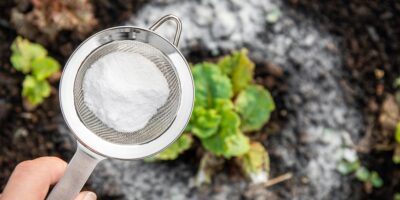
Rock phosphate is the standard slow-release organic phosphorus source, releasing over one to three years as soil organisms weather the mineral. Bone meal provides faster-available phosphorus alongside calcium. Greensand, a naturally occurring mineral deposit, supplies potassium along with iron and trace minerals. Wood ash from untreated wood provides potassium and calcium and also raises soil pH, which is useful in acidic soils but should be used cautiously in neutral or alkaline conditions.
Cover crops as fertility
Cover crops are one of the most powerful and underused tools in organic fertility management. Leguminous cover crops including clover, vetch, field peas, and fava beans form symbiotic relationships with nitrogen-fixing bacteria in their root nodules that convert atmospheric nitrogen into plant-available forms. A well-managed legume cover crop can fix 50 to 200 pounds of nitrogen per acre, enough to significantly reduce or eliminate the need for purchased nitrogen inputs.
Non-legume cover crops including rye, oats, buckwheat, and phacelia do not fix nitrogen but build organic matter, suppress weeds, prevent erosion, and improve soil structure when turned in or cut and composted. A two-year rotation that includes a season of heavy legume cover cropping can transform depleted garden soil without purchasing a single bag of fertilizer.
Organic Pest Management: Working With Nature
Pest management is where most beginning organic gardeners struggle, because they approach it the same way conventional gardening does: identify the pest, find the approved organic product, apply it. This approach works poorly in organic systems because it misses the actual mechanism of organic pest control, which is not about killing pests but about creating conditions where pest populations cannot establish to damaging levels in the first place.
Prevention first
The most effective pest management decisions happen before planting. Healthy, well-nourished plants grown in biologically active soil are significantly more resistant to pest and disease pressure than stressed plants in depleted soil. Research from the Rodale Institute consistently shows that plants growing in high-organic-matter soil with healthy microbial communities show lower levels of insect feeding damage than equivalent plants in conventionally managed soil, likely because well-nourished plants produce higher levels of secondary defense compounds that deter feeding insects.
Crop rotation is a foundational pest and disease prevention practice. Moving plant families to different beds each year breaks the cycles of soilborne pathogens and soil-dwelling pests that overwinter in the soil near their host plants. A minimum four-year rotation for the major plant families, nightshades, brassicas, cucurbits, and legumes, prevents the buildup of Colorado potato beetle larvae, clubroot fungus, cucumber beetle, and bean weevil populations that destroy crops when the same family is grown in the same spot year after year.
Beneficial insects
A functional organic garden supports populations of predatory and parasitic insects that naturally regulate pest populations. Parasitic wasps, ground beetles, lacewings, hoverflies, and lady beetles collectively prey on or parasitize aphids, caterpillars, whiteflies, thrips, and virtually every other common garden pest. The key to maintaining these populations is providing habitat: flowering plants that supply nectar and pollen for adult beneficials, undisturbed areas of ground cover where ground beetles overwinter, and avoiding any pesticide applications, even organic ones, that kill indiscriminately.
Planting a diverse border of flowering plants including dill, fennel, yarrow, phacelia, sweet alyssum, and members of the carrot family alongside your vegetable beds creates a beneficial insect habitat that can reduce pest pressure without any additional management. Marigolds planted densely at bed edges produce root exudates that suppress root-knot nematodes in surrounding soil and deter aphids and whiteflies above ground.
Related: How to Attract Ladybugs To Your Garden – Nature’s Crop Guardians
Physical and cultural controls
Row cover fabric laid directly over newly planted crops physically excludes flying insects during the vulnerable seedling stage and during peak pest pressure periods. A single layer of lightweight spunbonded fabric prevents cabbage moth, cucumber beetle, and flea beetle damage on newly transplanted brassicas, cucumbers, and eggplant without any spray application. Remove covers when plants flower if pollination is required, or use covers specifically on crops that do not require insect pollination.
Copper tape around raised bed edges creates a mild electrical barrier that deters slugs and snails. Diatomaceous earth applied to the soil surface around vulnerable plants dehydrates soft-bodied insects that crawl through it. Sticky yellow traps hung near susceptible crops monitor and reduce whitefly and fungus gnat populations. None of these approaches is a complete solution in isolation, but combined with habitat management and healthy soil, they reduce pest pressure to manageable levels in most garden situations.
Organic sprays as a last resort
When preventive measures are insufficient, several organic spray options are available, each with specific applications and limitations. Insecticidal soap kills soft-bodied insects including aphids, mites, and whiteflies on contact by disrupting their cell membranes; it has no residual activity and must contact the pest directly. Neem oil disrupts insect hormone systems and has both contact and systemic activity against a range of pests; it also has antifungal properties useful against powdery mildew and black spot. Bacillus thuringiensis (Bt) is a naturally occurring soil bacterium whose protein crystals are toxic to caterpillar larvae when ingested; it is highly specific to caterpillars and harmless to other insects, birds, and mammals.
The important limitation of all spray applications, organic or conventional, is that they also affect beneficial insects to varying degrees and can set back the biological balance you are trying to build. Use sprays as a last resort for specific outbreak situations, not as routine preventive treatments.
Organic Disease Management
Plant diseases in the organic garden are managed primarily through prevention: choosing resistant varieties, providing proper spacing for air circulation, watering at the base rather than overhead, practicing crop rotation, and removing diseased plant material promptly. Once a fungal or bacterial disease is established, organic management options are limited and prevention is far more effective than treatment.
Resistant varieties
Seed catalogs from organic-focused suppliers including Fedco, High Mowing, and Johnny’s Selected Seeds indicate disease resistance ratings for most varieties. Choosing tomato varieties with resistance to Fusarium wilt, Verticillium wilt, and early blight, or cucumber varieties resistant to powdery mildew and downy mildew, eliminates the management burden of those diseases entirely. This is the most effective single disease management decision available.
Cultural practices
Most fungal diseases require leaf surface moisture and warm temperatures to establish. Drip irrigation or soaker hoses that deliver water to the root zone without wetting foliage reduce fungal disease pressure dramatically compared to overhead watering. Morning watering allows any incidental leaf wetting to dry quickly in morning sun and air movement. Proper plant spacing, following the recommendations on seed packets rather than crowding for maximum yield, ensures air movement between plants that prevents the humid stagnant microclimate that fungal diseases thrive in.
Organic fungicide options
Copper-based fungicides, including copper sulfate and Bordeaux mixture, have a long history in organic disease management and are approved for certified organic production. They have preventive and early curative activity against late blight, downy mildew, and bacterial diseases. Sulfur-based fungicides control powdery mildew and certain other fungal diseases. Both are broad-spectrum and can affect beneficial fungi in the soil; use them only when disease pressure is established and cultural controls are insufficient. Bicarbonate sprays, mixing one tablespoon of baking soda per gallon of water with a small amount of insecticidal soap as a spreader-sticker, have modest preventive activity against powdery mildew and are gentle enough for regular use on susceptible crops.
Watering the Organic Garden
Water management in an organic garden differs from conventional practice primarily because of what healthy organic soil does with water. Soil with high organic matter content and good biological activity absorbs water quickly, holds it in pore spaces within aggregates, and releases it gradually to plant roots. This means organic gardens typically need less frequent watering than conventional gardens on degraded soil, and are more resilient through short dry periods.
Drip irrigation and soaker hoses are the most efficient delivery systems for garden-scale watering, applying water directly to the root zone with minimal evaporation and no leaf wetting. A properly designed drip system uses 30 to 50 percent less water than overhead irrigation while improving plant health by keeping foliage dry. The U.S. Environmental Protection Agency’s WaterSense program estimates that landscape irrigation accounts for nearly one-third of all residential water use in the United States, and that 50 percent of that is wasted through inefficiency. A drip system on a timer is one of the most impactful efficiency improvements in any garden.
Mulching the soil surface with two to four inches of straw, wood chips, or compost reduces evaporation from the soil surface by 50 to 70 percent, suppresses weeds that compete for soil moisture, moderates soil temperature, and feeds soil biology as it slowly decomposes. In most climates, a well-mulched organic garden requires watering at half the frequency of an unmulched bed.
Seed Selection for the Organic Garden
Seed selection is a leverage point that most gardeners underuse. The variety you plant determines the genetic ceiling on what your garden can produce, how it performs in your specific climate, and how much management it requires to stay healthy. Spending time on seed selection before the season is one of the highest-return investments in organic gardening.
Open-pollinated and heirloom varieties
Open-pollinated varieties breed true from saved seed, meaning the plants you grow from seed you save this year will produce plants with the same characteristics next year. This makes seed saving possible, which closes the loop on garden inputs and, over generations, produces locally adapted strains that are increasingly well-suited to your specific soil and climate conditions. Heirloom varieties are a subset of open-pollinated varieties with documented histories, often selected over decades or centuries for flavor, specific regional adaptation, or unusual characteristics that commercial breeding has not prioritized.
Hybrid varieties in organic systems
F1 hybrid varieties, produced by crossing two inbred parent lines, are not prohibited in organic gardening (though certified organic production requires organic seed when available). Hybrids often outperform open-pollinated varieties in yield, uniformity, and disease resistance. The tradeoff is that seed saved from hybrids does not breed true, so seed must be purchased annually. For gardeners who are not saving seed, hybrids are a legitimate choice when their performance characteristics are superior.
Organic seed sources
Organic seed is produced without synthetic pesticide or fertilizer treatment, which means the seed itself carries no chemical residues and has been selected under organic conditions. For certified organic production, organic seed is required when commercially available. For home gardeners, organic seed is worth seeking out from suppliers including Fedco Seeds, High Mowing Organic Seeds, Southern Exposure Seed Exchange, and the Seed Savers Exchange, which also maintains the largest collection of open-pollinated and heirloom varieties in the country.
Seasonal Management: What to Do and When
Spring preparation
In early spring before the soil has warmed, add compost to beds and work it lightly into the top two to three inches. Test soil if not tested in the past two years and apply any indicated amendments. Warm the soil two to three weeks before planting by covering beds with black plastic or clear row cover, which raises soil temperature and accelerates planting readiness. Start cold-tolerant crops including peas, spinach, lettuce, and brassica transplants as soon as soil temperature reaches 40 degrees F.
Midsummer management
Midsummer is the peak of pest and disease pressure. Monitor plants weekly for early signs of both. Side-dress heavy feeders including tomatoes, corn, and squash with compost or a nitrogen-rich organic fertilizer once fruit set begins. Keep beds mulched to conserve moisture and suppress weeds. Succession-plant fast crops including lettuce, cilantro, and radishes every two to three weeks to maintain continuous harvest and fill gaps left by spent spring crops.
Fall practices
Fall is the most important season for building next year’s garden. As crops finish, cut rather than pull spent plants to leave roots in the soil. Sow cover crops immediately into cleared beds to prevent erosion, suppress late-season weeds, and begin building organic matter for next season. Apply a fresh layer of compost to all beds before winter. Plant garlic in October for harvest the following summer. In cold climates, mulch perennial beds and root vegetables left in the ground with six to eight inches of straw for winter protection.
Organic Gardening on Different Scales
Small urban and suburban gardens
Raised beds filled with a custom organic growing mix are the most practical approach for small spaces, poor native soil, or rented properties. A standard mix of one part compost, one part topsoil, and one part coarse perlite or aged wood chips provides excellent drainage, fertility, and biological activity from the first season. In urban environments, test soil for heavy metals before growing food in native ground if the property has any history of industrial use, old paint, or road proximity.
Market garden and homestead scale
At larger scale, the economics of organic fertility management shift significantly. Purchasing sufficient compost to cover a half-acre market garden is expensive; producing it on-site from cover crops, green manures, and on-farm organic waste is not. Cover cropping, composting, and livestock integration, using chicken tractors or rotational grazing to cycle fertility through garden areas, are the systems that make large-scale organic production financially viable without purchased inputs.
Getting Certified Organic
For home gardeners, organic certification is irrelevant. For anyone selling produce as organic, USDA organic certification is legally required if annual gross sales exceed $5,000. Certification is administered through USDA-accredited certifying agents and requires maintaining detailed records of all inputs, practices, and land history for a three-year transition period during which prohibited substances must not have been applied to the land.
The USDA National Organic Program maintains the complete list of allowed and prohibited substances for certified organic production. For small-scale direct marketers below the $5,000 threshold, a written affidavit declaring compliance with organic practices satisfies USDA requirements without full certification.
Learn the Old-Fashioned Skills That Made Gardens Truly Self-Sufficient
Organic gardening is not new. Long before garden centers, bagged fertilizers, and chemical sprays, families had to keep soil fertile, control pests, save seeds, preserve harvests, and grow food year after year with what they had on hand. That kind of practical knowledge is exactly what made traditional Amish homesteads so resilient.
If you want to bring more of that old-world self-sufficiency into your own garden, The Amish Ways Book is a great place to start. It shares the forgotten skills, simple systems, and time-tested methods that helped Amish families live with less dependence on stores, utilities, and modern conveniences.
From growing and preserving food to building a more capable home and homestead, this guide is for anyone who wants to stop relying on fragile systems and start learning the practical skills that still work today.
The Long Game: What Organic Gardening Looks Like After Five Years
The most important thing to understand about organic gardening is that the system improves over time in ways that conventional gardening does not. A garden managed organically for five years has measurably higher organic matter, a richer microbial community, better structure, more earthworm activity, and lower pest pressure than it did in year one. The work required to maintain productivity decreases as the soil becomes increasingly capable of supplying what plants need without external inputs.
Year one is the hardest. The soil biology is building, the fertility reserves are being established, and the beneficial insect community is not yet fully developed. Expect some pest pressure, some nutrient deficiencies, and some crop failures. These are normal. The response is not to reach for a synthetic fix but to understand the underlying cause, address the soil condition or management practice that created it, and let the system develop.
By year three, most gardeners find that their pest and disease management burden has dropped significantly, their soil is visibly darker and more friable than when they started, their compost system is producing more material than they are using, and their yields are approaching or exceeding what they achieved with conventional inputs. By year five, many find that they spend more time harvesting than managing problems.
That trajectory, from labor-intensive and problem-prone to productive and increasingly self-sustaining, is what organic gardening is actually about. The chemical prohibitions are a small part of the picture. The soil biology is the whole thing.
You may also like:
Join Our Official Facebook Group For More Homesteading Tips And Tricks
The Silent Stockpile Killer. Do You Have It In Your Pantry? (Video)
Bucket Gardening: How to Grow Your Own Food Anywhere
Vertical Gardening for Self-Sufficient Living