I want to start this article by telling you that this is not about being lazy. This is about being efficient and using your time in better ways.
Most of us, when we first start the homesteading life, have some small goals on our lists. Maybe a big garden, some chickens, maybe some goats too. Then you might also start thinking about energy and water. So you also add these. Then you might think that a second garden might be a great idea.
You see, nobody builds a homestead from start to finish on their first try. The homestead is a system that evolves according to your needs. This takes time to happen. And this is both a flaw and an advantage.
But what I want you to know is that having a setup in mind from the beginning is the best thing you can do for your homestead. Planning like this gives you the chance to make your homestead as efficient as possible.
This is how the “Lazy Homestead” setup was born. Some people call this setup the best homesteading idea ever. Why? Because it lets you have a productive property with the least amount of work.
Want to see how it’s done? Keep reading!
Stop Walking Back and Forth Across Your Homestead
This is by far the most important rule.
Before you buy another gadget, pay attention to where you walk during morning chores. How many times do you go from the house to the coop? Or back to the shed because the shovel is there and you need it in the garden?
I used to think all that walking was part of the job. Then I realized I was making extra trips because I’d put things wherever they happened to fit.
If you’re planning a new homestead, put the things you use every day close together. Keep the coop near the feed storage, and make sure there’s an easy route to the garden and water supply.
If everything is already built, you can still fix a lot. Move supplies closer, keep a cart handy, and do jobs in an order that saves you walking back and forth.
It sounds almost too simple, but try it for a week. You might be surprised how much time you get back.
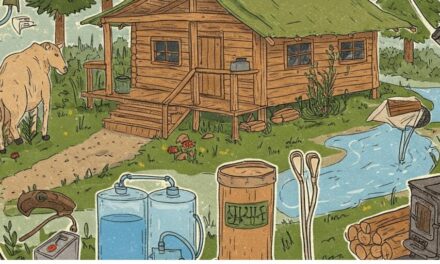
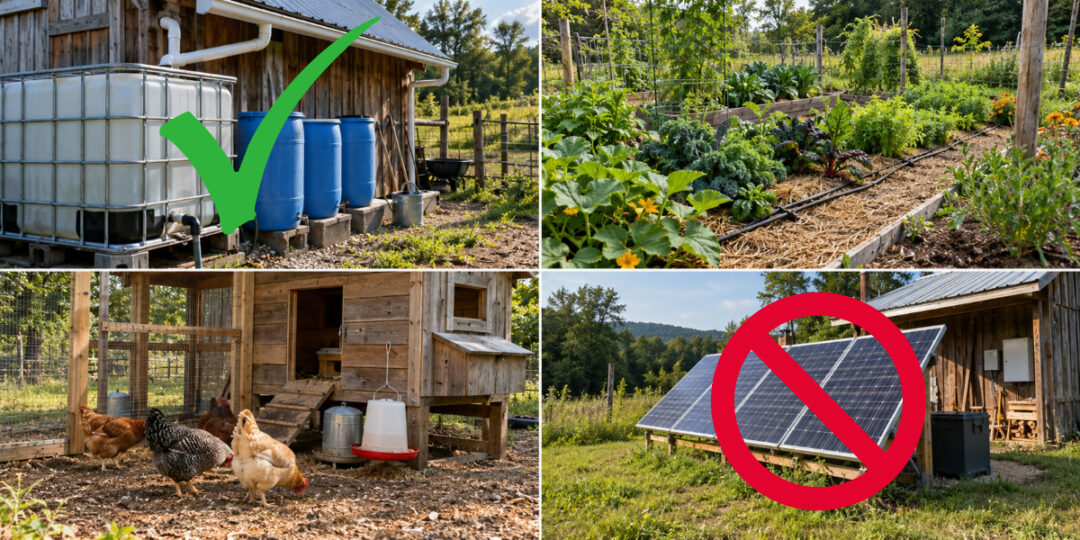
Once you have this rule in mind, I want you to see your homestead like a modular system. For the sake of this, I split the article into 4 big sections: water, garden, livestock, and energy.
For each section, I’ll present you some ideas and projects you can integrate to make your work as easy as possible.
Water
Catch Rainwater Off the Roof
All that rain falling on your shed or barn roof could be watering your garden instead.
An inch of rain on a 1,000-square-foot roof gives you about 620 gallons before losses. You need gutters, a downspout, and a tank to catch it. A used 275-gallon IBC tote may cost less than $100.
This is the classic setup and the one I used first.
But I’ve actually upgraded my setup since then.
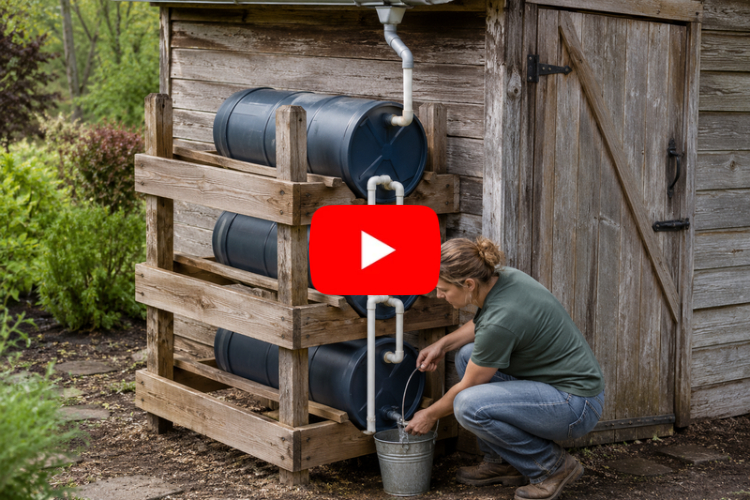
I now use a three-barrel rainwater harvesting system I found in this book called The Lost Skills of Independence.
The problem with my old setup was that one tank filled up pretty quickly during heavy rain. With three barrels, I can store more water for dry days, and I even use this setup to water my greenhouse.
What I like about this project is that the book shows you how to build it, with illustrations and a list of materials.
See how to build the three-barrel rainwater system here.
I’d start with the shed roof. It’s usually an easier place to try the idea.
Put a Float Valve on the Stock Tank
This is one of the easiest ways to stop carrying buckets to your livestock.
A float valve works like the one in a toilet tank. When the water drops, the valve opens. When the tank fills, it shuts off.
The catch is that valves can stick. Dirt and algae can jam them, and freezing weather can break them. I once lost a full tank of water overnight because a valve got stuck open.
Check it often, clean it when you scrub the tank, and protect it from freezing.
Put a Faucet Where You Actually Need It
If you’re dragging a hundred feet of hose across the yard every morning, there’s probably a better place for your water supply.
An outdoor faucet or frost-free hydrant near the garden or barn can save you a lot of trouble. You can fill buckets, wash tools, and connect a hose without walking back to the house.
Installing a new water line is a bigger job than buying a hose, of course. You’ll need to think about freezing depth, drainage, and where underground utilities run. But if you’re already doing work on the property, it’s worth planning for.
Sometimes the best improvement isn’t an automatic system. It’s just putting water close to where you use it.
Garden
Mulch Deep and Weed Less
Nobody starts a garden because they love spending every weekend pulling weeds.
Four inches of wood chips on paths and around established plants will cut down on weeds and help the soil hold moisture. You can sometimes get a load free from a local tree crew.
And no, chips won’t steal all the nitrogen from your garden if you leave them on top of the soil. Mixing them into the dirt is where problems can start. Keep them out of rows where you’re sowing seeds.
But there’s another way to grow vegetables that gives weeds a much harder time.
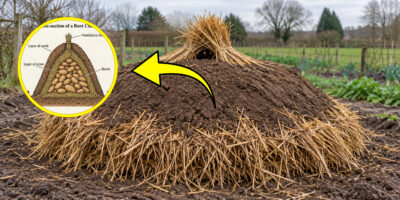
You can actually grow them right inside straw bales, without digging a garden bed at all. This is also a method that lets you grow your own mushrooms easily!
The trick is knowing how to prepare the bales before planting. Get that part wrong, and your vegetables may struggle to grow. See how this straw-bale growing method works.
Grow Food That Comes Back Every Year
Planting everything from scratch each spring gets old fast.
Asparagus, rhubarb, raspberries, blueberries, fruit trees, walking onions, and many herbs can produce for years once they get established. They still need care, but you’re not starting over each season.
You can also let dill, cilantro, and calendula drop seeds. Some will come up again on their own.
Just watch where you put horseradish and Jerusalem artichokes. Leave one little piece of root behind, and you may find yourself growing them for years whether you want to or not. Give them a spot where spreading won’t matter.
Put Drip Irrigation on a Timer
I like watering the garden. I just don’t want to stand there holding a hose every morning.
Drip tubing and a battery timer can do much of that job for you. Kits for a few raised beds can cost around $50, and you can lay the tubing yourself.
Set it to run early, then watch a full cycle to make sure the water reaches every plant. Cover the tubing with mulch to help keep the soil moist and protect the lines from sunlight.
You’ll still need to adjust the timer for rain and hot spells, and check for leaks. But it’s a lot less work than dragging hoses all over the garden.
But what if you could grow vegetables without having to water individual beds or pull weeds?
There’s actually a completely different way to grow food that I think more homesteaders should know about.
It’s called aquaponics, and instead of growing vegetables in soil, you grow them in a system that keeps water circulating and uses nutrients from fish to feed your plants.
No soil to weed, far less water wasted, and you don’t need a huge backyard to get started.
And you can build a setup like this yourself!
There’s a guide called Aquaponics 4 You that shows you how, with step-by-step instructions, diagrams, and videos.
Get the Aquaponics 4 You growing system.
And one more thing! Whether you build this aquaponics system or already have a hydroponic setup of your own, I’d recommend starting with the right seeds.
SeedsNow has a 15-variety seed kit made for growing without soil. You get lettuce, kale, spinach, arugula, and other greens, so you can grow a nice mix of fresh food instead of just one crop.
It’s a good way to get more out of the system you’ve built.
Get the All-in-One Hydroponic Greens Seed Kit here.
Livestock
Choose Animals That Don’t Tie You Down
A dairy cow or milking goat needs regular milking, often twice a day. You can’t just skip a day because you want to go somewhere. Fast-growing meat chickens also need careful feeding and watching, especially in summer.
Laying hens are generally simpler to keep. Hair sheep like Katahdins don’t need shearing, and Kiko goats are known for being hardy.
That doesn’t mean any of them can be left alone. But choosing animals that fit your schedule can save you years of frustration.
But here’s something else to consider. Even laying hens can become a lot of work if your coop isn’t set up right.
That’s why I think it’s worth looking at a different kind of backyard chicken setup before spending money on a ready-made coop.
It’s called The Eggs Factory, and the idea is to keep a small flock producing fresh eggs without spending half your morning feeding, cleaning, and running back and forth.
Get The Eggs Factory guide here.
See how this low-maintenance chicken coop is built!
Automate the Coop Door and Feeder
An automatic coop door means one less trip outside when it’s dark or raining.
You can set it to open and close at certain times or with daylight. Just make sure the coop itself is predator-proof and check that all the hens got inside before the door shuts.
A treadle feeder can save you trouble, too. The chicken steps on a bar and the lid opens. When it steps away, the lid closes, which makes the feed harder for rats and wild birds to reach.
Give the flock time to learn it before you remove their old feeder. And keep checking their feed and water daily.
Make Your Coop Easy to Clean
I wish I’d thought more about cleaning before building my first coop.
A wide door you can get through without bending over is worth more than a fancy window. So is a smooth floor you can scrape clean and nesting boxes you can open from outside.
One of the handiest additions is a removable droppings board under the roosts. Most of the overnight mess lands there, and you can scrape it off without digging through all the bedding.
Good ventilation and dry bedding still matter. But a coop that’s easy to reach into and clean turns a miserable job into a quick one.
Energy
This Is How I Would Build My Power Supply
There’s one more thing I want you to think about before we finish, and that’s electricity.
I don’t know about you, but I’d hate to spend all summer growing food, filling the freezer, and getting the homestead running smoothly, only to lose that food when a storm knocks the power out.
And it’s not just the freezer. Maybe you use a pump to get water to the garden or the animals. When the electricity goes out, that job becomes your problem again.
Now, I know what you’re thinking. Solar panels, batteries, all that stuff can get expensive. And it’s easy to think you have to buy a whole system right from the start. But you really don’t.
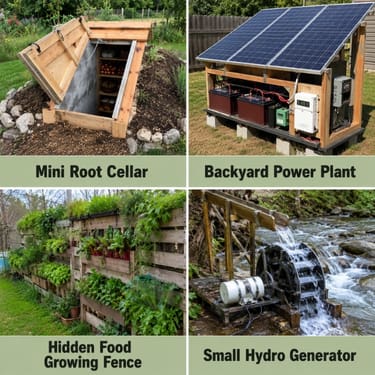
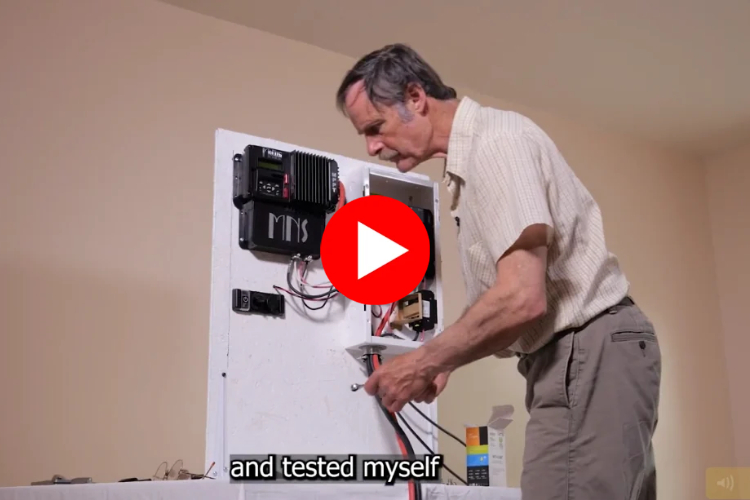
There’s a project called The Modular Backyard Power Plant that I think is worth looking at. It comes from Ron Melchiore, who’s an ex-engineer who spent more than 40 years living off-grid.
What I like about his approach is that you can start with a smaller system, just for the things you don’t want to go without. Then, if you need more electricity later, you can expand it instead of starting all over again.
Ron has put together a guide with pictures, a materials list, and a video showing how the system is built.
Also, you don’t need a permit for this thing. You can start building it tomorrow in your backyard, and everything will be fine.
Get the Modular Backyard Power Plant guide here and see how to build your own setup.
Use This Checklist to Make Your Work Easier
Now, I wouldn’t try to do all of these projects in one weekend. That sounds like a good way to turn a lazy homestead into a very busy one.
Instead, walk around your property with this article open and use it as a checklist.
Start with the jobs you do every single day. Are you still carrying water to the coop? Walking back to the shed for feed? Pulling weeds from the same garden beds every week?
Pick the one that wastes the most time and see which idea from this article could fix it.
Once you’ve made that change, cross it off your list and move to the next one.
And I’d love to know which of these ideas you’re already using on your homestead. Maybe you’ve even found a better way to do things!
You may also like: 
5 Homestead Layouts That Cut Chores in Half
New Invention 12X More Efficient Than Solar Panels (Video)
Worst Mistakes You Can Make When Buying Land
2027 Homestead Upgrades to Secure Your Water, Power, and Food
How to Actually Make $50k/Year on a Quarter Acre