Something Changed, and You Noticed!
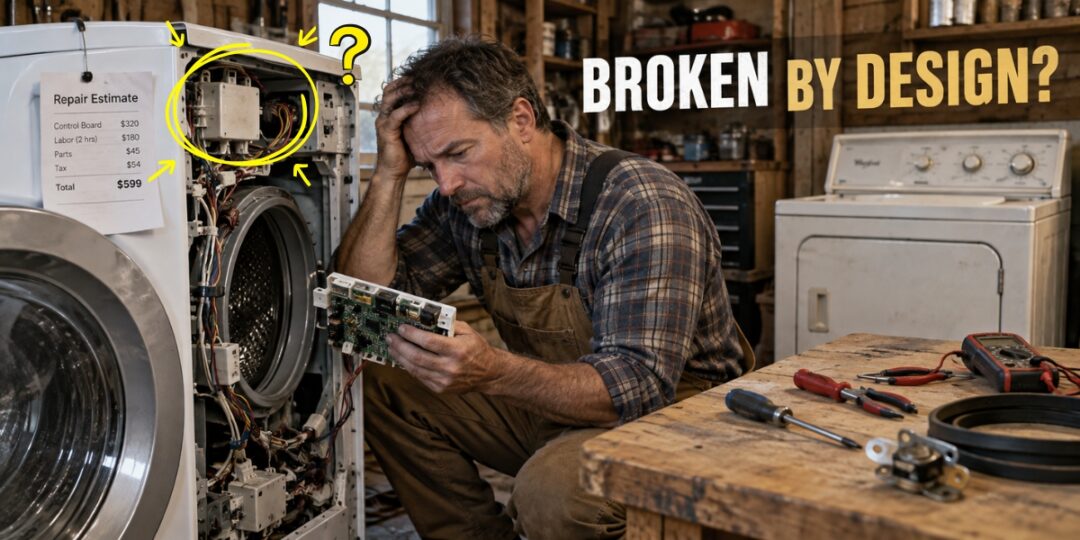
You’ve probably thought this for years: stuff just doesn’t last like it used to.
Your parents had appliances that ran for twenty or thirty years. You buy one now and feel lucky if it makes it past six or seven. A tool that once would’ve gotten a new bearing and gone back to work is now sealed up so tight you can’t even reach the bad part…
Then you call a repair guy and find out the fix costs almost as much as a new one.
So you replace it, and a few years later you’re doing the same thing again…
Indeed, the old stuff wasn’t perfect. But you’re not imagining everything. Things really did change, and some of those changes were deliberate.
The good news is you can learn to work around it.
The Repair Guys All Say the Same Thing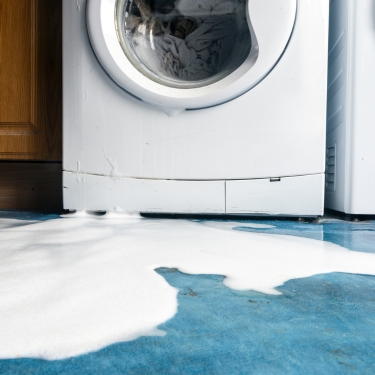
If you want to know why appliances don’t last, ask the people who open them up every day.
Earlier this year, two research groups surveyed close to 40 appliance repair technicians and asked why modern appliances don’t last as long.
The top answer was repair barriers. Out of 38 technicians, 19 called that the main reason, and about 87% said it was either the main reason or a very important one.
In plain English, the people fixing these machines think many could last longer if repairs weren’t made so difficult.
They also pointed to cheaper materials and more electronic parts.
Refrigerators, washing machines, and dryers were the appliances they thought had gone downhill the fastest.
There’s data behind that feeling. One study following appliance lifespans from 1940 to 2022 found that washing machines went from lasting about 19 years to around 10 and a half. Ovens dropped from roughly 23 years to 14.
The good news is, you don’t have to keep playing this game forever.
There are still people who live with far less dependence on expensive appliances and complicated systems. The Amish are a good example. A lot of what they use is simple, practical, and built so it can actually be repaired.
And some of those ideas are surprisingly easy to borrow.
You can build an Amish-style buried fridge, an off-grid washing machine, a simple wood-fired oven, or even use old-fashioned water systems that can pump and move water around the property without relying on a bunch of electronics.
People are still living this way today. It’s not some fantasy version of self-sufficiency.
You may not be able to avoid the system completely, but you can definitely depend on it a whole lot less.
Want to see how the Amish do it? Discover the projects you can build at home →
This Trick Is Almost a Hundred Years Old
Ok, brace yourself because this is the story that explains everything.
In 1924, major light bulb manufacturers had an unusual problem: their bulbs were lasting too long.
Some could burn for around 2,500 hours.
Great for the customer, not so great if you’re waiting to sell another bulb.
That December, representatives from major bulb companies met in Geneva, Switzerland, and agreed to bring the standard life of a bulb down to about 1,000 hours.
And they checked.
Manufacturers sent sample bulbs to a testing lab in Switzerland.
If the bulbs lasted longer than the agreed limit, the company could be fined. That system continued until 1939.
Some engineers argued that shorter-life bulbs could burn hotter and produce more light for the same electricity, and British regulators later agreed there were technical tradeoffs.
Fair enough.
But the testing program, lifespan target, and fines all happened. So when somebody says companies would never make a product wear out sooner, history gives us at least one reason to raise an eyebrow.
And the funny thing is, we already had plenty of ways to light a home before everything needed a circuit board.
Kerosene lamps, propane lamps, candles, hurricane lanterns—Americans relied on these for generations, and they still work just fine when the power goes out.
Most people simply stopped learning how to use them because modern lighting made those skills feel unnecessary.
But on a homestead, old-fashioned lighting can still be incredibly useful. It gives you options, especially when the grid doesn’t.
If you want to bring some of those forgotten skills back, click here. You’ll find practical, step-by-step guides for traditional lighting methods you can actually use at home.
The New Lock Is Software
Back then, a light bulb was glass, metal, and wire.
Now your tractor, truck, washer, and even your refrigerator have computers. That gives manufacturers a whole new way to control repairs.
Something breaks and the machine throws a fault code. You may need special software to read it. Then you replace the bad part and discover the machine still won’t run because the computer has to be told that the new part is allowed to work with it.
That’s called parts pairing.
You can own the machine, own the replacement part, and own the tools, and still be stuck.
Farmers have been fighting this for years. In January 2025, the Federal Trade Commission and five states sued one of the country’s biggest farm equipment makers, arguing that it controlled software needed for some tractor repairs and kept that software mainly in its dealer network.
The case was settled in July 2026. For the next ten years, the company has to give farmers and independent repair shops access to the same types of repair resources its dealers get, including tools for reading fault codes, pairing parts, and accessing technical information.
You can read the FTC’s own announcement here.
One survey of 53 farmers in 14 states estimated that repair restrictions cost American farmers more than $3 billion a year in downtime, and around $4.2 billion once repair costs were included.
That’s farm equipment, but the same basic setup is showing up in trucks, side-by-sides, mowers, and things in your kitchen too.
The Infamous Sticker 
You’ve seen the sticker.
Warranty void if removed.
It looks official, but it isn’t that simple.
The Magnuson-Moss Warranty Act has been around since 1975. In general, a company can’t force you to use only its parts or repair service just to keep your warranty.
In 2018, the FTC sent warning letters to six companies over warranty language, including claims that breaking a seal automatically killed coverage.
That same year, one study looked at 50 appliance manufacturers and found 45 still told customers that self-repair could void the warranty.
That doesn’t mean you can do anything you want to a machine and expect the company to pay for the damage.
If you break something yourself, that’s different.
But opening a product or using a third-party part doesn’t automatically erase every warranty right you have.
If you’re working on something that’s still under warranty, take pictures first, save your receipts, and keep track of what you changed.
That sticker is really just one small reminder of how dependent we’ve become on systems most of us barely understand.
And appliances are only part of it. What happens when the power, water, stores, or other services you count on suddenly aren’t there?
That’s the thinking behind Dark Reset. It walks through practical ways to handle food, water, heat, lighting, and home security when the usual systems stop working.
If you’d rather know what to do before you need to know, take a look here.
What Still Lasts
When something dies, it’s tempting to buy whatever is on sale and be done with it.
But if you want the replacement to last, there are a few things worth checking first.
Knobs instead of screens – Give me a simple dial any day. A mechanical switch is often cheaper and easier to replace than a big electronic touch panel.
No Wi-Fi, no app, no subscription – Your freezer does not need to text you. Every smart feature is one more thing that can fail or lose support.
Check the board price before you buy – Search the model number plus “control board” or “module.” If one electronic part costs half as much as the machine, I’d want to know that before buying it.
Parts you can actually get – Look up the model on a parts website. If there are diagrams and common parts are in stock, that’s a good sign.
Older and simpler – Newer doesn’t always mean better. I’d rather own an older machine that needs a $20 belt than a shiny new one that’s useless because the control panel died.
We’ve had the same chest freezer in the barn since we moved here, and it was already used.
My husband replaced the door gasket once and the thermostat once. Both repairs together cost us less than sixty dollars.
There’s a dial on the front with some numbers.
That’s about as smart as it gets.
And somehow, it keeps freezing things.
How to Fix What You Already Own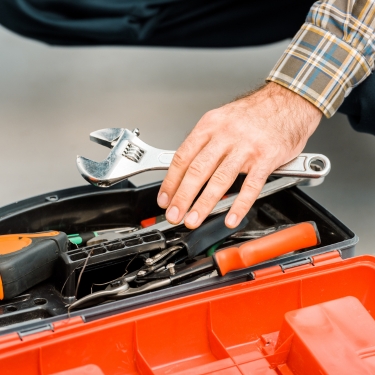
You don’t need to become an appliance technician if you want to do this. Start by finding the model and serial number tag on every important machine you own and take a picture.
That number is the key to manuals, parts, repair videos, and wiring diagrams.
When something breaks, search the model number along with the problem. There’s a good chance somebody has already had the same failure and filmed the repair. You can try Reddit for this. A lot of good people there when it comes to repairs.
A cheap multimeter helps too. It tells you whether electricity is making it through a part, and a basic one is enough for many home repairs.
A lot of failures are boring: belts, bearings, door seals, igniters, thermostats, and small-engine carburetors.
None of that automatically means the whole machine belongs in the trash.
Just be careful. Unplug the machine first, and remember that some components can still hold an electrical charge after the plug is out.
If you’re dealing with gas, high voltage, or you open something and immediately realize you’re in over your head, stop and call somebody. It can get dangerous fast.
A good next step is learning how to build more of what you need instead of replacing it.
That’s basically what No Grid Survival Projects is about. Its author, Michael Major, is a former infantry soldier who later worked as a welder and fabricator, and the book grew out of projects he built around his own property.
Inside are 70+ hands-on projects covering things like water, power, food, heating, and other homestead basics, with step-by-step pictures and accompanying videos.
You probably won’t build all 70 projects, and honestly, you don’t need to. If even a few of them help you stop buying expensive equipment or give you a backup when something goes down, they’ve already earned their place on the homestead.
You can see all the projects here.
Final Thoughts
Before bringing something home, spend five minutes looking past the shiny front.
- Can you get parts for it?
- What does the control board cost?
- Does it need an app?
- Is there a parts diagram online?
- Does the manufacturer still support older models?
Those questions aren’t nearly as exciting as whatever new feature is printed in giant letters on the box, but they may tell you a lot more about how long you’ll actually own the thing.
And things are starting to shift. More than 30 repair bills showed up in state legislatures during the first few weeks of this year.
So, be part of the change.
You may also like: 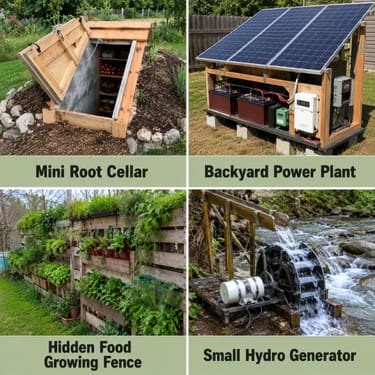
NEVER Throw Away These Items! (Do This Instead)
If Blood Sugar Is Something You’ve Been Paying Closer Attention to, Watch This Video… (Video)
200 Skills You Need to Become 100% Independent
How to Choose The Right Gas Generator for Your Homestead
An Old Homesteader Told Me to STOP Doing These Things…