A few years after Mark and I started our homestead, we signed up for WWOOF, a program that connects people with farms and homesteads where they can stay, help out, and learn how things are done.
I wanted to see how other people were actually running their places. Not polished homesteads made for photos. Real ones, where somebody had been growing food, storing it, fixing things, and working the same ground for years.
That’s how Mark and I ended up staying with an older man I’ll call Ray. His nephew had helped him put the listing online. Ray could still handle most things himself, but he appreciated some help with the heavier jobs and, from what I gathered, his nephew liked the idea of him having a little more company around the place.
By the second morning, Ray had already spotted several things about the way I ran my own homestead that bothered him.
“You keep buying your way around jobs the homestead could be doing for you,” he said.
I laughed.
Then he started showing me what he meant.
It Started With a Box of Seeds 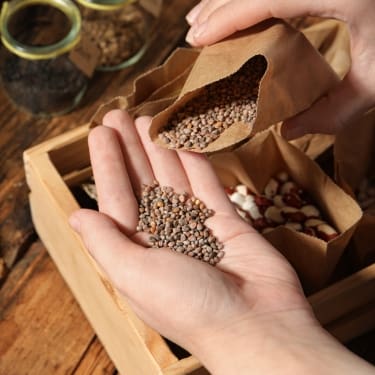
At breakfast, I mentioned how much I’d spent ordering seed that spring.
“You buy all of it every year?”
Not all of it, I told him. But enough.
Later he showed me jars and envelopes of seed he’d saved from beans, tomatoes, peppers, herbs and flowers. Nothing fancy. Some were labeled with masking tape and a year.
His point wasn’t that buying seed was foolish. He bought seed too. He just didn’t understand why I kept buying the same open-pollinated beans every spring when I could save them myself.
And this is true. Saving seed from open-pollinated varieties means you want offspring similar to the parent plants, and choosing your healthiest, best-performing plants for seed. Beans, peas, peppers, and many tomatoes are among the easier crops to start with.
I still buy plenty of seeds, especially when I want to try a new variety. But I came home with a much shorter list of things I felt I needed to reorder.
Ray had a fair point. If I was growing the same bean successfully year after year, there was no reason I couldn’t save a handful for next spring.
But there’s something I recommend for you this spring. This kit of medicinal herbs has everything you need if you want to start an herb garden. It has the most popular herbs used in remedies, and the best thing about it is that all the seeds are manually collected in the USA and 100% NON-GMO.
Then He Asked Me One Simple Question 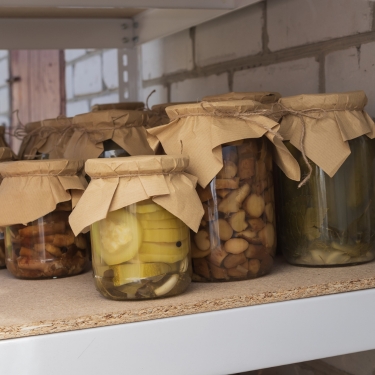
Ray’s garden didn’t look unusual at first. Potatoes, onions, winter squash, beans, cabbage, carrots. You know the drill.
The difference was that he already knew where most of it would end up.
Some went into the cellar. Some was canned. Beans were dried. Onions and squash were cured and stored.
Mark and I had absolutely done the opposite.
More than once, I’ve planted too much simply because I had the seed and the room. Then harvest came and suddenly I was standing in the kitchen wondering what to do with 30 pounds of vegetables at once.
Ray thought this was funny.
“You know you have to put it somewhere when you pick it, right?”
Since that trip, I pay more attention to how much we’ll eat fresh, how much I really want to preserve, and whether I have a place to keep the rest.
I also took canning much more seriously. And this led me to discover some incredible canning methods.
For example, I found out that the Amish use a secret ingredient most of us never heard of that helps their pickles stay firm in the jar for years and preserve their initial taste!
I Had No Idea What This Thing Was
One cold morning, Mark was helping Ray repair a wooden frame with a clear lid. I assumed it was a cold frame.
But I was wrong…
Underneath the growing area was manure mixed with bedding. As it broke down, it produced heat. The clear top helped hold some of that warmth around the plants above it.
People were using versions of these long before anyone could plug a heater into a greenhouse, and the funny thing is, the same idea still works. Composting horse manure and bedding can produce useful heat without electricity.
I’d heard about hotbeds before, but I’d never actually seen someone use one. I told Ray that I’d been thinking about improving the heating setup in our greenhouse.
He asked how many seedlings I actually needed heated. That was annoying, because the answer was: not that many. I didn’t need an entire greenhouse warm. I needed a small protected space for a few trays.
This is how I learned how to winter-proof my crops. What Ray used is one method, but there are many more, and a lot of them are much simpler. You can find some amazing winter-proofing methods here.
I Almost Threw This Away
Ray noticed what left the property.
One afternoon I cleaned dirty bedding out of an animal area, loaded it into a wheelbarrow, and asked where he wanted it dumped.
He looked at me, confused.
The bedding went into compost. Leaves had another pile. Garden waste had its place too. Manure was handled according to where it came from and how he planned to use it.
He wasn’t tossing raw manure around the vegetable beds and hoping for the best. Manure and used animal bedding can be valuable on a homestead when you handle them properly. Too much manure or compost can create nutrient problems, and raw manure comes with food-safety concerns.
Even clean wood ash sometimes has a use.
It contains potassium and can raise soil pH, so small amounts can be useful in some acidic soils. Too much can cause problems, though, and ash from treated wood or burned garbage should never go into the garden.
What stayed with me was how reluctant Ray was to call something trash. He was always trying to find a use for everything. Just as a self-sufficient person should.
I Thought He’d Like This Photo
I made the mistake of showing Ray a picture of our garden after fall cleanup. I removed the old plants, pulled weeds, and made everything look neat.
He stared at it for a few seconds and asked what I had growing there.
“Nothing. It’s winter.”
Apparently, that wasn’t the answer he wanted.
On his place, bare soil wasn’t automatically the goal once the vegetables were finished. Depending on the bed and the season, he used cover crops or left useful plant residue protecting the ground.
I had always associated a completely cleared garden with being finished for the year.
Now I still remove diseased plants, but I’m much less interested in leaving every bed bare just because it looks tidy.
Apparently the Amish do the same and they have very good reasons for doing so. Many of these “residual plants” don’t just protect the soil, but they also leave useful nutrients behind.
See what plants the Amish leave in their garden beds.
Mark Asked Him About the Trees
There was a long line of mature trees and shrubs along one side of Ray’s property. At some point, Mark asked if he had ever considered clearing part of it to gain more usable ground.
Ray answered immediately. No.
That tree line took some of the wind before it reached the house, outbuildings, animals, and garden. It also helped with drifting snow.
Ray also got firewood from that general area. To him, clearing the trees for a little more open ground would mean losing everything else they were already doing.
After a Few Days, I Started Noticing a Pattern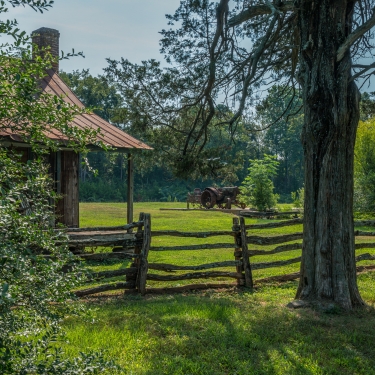
After a few days, I started noticing that almost nothing at Ray’s place was there for just one reason.
The chickens produced eggs, but their manure and bedding eventually contributed to compost. Some crops were grown because they stored well. The trees blocked wind and supplied wood.
One afternoon, I joked that he seemed suspicious of anything with only one purpose.
He laughed and said that when he was younger, they simply didn’t have the money to buy a separate answer to every little problem.
He wasn’t against new equipment. His sheds made that obvious. He used modern tools when they saved enough work to justify themselves.
What he didn’t do was buy something first and ask questions later. That was probably the biggest difference I noticed between his place and mine.
I used to be hyped about buying new seeds, new equipment, new pots, and so on. But after visiting Ray and seeing how a traditional homesteader does his work, I decided that it’s time to be more resourceful.
It took me a while to learn all of the useful tricks: how to be frugal on the homestead, how to take advantage of everything I have around me, and how to rely less on buying things I could produce or reuse myself.
Hopefully, you don’t need to spend time learning all of this anymore. When I first started my homestead, useful information couldn’t be found as easily as you can find it today.
For example, here you can find some of the most useful gardening advice I’ve ever seen. All of it in one single place. Amazing right?
Just a few things you can discover:
- How to build a DIY solar heater;
- How to make an off-grid refrigerator that works without electricity;
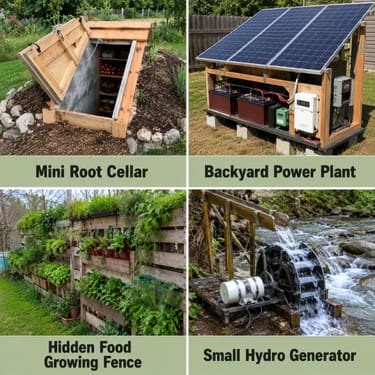
- How to build a hidden food-growing fence in your backyard with pallets;
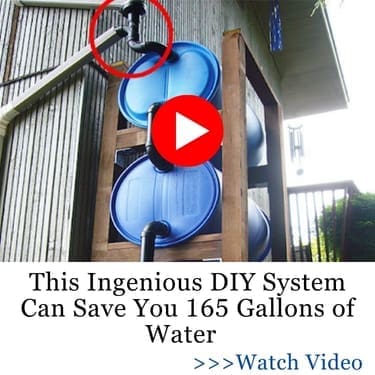
- How to stockpile a ton of water for 365 days;
And many more…
👉 If you want to see more, check out this video
What I Ended Up Bringing Home
By the time Mark and I left, I wasn’t planning to copy Ray’s homestead. That wasn’t why we went there. But I did start asking different questions back home.
If I need seeds, can I save some from this year? If I’m growing 40 pounds of potatoes, where are they going afterward? Is that bedding really trash? Does that empty bed need to sit bare all winter? Do I actually need a new piece of equipment for this job?
Sometimes the answer is still yes, buy the thing.
I’m not interested in pretending everything was better 70 years ago. But as you can see, there are some tricks that are still valuable today. Ray was very good at using what was already around him before reaching for something else.
Since then, I’ve caught myself heading to buy something and stopping to check whether we already had another way to do the job. That’s probably the most useful thing I learned from him.
You may also like: 
What We Learned After Our First Year of Total Self-Sufficiency
How to Build a Native American Subterranean Roundhouse in Your Backyard (Video)
How to Start a Fire with a Sharpie Marker
NEVER Throw Away These Items! (Do This Instead)
How To Keep Butter Fresh For 5+ Years