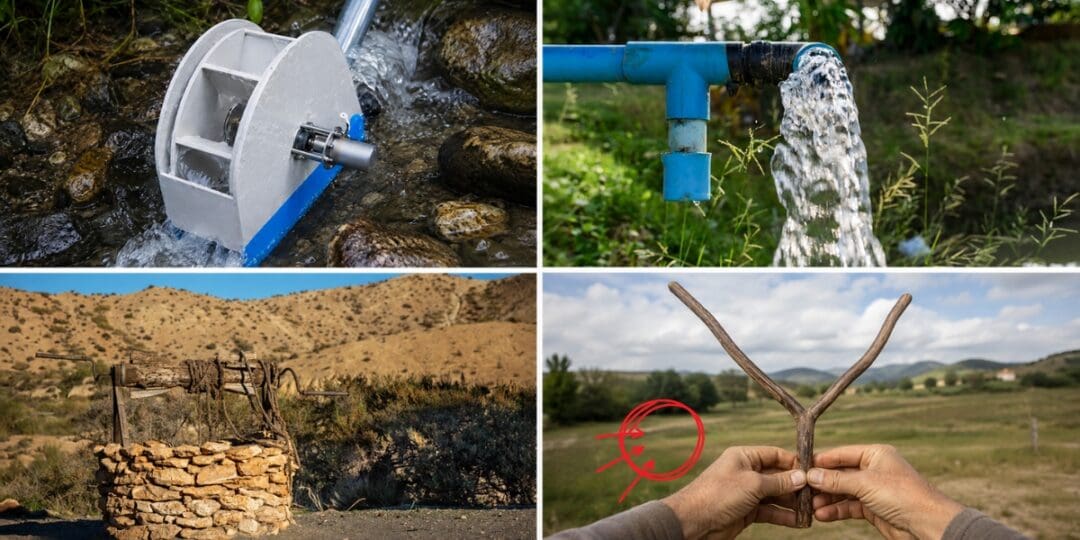
If you own land, sooner or later you’re going to need to know where the water is. Maybe you want to live more off-grid, or you just want to pay less for bills; reading your land for signs of water is a skill worth having.
Farmers were doing this long before anyone had electronic equipment or a geology degree. They had some secret tricks that guaranteed success, and today I want to share them with you.
Here are the most effective old-fashioned ways to find water on your property. Have you tried any of them?
Reading the Land
The first thing to do is walk your property and pay attention to the shape of it.
The first thing about water is that it obeys gravity above the ground and also below it. Water will always flow downhill and pool in the low spots. So when you’re looking for groundwater, look where surface water would want to go.
Valleys, ravines, depressions, and the base of hills are your best bets. The tops of ridges and hills are generally the worst place to look.
Even the U.S. Geological Survey confirms that shallow groundwater is more likely to occur in larger quantities under valleys than under hills. That’s basic physics, and farmers figured it out generations before anybody thought to write it down in a textbook.
Take note of the low points on your land, especially where two slopes meet. If you have any patch of grass that remains green all summer long, this might tell you something.
Also, another important clue you need to look for is the type of soil you have on your property. For example, clay is not the best indicator. It can tell you that there is water nearby, but building a well through clay is not a good idea because this is a thick soil that doesn’t support water flow.
On the other hand, clean sand or gravel is an amazing sign. If you have soil on your property with this structure, you are lucky. This type of soil has lots of gaps and this means it lets water flow freely. So, if there is some water nearby, the gravel will make it easily accessible.
Considering how water moves according to gravity, the chances of finding water in a soil that allows it to flow are much higher.
How to Find Out If The Type of Soil You Have on Your Property Has Water
Ok, maybe you’re wondering if there’s any way to see what type of soil you have to deal with. First of all, you can rely on your eyes. This is the classic method. Many times it’s easy to distinguish between sand, clay, and gravel. The only problem here would be that most of the land is made of a combination of soil types and this is why this method can be quite tricky, especially when you want to find water.
Then another method would be to request a professional soil test from the local Cooperative Extension office. This is the best method out there, but if you ever plan to do that, consider that there’s a high chance of remaining on a waiting list for months.
Maybe the simplest method out there that works very well and I also used is doing a soil test yourself. All you need is a mason jar and a soil sample from where you suspect there might be underground water.
It takes 15 minutes and the results are accurate enough to give you some clues about whether to build a well in that place or not.
This simple test gives you the chance to find a free water source that you already own and can exploit to reduce your water bill.
If you want to try the DIY mason jar soil test, you can find the full instructions here
Watching the Trees and Plants
Certain trees only grow where their roots can reach water, which makes them one of the most useful clues on your property.
The best indicators are willows, cottonwoods, alders, and sycamores. These trees have deep roots that follow groundwater, and if you see them growing on your property, especially in a dry stretch of land, they’re pointing right at what you’re looking for. Botanists call them phreatophytes, which is a fancy word for “plants that drink from the water table.”
At ground level, watch for cattails, rushes, and reeds. Cattails are the strongest sign of them all. If cattails are growing somewhere, water is within a foot or two of the surface. You can’t have cattails without water.
In dry areas, look for a patch of lush greenery in the middle of otherwise brown ground. That’s often a giveaway that something is keeping that patch alive from below.
The simplest way of identifying these plants is to have a list that has pictures and descriptions of all of them. Now, you don’t have to make this list yourself because you can take it already made from here.
The best thing about this resource is that besides helping you reconize water living plants, it also tells you how to use them around the homestead to make remedies or various recipes.
Springs, Seeps, and Wet Spots
Some groundwater rises to the surface on its own. Springs and seeps are the clearest signs of it, and they get overlooked all the time because they can be small enough to walk right past.
Walk your land after a dry stretch of weather. Anywhere the ground stays boggy or muddy when the rest of the property is dry is worth marking on a map. Even a slow trickle of a spring can point to a productive aquifer just below the surface.
If you have a stream on your land, watch how it flows. Where the water volume increases along its course, groundwater is likely discharging into it. That’s a good spot to consider for a shallow well.
And keep an eye out for old spring boxes or hand-dug wells that might be tucked in a corner of your property. Previous owners sometimes leave clues behind.
Also, having a stream on your land offers you more advantages than helping you decide where to build a well.
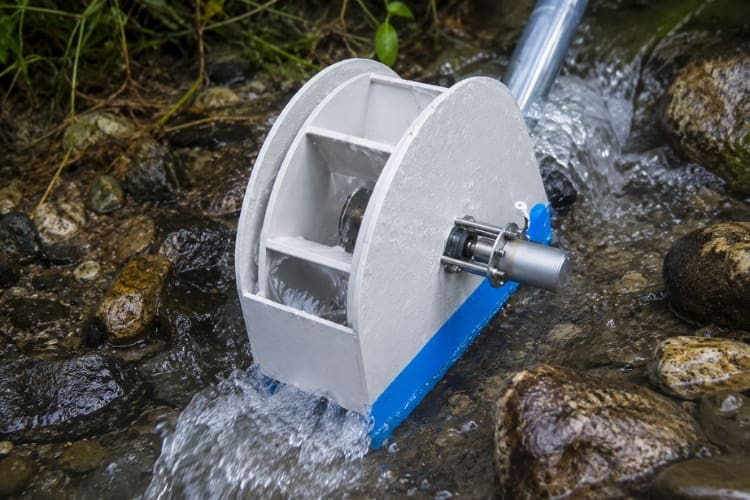
A source of flowing water means you can easily produce free energy forever. And this energy does not rely on the sun or the grid. Is completely independent from your power company and all it needs is the power of water.
The thing is that you can find many such projects online and most of them fail. This happens because they are made by amateurs who have no idea how to make them work.
Building a DIY hydroelectric generator is not complicated, but you need to have the right knowledge if you want to make it a reliable energy source on your homestead. Also, if you think it’s expensive, well, I have to contradict you because you can get this project done and spend only $60.
Now, since I mentioned that you need the right knowledge, I want to tell you more about Michael Major. He used to work as an engineer at Boeing, and now, after choosing the self-sufficient way of life, he has dedicated his whole life to educating the off-grid community.
He helped people with lots of projects over the years, and today he wants to share his plans for one of the most efficient hydroelectric generators.
You can get access to the blueprints and the whole step-by-step guide here →
The Morning Fog Trick
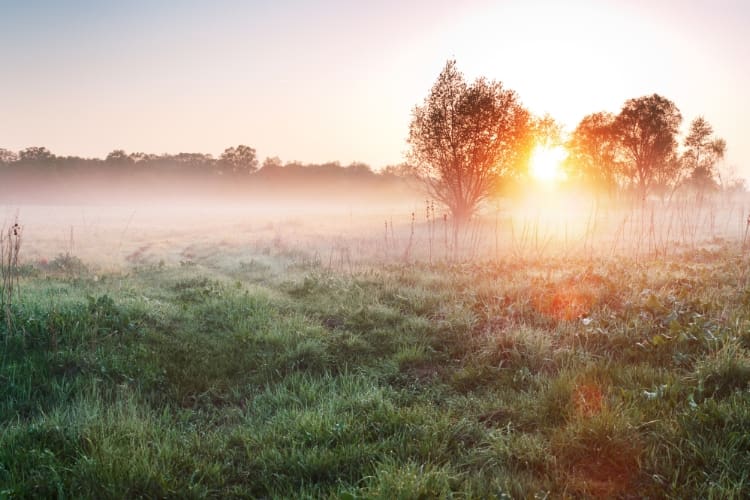
Here’s one my neighbor’s father taught him, and he passed it on to me and my husband. Get up before dawn and walk your land in early autumn or spring, right when the air is cool.
Look for the patches where the fog lingers longest, and where morning dew is thickest. Ground with high moisture content stays cooler than dry ground, and that temperature difference pulls water out of the air. So the spots where mist rises off the grass the longest are often sitting over shallow water.
The same principle works in winter. On a light frost morning, the frost often melts last where the ground is holding the most moisture from below. So if you’re up early anyway, take a look.
This one requires patience and repeating the observation over a few mornings, since weather patterns change.
But once you’ve done it a few times, the patterns will start to jump out at you.
Also, did you know that you can use a plastic sheet to catch the morning fog and transform it into water? Yes, this is an old technique cowboys used to gather water, but instead of a plastic sheet they used leather. At this point, this is one of the most underrated methods of getting free water, but you can start using it today.
Just think about walking in your garden in the early morning or walking through tall grass. Your legs were drenched in water, right? Why not collect that water and preserve it for personal use? See more about this method and how to use it in this guide.
Ask Around and Check the Old Wells
Talk to your neighbors. If they have wells, ask how deep they had to drill, what year, and what kind of yield they get. Ask how many feet down they hit the water table. This information is worth more than any dowsing rod, because it tells you what’s beneath the general area.
Look for old hand-dug wells on your property or on adjoining land. A hand-dug well tells you two things right away. It tells you the water table was shallow enough to hit by hand, and it tells you exactly how deep somebody had to go to reach it.
In most states, well records are also public information. Your state geological survey or your county office keeps them, and you can request them for free or for a small fee. If a well has been drilled anywhere near your property, that report is gold.
Also, if you decided that you want to build a well yourself, you might want to try an “Amish Well.”
Wells are the main water source for the Amish community. They’ve relied on wells for hundreds of years and have mastered the art of digging them like few others. And for one of these methods, you don’t even need to dig at all.
The Amish use three main types of wells, each with distinct technical features that make it suitable for different homesteads. The biggest advantage of the Amish design is that you won’t need to use a bucket to draw water from the well. These projects have piping systems, so you’ll be able to live off-grid while still enjoying comfort.
👉 Find out which Amish well design fits your homestead and how to build it without heavy equipment
The Bowl and Pit Test
If you’ve narrowed down a promising spot, here’s an old test that costs nothing and tells you a lot.
Dig a small pit about two feet deep. In the pit, turn a clean glass or ceramic bowl upside down. Or you can use a smooth stone if that’s what you have on hand. Cover the pit loosely to keep debris out, and leave it overnight.
Come back the next morning and check the underside of the bowl. If you find water beading up on it, the ground below is releasing moisture, which is a strong sign of a shallow water table. The more beads and the bigger they are, the closer the water.
You can also just dig your pit and leave it open for a few days. If water seeps into the bottom on its own, that’s about as clear an answer as you can get. The whole test costs nothing but a little digging and a little patience.
Dowsing
I couldn’t write an article about old-fashioned water finding and skip dowsing. Also called water witching, this is the practice of walking your land with a forked stick or a pair of L-shaped rods and waiting for them to dip when you cross over water.
I have to be honest with you about it, though. The U.S. Geological Survey has looked at dowsing many times and found no scientific evidence that it works. You can read their piece on it here if you’re curious. Controlled tests show dowsers do no better than chance.
Here’s what is really going on. A lot of experienced dowsers really do find water. But the stick isn’t doing the work. The dowser is. Seasoned dowsers are close observers of the land, and they notice the trees, the topography, the fog, and the seeps without even realizing it. The stick just gives them something to focus on while their brain does the real work.
So if you want to try dowsing, go ahead and try it. It’s harmless. Just don’t skip the other six methods and trust the stick to do all the work for you.
Final Thoughts
Reading your land for water is a skill that changes how you see the ground under your feet. You start noticing things that most folks walk right past and once you’re aware of them, you might be ready to take advantage of a free water source.
The old ways all come down to paying attention. And attention is a habit that keeps paying you back.
You may also like: 
How to Build a DIY Rainwater Collector
DIY Solar Water Heater from Plastic Bottles (Video)
The Only Way to Save Your Garden and Produce Water When It Doesn’t Rain
Why Tap Water Might Be Slowly Killing Your Garden
9 Plants That Grow With No Water