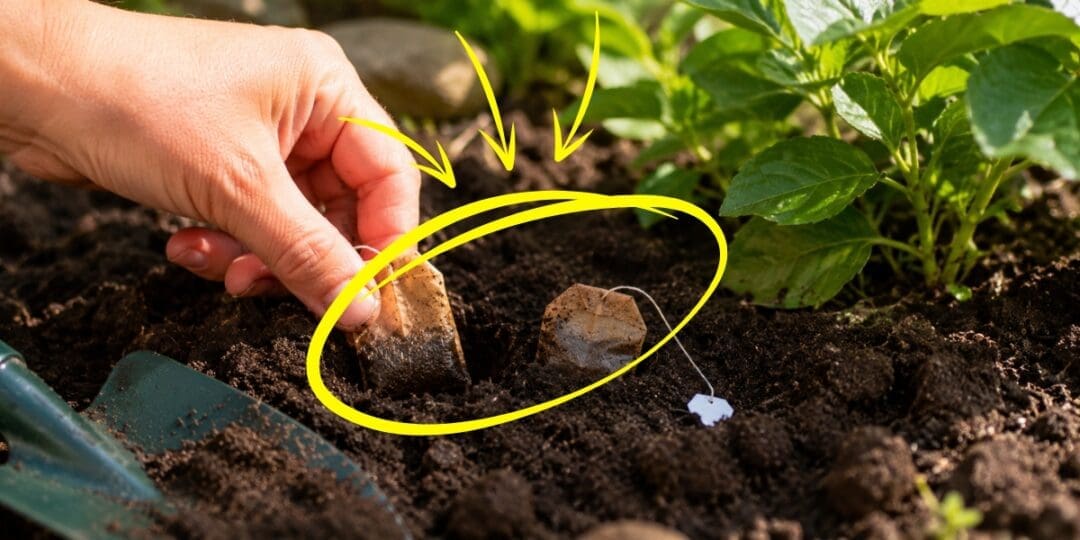
You’ve probably seen the advice floating online. People say you should toss your used tea bags in the garden and then watch the magic happen right before your eyes.
It sounds like a perfect homesteader move. Free fertilizer and less waste, the perfect reason to drink a cup of tea. But since this is something popular online, you should take it with a grain of salt. How much of this is real?
The catch here is that you should know which teabags are good and which are toxic for your garden.
I want to help you use teabags in the garden and get all the free benefits without wrecking your soil. Let’s get into it!
Why Your Soil Is Craving Tea Leaves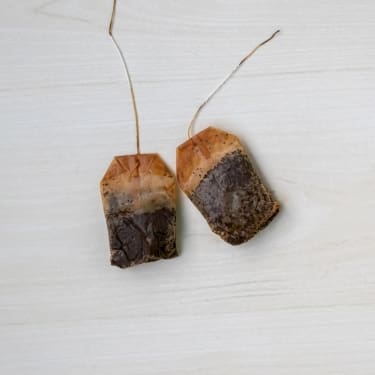
Believe it or not, your garden soil would ask for some tea leaves if it was aware of what they are doing.
Once you bury used teabags, the worms and microbes get to work pretty quickly. Tea leaves are nitrogen-rich, which is exactly what your soil bugs want to eat. They break down the leaves into the kind of organic matter your plants can actually use.
Dry spent tea leaves are around 4.4 percent nitrogen, with small amounts of phosphorus and potassium. That’s a respectable nitrogen number for something you were going to throw out anyway. The catch is that most of the easy nutrients have already come out into your cup. What’s left in the bag releases slowly as it breaks down, which is actually a good thing for your soil.
Soil scientists know this so well that they use tea bags as a measuring tool. There’s a whole research method where they bury tea bags in different soils to measure how fast organic matter breaks down. A study with the Royal Horticultural Society buried bags in over 500 home gardens and confirmed that gardens with regular organic amendments had better soil carbon and nitrogen levels.
What Type of Tea Can You Use
Well, there aren’t any restrictions here. You can use whatever tea you want. Green tea, black tea, berry tea. All is ok. As long as there is organic matter, your soil will love it.
I have a big box of black tea that I generally use, but sometimes I add something more special. For example, I grow lots of medicinal herbs, and I also make a lot of tea from them.
Some of my favorite teas include:
• The arterial “declogger”
• Gastritis, colitis, and ulcer tea blend
• Nature’s laxative blend
• Craving-buster brew
They are all made with various herbs you might already have in your backyard.
👉 Click here and discover how to make these teas yourself + 200 other medicinal herbal recipes
The Tea Bag Myth 
There’s one thing I always hear in homesteading communities and on various gardening groups. There are some people, usually pretty loud folks, who say that burying teabags in your garden will destroy your soil.
Well, this is not at all true. Brewed black tea sits around a pH of 4.9, which is acidic on paper. But once you bury a few used bags in a garden bed, the soil’s natural buffering takes over. Your dirt has way more pH-shifting power than a handful of tea leaves. This means your garden is safe and its pH is stable.
So if you’re trying to lower your soil pH for acid-loving plants, and you intend to use tea bags aren’t going to do it. If you want a big pH change, you’ll need elemental sulfur or pine needle mulch.
How Do You Know the Acidity of Your Soil
Knowing if you have acidic soil in your garden matters a lot because plants have different preferences. For example, potatoes and watermelons love a highly acidic soil, while tomatoes, cucumbers, corn, and most of the vegetables prefer a mildly acidic soil. Then we have asparagus, beets, kale, and cabbage that hate acidity.
So, being aware of the acidity of your soil is a little secret that helps you keep a healthy and happy garden.
But now the question is, how do you find out what type of soil it’s in your garden?
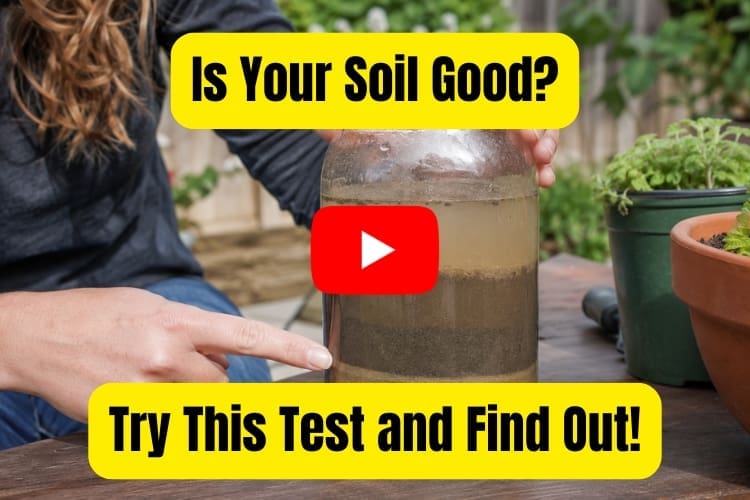
Well, this is actually really simple. You can make a test in less than 15 minutes and you get the answer to this question.
Your soil is mostly made up of three big components: Sand, silt, and clay. What matters here are the proportions. This test helps you with that.
Sand – doesn’t hold much nutrients. Then, when it’s raining, the water washes away most minerals and all that’s left behind is acidic hydrogen. This means sandy soil is probably acidic in places where it’s generally rainy.
Silt – sits in the middle. Holds nutrients better than sand but not as well as clay. Usually closer to neutral pH unless something pushes it one way or the other.
Clay – holds easily onto everything, including acidity. Clay soils are often naturally acidic, especially in the eastern US, the Southeast, and the Pacific Northwest.
👉 Find out the structure of your soil and its acidity. Try the test for yourself.
The Biggest Problem With Tea Bags
Now, I want to tell you about the real problem with tea bags. A lot of them are made of plastic. And I know you’re probably thinking about those that have a pyramid shape, but even “normal-looking” tea bags contain plastic nowadays. Even bags that look like plain paper often have polypropylene woven in to seal the edges.
When you bury those, the leaves break down, but the plastic mesh doesn’t. It just sits in your soil, shedding tiny particles for years.
A 2019 study from McGill University found that a single plastic pyramid tea bag steeped in hot water released about 11.6 billion microplastic particles and 3.1 billion nanoplastic particles into one cup. And that’s just when you are brewing a cup of tea. Now imagine that same material sitting in your vegetable garden.
And what happens with all these microplastics once they enter your soil? Your plants will catch them, and later they end up in your harvest and also on your plate. Yeah, I know this is not a nice scenario, but it happens pretty often.
The Best Way to Use Tea Bags in Your Garden
The safest move is also the simplest. Cut the bag open, dump the leaves into your garden or compost, and throw the bag itself in the trash unless you’ve verified the brand and you’re sure it’s a paper bag.
But, and this is very important, the bags you plan to use in the garden should not have already been used for brewing tea. Once you use them to make tea, the contents of the bag are already contaminated with microplastics. Your safest bet is to take brand-new tea bags and simply cut them open and use the contents in the garden.
So, it’s plain simple to see “that the best way to use tea bags in your garden” is to not use tea bags at all. Yeah, I know it sounds funny, but I just wanted to show you what the real problem is.
This won’t destroy your soil, and it won’t make your plants sick, as most rumors on the internet say. This is a whole different problem, and what to do next is completely up to you.
How Harmful Are Microplastics
The honest answer is: we don’t really know. This phenomenon is actually quite new and we have no idea what really happens with all of this plastic that ends up in our bodies.
The average person ingests somewhere between 39,000 and 52,000 microplastic particles a year through food and water, and probably inhales a similar amount. So the exposure is real and constant.
How to Make Your Tea Better and More Natural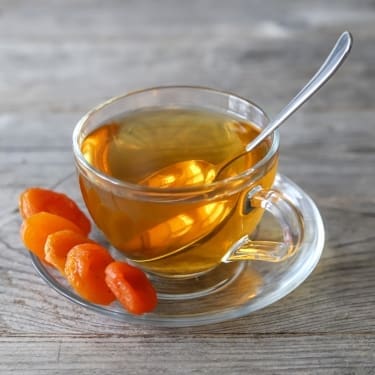
One nice way to do this is to make tea from what you already have in your garden. Hibiscus, rose hips, apples, pears, orange and lemon peel, berries, all are amazing options. They give you lots of vitamin C and help you hydrate better.
Hibiscus has been studied for helping with blood pressure, rose hips are a classic cold-weather pick-me-up, and dried apple or pear tea is easy on the stomach when you’re feeling under the weather.
But you need to be careful. Store-bought dried fruit is often loaded with added sugar and sulfites, but when you do it at home, you know exactly what’s going into your cup.
If you want to start drying your own fruits at home, the simplest approach is to use a fruit dryer machine. In case you don’t have one and you don’t want to spend money, because getting one can be quite expensive, you can build a solar dehydrator.
All you need are a couple of basic materials, and in 3 hours, you have a new device you can use. And all of this for $100 dollars instead of $1000.
👉 Click here and see how to build a solar dehydrator step-by-step
You Can Still Use Tea Leaves in Your Garden
Now, even if we don’t really know for sure how harmful microplastics are, we know that tea leaves are amazing for your garden.
In reality, you can still use tea in your garden, but you can just go with natural tea that does not come in bags. There are numerous options on the market to choose from.
I decided long ago that I don’t like tea that comes in tea bags and now I am buying big packages of tea and most of them last me half a year or more. As long as you keep them in a dry place, they will hold up well.
This is the single solution I found and this is also allowing me to use used tea leaves in my garden.
You may also like: 
The $0 Garden to Build in 2026
This Is Why You Should NEVER BURY a Shipping Container! (Video)
What Happens if You “Water” Your Garden With Spoiled Milk
NEVER Throw Away These Items! (Do This Instead)
Why You Should Put Plastic Forks In Your Vegetable Garden