Food gardens have been an existing self-provisioning practice in families for centuries now.
Since their first appearance in the urban context in 1760, it has only been gaining more popularity and importance.
During the first world war when the government encouraged US citizens to start gardens.
In the 1930s, when the Great Depression hit hard, people had to turn to planting their own food to escape poverty and starvation.
Nowadays, times are getting more and more unstable. Vegetable gardens are not only great for surviving in times of crisis but can also provide you with fresh foods and scarce elements in your region.
It is also considered a relaxing activity, either to spend some quality time with your family or to do by yourself.
As a gardener, being able to produce everything you consume within a whole year will save a lot of money.
Related: What Is a Freestanding Greenhouse? Everything You Need to Know
Growing Food Is Only Half the Battle – Storing It Is What Matters
Growing vegetables is powerful.
But if you can’t store your harvest safely, most of your hard work can be lost within weeks.
Root cellars were once the backbone of food security for families across the world. They allowed people to keep potatoes, carrots, squash, apples, onions, and more fresh for months without electricity.
The problem is most people today have no idea how to build one properly.
That’s exactly why Easy Cellar was created.
This step-by-step guide shows you how to build an effective food storage system using simple materials and practical designs that work in real homes.
Inside Easy Cellar, you’ll learn:
- How to store vegetables for months without refrigeration
- Which crops last longest and which ones spoil fastest
- Ideal temperature and humidity ranges for different foods
- Simple cellar designs for homes, basements, garages, or backyards
- Mistakes that cause food to rot early and how to avoid them
- How to rotate stored food properly so nothing goes to waste
- How families preserved harvests long before freezers existed
Even a small garden can feed your family for an entire winter – if you know how to store what you grow.
Easy Cellar bridges the gap between gardening and real self-reliance.
Because food security doesn’t come from planting alone.
It comes from knowing how to protect your harvest when it matters most.
👉 Easy Cellar gives you the missing piece between growing food and surviving on it year-round.
To start a vegetable garden, start by designing your space. Choose a spot that is spacy enough, depending on the quantity and size of what you are choosing to plant.
The spot should also be getting a fair amount of sunlight during the day (at least 8 hours), as most vegetables need a lot of direct sun to best harvest.
Next, decide on what to plant. Pick something relatively easy to grow, such as tomatoes, cucumber, or even spinach.
Take into consideration the space you have, the time of the year, and of course, your needs and preferences. For more helpful information, check out this guide on how to make a year-round self-sustaining garden.
Why You Should Put Plastic Forks In Your Vegetable Garden
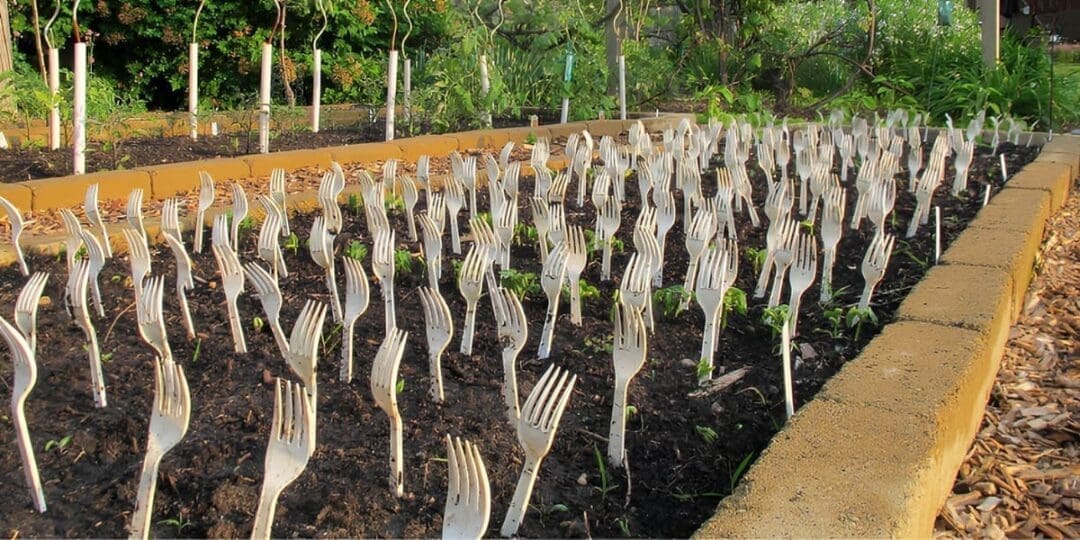
This is my favorite gardening tip. Plastic forks could be a multifunction tool in your garden. I’ll mention here some of their uses.
Keeping Animals Away
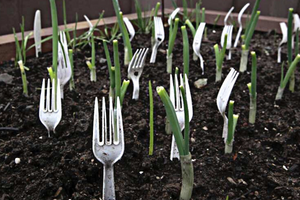 Your pets keep ruining your garden, digging the soil, running over your vegetables.
Plastic forks are great to keep pets and wild animals away. Just stick them in the ground of your garden, placing them some inches apart to prevent animals from stepping over them.
Keeping Plants Still
Getting your plants to stay down can be a struggle. Plastic forks can help you with that.
Insert the tines of the fork into the ground around the plants to hold properly and push down. It will keep your vegetables and plants in place for you.
Related:
Remember to adjust the forks from time to time to make sure that they are still securely planted. If your garden is small, regular plastic forks will do the job, but as you get more plants, you may want to consider switching to garden forks for a better grip.
Labeling Plants
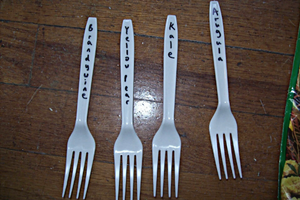 Forks can also be used as a cheaper labeling alternative for your plants.
There is a variety of different shapes and sizes to choose from.
Just find the ones you like, and write over them to keep track of your plants. You can even color them.
Building Borders And Fences
Another way to use forks in your garden is to wash them and line them at the edges of your beds. It will help you create sections in your garden to separate your different plants and stay within the lines when gardening.
⇒ Do You Know Why You Should Never Put A Tall Fence Around Your House?
Having a forks fence around your vegetable garden will also help keep the rabbits and squirrels away.
More Gardening Tips
Aside from plastic forks, another golden tip is to have good soil. In gardening, having healthy soil is crucial. Your soil has to have nitrogen, phosphorus, and potassium, elements that are essential for your plants’ growth.
Your vegetables will also need for it to contain compost and organic material such as bark and leaves. These two fertilize the soil and help it retain moisture. The best soil should be neither compacted nor sandy. It should be easy to dig.
Don’t Over Fertilize
Many people make the mistake of overusing nitrogen, thinking it will promote faster growth. They usually just end up with a small harvest and fewer vegetables.
What you can do instead is to opt for organic fertilizers, such as compost for your soil.
As mentioned before, good soil is key. It will provide your plants’ roots with the all nutrients and oxygen they need to thrive, resulting in a healthy and productive garden.
Be Careful With Watering
Most vegetable plants only need one inch of water per week.
This doesn’t mean to only water them once.
Except for when seedling, plants do best when watered 3 times a week, including any rainfall.
Water your plants either in the early mornings or evenings, avoiding the period of the middle of the day to prevent water loss due to evaporation.
Use Mulch
Adding mulch is a great water-conserving technique.
Having a layer of any organic mulch around your plants and over the irrigation lines will reduce evaporative moisture losses, protecting the soil and helping it stay cooler in the summer and warmer in the winter.
Be careful though. Some mulches contain high levels of harmful chemicals. So make sure you check the source of it before using it in your garden.
Lastly, check on your plants regularly. You must pay close attention to your plants, that way you always know if any issues were to come up.
Are they getting enough water, are they exposed to the sun long enough, and are they having a nutrition issue?
Checking the plants for any color changes, droopiness, and leaning, as well as noticing how fast they grow will help you stay alert and adjust your methods according to your gardens’ needs.
If you use all the tips mentioned above, be sure you will be set up for a good start on your gardening journey.
As a self-sufficient homesteader, you know that preparation is key and it is no different when it comes to gardening.
Learn From the People Who’ve Done This for Generations
Long before modern gardening trends, fertilizers, or online tutorials ever existed, the Amish were already living fully self-sufficient lives.
They didn’t rely on supermarkets.
They didn’t rely on electricity.
And they certainly didn’t rely on fragile supply chains.
They relied on knowledge passed down through generations.
That wisdom is preserved inside The Amish Ways Book, a powerful guide that reveals how ordinary families can live simply, sustainably, and independently, even during unstable times.
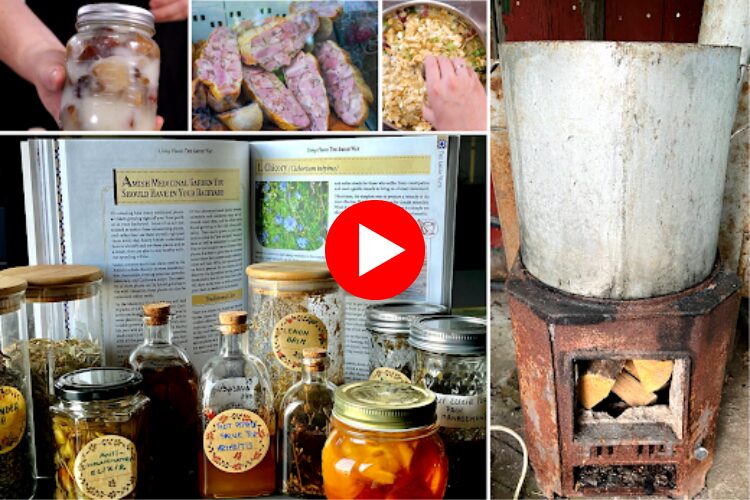 Inside this book, you’ll discover:
- How the Amish grow food year after year without chemicals or modern machinery
- Old-world gardening techniques that work with nature instead of fighting it
- Traditional food preservation methods used long before refrigeration
- Natural soil-building practices that keep gardens productive for decades
- How to organize a homestead so nothing goes to waste
- Simple systems for living comfortably with less money and fewer resources
- Time-tested habits that create true resilience, not dependence
What makes this knowledge so valuable is that it was never meant for convenience.
It was meant for survival, stability, and peace of mind.
If you want to garden not just for hobby, but for true preparedness, learning from the Amish may be one of the smartest steps you can take.
👉 The Amish Ways Book shows you how families thrived without modern systems — and how you can too.
If you haven’t yet, just start, be patient, and learn as you go. You will be more than ready for any crisis.
You may also like:
Don’t Throw Away SPOILED Vegetables! Do THIS Instead!
The Natural Painkiller that Grows in Your Backyard (Video)
Vegetables You Can Harvest In Less Than A Month
Asparagus – Where to Plant: Complete Location Guide for Growing Success