
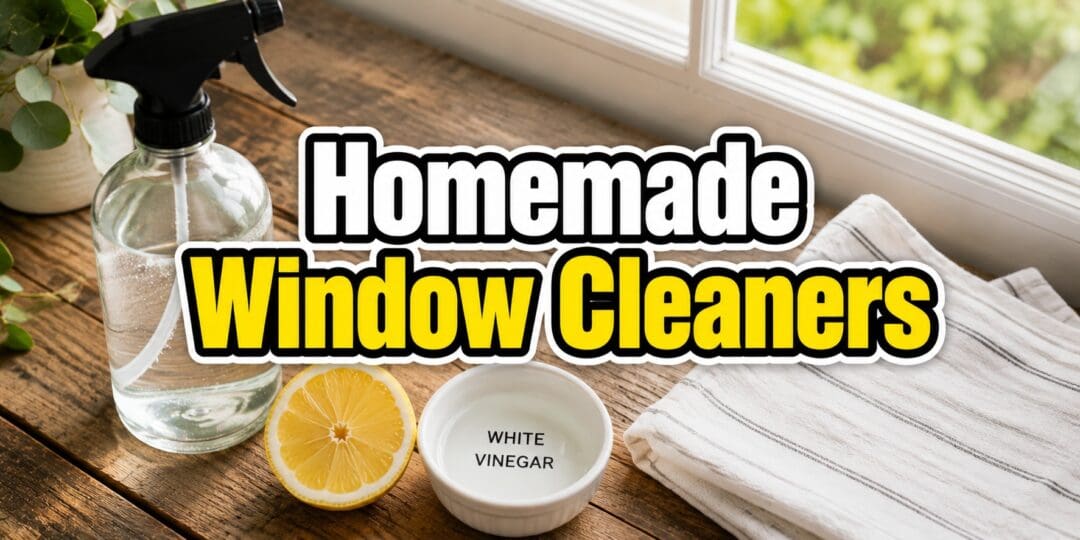
Store-bought window cleaners cost more than they should, come in plastic bottles that go straight to the landfill, and are made from ingredients most people could mix together in their own kitchen in under two minutes. If you have white vinegar, rubbing alcohol, and a spray bottle somewhere in your house, you already have everything you need to clean every window on your property.
This article covers the most effective homemade window cleaner recipes, the science behind why each ingredient does what it does, the techniques that separate streak-free results from frustrating smears, and the situations where certain formulas work better than others. Whether you are trying to cut your household spending, reduce chemical exposure in your home, or simply stop running to the store every time you run out of glass cleaner, making your own is worth doing.
Why Commercial Window Cleaners Are Worth Replacing
The blue liquid in those spray bottles is mostly water, isopropyl alcohol, and a surfactant, with fragrance and colorant added for marketing purposes. The active cleaning work is done by ingredients that cost pennies per bottle when purchased in bulk. You are paying primarily for packaging, branding, and convenience.
Beyond cost, there are legitimate environmental and health reasons to consider. The Environmental Working Group’s cleaning product database rates many commercial glass cleaners with moderate to high concern scores due to ingredients including 2-butoxyethanol, ammonia, and synthetic fragrances that can irritate the respiratory tract and eyes with repeated exposure.
Ammonia, found in many commercial glass cleaners, is effective but poses real risks. It reacts with chlorine bleach to produce toxic chloramine vapors, making it a genuine hazard in households where both products are used. It also degrades rubber seals and tinting film on windows over time, which matters if you have tinted car windows or double-pane window seals.
Homemade window cleaners sidestep all of these issues. The ingredients are inexpensive, widely available, non-toxic at household dilutions, and effective. The environmental footprint is dramatically lower, and the cleaning results, when the formula and technique are right, are indistinguishable from commercial products.
The Core Ingredients and What They Do
Understanding the role of each ingredient makes it easier to troubleshoot results and adjust formulas to your specific situation.
White distilled vinegar is the workhorse of most homemade window cleaners. Its acetic acid content, typically 5 percent in standard grocery-store vinegar, dissolves mineral deposits, cuts through grease and grime, and evaporates cleanly without leaving residue. It is the ingredient most responsible for streak-free results on glass. Crucially, it is non-toxic, biodegradable, and costs almost nothing.
Rubbing alcohol, either isopropyl alcohol at 70 percent or 91 percent concentration, accelerates drying and prevents streaking by lowering the surface tension of the cleaning solution. It also contributes antimicrobial action and helps cut through oils and fingerprints that vinegar alone may struggle with. The higher the alcohol concentration, the faster the solution evaporates, which is an advantage in cold weather or on large glass surfaces.
Distilled water is worth using over tap water if you live in an area with hard water. Hard water contains dissolved calcium and magnesium minerals that leave white spots and haze on glass as they dry. The U.S. Geological Survey’s water hardness map shows that the majority of the American West and Midwest deals with hard to very hard water. If your tap water leaves spots on dishes or creates scale buildup in your kettle, use distilled water in your window cleaner.
Dish soap in very small amounts adds surfactant action that helps lift stubborn grease and grime from heavily soiled windows. The critical word is very small. More than a single drop per spray bottle will leave a soapy film that causes streaking. Dish soap is an optional addition for particularly dirty windows, not a standard ingredient in the everyday formula.
Cornstarch is an old-fashioned addition found in some traditional recipes. It acts as a very mild abrasive and polish, and some people find it improves clarity on glass that has become dull or hazy over time. It requires thorough buffing and works better on some glass types than others.
The Standard Homemade Window Cleaner Recipe
This is the formula that covers 90 percent of everyday window cleaning needs. It is fast to make, costs almost nothing, and produces results comparable to any commercial product.
- 2 cups distilled water (or tap water if your water is soft)
- 1/2 cup white distilled vinegar
- 1/4 cup rubbing alcohol (70 percent or higher)
Combine all ingredients in a clean spray bottle. Shake gently to mix. Label the bottle with the date and contents. That is the complete recipe.
This formula is stable indefinitely as long as the spray bottle is kept sealed between uses. The alcohol prevents any microbial growth in the solution, and the vinegar and water have no meaningful shelf life limitations. Mix a large batch if you have a lot of windows to clean.
The ratio works because the vinegar provides the primary cleaning and anti-streak action, the alcohol speeds drying and adds cutting power, and the water dilutes the solution to a level that cleans effectively without leaving vinegar residue. This balance took generations of homemakers and homesteaders to arrive at, and it is genuinely difficult to improve on for standard glass cleaning.
A Stronger Formula for Heavily Soiled Windows
If your windows have not been cleaned in a long time, have heavy grease from cooking residue on interior surfaces, or are covered in insect debris, tree sap, or road film, the standard recipe may need some reinforcement.
- 1 cup distilled water
- 1 cup rubbing alcohol (91 percent)
- 1 tablespoon white distilled vinegar
- 1 drop dish soap
The higher alcohol ratio in this formula dramatically increases cutting power and drying speed. The single drop of dish soap provides surfactant action to lift heavier soiling without creating the streaky film that more soap would leave. Use this formula as a first pass on very dirty glass, then follow with the standard formula or a plain water wipe to remove any remaining residue.
For windows with heavy mineral deposits or hard water stains that have built up over years, a full-strength application of undiluted white vinegar left to sit on the glass for several minutes before wiping can dissolve the calcium carbonate deposits that cause that characteristic white haze. Research from the American Chemical Society explains that acetic acid reacts with calcium carbonate in a straightforward acid-base reaction, converting the insoluble mineral deposits into soluble calcium acetate that wipes away cleanly.
The Vinegar-Free Formula for Sensitive Surfaces
Vinegar is excellent on plain glass but should be avoided on certain surfaces. Natural stone windowsills, marble surrounds, grout between tile, and some treated or coated window frames can be etched or dulled by repeated acid exposure. If your windows are surrounded by stone or specialty finishes, use this formula instead.
- 2 cups distilled water
- 1/2 cup rubbing alcohol (70 percent or higher)
- 1/4 teaspoon dish soap
This produces an effective, gentle glass cleaner that poses no risk to adjacent stone or treated surfaces. The cleaning power comes entirely from the alcohol and surfactant. It is slightly less effective on mineral deposits than the vinegar-based formulas but works well for regular maintenance cleaning on glass that is not heavily soiled.
The Technique Matters as Much as the Formula
Even the best window cleaner formula will produce streaky, frustrating results if applied with poor technique. The cleaning method accounts for at least half of the final result.
Avoid cleaning windows in direct sunlight. This is the single most common cause of streaking in otherwise correctly made solutions. When the sun is directly hitting the glass, the cleaning solution evaporates before you can wipe it, leaving dissolved residue behind. Clean windows in the early morning, on overcast days, or from the shaded side of the house.
Start with the right wipe material. Paper towels work but leave lint and require a lot of product. Newspaper was the traditional recommendation and still works well due to its slightly abrasive texture and low linting. The best option for streak-free results is a clean, lint-free microfiber cloth. Microfiber attracts and holds dirt mechanically, requires less product, and can be washed and reused hundreds of times.
Spray the cleaner directly onto the cloth rather than directly onto the glass when working on smaller panes or interior windows. This prevents overspray on frames, sills, and surrounding surfaces and gives you more control over product distribution.
For large windows, use an S-pattern wipe rather than circular motions. Circular wiping redistributes dirt and cleaning solution in patterns that dry into visible swirls. Horizontal or S-pattern strokes move the dirt off the glass surface in one direction.
Dry the glass immediately after wiping with the damp cloth using a second dry microfiber cloth or a squeegee. A squeegee with a sharp rubber blade produces the most consistently streak-free results on large panes. Consumer Reports’ cleaning guides consistently rate squeegee technique above cloth wiping for large windows, citing the mechanical advantage of the blade in removing all liquid in a single pass before any evaporation can occur.
For exterior windows with heavy caked-on debris, rinse the glass with a hose before applying cleaner. Wiping cleaning solution over abrasive grit or debris scratches the glass and creates micro-damage that makes future cleaning harder.
Using Homemade Window Cleaner on Specific Surfaces
Different glass surfaces around the home have different requirements, and it is worth knowing which formula to reach for in each situation.
Interior windows and mirrors respond best to the standard formula applied with a microfiber cloth. Mirrors are particularly unforgiving of technique errors because they reflect at an angle that makes every streak visible. Use minimal product, wipe in one direction, and buff dry immediately.
Car windows benefit from the stronger alcohol-forward formula, particularly on the interior. The interior windshield of most vehicles accumulates an oily, hazy film from off-gassing plastic and vinyl surfaces. Straight vinegar or a high-alcohol formula cuts through this film effectively. Avoid using vinegar-based formulas on car windows if your vehicle has window tinting film, as repeated acid exposure can cause tinting adhesive to lift and bubble over time.
Double-pane or insulated window glass should only be cleaned with gentle formulas on the exterior surfaces. Avoid getting any cleaning solution into the edges or frames of double-pane units, as moisture infiltration can cause the argon gas filling to escape and the window to cloud permanently between the panes.
Shower doors and bathroom mirrors face specific challenges from soap scum and hard water deposits. The full-strength undiluted vinegar approach works best here. Spray, let sit for five minutes, then scrub with a non-scratch sponge and rinse. For ongoing maintenance, a squeegee on shower glass after every use prevents mineral deposit buildup entirely.
Making Your Window Cleaning Routine More Self-Sufficient
If you produce your own vinegar at home, you already have the primary ingredient for an essentially free window cleaner. Apple cider vinegar works in the same way as white vinegar but may leave a faint color on light-colored surfaces if used at high concentrations. For window cleaning specifically, white distilled vinegar is preferable because of its clarity.
Rubbing alcohol can be purchased in bulk at significantly lower cost per ounce than small pharmacy bottles. A gallon of 91 percent isopropyl alcohol, which makes roughly 30 spray bottles of the standard formula, costs a fraction of what 30 bottles of commercial window cleaner would cost. Stored in a cool, dark place in a sealed container, it keeps indefinitely.
Reusable glass spray bottles are worth the small upfront investment over plastic. Glass does not absorb odors or leach any material into the solution over time, and a quality glass spray bottle will outlast hundreds of plastic ones. Many homesteaders keep a set of labeled glass spray bottles in their cleaning supplies as permanent fixtures rather than single-use containers.
Microfiber cloths are the last piece of the system worth upgrading. Standard terry cloth towels require far more product and effort to achieve comparable results. The EPA’s Safer Choice Program recognizes microfiber cleaning technology as a significant reducer of chemical cleaning product consumption, because the mechanical cleaning action of the fibers replaces much of the work that chemical surfactants do in conventional cleaning.
Once your setup is in place, your ongoing cost for window cleaning is essentially the cost of vinegar and water. That is a meaningful reduction from a recurring household supply expense, and it removes a category of single-use plastic from your home entirely.
Rediscover the Simple Household Wisdom That Still Works Today
Long before expensive commercial cleaners filled store shelves, Amish families kept spotless homes using simple, affordable ingredients they already had on hand. Their practical, time-tested methods are just as useful today for anyone looking to save money and become more self-sufficient.
The Amish Ways Book is packed with traditional household tips, cleaning methods, food preservation techniques, gardening advice, and everyday skills that have been passed down through generations. Inside, you’ll discover how to:
- Make effective homemade cleaners from common pantry ingredients
- Reduce household costs with simple DIY solutions
- Preserve food using traditional methods
- Maintain a more self-reliant home with practical skills
- Learn timeless Amish wisdom that still works today
If you enjoy replacing expensive store-bought products with simple homemade alternatives, this book is a valuable addition to your homestead library.
Troubleshooting Common Results
Streaks after drying almost always come from one of three causes: too much product applied, cleaning in direct sunlight, or a cloth that is not clean enough. Start with less spray than you think you need. A light mist covers glass more evenly than heavy saturation and dries faster.
Hazy or cloudy film after cleaning usually means the glass had an existing buildup of wax, silicone, or cleaning product residue that the new formula could not fully dissolve in one pass. Apply undiluted rubbing alcohol to a clean cloth and wipe the glass firmly before applying the standard cleaning formula. The alcohol dissolves most wax and silicone residues that vinegar-based cleaners cannot cut through.
Smearing without cleaning often means the cloth is picking up more dirt than it is removing, either because the cloth is already loaded with debris or because the window is too dirty to clean without a pre-rinse. Rinse exterior windows before cleaning and switch to a clean cloth section frequently on large surfaces.
Lingering vinegar smell indoors dissipates within 15 to 30 minutes as the acetic acid evaporates. If the smell bothers you, add 10 drops of essential oil such as lemon or eucalyptus per bottle of the standard formula. This does not affect cleaning performance and leaves a faint pleasant scent rather than the sharp vinegar note.
Making your own window cleaner is one of those small homesteading tasks that takes almost no time, costs almost nothing, and produces results that are genuinely equal to anything you could buy. Get the formula, the bottles, and the cloths set up once, and it becomes one less thing you ever need to buy again.
You may also like: 
Join Our Wonderful Facebook Group HERE!
How to Build Your Own Water Generator (Video)
Cleaning the Chimney: A Complete DIY Guide for Homeowners
How to Clean a Cast Iron Skillet – The RIGHT Way
How to Use Cornstarch Around Your Homestead
These 7 Homesteading Skills Pay for Themselves in Under a Year