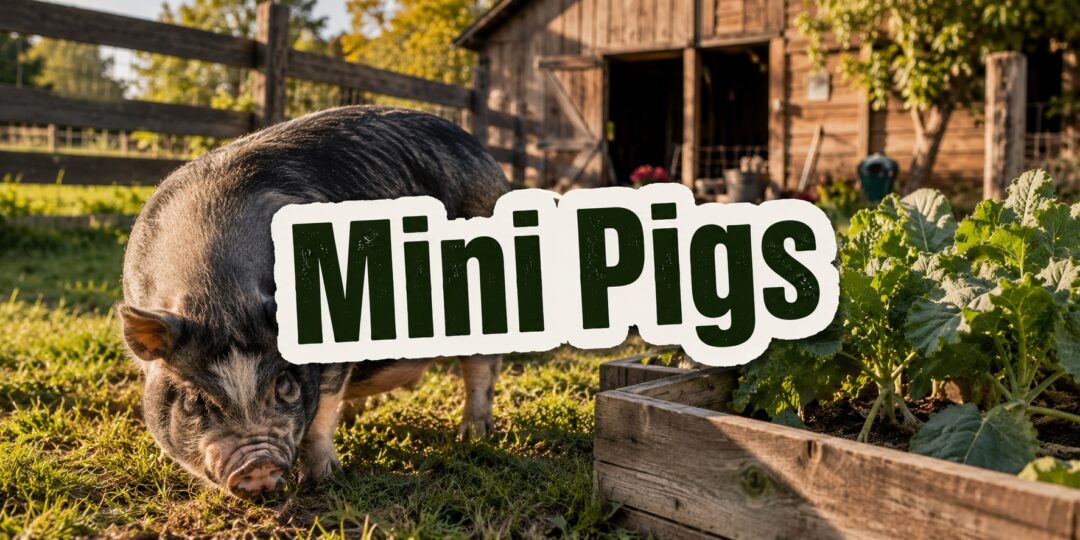
A neighbor of mine bought what she was told was a “teacup pig” from an online breeder, a piglet small enough to fit in a purse in the photos. Two years later, that same pig weighs close to 150 pounds and lives in a custom-built stall in her barn, nowhere near the lap pet she was promised.
Her story is not rare, it is close to the norm. This guide covers what a mini pig actually is, which breeds are real versus marketing, what it actually takes to keep one well, and whether a mini pig has any real place on a self-sufficient homestead.
The “Teacup Pig” Myth You Need to Know First
“Teacup pig,” “micro pig,” and “pocket pig” are marketing terms, not real breeds or a scientifically defined size category. According to Texas A&M College of Veterinary Medicine, even pigs sold as “micro pigs” can still grow to around 40 pounds, and full-size or traditional pot-bellied pigs can reach 100 pounds or more, so evaluating the parents of a piglet is the only reliable way to judge its eventual adult size.
Every mini pig starts life small enough to fit in someone’s arms, which is exactly what breeders photograph and sell. Most of a pig’s growth happens in the first year of life and continues until around three years of age, meaning the “teacup” piglet you bring home today is nowhere near its adult size yet.
Popular Mini Pig Breeds and How Big They Actually Get
Vietnamese Potbellied Pig
The Vietnamese potbellied pig was the original pet pig, introduced to North America in the 1980s and still the most common pig kept as a household pet today. Texas A&M’s Pet Talk puts a full-grown potbellied pig at roughly 120 to 150 pounds, with a distinctive sway back, short wrinkled face, and pot belly that gives the breed its name.
Juliana Pig
Juliana pigs are the smallest recognized breed, typically weighing 40 to 80 pounds with a lean, spotted, athletic build rather than the potbellied breed’s rounder shape. A fully grown Juliana weighing only 15 to 20 pounds is a sign of an underfed, unhealthy animal, not a well-bred miniature.
KuneKune Pig
KuneKune pigs, developed in New Zealand, land on the larger end of the mini pig spectrum at 100 to 250 pounds and up to 24 to 30 inches tall. Their long hair, floppy ears, and easygoing, grazing-friendly temperament make them popular for petting zoos and homesteads that want a docile pig with a fairly predictable adult size.
American Mini Pig
The American mini pig is not a single breed but a mixed lineage crossed down from potbellied, Juliana, KuneKune, and other small breeds over many generations. Sizes vary widely, generally landing under 150 pounds, but genetics from any ancestor breed can show up unpredictably in a given litter.
Temperament and Intelligence
Mini pigs are genuinely intelligent, arguably smarter than most dog breeds, and can be trained using the same positive reinforcement and clicker methods used for dogs. They also housebreak and litter-train readily, sometimes faster than a puppy, which is part of why they became popular house pets in the first place.
That intelligence cuts both ways. A bored, understimulated pig will root up carpet, chew walls, or tip over furniture looking for something to do, and mini pigs need daily exercise and social interaction to stay well-behaved.
Housing and Fencing Requirements
Pigs need secure fencing regardless of their size, since Texas A&M’s veterinary faculty note that pigs have no natural defense against dog attacks at any age. A determined pig can also root under a weak fence line looking for food, so fencing needs to be reinforced or buried at ground level, not just tall.
Every pig, indoor or outdoor, needs regular access to a space where it can root, an instinctive digging behavior pigs use to search for food and pull iron from the soil. Outdoor pigs also need shelter from sun, wind, and rain, plus a wallow or shallow pool in hot climates, since pigs cannot sweat and overheat easily.
Diet and Feeding
Feeding a pig table scraps or ordinary pet food is one of the fastest ways to create a sick, obese pig. Texas A&M’s Pet Talk recommends a commercially formulated pot-bellied pig feed as the only appropriate diet, fed twice daily according to the package instructions, since obesity is the single most common health problem veterinarians see in pet pigs.
Young pigs need a youth mini-pig feed until around two years old, then transition to an adult or senior formula that’s higher in fiber and lower in calories. Treats should be limited to low-calorie options like fresh vegetables, since pigs are highly food motivated and will happily overeat anything offered to them.
Health Care and Common Problems
A pot-bellied pig’s veterinary needs look similar to a dog’s on paper, but finding a vet who actually treats pigs can be the harder part. Peer-reviewed research on potbellied pig husbandry found that improper housing, care, and training create more health and behavior problems in pet pigs than in more traditional pets like dogs and cats, and an obese, poorly managed pig often ends up given away or worse.
Pigs need annual vaccinations, physicals, and regular hoof trimmings, along with periodic deworming. Obesity leads directly to arthritis as pigs age, and unspayed females face a meaningfully higher risk of uterine cancer later in life, which is why most veterinarians recommend spaying or neutering pet pigs.
Zoning Laws and Local Regulations
Many towns and cities still classify pigs as farm livestock rather than pets, which means a backyard mini pig can be against local code even in areas where dogs and cats are welcome. Check zoning regulations and any homeowners association rules before bringing a pig home, not after, since pigs discovered in violation of local ordinances are sometimes forcibly removed from their homes.
Regulations vary enormously by city and county, and there is no national database that tracks which areas allow pet pigs. Some municipalities have relaxed their rules in recent years as pet pigs became more common, so it’s worth contacting your local zoning office directly rather than relying on outdated information online.
Lifespan and Long-Term Commitment
A healthy mini pig can live 12 to 20 years, which is a longer commitment than most dog breeds and close to the lifespan of a well-cared-for cat. That timeline matters when you’re evaluating whether a pig fits your life for the next two decades, not just the next two years.
Do Mini Pigs Make Sense for a Homestead?
A mini pig fits a homestead better as a pet or a working garden-tiller than as a meat or production animal, since the smaller breeds were never developed for that purpose. Their strong rooting instinct can actually be useful for turning over garden beds or small patches of ground between growing seasons, if you’re comfortable directing that instinct somewhere useful instead of the lawn.
If your goal is genuine food production, a standard meat hog breed will get you there faster and cheaper per pound than any mini pig breed ever will. Mini pigs make the most sense on a homestead as an intelligent, long-lived companion animal, not as a shortcut to more efficient pork.
Common Mistakes New Owners Make
- Buying a piglet based on advertised “teacup” or “micro” size instead of seeing the actual parents
- Feeding table scraps or dog food instead of a proper pot-bellied pig feed
- Skipping a check of local zoning laws before bringing a pig home
- Underestimating how much daily mental and physical stimulation a pig actually needs
- Assuming a mini pig will stay small enough to live like an indoor lap pet indefinitely
Build the Skills That Make a Homestead Truly Independent
Keeping animals successfully is about far more than buying the right breed. As this mini-pig guide shows, real self-reliance comes from understanding what an animal needs, planning ahead, building the right infrastructure, solving problems yourself, and knowing what to do when the easy modern solution isn’t available.
The Lost Skills of Independence was created around that same principle: practical knowledge gives you options. It brings together hands-on skills that previous generations relied on to provide for themselves, maintain their homes, preserve resources, improvise solutions, and stay capable when circumstances changed.
Inside, you’ll discover practical, step-by-step knowledge designed to help you become more self-reliant, including skills connected to growing and preserving food, working with your hands, making and repairing useful things, managing resources, solving everyday homestead problems, and preparing for situations where outside help may be limited or unavailable.
You don’t need to abandon modern life to benefit from these skills. You simply need to know that when something breaks, supplies become scarce, costs rise, or an unexpected problem lands on your doorstep, you have more options than reaching for your phone or your wallet.
Whether you’re already building a self-sufficient homestead or you’re just beginning to reclaim practical skills that have largely disappeared from everyday life, this is the kind of knowledge worth keeping within reach.
Be ready for anything life throws at you. Build practical skills now—and become harder to catch unprepared later.
Final Thoughts
A mini pig is not a shortcut to a small, low-maintenance pet, it is a genuinely intelligent, long-lived animal that happens to come in a smaller package than a farm hog. Do the homework on breed, adult size, zoning, and daily care before you commit, and a mini pig can be a rewarding, decades-long addition to a homestead.
Skip that homework, and you risk becoming the next version of the story that opened this guide, a piglet bought as one thing that grew into something the household was never prepared for.
You may also like:
Join Our Homesteading Facebook Group!
An Ingenious Eggshell Remedy and 25 Others Made from Things People Usually Throw Away (Video)
Growing Kunekune Pigs: A Practical Guide for Self-Reliant Homesteads
10 Things To Never Feed Your Pigs
What Do Pigs Eat? A Practical Guide for Healthy, Happy Animals