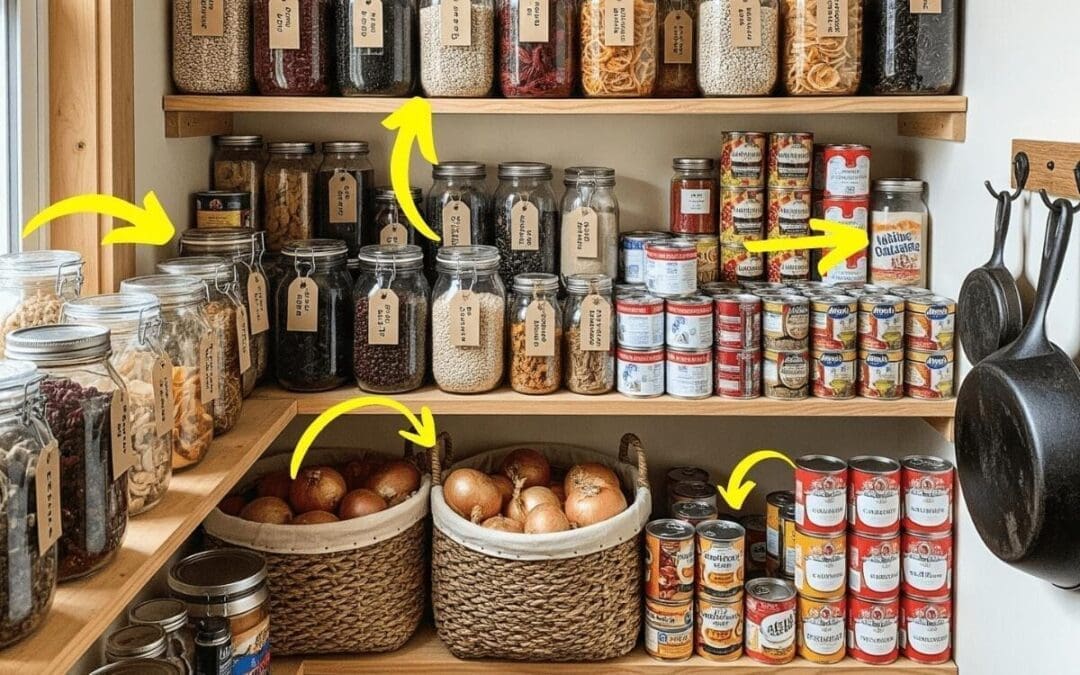
Small spaces force you to think differently about food storage. When you have limited square footage but need to store enough provisions for two years or more, every inch counts.
Standard pantry advice falls short because it assumes you have abundant space. You don’t, so you need better strategies. Your success depends on understanding what works in cramped quarters.
The difference between storing three months of food versus two years comes down to density, efficiency, and smart choices about what you keep. Space constraints become advantages when you know how to use them.
Building a Distributed Storage Network
Trying to cram everything into one tiny space usually fails. Instead, embrace a distributed system. Think of your small pantry as just the active hub – where you keep the beans, rice, or canned goods you’ll use this month.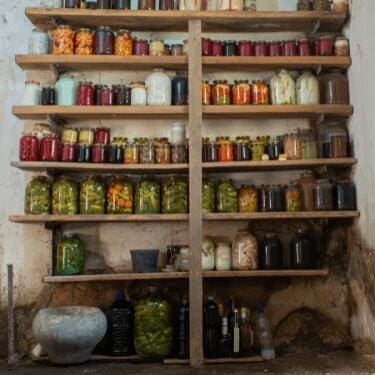
Your true 2+ year reserve lives in multiple, smaller, optimized locations around your home and outbuildings. One module might be grains and legumes in Mylar bags under your bed.
Another could be freeze-dried foods and powdered milk in sealed bins filling the top shelves of bedroom closets. A third might be jars of home-canned meat or broth secured in a sturdy cabinet in the garage (if temps stay above freezing).
This modular approach spreads the load, utilizes otherwise wasted space, and makes managing your large-scale food storage far less overwhelming than one massive, inaccessible stockpile. It turns every nook into a contributor to your family’s food security.
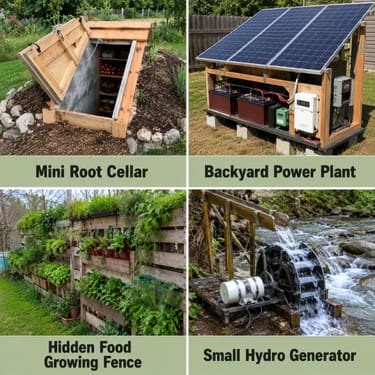
A well-designed underground cellar, such as the one described in The Easy Cellar, also makes a perfect addition to your distributed storage network. Built just a few feet beneath your backyard, it provides a cool, stable environment for root vegetables, canned goods, and many other long-term staples, giving you months of reliable storage instead of just days.
Inspired by the root cellars our ancestors relied on, this modern design adds extra security, similar to a small-scale bunker, and even offers a layer of protection against EMP strikes, keeping critical supplies safe when electronics fail. Best of all, it’s surprisingly affordable. You can build it for under $400 and complete it in less than a week, entirely on your own, without the need for expensive contractors or specialized equipment.
Claiming Dead Zones
Look down. Look up. That void under a raised bed frame? Perfect for sliding shallow, sturdy bins filled with root vegetables (like squash or potatoes packed in sand/wood shavings), sealed buckets of dry beans, or seed storage bins.
Build simple, low-profile plywood platforms on casters if needed. Now look up. In a closet, attic space, or even a garage corner with stable temps, install heavy-duty ceiling racks.
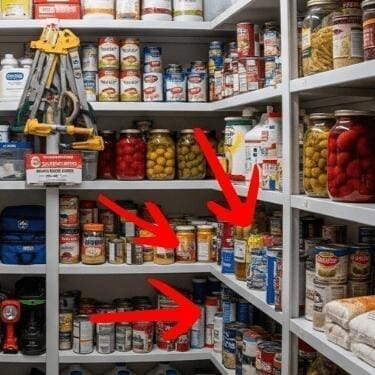
Use these for lightweight but bulky items like commercially freeze-dried #10 cans, sealed bins of rolled oats, or empty canning jars waiting for the next harvest. Ensure they are securely mounted and you can safely access them.
Inside A Navy SEAL’s Bug-In Guide, you will discover exactly how to build a long-lasting stockpile that needs no refrigeration. It starts with a complete stockpile that you can eat from morning, lunch, and dinner for three months. Then you’ll have another one for six months and another for a full year.
You’ll see exactly where to buy these foods so they’re as affordable as possible. You’re also going to get a day-by-day and meal-by-meal rationing plan to make sure you are not only getting around 2,200 calories a day but also the vital protein, fat, and other nutrients that will keep you healthy in the long run.
Floor-to-Ceiling is Non-Negotiable
Your walls are prime real estate. Standard wire shelving often buckles under heavy loads. Invest in serious, adjustable steel shelving systems rated for significant weight – think 18-gauge steel or better.
Anchor them securely into the wall studs, not just drywall. Go all the way up to the ceiling, even if you need a small step stool for the top shelf.
Reserve that highest, hardest-to-reach tier exclusively for your deep reserve items – the bulk grains in Mylar buckets or #10 cans you won’t touch for a year or more.
Keep shelf depth manageable (8-12 inches max) to avoid items getting lost in the back. Deeper shelves waste space and make rotation a nightmare.
Your Stuff Working Double Duty
Your everyday furniture is storage. Opt for platform beds with deep, sturdy drawers underneath – ideal for Mylar bags of rice or wheat packed in food-grade buckets.
Replace a basic kitchen stool with a sturdy storage ottoman holding vacuum-sealed bags of lentils or salt.
Repurpose an old, solid wood dresser in a garage (conditioned space!) into a dedicated grain storage unit, lining drawers with Mylar bags. Every piece should earn its keep by contributing to your compact food reserves.
FIFO in Tight Quarters
Rotating stock is critical, but hard in a crammed space. Ditch the single-file can racks. Instead, build or buy specialized FIFO (First In, First Out) racks designed for tight corners.
Think slanted shelves where gravity feeds cans forward as you take one from the front. Or tiered, cascading shelves where pulling the front item automatically drops the next one down.
For bulk grains in buckets, use a simple pipe system: load buckets in a row on pipes; pull the front bucket out; the whole row rolls forward.
Label zones clearly (e.g., “Beans – Active Rotation,” “Beans – Deep Reserve”) and use color-coded tape on lids for quick visual dating.
This system prevents older food from getting buried and forgotten, saving you money and ensuring your stored food stays viable.
Make sure you stock up on both food and medicinal seeds. This way, when everyone pays for antibiotics in gold, you’ll have them growing in your backyard. This crisis-proof seed pack contains one plant for every part of your body – you’ll find a painkiller, an anti-inflammatory, an anti-parasitic, and even some plants that can help people with diabetes and autoimmune disorders.
Choosing the Right Foods for Long-Term, Small-Space Storage
Filling a small pantry for 2+ years demands ruthless selectivity. Every cubic inch must deliver maximum calories and nutrients for its size.
One technique that makes this possible is salt preservation. I first learned about it from the Amish Ways book. Honestly, I wish more people knew about it; it’s a game-changer for any homesteader. For the first time ever, this 200-year-old wisdom is available in a beautifully made hardcover edition, authored by Eddie Swartzentruber, a man who spent 16 years living within the Amish community and learning their way of life first-hand. You can grab your own copy today and claim 3 FREE BONUSES using my exclusive 76% discount coupon right here.
Calorie & Nutrient Density is King
| Food Type | Examples | Why It Works for Small Spaces | Key Storage Notes |
| Whole Grains | Hard wheat, rice, oats | 35 lbs = 50,000+ calories in 1 bucket | Mylar + O2 absorbers in buckets |
| Legumes | Pinto beans, lentils | 30 lbs protein in 1 bucket | Same as grains |
| Fats | Coconut oil, ghee | 1 gallon = 32,000 calories | Dark glass/opaque containers |
| Salt | Sea salt, canning salt | Indefinite shelf life, tiny footprint | Food-grade buckets with lids |
Space-Saving Staples
| Food | Space Advantage | Usage | Homesteader Tip |
| Amaranth/Teff | 50% smaller grains than wheat | Hot cereal, flour | Stores like rice, more nutrients |
| Mung Beans | Sprouts in 3 days, high yield | Stir-fries, salads | 1 cup seeds = 1 lb sprouts |
| TVP | 10:1 rehydration ratio | Meat substitute in stews | Buy in #10 cans for longest life |
| Instant Potatoes | 1 #10 can = 40 servings | Thickener, side dish | Rotate every 2-3 years |
Maximum Shelf Life
| Powder | Fresh Equivalent | Space Saved | Critical Use Case |
| Whole Milk | 14 gallons liquid milk | 90% | Baking, drinking, yogurt |
| Eggs | 20 dozen fresh eggs | 95% | Binding agent in baking |
| Butter | 4 lbs solid butter | 80% | Sauces, baking, fat source |
| Greens | 5 lbs fresh kale | 97% | Nutrient boost in soups/steaks |
Ultra-Compact Calorie Bombs
| Food | Calories/Lb | Shelf Life | Special Consideration |
| Honey | 1,400 | Infinite | Crystalizes but remains edible |
| Pemmican | 3,200 | 20+ years | Requires proper fat rendering |
| Hardtack | 1,600 | 50+ years | Supplement only – low nutrients |
| Calorie Bars | 2,500 | 5 years | Emergency use only (costly) |
Food That Grows
| Seed Type | Yield (Per 1 oz Seed) | Time to Harvest | Storage Tip |
| Alfalfa | 3-4 lbs fresh greens | 5-7 days | Keep cool/dark in mason jars |
| Radish | 2 lbs microgreens | 3-5 days | Use oxygen absorbers |
| Broccoli | 1.5 lbs sprouts | 4-6 days | Label with harvest date |
| Mung Beans | 6 lbs bean sprouts | 2-3 days | Buy only food-grade sprouting |
A pint jar of alfalfa seeds becomes 20+ pounds of fresh greens over time – the ultimate space hack.
Final Pantry Readiness Checklist
Capacity for 24+ months requires accurate calorie calculations based on household size, activity level, and season. Active adults need 2,200–2,800 calories daily, sedentary adults 1,800–2,200; children’s needs vary by age and activity.
Include variety to prevent food fatigue and maintain nutrition balance with protein, healthy fats, vitamins, and supplements if produce is unavailable.
Climate stability means keeping storage at 50–70°F with 10–15% humidity. Use min/max or digital thermometers with remote sensors, check weekly, and fix issues fast.
A good rotation system (FIFO) should work naturally through normal cooking—test it by using and replacing foods regularly.
Safety checks include pest-proofing, sealed containers, and contamination prevention. Inspect monthly for pest activity or damage. Replace cracked or loose-lidded containers immediately; metal lasts longer than plastic but costs more.
That’s Your Two-Year Food Security Plan
Your small space becomes an asset when you apply these storage strategies systematically.
Dense nutrition, efficient containers, and smart organization multiply your capacity far beyond what seems possible initially.
The key lies in choosing foods based on nutrition per cubic foot rather than convenience or familiar packaging.
You may also like:
10 Frugal Items You Must Have In Your Pantry
50+ Items You Should Stockpile Before The Next Great Depression (Video)
25 Pantry Foods That Actually Expire Quickly
Ingenious Ways To Keep The Critters Out Of Your Pantry
DIY Hidden Pantry For Your Kitchen