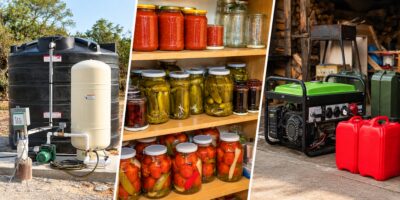
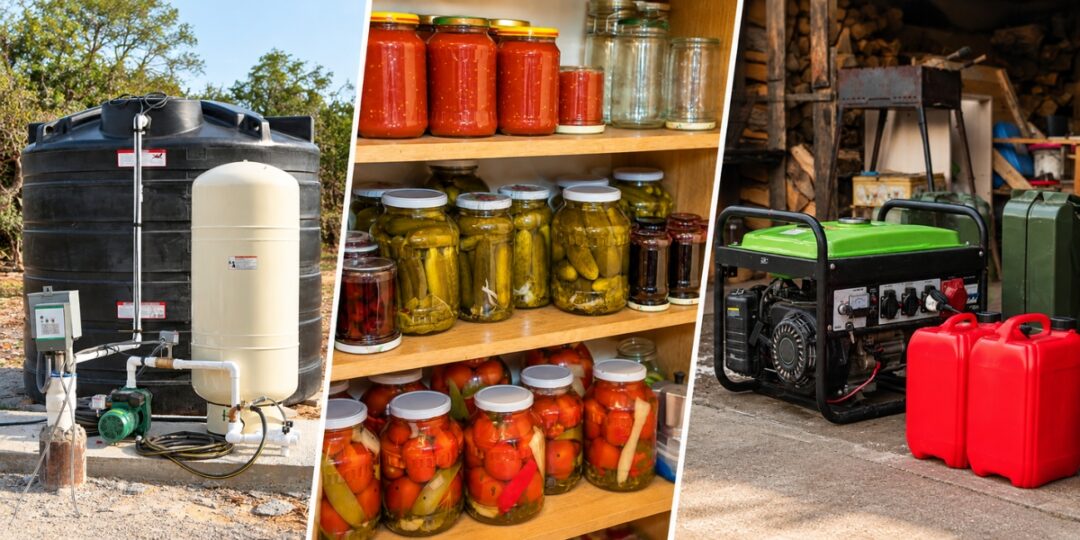
Last year my homestead went two days without power. A storm came through, a line went down somewhere up the road, and that was that.
That was the moment I carefully started to analyse what kept working and what just quit. My place is prepared for such incidents, so I was lucky.
But I know that most people aren’t ready to live without power. And actually, the government tracks how long the average American goes without power, and in 2024 it came to 11 hours, nearly double the average of the ten years before it. Three hurricanes caused 80 percent of that. Folks in South Carolina averaged 53 hours.
Eleven hours won’t end anybody’s world. But it tells you which direction things are moving, and it tells you exactly what to focus on.
Water. Power. Food.
Here’s what I’d work on, and I’m starting with the cheap stuff.
Start With Water
You can go a long time without power. But you can’t go more than three days without water. That’s why I’m starting with this.
Put a Hand Pump on the Well You Already Have
Most people with a drilled well figure a generator is their only backup. But you can’t rely only on that.
You can find lots of hand pumps that drop into the same well casing right alongside your electric pump. And there’s no extra work. You don’t pull anything out. You don’t give anything up. The electric pump keeps running as always, and when the power quits, you work the handle.
If you want to try this, start by finding two numbers. How deep your static water level sits, and how wide your casing is. Every pump company asks for both before they’ll quote you. Your well driller’s report has them, and if you can’t find yours, your state usually keeps a copy on file.
Expect $500 to $2,000 for the pump depending on your depth, and figure 1 to 3 gallons a minute once it’s in.
Before You Spend $2,000 on a Hand Pump, Look at How the Amish Do It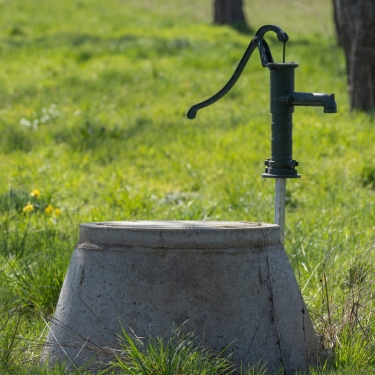
There’s something interesting about the Amish when it comes to wells.
For most of us, getting water without electricity is an emergency problem. We already have the electric pump, the pressure tank, and all the rest of it. Then one day the power goes out and we realize that several hundred feet of water under our own property isn’t much use if we can’t get it to the surface.
So we start shopping for the backup. And suddenly we’re looking at hand pumps that can cost $500, $1,000, even $2,000.
A lot of Amish families came at this from the opposite direction.
They live in communities where electricity isn’t something they want to depend on. Hand-operated and mechanically powered well pumps are a part of their everyday life. Some of these systems have been kept going for generations because they’re simple, repairable, and are completely independent form the grid.
The Amish have their own ways of setting up wells and building simple hand-pump systems, using the kind of basic materials and mechanical parts you might already have somewhere in your shed.
You can see how the Amish make their wells and hand pumps here →
Store Water You Can Drink Without Power
Catching water and drinking it are two different jobs.
Keep a gravity filter in the house and know what it does. A filter handles bacteria and dirt. A purifier handles viruses on top of that. For your own well or your own roof, a good gravity filter is plenty.
And keep some already stored. Fifteen gallons per person covers a week of drinking and cooking. I keep mine in food-grade drums in the cellar and run it out on the garden every spring so it never sits long enough to go stale.
Catch More Rain Than One Barrel Holds
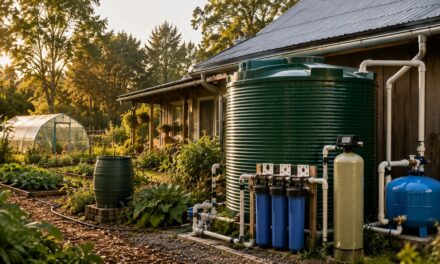
One barrel runs dry in two days. If you want rain to matter, you need a real tank.
The good news is collecting rainwater is legal in all fifty states, and most of them set no limit at all. Three are worth a look. Colorado caps you at 110 gallons in two barrels. Utah lets you hold 2,500 gallons if you register, and registering is free. Nevada depends on your county.
Here’s the math that changed my mind. A thousand square feet of roof gives you roughly 600 gallons from a single inch of rain. Go measure your barn roof, and you’ll quit thinking in barrels.
You should put a first flush diverter on the line, which dumps the first few gallons carrying all the grit and bird mess off the roof. Then size your tank for the dry stretch you actually get, not for the rainy month.
Already have a bunch of rain barrels?
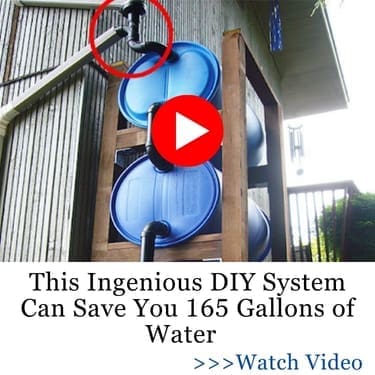
A few barrels scattered around the yard don’t hold much individually. But connect them the right way and you can have them all filling from the same roof, almost like turning a bunch of small barrels into one much bigger tank.
It sounds like a mess of pipes and something you’d need a lot of room for. That’s what I thought when I first saw the setup Claude Davis shows. It’s actually a pretty clever way to catch a lot more of the rain that’s already running through the same downspout.
See how the multi-barrel rainwater system is put together →
Then Fix Your Power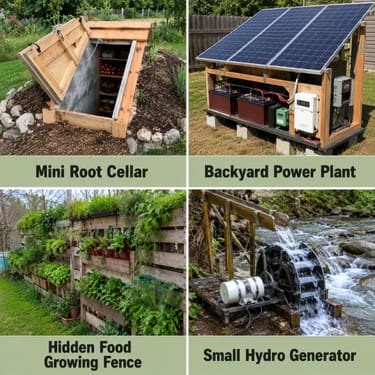
Build a Small Battery Bank Instead of a Whole House System
The 30% federal solar credit ended on December 31, 2025. If you buy solar now with cash or a loan, you get nothing back. Batteries lost the credit right along with it.
That sounds like bad news. It isn’t, and here’s why.
Battery prices fell through the floor while that credit was dying. They’re down more than 70% from where they sat in 2022. A 5-kilowatt-hour rack battery runs about $1000 now, and you can stack another one next year when the money’s there.
Compare that to the big branded wall units, which run eight to ten thousand dollars. Three stacked rack batteries give you more storage for roughly half the price.
Sit down and write out what truly has to stay on. Well pump. Freezer. Fridge. A few lights. That list is far shorter than your electric bill makes it look and also cheaper to cover.
Make Sure Your Wood Heat Works Without Electricity
A lot of wood stoves have an electric blower, and some newer inserts won’t run at all when the power’s out. Go check yours before January instead of finding out during the storm.
You should also be able to cook on it. A flat top, a cast iron pan and a kettle handle most of what you need.
And get the chimney swept. Creosote is what burns houses down every winter, and a sweep costs a whole lot less than the alternative.
This Is the Kind of Power System I’d Build First
Most people look at backup power and think they have two choices.
Spend a small fortune on a big solar system, or drag out the generator every time the power goes down.
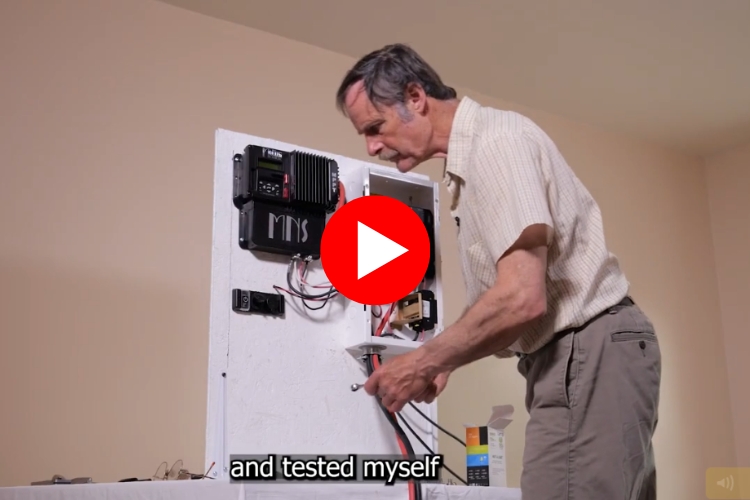
Ron Melchiore built something in between.
He and his wife have lived off-grid for decades, and his whole idea is simple: build enough power to keep the important things alive first.
Your freezer stays cold.
Your fridge keeps running.
You can keep a few lights on, charge your phone, and still have power for the things you actually need when everyone else on the road is dark.
And you don’t have to build the whole thing at once.
You start with one module. Then later, if you want more storage or more power, you add another.
That means you’re not dropping thousands of dollars trying to run every outlet in the house from day one. You build around the loads that matter most, then grow from there.
Ron put the whole system into a step-by-step guide with the parts, wiring, pictures, and videos showing how it goes together.
For someone who wants real backup power without turning their house into a $30,000 solar project, this is the kind of setup I’d look at first.
See how Ron built his modular off-grid power system →
Then Take Care Of Your Food
Store Your Grain So It Actually Lasts
Buckets alone won’t do it. You want Mylar bags inside food-grade buckets with oxygen absorbers, kept cool and dark.
Wheat, rice, oats, beans, and dried corn all keep for decades that way. Flour doesn’t, because the oil in it turns rancid, so you should store whole grain and grind it as you go.
Label every bucket with what’s inside and the date you packed it. You won’t remember in four years. I didn’t.
Homesteading and Bugging In Have More in Common Than You’d Think
Both come down to the same question:
How long could your house keep feeding you if you suddenly had to depend on what was already there?
That’s why I like the food section in A Navy SEAL’s Bug-In Guide.
Joel Lambert doesn’t just tell you to “stock up.” He lays out actual 3-month, 6-month, and 1-year food plans, including what to buy, what lasts, what doesn’t need refrigeration, and how much you need to keep a person properly fed.
There are also some things in there I hadn’t seen in the usual food-storage advice, including a survival food with a 25-year shelf life, ways to preserve eggs without electricity, and cheap foods most people walk past in stores without giving them a second thought.
See Joel’s full food-storage plan →
Fill the Root Cellar Before You Buy a Freeze Dryer
Everybody wants the freeze dryer, and I understand why. Freeze-dried food keeps for 25 years and comes back close to fresh.
But look at the numbers before you spend. A canner and jars run $100 to $400. A dehydrator is $50 to $300. A home freeze dryer starts around $1,600 for the small one, and most people land between $2,500 and $4,000 once they add the better pump.
Here’s my rule. If you’re already canning and dehydrating every season and you still have more food than you can put up, a freeze dryer earns its keep. If you aren’t there yet, buy the canner and fill it.
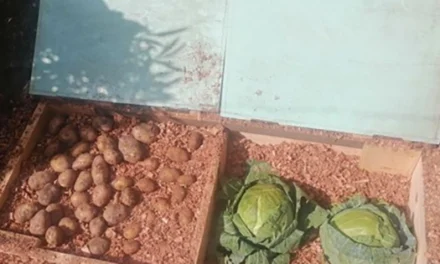
And don’t skip the root cellar. It costs almost nothing, it runs on no power, and it never breaks. A cold north corner of the basement, a barrel buried in a bank, a hole in the hillside. Potatoes, carrots, beets, cabbage, squash and apples will hold for months in one.
Save Your Own Seeds
If your whole garden depends on seed you buy every spring, you’re one bad year away from a real problem.
Start with the easy ones. Beans, peas, tomatoes, peppers, and lettuce save well, and they don’t cross much. You need open-pollinated or heirloom varieties, because hybrid seed won’t come back true to the parent.
Dry them thoroughly, store them cool and dark in a jar, and tuck in a packet of silica gel or a spoonful of powdered milk wrapped in tissue to pull out the last of the moisture.
Why Is All Of This Important?
The thing is that nobody is coming to fix your well. Not quickly, anyway…
Being able to sustain your life is what makes the difference between a home and a homestead.
Every project you find in this article is meant to make your homestead better or help you make your home a homestead.
You may also like: 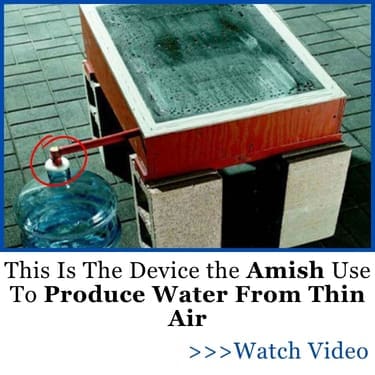
7 Low-Maintenance Animals That Thrive on Small Homesteads
4ft Pocket Farm Builds Your Food Stockpile On Autopilot (Video)
5 Surprising Ways to Reuse Graywater Around the Homestead
The Real Cost of Starting a Homestead (And How to Cut It)
Top 7 Best States to Be Self-Sufficient