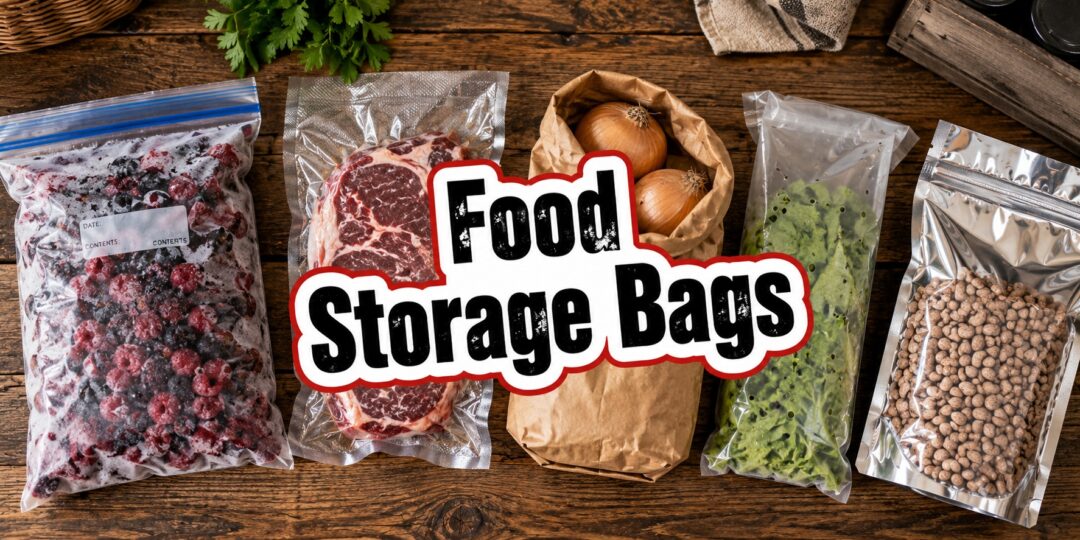
I have a drawer in my kitchen that used to be a junk drawer, and now it is entirely dedicated to bags. Freezer bags, vacuum bags, paper bags, mesh bags, a couple of mylar bags left over from last fall’s wheat. It took me a few seasons of ruined harvests to figure out that “food storage bag” is not one product, it is a whole category, and grabbing the wrong one costs you food.
This guide walks through every type of food storage bag I actually use around this homestead, what each one is genuinely good for, and where people waste money buying the wrong bag for the job. By the end you will know exactly which bag belongs in the freezer, which one belongs in the root cellar, and which one has no business touching your garden potatoes.
Why the Bag You Grab Actually Matters
A bag’s whole job is to control three things: air, moisture, and light. Different foods need different amounts of each, which is why a bag that is perfect for freezing ground beef will ruin a bag of onions in about three weeks.
I learned this one the hard way. My first year homesteading I stored onions in plastic grocery bags in the pantry, and within a month half of them had gone soft and slimy from trapped moisture. Onions need to breathe, and no plastic bag on earth is going to let them do that.
Everyday Storage Bags vs Freezer Bags
Regular zip-top storage bags and freezer bags look almost identical on the shelf, but the plastic itself is different. Storage bags run thin, somewhere around 1.5 to 2 mils, which is fine for a sandwich or a handful of snap peas headed to the fridge for a few days.
Freezer bags use a thicker, tougher plastic built to resist tearing from ice crystals and to hold a tighter seal over months instead of days. If you have ever had a bag of frozen berries split open in the bottom of the freezer, there is a good chance it was a storage bag doing a freezer bag’s job.
My rule on the homestead is simple: if it is going in the freezer for more than a week, it gets a freezer bag, no exceptions. The few extra cents per bag are cheaper than the meat or produce you lose to a burst seam.
Freezer Bags and the Real Cause of Freezer Burn
Freezer burn is not spoilage, and it will not make you sick, but it will absolutely ruin the texture and flavor of whatever it touches. It happens when air reaches the surface of frozen food and the ice there sublimates, meaning it turns straight from solid to vapor and leaves the surface dried out and grayish.
According to Iowa State University Extension, freezer burn is simply the result of air coming into contact with food, and the fix is removing as much air as possible before the bag ever goes in the freezer. A straw pushed into the corner of a zip-top bag, with the rest sealed shut, lets you suck out most of the remaining air by mouth before sealing the last inch.
I do the straw trick on anything I am not vacuum sealing, and it genuinely doubles how long ground venison or garden beans hold their quality in my chest freezer. Cooling food fully before bagging it matters too, since warm food creates steam inside the bag that turns into ice crystals of its own.
Vacuum-Seal Bags for Butchering and Garden Surplus
If you raise or hunt your own meat, or you grow more tomatoes and beans than you can eat fresh, a vacuum sealer earns its keep fast. Pulling the air out mechanically does a far more thorough job than any amount of hand-squeezing, and it is the closest thing to mylar-level oxygen protection you can do for food headed to the freezer instead of the pantry.
Illinois Extension notes that vacuum packaging with home vacuum sealers is a good way to reduce freezer burn on meat that would otherwise sit in oxygen-permeable store wrapping. I run every cut of deer meat and every whole chicken from my own flock through the vacuum sealer before it goes in the chest freezer, and the difference in quality after eight months is night and day compared to a regular zip bag.
Vacuum bags are not free, and buying a roll of the textured bagging material for a sealer costs more upfront than a box of freezer bags. For anything I am storing longer than three or four months, though, the quality difference pays for the machine within a season or two.
Reusable and Eco-Friendly Storage Bags
Silicone bags have earned their spot in my kitchen for anything short-term that does not need long-term freezer protection. They wash and reuse for years, they handle the freezer down to safe silicone temperature ranges, and they cut down on the pile of single-use plastic that used to leave my house every week.
Beeswax wraps are another one I reach for constantly, though they have real limits worth knowing. They work beautifully for covering a bowl, wrapping cheese, or holding half an onion in the fridge, but they are not airtight enough for the freezer and they should never touch raw meat.
None of these reusable options replace a proper freezer bag or vacuum bag for long-term storage. Think of them as the everyday, short-term layer that saves plastic on the stuff you are using up within a few days anyway.
Perforated Bags for Fresh Garden Produce
This is the one that surprises people the most: a sealed, airtight bag is often the wrong choice for fresh vegetables straight out of the garden. Fruits and vegetables are still alive after harvest, releasing moisture and gases, and a fully sealed bag traps that moisture until it condenses and rots the produce from the inside.
University of Wisconsin-Extension research on home garden storage found that perforated plastic bags let air move in and out while retaining most of the moisture, which prevents both shriveling and the condensation that leads to storage rot. Their guidance recommends punching holes roughly every six inches through both sides of the bag for crops like broccoli, carrots, berries, and salad greens headed to the refrigerator crisper.
I keep a hole punch in my kitchen drawer specifically for this. A few holes in a plain plastic bag turns it into produce storage that actually keeps lettuce and broccoli crisp for a week or two instead of turning to mush in three days.
Paper and Mesh Bags for Root Cellar Staples
Onions, garlic, and potatoes want the exact opposite treatment from berries and broccoli. These crops need airflow more than anything, and sealing them in plastic traps the humidity they give off and speeds up rot instead of preventing it.
Paper bags and mesh bags let onions and garlic breathe while still keeping light off them, and light exposure is what turns potatoes green and bitter with solanine. I switched my whole onion harvest over to paper bags with a few punched holes a few years back, and I genuinely get twice the shelf life compared to when I used plastic.
Store onions and potatoes separately if you can manage it. Onions give off gases that will make nearby potatoes sprout faster, and potatoes release moisture that speeds up onion rot.
Mylar Bags for Long-Term Pantry Storage
For dry pantry staples you want to store for years rather than weeks, mylar is in a different category entirely from the plastic bags in this guide. These metalized bags block oxygen, moisture, and light far more effectively than any standard freezer or storage bag, which is why they show up in every serious long-term food storage plan.
Utah State University Extension’s food storage guidance lists mylar-type bags as suitable packaging for wheat, dried beans, dried milk, and sugar, the exact staples most homesteaders are trying to stockpile from a good grain or garden year. Pair a mylar bag with an oxygen absorber and a food-grade bucket, and you are looking at ten to twenty years of shelf life on rice, wheat, and dry beans instead of the one or two years you would get from an ordinary storage bag.
I keep this option separate from everyday storage bags because it solves a different problem. Freezer and produce bags manage food you are using within weeks or months, while mylar is for the wheat and beans you are not touching until next year or the year after.
Reading the Plastic: What Food-Grade Actually Means
Not every bag with food on the label is actually meant to touch food long-term, and the plastic resin matters more than most people realize. In the United States, any plastic that contacts food has to clear FDA review before it can be sold for that use.
The FDA explains that food contact substances, including the plastics used in packaging, go through a safety review before they can be marketed for use with food. Look for bags specifically labeled food-grade or freezer-safe, and be skeptical of bulk bags sold for non-food packaging purposes, since those are not held to the same standard.
Recycling codes 2, 4, and 5, which stand for HDPE, LDPE, and polypropylene, are generally the safest bets for food contact plastics. If a bag does not list a recycling code or food-grade claim anywhere on the box, I do not use it for anything I plan to eat.
Common Food Storage Bag Mistakes That Waste Food
- Using thin storage bags in the freezer, where they split and let in air within weeks
- Sealing fresh produce in solid plastic bags instead of perforated ones, which speeds up rot
- Storing onions or potatoes in plastic instead of paper or mesh
- Skipping the air-removal step, whether that is a straw trick or an actual vacuum sealer
- Reusing bags that held raw meat for anything else without a thorough wash
- Forgetting to label and date bags before they disappear into a full freezer or pantry shelf
How I Choose Which Bag for Which Job
After years of trial and error, my system on this homestead is pretty simple. Anything going in the freezer longer than a week gets a proper freezer bag or the vacuum sealer, no shortcuts.
Anything fresh from the garden that I am refrigerating for a few days, like lettuce, broccoli, or berries, goes in a perforated bag so it can still breathe. Onions, garlic, and potatoes go straight into paper or mesh and never see plastic at all.
Dry staples I am putting away for the long haul, meaning wheat, rice, and dry beans I do not plan to touch for a year or more, get the mylar-and-bucket treatment. Everything else in between, like snacks and leftovers I will eat within a few days, gets whatever reusable silicone bag is closest to hand.
Food Storage Is Only the Beginning of Real Self-Reliance
Knowing whether your food belongs in a freezer bag, vacuum-sealed pouch, paper sack, mesh bag, or Mylar can mean the difference between preserving a harvest and watching months of work spoil.
But that’s only one piece of the self-reliance puzzle.
Our grandparents and great-grandparents knew dozens of practical skills that allowed them to preserve food, repair what broke, make what they couldn’t buy, grow what they needed, and keep a household running with far less dependence on stores and modern conveniences.
Many of those skills have quietly disappeared.
The Lost Skills of Independence was created to bring that knowledge back.
Inside, you’ll discover practical, old-fashioned skills that can help you become more capable and prepared, including ways to:
- Grow, harvest, preserve, and store food for your family
- Make better use of what you already have instead of constantly buying more
- Rediscover traditional household and homestead techniques
- Repair, reuse, and improvise when replacements aren’t readily available
- Become less dependent on fragile supply chains
- Prepare your home and property for difficult times
- Build practical skills that remain useful whether there’s an emergency or not
A pantry full of properly stored food is valuable. But knowing how to replenish that pantry, preserve your next harvest, repair your equipment, and solve problems with your own two hands is even more valuable.
Supplies eventually run out.
Skills don’t.
If you’re working toward a more independent, resilient way of life, The Lost Skills of Independence belongs alongside the tools, seeds, and food you’ve already put away.
Frequently Asked Questions
Can I reuse freezer bags?
Yes, as long as they never held raw meat, poultry, or fish and show no tears or weak spots in the seams. Wash them with hot soapy water, let them dry completely inside and out, and check the seal before reusing.
Do vacuum-seal bags work for liquids?
Most standard vacuum sealers struggle with liquids, since the suction pulls broth or sauce right out of the bag along with the air. Freeze liquids solid in a container first, then vacuum seal the frozen block, or use a chamber-style sealer if you process a lot of soups and stocks.
Is it safe to put a hot mason jar of food directly into a freezer bag?
Always cool food fully before bagging it. Warm food creates condensation inside the bag that turns into ice crystals and accelerates freezer burn, and it can also fog up a vacuum sealer’s ability to get a clean seal.
What is the best bag for storing garden herbs?
Fresh herbs do best wrapped loosely in a damp paper towel inside a perforated bag in the crisper drawer. For long-term storage, dry or freeze the herbs first, then pack them in a regular freezer bag with the air pressed out.
Bottom Line
There is no single best food storage bag, because a homestead kitchen has too many different jobs for one bag to handle. Match the bag to the food, whether that means a thick freezer bag, a perforated produce bag, a paper sack for onions, or mylar for the pantry staples you are stockpiling for the long haul, and you will waste a lot less food than I did my first few years figuring this out.
You may also like: 
Pantry Moth Traps – How to Stop an Infestation Before It Destroys Your Food Storage
A Food Miracle from the Civil War That You Can Add to Your Pantry (Video)
Foods That Grow Under Snow – A Homesteader’s Guide to Winter Harvests
Join Our Exclusive Homesteading WhatsApp Channel For Free HERE!