We’ve mentioned birch briefly in our roundup of backyard trees worth tapping, but it deserves its own deep dive, because birch syrup is genuinely not just maple syrup’s lesser cousin. It’s a different product with a different flavor, a completely different production process, and a level of effort that will surprise anyone who assumes tapping is tapping regardless of the tree.
This guide covers what birch syrup actually is, how it differs from maple at nearly every step, when and how to tap birch trees correctly, and why the processing method matters more here than with almost any other homestead syrup project.
What Is Birch Syrup?
Birch syrup is made the same basic way as maple syrup, tapping trees, collecting sap, and boiling it down, but the resulting product tastes nothing like it. According to the Cornell Maple Program, birch syrup reveals a mix of fruity-tart and complex caramelized sugar flavors reminiscent of raspberries, tart cherry juice, apple butter, and molasses, a flavor profile with essentially nothing in common with maple’s straightforward sweetness.
One persistent myth worth clearing up immediately: birch syrup does not taste like wintergreen, despite birch bark’s well-known association with that flavor in products like birch beer. The wintergreen compound lives in the bark itself and is entirely absent from the sap, so the syrup carries none of that flavor.
Birch Syrup vs. Maple Syrup: The Real Differences
The gap between these two syrups is bigger than most people expect, and it starts with sugar content. Maple sap typically runs a sugar concentration measured in brix that dwarfs birch sap. Cornell’s research forest recorded a three-season average sap brix of just 0.86 percent for birch, generally landing between 0.5 and 1.0 percent, compared to a much richer concentration in maple sap.
That difference in starting sugar content translates directly into how much sap you need. Cornell’s data puts the average birch sap-to-syrup ratio at 104:1, compared to 37:1 for maple over the same seasons. In practical terms, producing a single gallon of birch syrup takes roughly three times the sap that a gallon of maple syrup requires, which is the single biggest reason birch syrup costs so much more and remains a niche product even among experienced maple producers.
- Flavor: Maple is clean and sweet. Birch is tart, fruity, and deeply caramelized, closer to a reduction than a simple sweetener
- Sugar concentration: Birch sap runs roughly 0.5 to 1.0 percent brix, compared to maple’s considerably higher natural sugar content
- Sap-to-syrup ratio: About 104:1 for birch versus roughly 37:1 for maple
- Typical use: Maple works as a table syrup. Birch is generally treated as a savory cooking ingredient rather than something poured over pancakes
Identifying the Right Birch Trees
According to Cornell, any birch species can be tapped, and they tend to yield similar quantities and quality of sap. The main native species suitable for tapping in the eastern United States include yellow birch, paper (white) birch, black birch, and river birch.
- Paper birch: Identified by its stark white, papery bark that peels in thin layers
- Yellow birch: Distinct golden, shaggy strands of bark on younger trees, becoming thick and plate-like as the tree ages
- Black birch: Darker, smoother bark that can resemble cherry bark at a glance
- River birch: Often found near water, with a more reddish-brown, curling bark
The main identification challenge is distinguishing young paper birch from stands of aspen, since both can show pale, smooth bark at a distance. Look closely at bark texture and peeling pattern before drilling.
When to Tap Birch Trees
This is the first major difference from maple production, and it trips up plenty of first-time birch tappers. Maple sap flows because of freeze-thaw cycles that create stem pressure. Birch works completely differently. According to Cornell, birch sap flow is driven by root pressure as the tree moves water upward toward bud break, and it typically doesn’t start until temperatures consistently reach 50 degrees Fahrenheit or higher.
In practice, this means birch tapping season begins right around when maple season winds down, making birch a natural way to extend a home syrup operation into a second harvest window using much of the same equipment. Cornell’s research forest in the Adirondacks generally taps birch in mid-April, with the season running into the first week of May, though your exact timing will depend on regional climate.
How to Tap a Birch Tree
- Use a sharp 5/16-inch tapping bit to drill a clean hole 1.5 inches deep, positioned on a healthy section of the trunk away from any old tap wounds
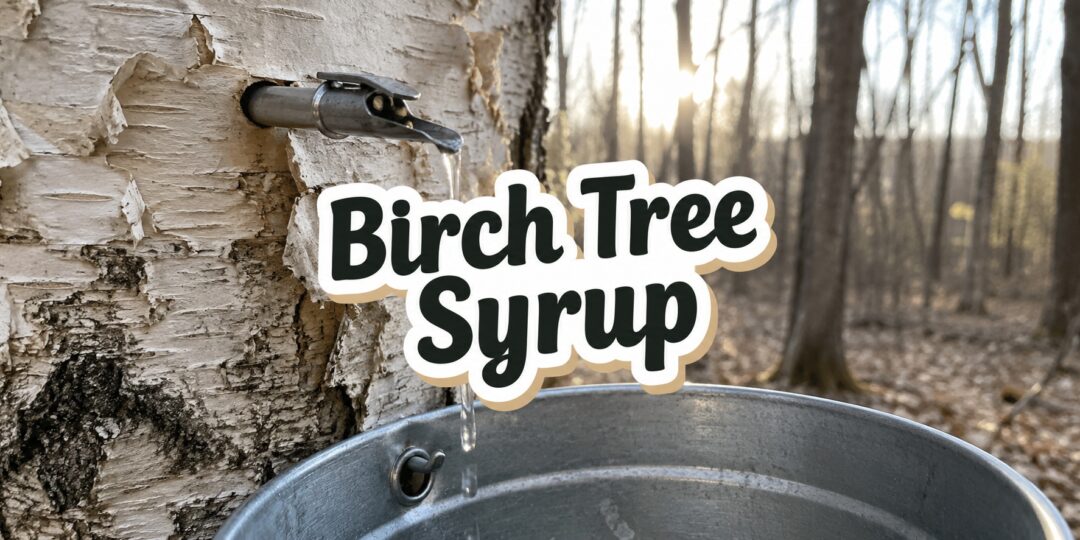
- Insert a 5/16-inch spout and gently pound it into place. Sap flow in birch can be vigorous enough to catch you off guard when you first tap the hole
- Use food-grade plastic or stainless steel containers if collecting by bucket, since birch sap is slightly acidic and can react poorly with galvanized or aluminum containers
- A lid on any bucket keeps out insects and debris during collection
Sap volume can be surprisingly generous. Cornell recorded an average of 20 gallons of sap per tap over a 14-day birch season, compared to 12.5 gallons per tap over 35 days for maple in the same year. The higher volume doesn’t make up for the much lower sugar concentration, but it does mean a productive tree won’t leave you short on raw sap.
Why Birch Sap Is So Different to Process
Birch season runs later and warmer than maple season, and that timing creates a real processing challenge. Daytime temperatures during birch season can climb well above 70 degrees Fahrenheit even in northern climates, and warm sap spoils fast. Sap that sits too long before processing degrades in quality, and spoiled sap does not make good syrup no matter how carefully you boil it afterward. Plan to process birch sap daily rather than letting it accumulate the way you might get away with in cooler maple weather.
Why Birch Sap Darkens and Scorches So Easily
The chemistry here explains a lot about why birch syrup behaves so differently under heat than maple. According to Cornell Small Farms Program, maple sap comes out of the tree almost entirely as sucrose, with only a small fraction converted to glucose and fructose by microorganisms over time. Birch sap is the opposite: it emerges from the tree already primarily glucose and fructose. That difference is exactly why birch develops such a dark color and intense flavor so much faster than maple when exposed to prolonged heat.
This is also why reverse osmosis matters so much more for birch than for maple. Removing more than 90 percent of the water from birch sap before it ever reaches the evaporator cuts the time that sap spends under heat by a similar margin, which is the real mechanism behind reverse-osmosis-processed birch syrup tasting noticeably milder and less bitter than syrup boiled the long way from raw sap.
Reverse Osmosis: The Practical Necessity
Given birch sap’s extremely low sugar content, boiling it down with a standard evaporator alone is brutally inefficient. Cornell strongly recommends concentrating the sap through reverse osmosis before evaporating to remove much of the water and reduce the energy and time needed to finish the syrup. Small, hobby-scale reverse osmosis units exist for exactly this kind of home operation.
Cornell’s own process runs sap through reverse osmosis twice, first concentrating to around 4 to 6 brix, then again up to 12 to 16 brix, before the sap ever reaches an evaporator. Without this step, a backyard producer working with a pot on a stovetop will spend an enormous amount of time and fuel boiling off water that reverse osmosis could have removed far more efficiently.
Evaporating Without Scorching
Birch sap’s sugar is dominated by fructose, and fructose caramelizes and scorches at a lower temperature threshold than the sucrose that dominates maple sap. According to Cornell, care must be taken not to burn or scorch the delicate sugars in birch sap, since doing so produces an unpleasant, overly bitter flavor rather than the complex, fruity caramelization that makes good birch syrup distinctive.
- Work in small batches. Cornell’s own steam-kettle method processes just 5 to 10 gallons of concentrate at a time
- Fast, relatively high-heat evaporation in small batches tends to outperform slow, prolonged boiling, since it caramelizes the sugars quickly without giving them time to scorch
- Finished birch syrup is typically taken to around 67 percent brix, similar to maple’s finishing point, but the flavor and color that develop along the way are entirely different
This is genuinely the step where most first-time and hobby producers go wrong. A slow simmer that works perfectly well for maple sap can easily scorch birch sap into an unpleasantly bitter, overly molasses-like product.
Filtering and Packaging
Birch syrup carries a notably high mineral content due to how concentrated the finished product is relative to the starting sap, so double filtration is generally recommended rather than the single pass that works fine for maple syrup. When it comes to packaging, consider using a bottle style associated with something like balsamic vinegar or a fine cooking oil rather than a traditional syrup bottle, signaling to anyone using it that this is a savory cooking ingredient rather than a table syrup.
How to Use Birch Syrup
- Drizzled over roasted vegetables, especially something with natural bitterness like Brussels sprouts, where it balances beautifully against crisped bacon or a similar salty element
- Worked into a glaze for grilled, roasted, or smoked meats, added near the very end of cooking to avoid burning the sugars
- Used as a brine ingredient for poultry or pork ahead of roasting
- Stirred into a dipping sauce with soy sauce for dumplings or other Asian-inspired dishes
- Drizzled over a sandwich built around goat cheese, roasted beets, or smoked salmon, where its tart, fruity edge plays well against rich or savory ingredients
Resist the instinct to treat birch syrup like a maple syrup substitute on pancakes. Its flavor is built for savory and complex applications, not a simple breakfast pour.
Common Mistakes
- Tapping birch trees using maple’s freeze-thaw timing instead of waiting for consistent 50-degree-plus temperatures
- Letting collected sap sit for more than a day before processing, especially during a warm stretch
- Trying to evaporate raw, unconcentrated birch sap from start to finish without reverse osmosis, burning enormous amounts of time and fuel in the process
- Using a slow, low-and-slow boil out of habit from maple production, scorching the fructose-heavy sap into a bitter, unpleasant flavor
- Expecting birch syrup to taste like a variation on maple, rather than approaching it as its own distinct ingredient
Don’t Just Store Supplies – Learn the Skills to Produce What You Need
Making birch syrup is a perfect example of what real self-reliance looks like. You take something growing on your own land, understand the right season and technique, and turn it into something useful with your own hands.
But this is only one of the old-fashioned skills that can make you less dependent on stores, fragile supply chains, and modern conveniences.
That’s exactly why The Lost Skills of Independence was created.
This practical guide brings together forgotten knowledge that generations before us relied on to grow, preserve, build, repair, forage, cook, and provide for themselves—skills that are becoming increasingly rare today.
Inside, you’ll discover traditional methods and practical projects designed to help you become more capable with the resources you already have around you.
Whether you’re building a homestead from scratch or simply want your household to depend less on outside systems, these are the kinds of skills worth learning before you actually need them.
Frequently Asked Questions
Can I make birch syrup without a reverse osmosis machine?
Yes, but expect a dramatically longer, more fuel-intensive boiling process given birch sap’s very low starting sugar content. Small hobby-scale reverse osmosis units exist specifically to make this more practical for home producers.
Does birch syrup taste like birch beer or wintergreen?
No. The wintergreen flavor associated with birch products comes from the bark, not the sap, and is entirely absent from properly made birch syrup.
Why is birch syrup so much more expensive than maple syrup?
Almost entirely because of the sap-to-syrup ratio, combined with limited supply. Cornell Small Farms notes that birch syrup prices commonly run three to four times higher than maple syrup, driven by demand outpacing the still-small supply, on top of the added cost and complexity of reverse osmosis processing most producers rely on.
Can I tap the same tree for both purposes if I have maple and birch on my property?
You can operate both on the same property using much of the same equipment, but keep the sap collection separate rather than mixing maple and birch sap in the same lines or containers, since combining them will affect the flavor of both finished products.
You may also like: 
Join Our Exclusive Facebook Group HERE!
How to Forage Medicinal Plants the Amish Way (Video)
How to Make Long-Lasting Flour from Wild Grains, Seeds, Nuts and Bark
Medicinal Trees You Walk Past Every Day
Why Homesteaders are Hanging Empty Jars on Trees
12 Trees Every Homesteader Should Plant In Their Backyard
DIY Tools You Can Make from Bark, Rocks and Trees