One of the utility bills that keeps going up (like everything else) is the water bill. People on municipal water sometimes have to wonder when the price hikes will stop. And even if you don’t have municipal water, relying instead on a well pump or other water resources, collecting rainwater is an easy way to have water on hand when and where you need it. And it’s free.
Rainwater collection is a standard practice for people living off-grid and it makes sense following a disaster when power outages can shut down the well pump or the pumps that refill municipal water towers.
The Easiest Way to Collect Rainwater
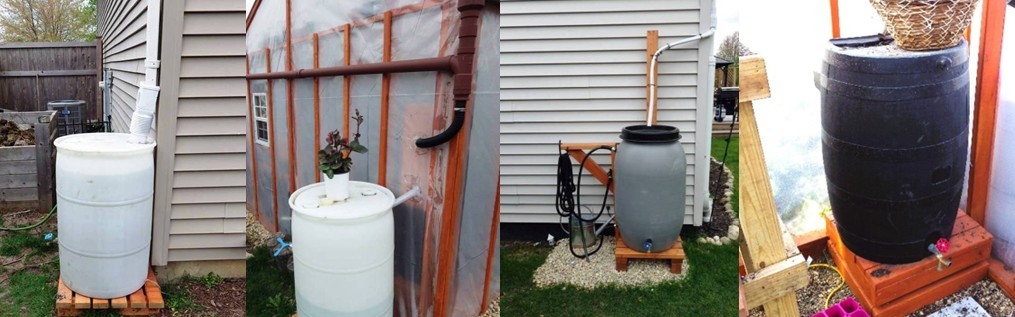
To collect rainwater, you have to catch and channel the rain. There’s something most people have that makes that easy: your roof. A roof is a large-scale rainwater collector, and as it sheds the rain from your house, it directs it to gutters and downspouts. You don’t have to build a thing; they’re already there.
The Critical Step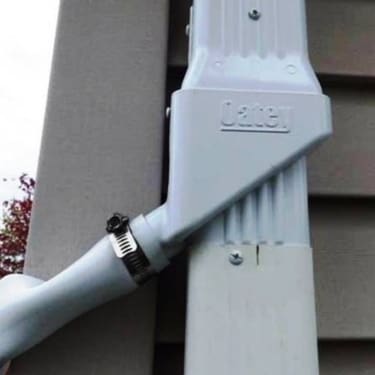
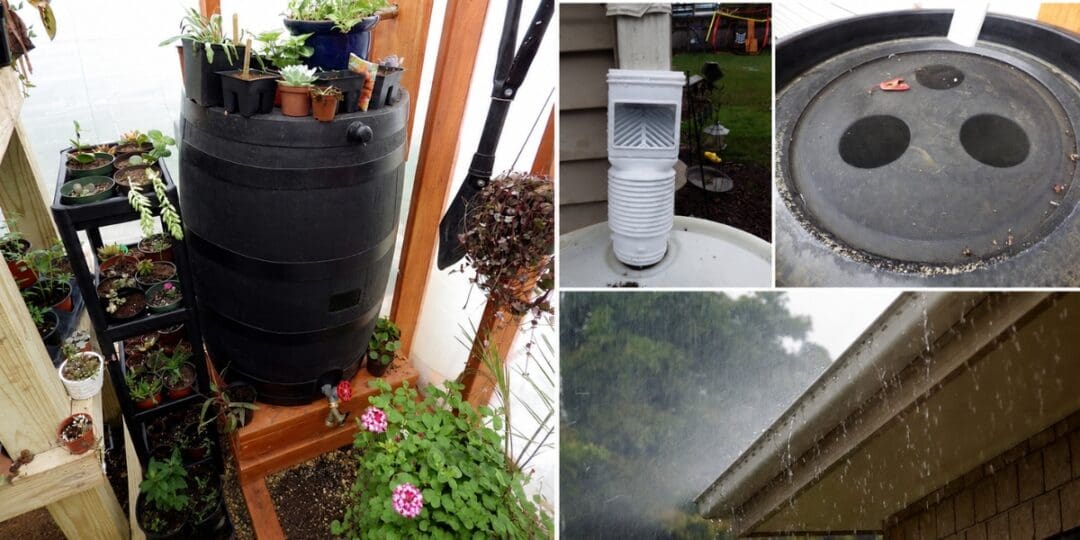
There are downspout attachments that will gather water from the downspout and direct it to a hose running into a rainwater collection barrel. The barrels have a screened set of openings on the top.
They usually have a spigot towards the bottom of the barrel for harvesting the water.
Another downspout collector is attached to the bottom of the downspout over the rain barrel. It has a screen to prevent debris from falling into the barrel.
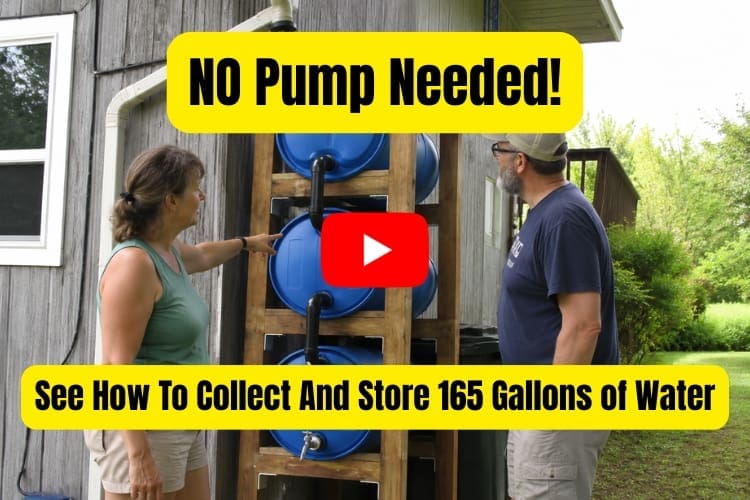
Either way, you’re collecting up to 50 gallons of water every time it rains. You can expand the amount by running the overflow from a barrel into another barrel and as many additional barrels as you choose.
If you don’t have the overflow running to another barrel, you should attach a hose to an outlet that is usually located towards the top of the barrel.
Run the hose to a part of your yard or garden where you could use additional water, like trees or gardens away from the house foundation.
Another overflow option is to connect the overflow hose to a soaker hose. This will distribute the water across a garden or plants and shrubs, once again directing the water to places that benefit from extra watering.
How to Safely Store Rainwater
As I already mentioned, each time it rains, you’ll manage to get around 50 gallons of water. This is a lot and it can easily turn into a problem if you want to keep this water long term. The thing is that you can take advantage of every rain to, let’s say, water your greenhouse or use the water to wash your car, but wouldn’t it be great to be able to store all that water for real emergencies? Maybe you want to be able to use that water in case of a severe drought, or have it there for the next time the taps run dry and the stores are empty. You never know when the grid decides to quit on you and the main resource that will keep you alive is water.
The problem with storing water is the fact that doing this correctly might be kind of tricky. Water on its own doesn’t get bad, but what’s around it does. The water you store picks up all of its problems from the containers you use for storage. Some of the most common problems include algae and bacteria. For example, if you don’t sanitize the container properly and you seal it up, well, you’ve basically sealed up an entire ecosystem that will keep growing and growing and literally destroying your emergency water.
Also, you need to be very careful about the place where you store all of this water, as it’s very sensitive to light and temperature changes.
Then there’s the space problem. Maybe your property doesn’t allow you to store gallons of water in barrels because you don’t have space for a setup like this one.
So, even if you want to be prepared and have an emergency water resource, this might seem impossible because of all these factors that simply make everything more difficult.
Considering that water is the main resource you need to have in case things go sideways, this has been a highly debated subject in the homesteading and prepping communities. This is how the following long term water storage system was born. This is a simple system that was created with the average US citizen in mind. It is meant to help you store considerable quantities of water under proper conditions without having to think about all the problems I listed above. This is a setup that perfectly fits in any shed, backyard, or apartment.
All you have to do is to follow a simple set of instructions when you decide to build your water storage system. This system can be built using 55-gallon plastic drums, jerry cans, or even soda bottles for those that don’t have enough space. Also, the guide pays careful attention to sanitation so you can be sure that water stays safe to drink.
To this day, this is the most complete solution when it comes to storing water for long term use because it was designed to cover all of the needs related to water storage from containers and storage space, to sanitation and freshness.
👉 Click here to find the whole set of step-by-step instructions
Can You Drink Harvested Rainwater?
Yes, but. You really should filter it and purify it. The rain runs over lots of stuff on the roof, from dust and dirt to bird droppings, pollen, and anything else carried in the wind. The sooner you harvest the water from your barrel for purification, the better. Over time, any bacteria in the barrel will have time to multiply. Boiling for at least 3 minutes is the best bet.
This is one of the best water filters that I used and it’s all DIY. It’s a high-capacity activated charcoal filter that can be easily attached to the system I presented above. But you can also use it independently.
I like this approach the best because over time I used various activated charcoal water filters I bought from Amazon and the main problem with them was that once the filter got old and was not able to clean the water properly, the only solution was to buy a new filter. Doing this over and over again is not sustainable, especially in this economy.
That’s how I decided to go with the DIY approach. Once you build the filter, all you have to do is change the activated charcoal from time to time. But here’s the advantage: one big bag of activated charcoal is $15! You can use this bag for a whole year. If you were to change the filter once every few months, you would pay 1t least $25 on a single filter.
Click here and see how to build your own water filter and never waste money ever again →
The Ideal Use for Harvested Rainwater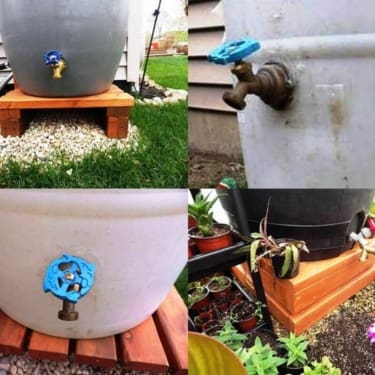
Rainwater is naturally soft water (usually). Plants thrive on soft water, so using your collected rainwater for watering a vegetable or flower garden is a great idea. It’s also a great way to water gardens that are far from the home or homestead. Sometimes a hose just isn’t long enough, and your usual option is hauling watering cans of water to remote gardens. A rain barrel next to a shed, barn, or other outbuilding in a remote location can get the water out to the distant gardens.
Another idea is to collect rainwater for chickens or livestock. At times, the coop or pens are some distance from the house and you’re back to hauling the water in buckets. A rain barrel collecting rain runoff from the roof of the coop or pigsty keeps a ready supply on hand. You can even hook up your rain barrel so it automatically refills chicken waterers or watering troughs.
And if you have a greenhouse, the greenhouse roof is perfect for collecting the rain and funneling it into a barrel.
You can even put the barrel inside the greenhouse where it will always be easy to draw some water to keep everything in the greenhouse green.
When There is No Roof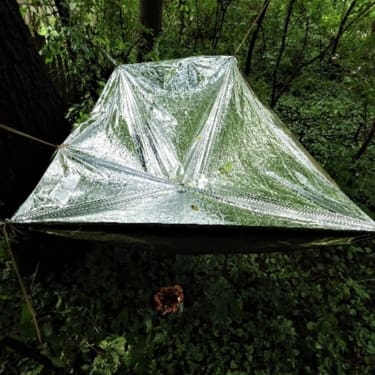
There are times when we don’t have a roof over our heads. A hunting, fishing, or camping trip is one set of examples. Following a disaster or an evacuation is another. At those times, you need to improvise and a tarp or even a Mylar emergency blanket can work in a pinch.
The tarp or Mylar blanket is suspended between 4 trees. It will catch the rain and as it pools in the tarp or Mylar, it will cause it to bow towards the center. You can punch a small hole in the tarp or blanket under this pool and allow the water to drip or drizzle into a bucket.
The good news is that water collected this way is probably purer than water collected from a roof. But birds still cover tree branches with their droppings, so don’t make assumptions and always purify it. And if it’s autumn, you may find that any brown leaves soaking in the rainwater have released some tannins, discoloring the water.
Filter it and purify it and give it a taste. If it tastes off, harvest the rainwater sooner so the leaves don’t have a chance to soak for too long, or clear the leaves out as they accumulate.
One of the most efficient ways to make sure the water you drink is clean is rock boiling. This is a method the pioneers used and it still works as well today.
Click here to see the main 4 methods the survivalists use to purify water in the wild →
If your goal is to fill a 40 to 50 gallon barrel, all you need is a very large tarp and a heavy rain. This can work for those distant or remote gardens we mentioned where you don’t have an outbuilding with a roof. Once again, you’ll be looking for 4 trees that will let you suspend your tarp. If you don’t have the trees or are missing one or two, you can substitute supported poles with guy lines to keep them straight and support the weight of the water while it drains into the barrel.
How to Preserve Water The Amish Way
Ok, now if you want a more professional long term water solution, there’s the Amish way of doing that. This is once again a method that takes literally no space in your backyard because everything is underground. The only disadvantage of this problem is that, compared to the one I mentioned above, this one will never work for those living in apartment buildings.
Why is the Amish method so good for long term storage? They were very well aware of the main problems that make water undrinkable, and they decided to make these problems disappear once and for all. That’s how they took everything underground. Here, there’s no more light that grows algae and the temperature is stable. Also, it takes no space and everything is nicely concealed. This makes it a good strategy when you also want to hide your emergency water.
👉 Click here to get the blueprint for the Amish underground water cisterns project
It’s Easier Than You Think
Give it a try. Get on the Internet and buy a rainwater collection barrel and one of those downspout hookups and start to get some experience with rainwater collection. Over time, the cost of the barrel and downspout hookup could pay for itself. That’s when you can think about adding to the barrels and getting really serious about rainwater collection.
You may also like: 
Why Tap Water Might Be Slowly Killing Your Garden
DIY $17 Hand Pump That Moves Water Without Electricity (Video)
8 Invisible Threats Hiding in Your Water Supply
DIY UV Water Sterilizer That Kills Every Pathogen
9 Plants That Grow With No Water