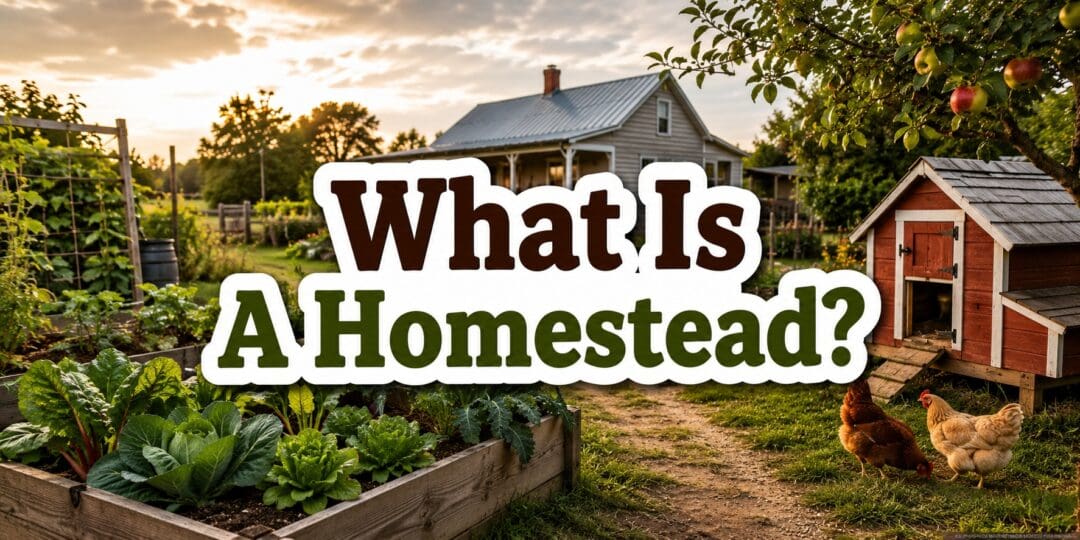
Somewhere between a backyard garden and a full working farm, the homestead occupies a unique space in modern life. It is a place built around self-reliance: a property where you grow food, raise animals, preserve harvests, and take direct responsibility for as many of your own basic needs as you choose. But a homestead is also a mindset, a deliberate shift away from passive consumption toward active, hands-on living.
If you have been asking yourself what is a homestead and whether it might be the right path for you, this guide covers everything: the definition, the history, the different types, what homesteaders actually do day to day, and how to start regardless of your land size or budget.
The Definition of a Homestead
At its simplest, a homestead is a property used for self-sufficient living. The word itself has roots in Old English, combining “home” and “stead” (meaning place or site). Historically, a homestead was simply the primary dwelling on a piece of land. Over time, particularly in the American context, the term became associated with land settlement, small-scale agriculture, and the pursuit of household independence.
Today, the definition has broadened further. A modern homestead can range from a rural farm of 40 acres to a quarter-acre suburban lot, from an off-grid mountain property to a city rooftop garden. What defines it is not the size of the land but the intention: to produce rather than purely purchase, to develop practical skills, and to build resilience into daily life. The USDA National Agricultural Library defines small-scale and subsistence farming in ways that overlap significantly with modern homesteading practice.
A Brief History of Homesteading in America
The homesteading tradition in the United States was formalized by the Homestead Act of 1862, which granted 160 acres of federal land to any adult citizen willing to settle and improve it over five years. Between 1862 and 1934, approximately 270 million acres were claimed under this act, representing one of the largest land distribution programs in history. Settlers built houses, dug wells, grew crops, and raised livestock on land that had been open prairie just years before.
This era shaped the cultural archetype of the American homesteader: self-reliant, hardworking, skilled in practical trades, and rooted to the land. The 1970s back-to-the-land movement revived homesteading as a countercultural response to industrialization and corporate food systems, with thousands of families moving to rural properties to grow their own food and live with greater intentionality.
Today’s homesteading revival draws from both traditions but is shaped by new motivations: food security concerns, rising grocery costs, distrust of industrial food supply chains, environmental awareness, and a widespread desire for more meaningful, skill-based living.
What Is a Homestead Today? The Modern Definition
Modern homesteading does not require a specific acreage, a barn, or a rural zip code. It is better understood as a spectrum of practices centered on self-sufficiency. At one end are people who grow a few vegetables and preserve summer produce. At the other end are families producing nearly all of their own food, generating their own power, and processing everything from firewood to soap from scratch.
Most homesteaders fall somewhere in the middle, combining productive land use with a selective reliance on modern infrastructure. The defining characteristics that distinguish a homestead from an ordinary property are:
- Intentional food production, whether vegetables, fruit, eggs, meat, dairy, or some combination
- Active development and use of practical skills: gardening, food preservation, animal husbandry, building, foraging
- A goal of reducing dependence on outside systems for basic needs
- A household orientation toward production and resourcefulness rather than pure consumption
Types of Homesteads
Rural Homesteads
The classic image: a property of several acres or more in a rural or semi-rural setting, with space for large gardens, orchards, pasture animals, and outbuildings. Rural homesteads offer the most flexibility for self-sufficient living but require significant capital to acquire and substantial physical labor to maintain. Many rural homesteaders work part-time off the property to supplement income, particularly in the early years before their systems are fully productive.
Suburban Homesteads
A quarter-acre to one-acre suburban lot can support far more food production than most people realize. Intensive raised bed gardens, backyard chickens (where local ordinances allow), dwarf fruit trees, beehives, and small-scale food preservation can all operate within a typical suburban footprint. Suburban homesteading requires creativity with space and an understanding of local zoning restrictions, but it is often the most practical entry point for families transitioning toward self-sufficient living.
Urban Homesteads
Urban homesteading operates within city limits, often on very small lots or even in apartments with access to rooftop or community garden space. Container gardening, indoor herb production, fermentation, sourdough baking, and community-supported food networks all fall under the urban homesteading umbrella. The Cornell Small Farms Program and similar university extension services have documented how urban and peri-urban food production can meaningfully contribute to household food security even in dense city environments.
Off-Grid Homesteads
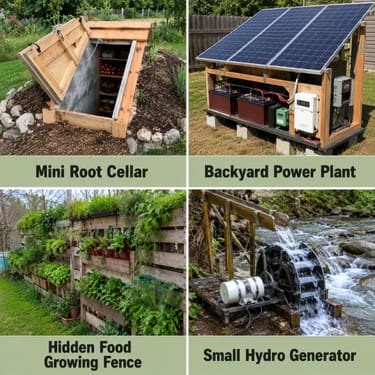
Some homesteaders take self-sufficiency further by disconnecting from municipal utilities. Off-grid properties generate their own electricity (typically through solar, wind, or micro-hydro systems), manage their own water supply through wells or rainwater collection, and handle their own waste through composting toilets or septic systems. Off-grid homesteading demands a higher level of technical knowledge and upfront investment but provides the deepest degree of independence from external infrastructure.
What Do Homesteaders Actually Do?
Homesteading is defined by its practices. The specific activities on any given homestead depend on climate, land size, family priorities, and experience level, but most homesteaders engage in some combination of the following:
Growing Food
The vegetable garden is the foundation of most homesteads. Productive homestead gardens are typically planned around caloric density and preservation potential as well as fresh eating. Root vegetables, winter squash, dry beans, and potatoes store well and provide substantial calories. Perennial crops like asparagus, rhubarb, and fruit trees reduce annual replanting labor over time.
Raising Livestock
Animals expand what a homestead can produce. Chickens are the most common starting point, providing eggs with minimal space and infrastructure. Rabbits are highly efficient meat producers for small properties. Goats offer milk, meat, and land clearing. Pigs convert food scraps and forage into meat efficiently. Larger properties may support dairy cows, beef cattle, sheep, or heritage breed pigs. Each species brings its own management requirements and learning curve.
Food Preservation
Growing food is only half the equation. Preserving the harvest is what allows a homestead to feed a household through winter and lean seasons. Common preservation methods include water-bath and pressure canning, lacto-fermentation, dehydrating, cold cellaring, and freezing. A well-stocked pantry built from your own garden is one of the most tangible rewards of homestead living. The National Center for Home Food Preservation at the University of Georgia is the authoritative resource for safe home canning and preservation guidance.
Building and Maintenance
Homesteaders tend to develop broad practical building skills out of necessity. Fencing, coop and shelter construction, irrigation installation, basic plumbing repairs, and tool maintenance are all regular tasks. The ability to build and fix things yourself reduces costs substantially and builds the kind of practical competence that makes the whole homestead system more resilient.
Foraging and Wild Harvesting
Many homesteaders extend their food system into the surrounding landscape by foraging for wild edibles: berries, mushrooms, medicinal herbs, nuts, and greens. Foraging integrates well with homestead living because it encourages deep familiarity with the local environment and supplements cultivated production, particularly in early spring before gardens are producing.
Homemade and DIY Production
Beyond food, homesteaders often make their own cleaning products, candles, herbal remedies, fermented beverages, textiles, and personal care items. This broader DIY orientation reduces household expenses and closes the gap between daily life and direct production.
How Much Land Do You Need to Homestead?
This is one of the most common questions prospective homesteaders ask, and the honest answer is: it depends on your goals. A self-sufficient homestead producing most of a family’s calories requires significantly more land than a homestead focused on supplemental food production and skill development.
As a rough guide:
- A quarter acre or less: herbs, salad crops, small raised bed vegetable garden, container fruits, backyard chickens
- Half an acre to one acre: substantial vegetable production, small orchard, chickens, rabbits, and potentially a beehive
- One to five acres: full vegetable and fruit production, multiple livestock species including goats or pigs, woodlot for fuel
- Five acres and above: approaching full food self-sufficiency for a family, with room for grain production, large orchards, cattle, and significant wild habitat
Most experienced homesteaders will tell you that skills matter more than acreage. A highly skilled gardener can feed a family from a well-managed half-acre. An inexperienced family on ten acres may struggle to produce reliably. Start with the land you have and focus on developing depth of practice before expanding.
The Legal Side: Homestead Exemptions and Zoning
The word homestead also carries legal meaning in the United States. Most states offer a homestead exemption, a property tax reduction available to homeowners who declare their primary residence as a homestead. This is a separate concept from lifestyle homesteading but worth understanding as a property owner.
More practically relevant for active homesteaders are local zoning ordinances that govern what you can do on your land. Rules vary widely by municipality regarding:
- Whether livestock can be kept, and if so which animals and how many
- Regulations on structures such as coops, barns, and greenhouses
- Rules governing the sale of produce, eggs, or processed foods from a home property
- Water rights, well-drilling regulations, and rainwater harvesting legality (which varies by state)
Before purchasing land or expanding your homestead activities, research your county’s zoning code and any applicable state agricultural regulations. Many states have Right to Farm laws that protect agricultural operations from nuisance complaints, and several have enacted cottage food laws that allow home-produced foods to be sold with minimal licensing.
Is Homesteading Right for You?
Homesteading is genuinely rewarding, but it is also genuinely hard. Anyone romanticizing it as a simpler life is likely underestimating the physical labor, the learning curve, and the relentless demands of caring for plants and animals. Crops fail. Animals get sick. Equipment breaks at the worst possible moments. Winters are long and pantry inventory gets precarious.
That said, the people who commit to it consistently report high levels of life satisfaction, a stronger sense of purpose, deeper connection to seasons and natural cycles, and a practical confidence that comes from knowing how to produce what you need. The skills compound over time. Each year of experience makes the next more productive and less exhausting.
Ask yourself these questions honestly before committing:
- Am I prepared to do significant physical work outdoors in all weather conditions?
- Do I have, or am I willing to develop, patience for the long learning curve of growing food and raising animals?
- Is my household aligned on this direction? Homesteading works best when the whole family is invested.
- Can my finances support the startup costs of land, infrastructure, tools, and initial livestock?
- Am I comfortable with uncertainty, crop failures, animal losses, and systems that do not always go as planned?
If your honest answers are mostly yes, homesteading is likely a good fit. If you are hesitant on several points, starting smaller, a garden bed, a few chickens, a season of canning, is a low-stakes way to test your commitment before making major investments.
How to Start Homesteading: A Practical First-Year Approach
The most common mistake new homesteaders make is trying to do everything at once. Overextending in the first year leads to burnout, wasted money, and demoralization. A better approach is to start with one or two core practices, learn them well, and expand deliberately.
Year One Priorities
- Get a productive vegetable garden established. Learn your soil, your microclimate, your pest pressures, and your best-performing crops before adding complexity.
- Begin preserving what you grow. Canning, fermenting, and dehydrating even a small harvest builds the skills and confidence you will need when production scales up.
- If adding livestock, start with chickens. They are the most forgiving livestock for beginners, require relatively simple infrastructure, and provide immediate, tangible returns in the form of eggs.
- Build your tool inventory deliberately. A quality shovel, hoe, broadfork, and harvest knife will serve you better than a garage full of cheap or specialized equipment.
- Connect with other homesteaders. Local agricultural extension offices, homesteading Facebook groups, and regional farming networks are invaluable sources of locally relevant knowledge.
Building the Homestead Skill Stack
Homesteading rewards what experienced practitioners call a wide skill stack: a broad range of practical competencies that reinforce each other. Prioritize learning in this rough order:
- Soil building and garden management
- Seed saving and plant propagation
- Food preservation (canning, fermenting, dehydrating)
- Basic animal husbandry for your chosen species
- Food foraging and wild plant identification
- Basic carpentry and fencing
- Water management: irrigation, rainwater collection, drainage
- Herbal medicine and basic veterinary first aid for livestock
The Self-Sufficient Homestead: What It Actually Looks Like
True self-sufficiency, meaning a household that produces everything it needs without any external inputs, is more ideal than practical reality for most modern homesteaders. The more useful goal is meaningful self-sufficiency in the areas that matter most to you: your food supply, your energy, your health, or your finances.
A realistically self-sufficient homestead for a family of four might look like this: a large productive garden covering most vegetable needs from April through October, preserved goods stocking the pantry through winter, chickens and possibly goats providing eggs and dairy, a freezer with meat from animals raised on the property or purchased from neighbors, a woodlot providing heating fuel, and a robust skill set that reduces dependence on outside labor and services for routine maintenance.
This is not a primitive existence. It is an intentional one. The goal is not to reject the modern world but to build a functional, productive household that is genuinely less vulnerable to supply chain disruptions, rising food costs, and the fragility of just-in-time consumer systems. Organizations like the Rodale Institute have spent decades documenting how regenerative, small-scale farming practices can build genuine household and community resilience.
Learn the Amish Way to a More Self-Sufficient Life
A successful homestead isn’t built overnight. It’s built on practical skills that have been passed down for generations. The Amish Ways Book reveals traditional methods for growing food, preserving harvests, raising livestock, storing supplies, and becoming less dependent on modern systems.
Whether you’re starting with a backyard garden or building your dream homestead, these proven techniques can help you save money, waste less, and become more self-reliant every season.
Click HERE to discover The Amish Ways Book today!
Final Thoughts: What Is a Homestead, Really?
A homestead is, at its core, a declaration of participation. It is a choice to engage directly with the processes that sustain life rather than delegating them entirely to industrial systems. It does not require acres of land, a specific lifestyle aesthetic, or a rejection of modern technology. It requires skill, patience, physical engagement, and the willingness to keep learning from what does not work.
Whether you start with a raised bed on an apartment balcony or purchase a five-acre rural property, the homesteading mindset is the same: grow what you can, preserve what you grow, build what you need, and reduce what you waste. That combination of intention and action is what has always defined the homestead, regardless of the era.
You may also like: 
Join Our Warm Facebook Group For Weekly Homesteading Advice You Will Love
How to Build Your Own Water Generator (Video)
How to Use Cornstarch Around Your Homestead
Lactic Acid Fermentation – A Complete Guide for the Home Homesteader
Domestic Sheep Herding: A Practical Guide for the Small-Scale Homesteader
Beekeeping Supplies for the Homestead: Everything You Actually Need