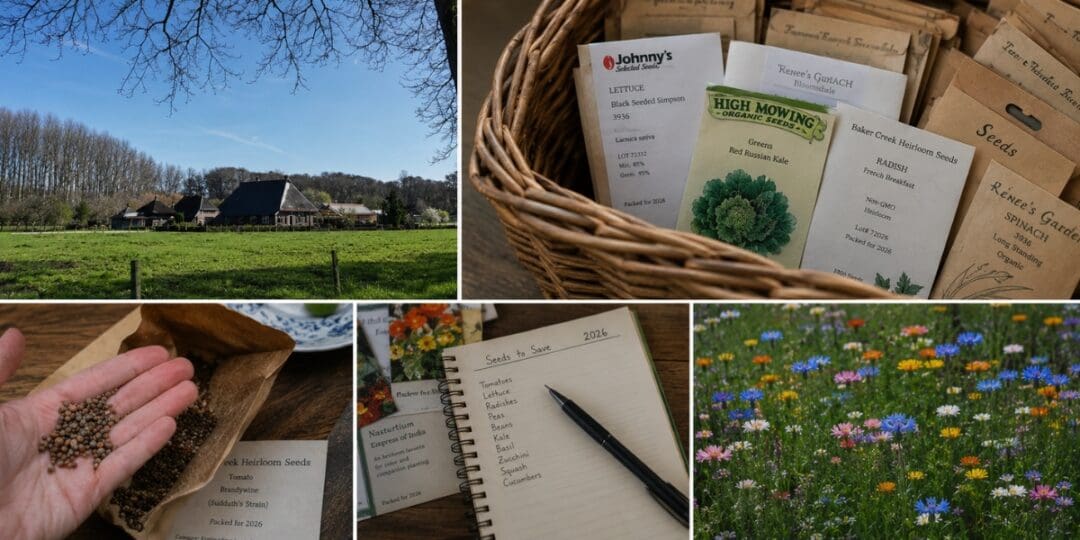
Every year, the same thing happens. You walk into the local gardening store full of hope and preparing for the new garden, and there it is by the register. A spinning rack of seed packets with bright pictures of fat tomatoes and rainbow carrots. The prices look good. This makes you grab a handful and toss them in the cart.
I did this for years. Some of these seed packets turned out fine, but a good number of them let me down. It took me a while to understand why.
I want to save you some trouble. So, keep reading and see what seeds to never buy from big box stores and what to choose instead.
The store isn’t always the one to blame. Certain seeds are just a bad deal no matter how good the packet looks, and some of them can cost you a whole growing season before you’re even ready to admit something went terribly wrong.
Also, don’t forget to check out the easy DIY seed storage project I included in the article.
Seeds You Plan to Save
This is a big subject, so I want to start here.
A lot of the vegetable seeds on that infamous rack have a huge chance to be labeled F1 hybrid. That means a seed company crossed two parent plants to get one with specific traits, like disease resistance or a uniform ripening time. Hybrids aren’t bad. They often grow strong and are a strong choice for most homesteads and gardens.
But here’s the catch nobody at the store will tell you. If you save seeds from an F1 hybrid plant, the next generation will not grow true to type. True to type means the new plants grow up like the parent, with the same fruit you liked in the first place.
Unfortunately, hybrid seeds don’t do that. They carry a scrambled mix of traits from those two parents, so the seed you save won’t reliably give you the same plant. That makes seed saving with hybrids pretty much pointless.
So, if part of your plan is to save seeds and become less dependent on buying new ones every year, you want open-pollinated or heirloom varieties instead. Open-pollinated means the plant gets pollinated naturally, by wind, insects, or itself, and the seed stays stable. Save it, plant it next year, and you get the same vegetable back. The big box rack leans heavily toward hybrids, so read the packet carefully. If it says F1 and you want to save seed, put it back.
What Are the Amish Seeds?
Since I mentioned the heirloom seeds, I also wanted to tell you more about the “Amish seeds.”
These seeds are the ultimate heirloom seeds. Why? Because the Amish have passed them down from generation to generation for over 50 years.
One thing I learned from them is where to get my seeds from. They exclusively get their seeds from local companies, and some strict Amish communities even ban the use of GMO corn. Some famous Amish heirloom seeds include the “Amish Paste” tomatoes, the “Early Ohio” potatoes, or the “Amish White Bunch.”
If you want to be self-sufficient, saving your own seeds is a big and important step. I wanted to tell you more about the way they do things because maybe, just like me, you also want to get seeds from places where farming work is all done with the protection of the natural world, protecting soil, plants, and wildlife.
👇 Try the Amish way of getting seeds
Cheap Wildflower Mixes
I know these are incredibly tempting. I fell into this trap too many times. When you see a big bag of seeds promising a meadow full of pollinators for a few dollars, it’s hard not to be tempted to buy it right away.
But what I want you to do is just flip that bag over and read the fine print. A lot of these mixes are nearly all filler, with just a small fraction of actual seed in the bag. Most of the time you’re paying for sawdust and a sprinkle of seed, and that filler even pulls moisture away from the seeds while the bag sits on a shelf, which drops your germination even lower.
But this is not the only problem. Many of these generic mixes might not even be made for your region. You can end up planting something aggressive that takes over a corner of your homestead, or species that simply won’t survive your winters.
If you want a pollinator patch, buy a regional native mix from a company that lists what’s actually in the bag. This is both great for the bees you want to attract and also for your wallet.
Grass and Lawn Seed
This one might sound surprising, but it’s worth knowing if you’ve got pasture or a yard to fill in.
The trouble with big box lawn seed is something called “other crop seed” on the label, and the number is often vague on purpose. Even a tiny percentage adds up. A blend listing just 0.50 percent other crop seed can carry around 30 unwanted grass seeds in every single square foot you plant.
That means you could be seeding weedy pasture grass right alongside the good stuff without knowing it. Once the grass is taller, you will start to notice patchy spots and odd textures.
If you want to grow a pasture suitable for feeding animals, this is a huge problem. Buy your grass and forage seed from a feed store or a seed company that tests for purity, and ask them what’s suited to your soil and your animals.
Carrots, and Anything Sold as a Seedling That Shouldn’t Be
Ok, this one is not about seeds at all, but I think it’s worth mentioning. In gardening big box stores, you might notice just near the seeds rack these little six-packs of started plants. I’m putting it here because it confuses a lot of new gardeners.
Some plants should never be sold as transplants, and carrots are the main example. A carrot is mostly taproot, which is the single main root that grows straight down, and that root forms right after the seed sprouts.
The moment you disturb it, moving a seedling into the ground, you’ve damaged the very part you wanted to eat. If you try to grow carrots from those transplants, you’ll almost 100% get stunted, forked, sad little carrots.
Corn is the same story. It’s a grass with shallow roots that sets up fast, so transplanting destroys it. Dill and cilantro both have fragile taproots and tend to bolt the second you move them. Bolting is when a plant gives up on growing leaves and rushes to flower and set seed. Once that happens, the leaves turn bitter and the harvest is basically over.
So, do yourself a favor and direct-sow these. Plant the seed straight into the ground right where it’ll grow instead of starting it in a pot first. Carrots, corn, dill, and cilantro this is what you need to remember. If you ever spot them in a six-pack of started plants, walk on by.
Medicinal Herbs Seeds 
Buying medicinal herb seeds from big box stores is generally a weak choice for a couple of reasons.
First of all, the biggest problem is the poor selection. Big box racks generally have the same generic seeds you can find anywhere: basil, parsley, dill, cilantro, maybe chamomile or echinacea. These all are seeds everyone should have when growing a garden, but if you want a real medicinal garden you can use to make remedies, that’s not enough.
The medicinal plants homesteaders actually want for a real apothecary garden- things like marshmallow, yarrow, valerian, mullein, or calendula- are rarely on the rack.
Then another big thing is freshness. If you want to make strong medicine, you need potent plants. And to get potent plants, you need fresh seeds. This is a cycle that is not respected in the big box stores.
What I’d steer people toward instead is a dedicated herb or medicinal seed company, or a regional seed house. They carry the unusual species and tend to move stock fast so you can be sure it’s fresh.
For example, here you can find a nice medicinal garden kit that offers you a lot of truly useful plants such as yarrow, marshmallow, calendula, chicory, or evening primrose.
Inside the kit, there are 10 smaller packages with each type of seed. In total, you’ll get 4,818 high-quality, NON-GMO seeds packaged right here in the US. Perfect for any medicinal garden.
What I like the most about this kit is that you don’t just get the seeds; you also get a brochure that’s actually a mini book, which includes remedy recipes for all plants included in the kit.
Old Seed With No Date on the Packet
Seeds are alive, and like anything alive, they fade with time. A fresh bean seed might sprout at 90%. That same seed three or four years old might give you half that, or less.
Here’s my problem with a lot of big box seed. You often can’t tell how long a seed pack has been sitting there. The packet might have a “packed for” year stamped on it, but plenty don’t make it easy to find, and the rack might be carrying leftover stock from a season or two back. When germination is poor, you’ll waste weeks waiting on rows that never fill in.
When you do buy from any store, hunt for that packed-for date and buy the freshest you can find. And when a packet doesn’t show one at all, I treat that as a reason to set it back down.
Specialty and Regional Varieties
The big box rack is built to be suitable for the highest number of people. The store wants to sell their products to as many people as possible, and this is why many of their seeds are designed for this purpose only.
This means it leans on the same dozen common varieties you see everywhere. There’s nothing wrong with a Roma tomato or a Blue Lake bean. I grow both.
But if you’re after something that actually thrives where you live, like a short-season tomato for a cold northern summer or a heat-loving okra for the South, you usually won’t find it at the big box store.
This is where a good regional seed company earns its keep. They carry varieties bred for real American growing conditions, and that edge shows up in your harvest.
Anything for Long-Term Storage in Your Seed Vault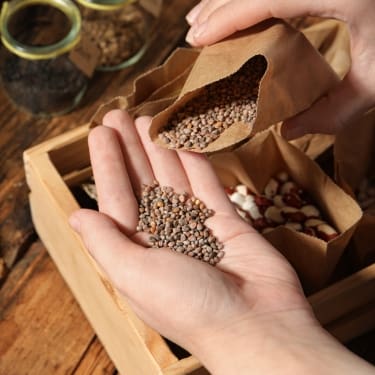
If you’re putting seeds away as a backup, the kind you want to count on years down the road, the big box rack is the wrong place to shop.
You want open-pollinated, non-GMO seed, and you want to know what year it was harvested so you can plan around how long it’ll keep. It should have been stored cool and dry from the start, too.
Cheap rack seed of unknown age and unknown handling makes a poor foundation for a seed vault you’re trusting your food security to. Buy from a company that specializes in storage seed, and keep your stash somewhere cold and dark.
How to Stockpile Seeds the Right Way
One crazy thing that happened among all the other insane things that happened during the COVID-19 pandemic is that seeds suddenly became a luxury item that not many could get. I used to store seeds before that, but once the pandemic happened, I decided that maybe having a little “seed vault” on my homestead was the right decision.
If you’re wondering why seeds were so hard to get, well, the answer is simple: when big crises happen, a lot of people turn to gardening at the same time. If you think about it, this is a very natural and instinctive move. When you see that getting food becomes a burden, you want to be safe and have your own food supply, and a garden is a continuous food supply. So, you can easily see why this happened.
The problem is that stockpiling seeds is not that simple. You can’t just buy seed packs and then put them in a drawer and call it a day. That’s what most people get wrong and I don’t want you to be one of them.
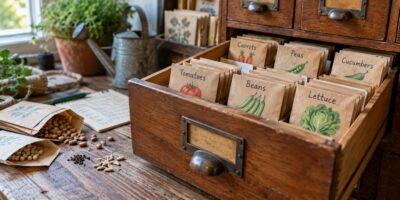
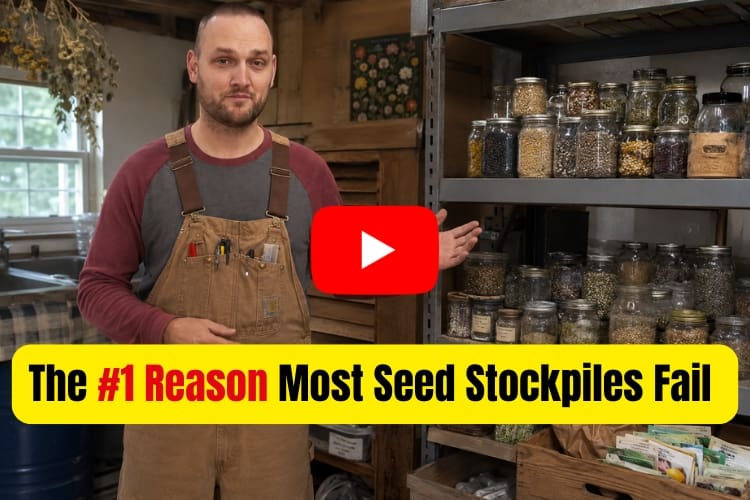
The whole game with storing seeds is slowing down their metabolism. A seed is alive but resting, and three things wake it up or kill it: moisture, heat, and light. This means that once you get your good quality seeds, you should also know where to store them, what containers to use, and so on.
Now, I’m no expert when it comes to seed storage and this is why I want to redirect you to someone who knows better. Michael Major dedicated his life to learning how to live off-grid and he also knows a thing or two about seeds, how to store them, and what seeds you should get for an emergency vault. He’s also the one who guided me when I made my own vault.
You can see more about this here and you’ll also get the chance to see more of his no-grid projects, many of them gardening-related.
👉 Click here if you want to start your own little seed vault
A Simple Seed-Saving Project You Can Start This Week
Here’s the thing that makes all of this matter. Once you grow open-pollinated varieties, you can save your own seed and stop buying it almost entirely. Tomato seed is the easiest place to start, and the method is so simple you’ll want to try it right away.
Here’s what you’ll need:
- A ripe tomato from an open-pollinated plant
- A clean glass jar
- Some water
- A paper towel or a plate
Start by scooping the pulp and seeds out of a fully ripe tomato into your jar. Don’t worry about the gooey jelly around each seed. We’re going to use a little fermenting to get rid of it, and that jelly actually carries chemicals that stop the seed from sprouting too early.
Next, add a splash of water, just enough to loosen things up. Set the jar somewhere warm and out of direct sun, and leave it for two to four days. It’ll get a little funky and grow a fuzzy film on top, and it might smell sour. I know it looks like something went wrong, but this is exactly what’s supposed to happen. Don’t pour it out. That film is mold breaking down the jelly coat for you, and your seeds underneath are fine.
After a few days, fill the jar with water and stir. The good, viable seeds are heavy and sink to the bottom. The dead ones and the leftover pulp float. Pour off everything floating on top, add more water, and repeat until you’re left with clean seeds at the bottom.
Then pour those seeds onto a plate or a paper towel and spread them out in a single layer. Let them dry completely somewhere with good airflow, which usually takes about a week. Don’t rush this. Seeds left even a little damp will grow mold, so be careful about this.
Once they’re bone dry, store them in a paper envelope, label it with the variety and the year, and tuck it somewhere cool and dark. That’s it. Next spring you’ve got free seed from your best tomato, and you never had to touch that rack by the register.
Here’s the whole thing at a glance if you want to keep it handy while you work:
- Scoop the pulp and seeds into a jar
- Add a splash of water and leave it somewhere warm for two to four days
- Fill the jar with water, stir, and pour off everything that floats
- Spread the clean seeds out and dry them flat for about a week
- Store them in a labeled envelope somewhere cool and dark
If you want to read more, check out this Oregon State University Extension seed-saving guide.
Final Thoughts
Now, you can still buy seeds from the big box stores. Some seasons I still do it for something common when I’m in a hurry. The point is to know what you’re about to buy before you pay for it.
Some seeds will grow beautiful plants anyway, but being prepared beforehand gives you enough room to make the right call.
You may also like:
The Natural Garden Booster Hidden in Most American Kitchens
Grow More Food in Less Space: The DIY Wall-Hanging Garden Anyone Can Build (Video)
7 Medicinal Seeds You Need to Start Stockpiling
No Seeds Needed! How to Grow Tomatoes from a Single Slice
What Happens if You Bury Tea Bags in Your Garden