Foraging has a special way of making you see the world. It changes your perspective, and for example, a sidewalk crack stops being just a crack. Sometimes, incredibly useful plants can grow from there. That patch of “weeds” you have in your backyard suddenly turns into a potential source for pantry supplies. The whole space around your home becomes more alive and a lot more generous than you remember.
The idea of gathering food for free is making a comeback, considering the actual social and economic landscape, and the skill of foraging is starting to become a pretty advantageous alternative to store-bought food.
Why spend your money on expensive groceries when nature awaits you to forage for free near your house? But one important thing about foraging is that you don’t just grab anything green and call it a day. Hoping for the best is not a sustainable strategy here, as there are numerous toxic plants out there.
Read on and you’ll discover some amazing foods you can forage right from your backyard and how to use them to make the best food that will make you forget anything you can buy from a store.
What You Should Know Before You Start Foraging
It might look like the most effortless task when you see someone casually pluck a plant and toss it into a basket. But is this all? Indeed, you don’t need expensive gear, but some basic tools and a little bit of plant knowledge will make foraging easier and safer.
Knowledge is by far the most important. Never eat a plant unless you are 100% certain of its identification. Many edible plants have lookalikes, and some of those can be harmful. A reliable field guide specific to your region or a trusted foraging book is essential. And remember: When in doubt, leave it out.
Since knowledge can literally save your life in this situation, it’s better to get your info from trusted and reliable sources.
Dr. Nicole Apelian is an herbalist, a mother, a survival skills instructor, and a biologist. Food gathering and harvesting medicines is a way of life she adopted for her personal wellness after being diagnosed with Multiple Sclerosis.
Her book, The Forager’s Guide to Wild Foods, is one of the staples when it comes to foraging guides. Inside, you can find everything you need from HUGE, clear pictures of each plant to edible plant maps for every U.S. state.
Be 110% safe and sure you got the right plant. CLICK HERE and get your own copy of The Forager’s Guide to Wild Foods.
As for tools, this practice doesn’t require much. A small basket, cloth bag, or reusable tote works well for collecting plants and allows air to circulate so greens don’t wilt. Make sure you avoid plastic bags as they trap moisture and will make your greens soggy. Also, you can carry with you a pair of scissors or a small knife since they help cut leaves and stems.
Now, let’s get to the part you were waiting for. Here are some of the best and most common foods you can forage for free near your house.
Dandelions
They are one of the easiest plants to start foraging, mostly because they’re almost everywhere. You’ll find them in lawns, fields, gardens, along sidewalks, and in other sunny open spaces. To recognize them, look for the familiar bright yellow flowers and the jagged green leaves. Make sure you’re harvesting from areas that haven’t been sprayed with chemicals.
One great thing about the dandelion is that you can use nearly the entire plant. Young leaves are best picked in early spring, when they’re tender and less bitter. Simply cut or pinch them at the base. The flowers can be harvested once fully open, and the roots can be dug up in the fall or early spring.
In the kitchen, you can use dandelion leaves for salads, soups, and delicious and nutritious sautes. The flowers are often used for fritters, syrup, or even homemade dandelion “wine.” Roasted roots can be brewed into a caffeine-free coffee substitute
Ramps
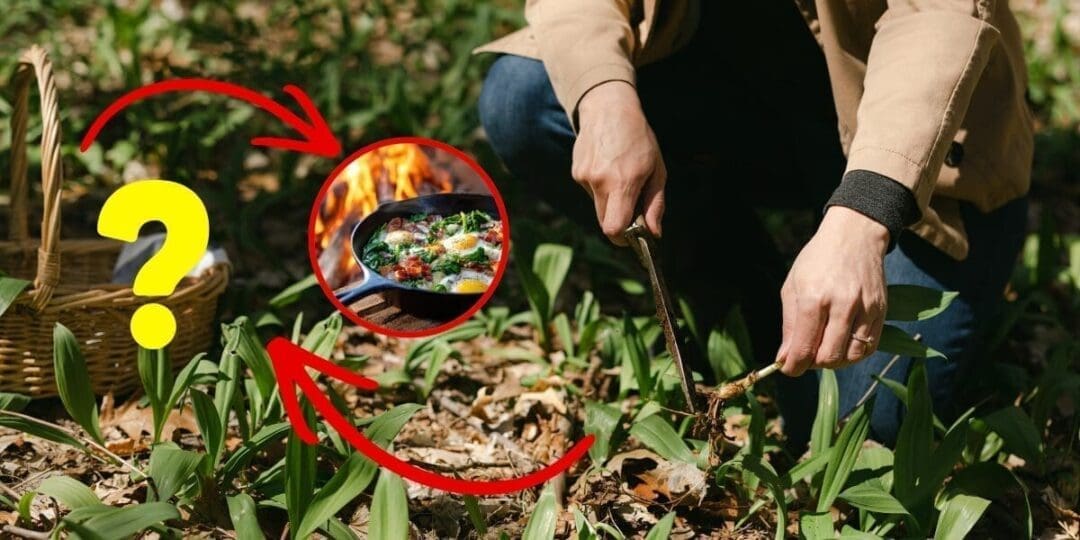
Also called wild leeks, these plants are one of the favorites of the spring season. They grow in moist, shaded woodland areas, especially under hardwood trees, and appear early in the season before the forest canopy fills in. Recognizing them is easy. Look for their broad green leaves, purplish stems, and strong onion-garlic scent. This garlic aroma is the best indicator that you’ve indeed found ramps and guided entire generations of foragers.
Be aware that ramps grow slowly, so responsible harvesting is a must.
Never pull up the entire plant. Cut just one leaf per plant and make sure you leave the bulb intact. In this way, the plant will regrow, and you will be able to enjoy it next year too. This is how the Amish managed to rely on ramps year after year without exhausting the supply.

In terms of food, you can use ramps anywhere you’d use onions or garlic. Fried with eggs, added to potatoes, mixed into butter, or preserved by pickling, anything goes. The choice is yours.
Plantain
This is the plant you probably walk over every day in your garden without realizing you are stepping on a treasure of nature. It grows in lawns, along paths, driveways, and other compacted soil, often where grass struggles. You’ll recognize it by its broad or narrow leaves with strong parallel veins running from the base to the tip.
Foraging for plantain is simple. Young leaves are best for eating and can be picked by hand or cut near the base. Older leaves become tough but are still useful. Always harvest from clean areas away from road runoff or treated lawns.
The leaves can be eaten raw (in small amounts) or cooked like spinach or added to soups and stews. During the Great Depression, plantain was a staple and was valued for its abundance and soothing properties. Herbalists use it for treating bites and stings.
But plantain alone won’t save you from the next Great Depression. Times have changed and they are brutal beyond anything we’ve seen. Hyperinflation is unlike any other crisis America has experienced before.
Even if there’s no more food to buy at the supermarket, you can still be saved if you learn how to build your self-sufficient greenhouse to produce what you need on your own property. Take control now. Watch the video below to discover how to build your own year-round greenhouse and never depend on empty shelves again.

Wild Raspberries
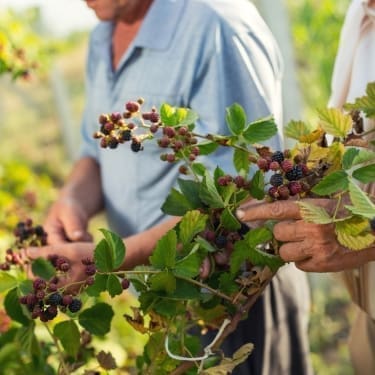
Any forager hopes to stumble upon wild raspberries because they are such a nutritious treat. Generally, they grow along forest edges, trails, fences, and sunny clearings, often forming dense, thorny patches.
The simplest way to recognize them is by their arching canes covered in fine prickles, serrated compound leaves, and small white flowers that later turn into red (or sometimes black) berries. A helpful detail: when you pick a ripe raspberry, it slips easily off the plant and leaves a hollow center.
Only harvest berries that are fully colored and come away easily. They don’t store well, so they’re best eaten fresh or processed quickly.
The fruits of these berries are antioxidant-rich, but their leaves are useful too. Raspberry leaf tea was traditionally used for digestion and general wellness.
If you are lucky and have a patch of wild raspberries in your backyard, harvest them and stock your pantry with healthy homemade jams and syrups.
Patience Dock (Monk’s Rhubarb)
This is a hardy plant that shows up in fields, pastures, roadsides, and disturbed soil. It’s not native to North America, but after it was brought over from Europe, it quickly naturalized and now it’s a part of our gardens too.
When you are out foraging, look for its long, narrow leaves with wavy edges and its tall seed stalks that turn rust-brown as they mature. Be patient since taking this plant home with you will take a while.
The young spring leaves are the most useful, as older leaves become tough and bitter. Harvest them early and cook them well. They show off their aroma the most in stews and the seeds are sometimes ground into flour because they provide an accessible calorie source. From the flour, you can make rustic breads, crackers, or pancakes.
Chickweed
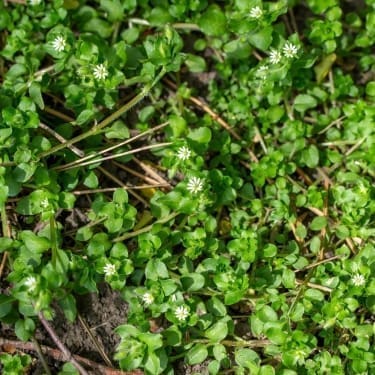 Its name comes from how eagerly chickens and other birds eat it. For centuries, farmers noticed that chickens would seek out this plant whenever it appeared, scratching it up and literally devouring it.
But this is not random. Chickweed is nutritious, containing vitamins and minerals that are beneficial for both animals and people. You can recognize chickweed by its low, spreading habit, small, pointed leaves, tiny white star-shaped flowers, and a single line of fine hairs running along the stem.
The whole above-ground plant is edible, and you can harvest it by snipping handfuls at a time. Its tender texture and mild taste make chickweed one of the few wild greens that’s pleasant to eat raw.
If you still prefer to make something out of it in the kitchen, go for salads, pesto, sandwiches, or add it to soups.
Common Mallow
It shows up almost anywhere, from roadsides to the back of your garden. The same as patience dock, this plant is not native to North America. It originally came from Europe and parts of Asia, but right now it has spread all across the continent.
This is not a bad thing, considering how useful it is. If you are not sure how it looks, search for the rounded, softly lobed leaves, low sprawling growth, and small pink or pale purple flowers. The seed pods are especially distinctive, often described as looking like tiny green “cheese wheels.”
Young leaves and stems are best and can be picked by hand throughout much of the growing season. One of mallow’s most interesting properties is its natural mucilage. This is a slippery, gel-like texture released when cooked.
And this exact texture is what made mallow so precious during hard times. You no longer need to use starch or flour to thicken your sauces or stews. Mallow is perfect for this since it is a natural thickener.
Nettle
This one has a bit of a reputation, and honestly, for good reason. Just brush a little against it with your bare skin, and the sting that follows will remain with you for a while. But don’t let this deter you from foraging for nettle. It’s one of the most nutrient-rich wild plants, and even though picking it might sound challenging, take a pair of gardening gloves, or any gloves, and the problem is gone.
Nettles grow in rich, moist soil along streams, fence lines, forest edges, and neglected corners, often in large, generous patches. So the chances of finding it in your backyard are incredibly high.
Harvest young tops in early spring, cutting above the lower leaves. Once cooked, dried, or blended, the sting disappears completely. They also work like spinach, excellent for soups, sautés, and pesto.
Nettles have also been used for centuries by herbalists to support the body’s natural response to seasonal allergies. Its gentle antihistamine action reduces inflammation, eases congestion, and calms itchy eyes and sneezing. Nettle tincture is a safe and natural way to manage your symptoms during the spring when most allergies flare up.
Many homesteaders choose to prepare this miraculous remedy in their own homes. If you want to try it, CLICK HERE and get the most effective recipe. You can make it in your kitchen in less than an hour!
Fiddle heads
These ferns have a distinctive look that will help you identify them out in the wild. The tightly curled green shoots are the young fern fronds, and you should harvest them just as they emerge in early spring.
You will find them in moist, shady areas near rivers, streams, and forest edges. The most commonly eaten (and safest) variety comes from the ostrich fern, which can be recognized by its smooth, bright green coils and a deep U-shaped groove along the stem.
Forage them when they are young and tightly curled. Snip only a few from each plant to let the fern continue growing. This plant comes back year after year if treated well.
Try to sauté them with butter and garlic or add them as a side to pasta and eggs. Very important: Always cook them first and never eat them raw since they can cause food poisoning. Cooking will neutralize the dangerous compounds.
Why This Knowledge Matters
Once you learn how to forage, this will become a constant part of your life. Recognizing the plants and where they grow will be second nature for you. You’ll start to notice seasons, soil, sunlight, and patterns you may have walked past for years. This type of awareness is an amazing skill for anyone who wants to be self-sufficient. Food is everywhere around you.
Besides this, foraging also encourages a respectful relationship with the land. You only take what you need, harvesting responsibly, and understanding how plants grow ensures these food sources remain available year after year.
You may also like: 
The Plants That Are Illegal To Grow, But Perfectly Fine To Forage
How to Make Bark Bread from a Tree that Grows on Almost Every Street in America (Video)
Survival Foods You Need To Forage This Spring
Here’s What You Need to Build a Forager’s Toolkit
9 Wild Edibles You Should Forage This Spring