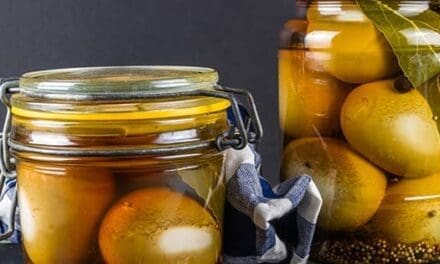
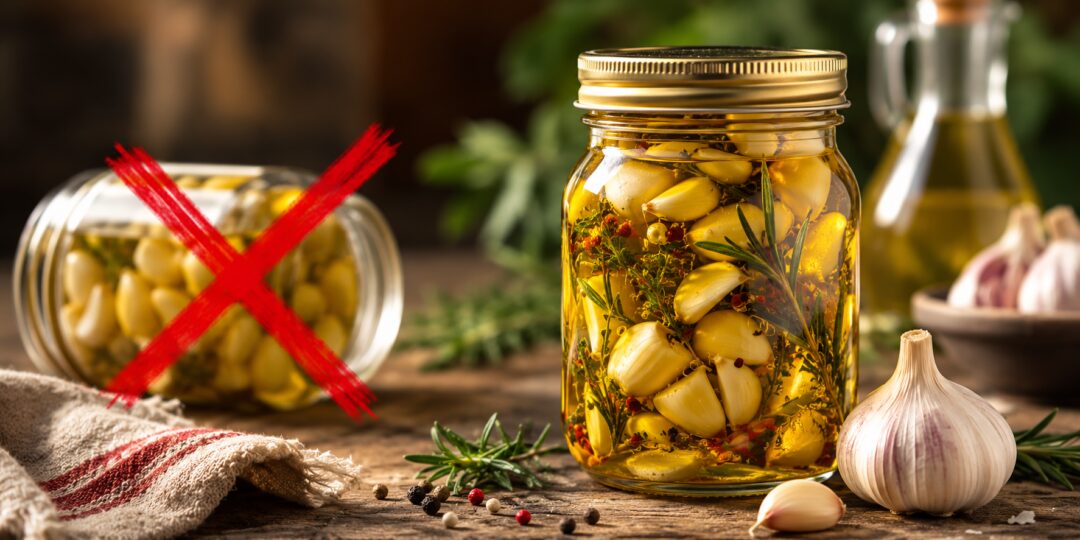
You probably saw a recipe online for garlic in olive oil. Maybe it was on Pinterest or on some pretty-looking blog with beautiful photos. The recipe told you to fill a jar with fresh garlic, cover it in oil, screw the lid on, and set it in the pantry like a jar of jam. It looked easy and practical, like something you could gift to friends and family.
But in reality, that jar sitting in your cupboard could send somebody to the hospital. What most of those recipes leave out is the one thing that matters. So today I want to walk you through what they get wrong and how to preserve vegetables in oil the right way.
The Big Mistake Almost Every Recipe Makes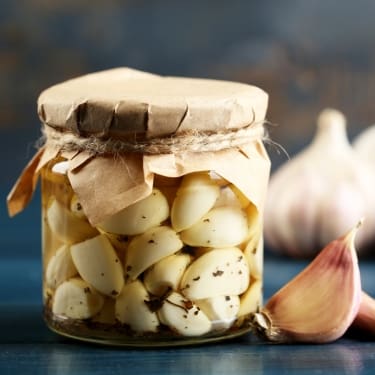
Most recipes treat oil like a preservative. They tell you to pour olive oil over your fresh garlic, mushrooms, peppers, or herbs, seal the jar, and set it on the shelf like a jar of jam. This is what causes all the problems.
Oil is not a preservative; it never has been and it will never be. All the oil does is block the air from getting to your vegetables. That sounds like a good thing, but it isn’t when you’re dealing with fresh vegetables that carry water in them.
Vegetables and herbs are what food scientists call low-acid foods. When you drop them into oil, you create a moist, oxygen-free little world at room temperature. That’s exactly the environment that the bacteria causing botulism love. This bacteria produces one of the deadliest toxins on earth. So I am sure you don’t want that in your food.
If you’d like to go deeper on botulism and how to keep your family safe from other food-preservation risks, take a look here.
It also covers a handful of natural health protocols that fit right into a self-sufficient way of living.
Also, if you suspect you might be dealing with botulism, you should go to the ER immediately.
Why This Is So Important
The thing is that you can’t see the toxin and you can’t smell it. Also, you can’t taste it. Your beautiful jar of garlic in oil will look the same as the day you made it, right up until it makes somebody in your household seriously sick.
Now, I’m not trying to make you afraid of oil preservation, but I want you to be aware of the dangers.
There were real outbreaks tied to homemade garlic-in-oil in the United States and Canada back in the 1980s, and the reason we know so much about it today is that researchers dug into it and worked out what was going wrong.
Botulism starts with blurred vision, trouble swallowing, and slurred speech, and it can shut down your breathing if you don’t get help fast. The National Center for Home Food Preservation and multiple extension services have laid out clear rules since those outbreaks.
If you’d like to read the research yourself, Oregon State University Extension has a clear fact sheet on it that’s worth a read.
What to Do if You Want to Store Vegetables Long Term
If this is your goal, I don’t want to beat around the bush: preserving vegetables in oil is not for the long run. This is just a way of keeping them fresh for a couple of weeks at most. Well, there is actually a trick that can make oil-preserved vegetables safe and last longer, but I will tell you more about that in a moment.
For now, I want you to know that this method is useless, but if you’re here because you want to keep your vegetables canned for years, oil preservation might not be suitable for you.
Instead, you should focus on pressure canning. This is the holy grail when it comes to food preservation. Most homesteaders are already doing this, but what method you use makes the difference.
Yes, I know that pressure canning is a standard method that follows the same steps, but what you do with the vegetables before you put the jars in the pressure canner can make them taste just as good as fresh while also guaranteeing they’ll last for years.
So, sometimes just knowing the basic technique is not enough. Sometimes what matters the most is the prepping you are doing beforehand. These are some well-kept secrets, even those homesteaders who’ve been in the game for a long time have no idea about.
This happens because many people are not interested in mastering the art of canning. Once they know how to do the basic thing, they are pleased and they will keep doing this until the end of time.
But you can change that and learn how to can like a pro. All you have to do is show a little bit of interest and just look into the right place. I’ve been struggling with this for a while because all the recipes I found on the internet were all the same. They show you how to use a pressure canner, and that’s all they offer.
But this is not what I was interested in. I wanted to know the real deal, the things that make your canned food taste good and last long. I wanted to can vegetables like my grandma used to.
What helped me is right here. This is the best resource I’ve found when it comes to food preservation. Everything you find here is made really how people used to do it hundreds of years ago. It’s all preserved knowledge.
So, if you want to see how to make your canned food taste just as good as fresh and last even longer, you can find every little secret here →
The Right Way for Fresh Vegetables in Oil
Now, let’s get back to oil preservation and how to make things right and safe. You can preserve fresh vegetables and herbs in oil, but you just need to treat the jar like fresh food, not like a shelf-stable preserve.
The thing with oil preservation is that it can make your vegetables and herbs last a little longer, but the real thing that makes this method so popular is the taste. Just imagine some garlic preserved in oil and infused with herbs. This sounds delicious!
Here’s what the folks at OSU recommend, and what I follow at my own house. Once you put fresh garlic, herbs, mushrooms, peppers, or any other vegetable into oil, you have two choices. You either refrigerate that jar right away and use it within four days, or you freeze it for longer storage. That’s it. Those are the only safe options.
Four days sounds short, and it is. But that’s the window where the risk stays low enough to be safe. After four days in the fridge, that jar goes in the freezer or in the trash.
The freezer is your friend here. I like to portion garlic-in-oil into ice cube trays, freeze them solid, and pop them into a labeled freezer bag. When I need a spoon of garlic-in-oil for a pan of sautéed greens, I grab a cube out of the bag and toss it in the pan. It melts in seconds and I’ve got fresh garlic flavor with none of the risk of a shelf-stored jar going bad on me.
The Secret Nobody Tells You About
Here’s a trick most recipes leave out entirely. The trick I told you earlier about.
If you dry your vegetables and herbs completely before you put them in oil, the risk goes way down.
The reason botulism grows in those jars is that fresh vegetables carry water. That bacteria needs water to grow. Take the water out, and you take away the food source. Properly dried garlic, dried herbs like rosemary and thyme, and dried peppers can go into oil far more safely than fresh ones.
I’ve had good luck with a small dehydrator for this. I run my garlic and herbs through it at around 125 degrees until they’re bone dry, then let them cool completely before I pour the oil over them.
If you don’t have a dehydrator, don’t worry. You can build one yourself! Before I got my dehydrator, I used to dry vegetables, fruits, and herbs in my oven. The problem was that it took too long and blocked my entire kitchen. Not to mention the gas bill…or the smell…
I wanted to find a solution for this and this is how the story of how I made a DIY dehydrator started. Building one yourself is surprisingly easy and the best part is that the sun is everything this device needs to do a proper job. So, you just take it outside on a sunny day and you’re all set. No more gas bills, no more smelly and humid kitchen.
👉 If you want to use the same blueprints I used, you can find the whole step-by-step guide here
The One Jar You Can Leave on the Counter
There is one common exception. Fully dried tomatoes in oil are safe to store at room temperature.
It comes down to the tomatoes themselves. They’re acidic enough on their own, and once they’re properly dehydrated, there’s no moisture for anything harmful to grow in. This is why the jars of sun-dried tomatoes you see at the grocery store sit right there on the shelf, no refrigeration needed.
You can do the same thing at home. Dry your tomatoes down until they’re leathery but not brittle, and if you want a little extra safety margin, dip them quickly in bottled lemon juice before you slide them into the oil. That’s the treat I make every August when my tomato plants are giving me more than I can keep up with.
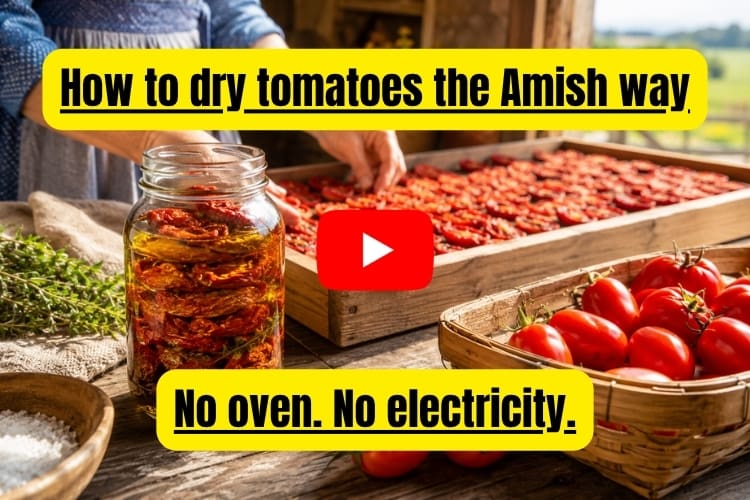
If you’d like to try oil-preserved sun-dried tomatoes yourself but aren’t sure where to start, the Amish have this down to an art.
A Quick Word About Pesto
Pesto deserves its own mention because so many of us make it every summer, and almost nobody talks about the risk.
That jar of basil pesto with a layer of olive oil poured on top is doing the exact same thing as a jar of garlic-in-oil. The oil creates the oxygen-free layer, the basil and garlic bring the water and the low acidity, and the fridge shelf is not enough to keep it safe past a few days.
The fix is simple, though. Portion your fresh pesto into ice cube trays or small jars and freeze it. Frozen pesto holds its flavor for months, and you can pull out just what you need for a bowl of pasta or a piece of grilled fish. That’s how I handle my whole basil harvest every year.
Always Come Back To This
There’s a lot to remember here, so here’s a simple summary you can screenshot or jot down and keep near your kitchen.
Safe on the pantry shelf – fully dried tomatoes in oil, and commercial products with vinegar or citric acid listed in the ingredients.
Safe in the fridge for 4 days – fresh garlic, herbs, mushrooms, or peppers in oil.
Safe in the freezer for months – any of the above, portioned into ice cube trays or small containers.
Never safe – any fresh vegetable, herb, or pesto left in oil at room temperature.
Final Thoughts
I know none of this is what you signed up to hear if you were looking for a pretty jar recipe. But food preservation is one of those areas where the pretty pictures online can lead you into real trouble, and I’d rather you know the truth than end up in a hospital.
Once you understand what’s really going on inside those jars, you can preserve your garden’s bounty in oil safely for years. You just work with the refrigerator, the freezer, and the dehydrator instead of the pantry shelf.
You may also like: 
Don’t Throw Away SPOILED Vegetables! Do THIS Instead!
OTC Meds In Your Backyard: 10 Plant Alternatives (Video)
The Black Soil That Doubles Your Harvest
What Happens if You “Water” Your Garden With Spoiled Milk
Don’t Throw Away Spoiled Milk! Do This Instead!