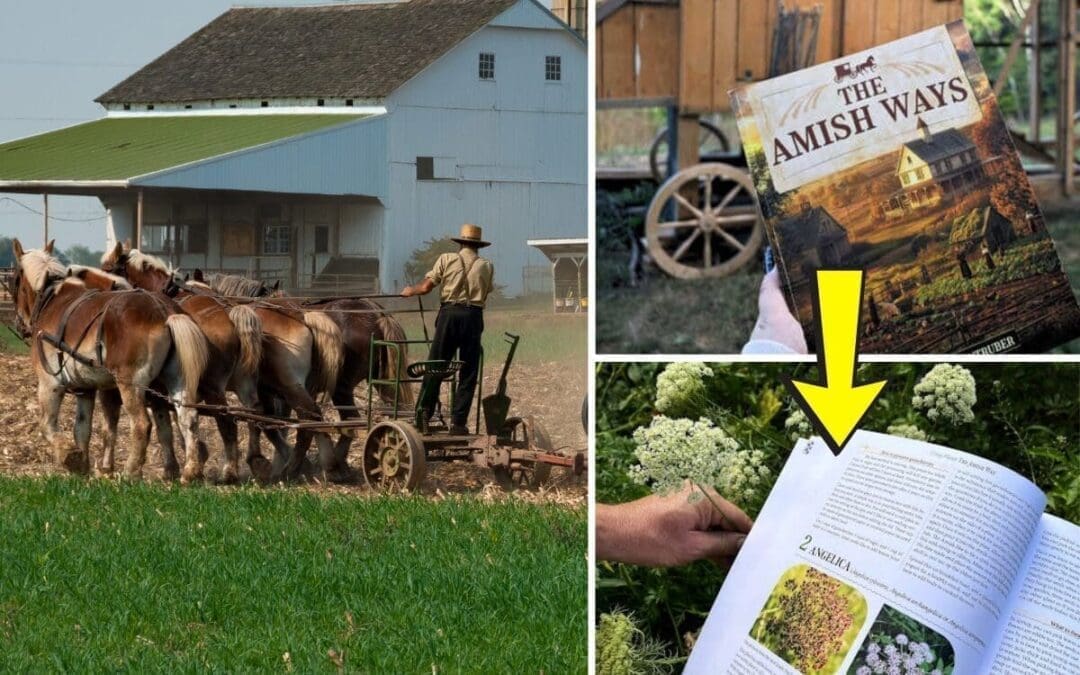
If anyone knows how to live a self-sufficient life, it’s the Amish. When a crisis hits, they barely even notice. And that’s because they’ve built a life that can run itself, even when the world as the rest of us know it begins to falls apart. This made me wonder what they know and the rest of us don’t.
That’s what first drew me to The Amish Ways. I saw someone talk about this book online, saying it was written by a former Amish. What caught my attention was that it didn’t only promise stories about the Amish, but also practical insights into the everyday skills and habits that make them resilient to a crisis.
First Impressions: Ordering and Arrival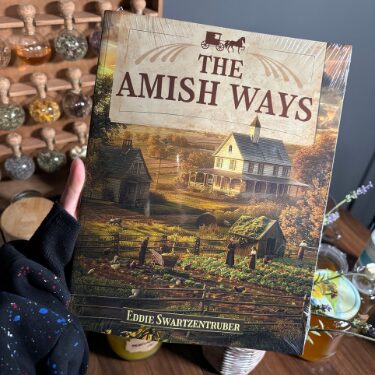
After placing my order, I received a confirmation e-mail. I chose to wait until the physical copy arrives, so I just downloaded my free bonuses and browsed through them until I got it.
It took about four days for the book to arrive, and it reached me in perfect condition.
The cover immediately drew me in. It has this warm, rustic feel. Just by looking at it, I got a sense of the calm, self-sufficient lifestyle the book promised to explore. Honestly, it’s the kind of cover that makes the book a perfect coffee table addition. Something you can leave out, have guests notice it, and spark conversations, especially if you already live on a homestead.
The author, Eddie Swartzentruber grew up in one of the strictest Old Order Amish communities. In his world, riding in a car was only allowed for emergencies, electricity and indoor plumbing didn’t exist, and lots of everyday items we take for granted (like bicycles!!) were off-limits for being too “worldly.”
What’s amazing is how Eddie saw his community adapt and invent solutions to make daily life work smoothly without modern conveniences. He learned first-hand the routines, skills, and inventions that keep an Amish household running efficiently, even in tough times. Eventually, Eddie left the community to explore the outside world, but the skills he grew up with never left him. It’s actually the first time an Amish-born person has pulled back the curtain on their way of life, and I don’t know if anything like it will happen again.
What the Book Covers
The book itself is cleverly structured around the way the Amish live their lives, from the ground up.
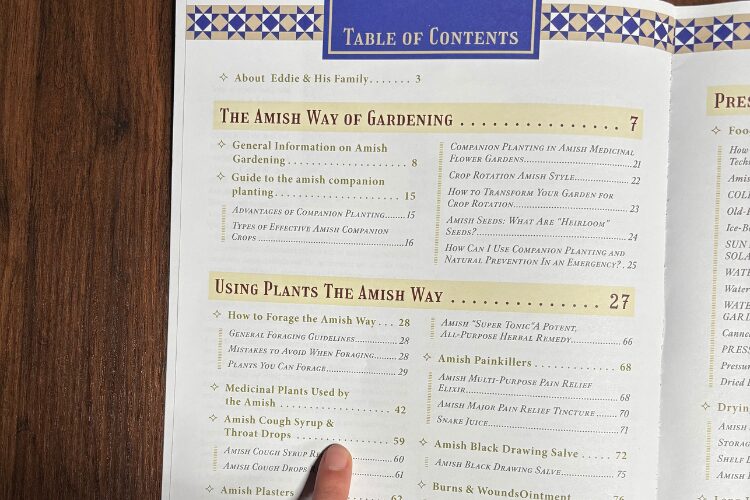
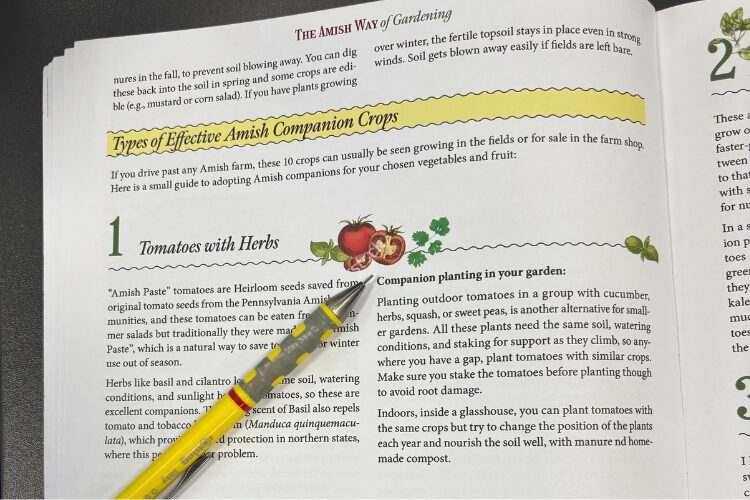
It starts with gardening, diving into the Amish approach to growing food. You get detailed advice on planting, crop rotation, soil care, and seasonal planning, all explained in a way that makes it easy to apply, even if you’ve never gardened before. The chapter also highlights the philosophy behind how the Amish view their land. By the end, you understand not just how to grow a garden, but how to build a self-sufficient system that produces year after year. I actually got this seed kit a couple of weeks before I came across the book, and Eddie really opened my eyes to all the different ways I could use those plants beyond what I’d originally planned (got some really great ideas even for the winter time!)
A Closer Look at the Gardening Chapter
To give you a better sense of what to expect, here are some of the specific techniques Eddie covers in this chapter:
The book walks you through a three-bed crop rotation system the Amish use to keep soil productive year after year without synthetic fertilizers. The basic principle is dividing your growing space into three sections — one for heavy feeders like corn and tomatoes, one for light feeders like carrots and onions, and one left for legumes like beans and peas that put nitrogen back into the soil. Each season, you rotate the crops one bed forward. It sounds simple, but the results compound over time in a way that most modern gardeners never experience.
Eddie also covers soil preparation the Amish way — layering composted manure, straw, and wood ash in specific ratios to build what he calls a “living soil” that holds moisture longer and requires far less watering. For anyone gardening in dry climates or trying to reduce water use, this section alone is worth the price of the book.
There is also a detailed seasonal planting calendar based on moon cycles — something the Amish take seriously and that modern agriculture largely ignores. Whether you believe in lunar gardening or not, the calendar doubles as a practical planting guide that tells you exactly what to plant and when, from early spring through late autumn.
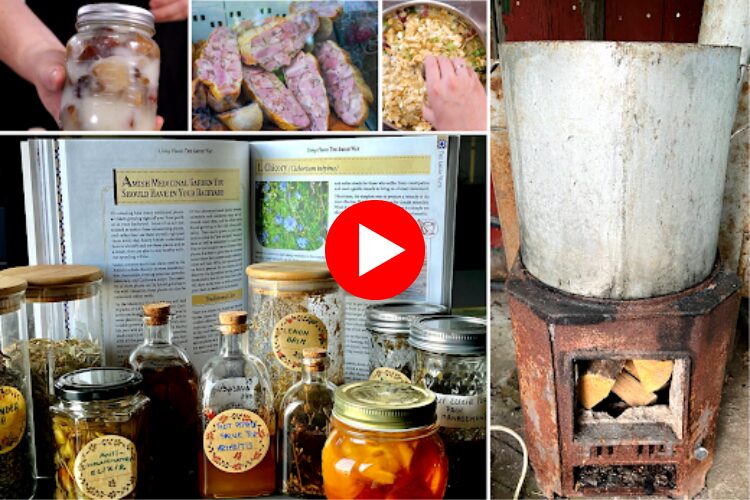
From there, it moves into using plants the Amish way, which is really fascinating. This chapter covers foraging, medicinal plants, and homemade remedies, with step-by-step recipes. You learn which herbs can help with everyday ailments, how to prepare tinctures, salves, and teas, and even which plants to keep on hand for emergencies. My favorite parts of this chapter were the ones that teach you how to make Amish amoxicillin, the salve for burns and wounds, and the multi-purpose pain relief elixir.
One Recipe Worth Highlighting: The Amish Drawing Salve
Since the medicinal plant chapter is one of the richest in the book, here is a taste of what Eddie shares — the Amish drawing salve, used for generations to treat infected wounds, splinters, insect bites, and skin irritations.
What you need:
- 1/4 cup of activated charcoal powder
- 2 tablespoons of raw honey
- 1 tablespoon of coconut oil
- 1 teaspoon of turmeric powder
- A few drops of tea tree oil
How to make it: Mix the activated charcoal and turmeric together in a small bowl. Add the coconut oil and raw honey and stir until the mixture reaches a thick, paste-like consistency. Add the tea tree oil last and mix well. Transfer to a small glass jar with a lid and store in a cool, dark place for up to three months.
How to use it: Apply a small amount directly to the affected area, cover with a clean cloth or bandage, and leave for four to six hours or overnight. The charcoal draws out toxins, the honey prevents bacterial growth, the turmeric reduces inflammation, and the tea tree oil acts as a natural antiseptic.
This is just one of dozens of remedies in this chapter. The “Amish amoxicillin” recipe is even more involved and uses ingredients most people already have in their kitchen — but I will leave that one for you to discover in the book itself.

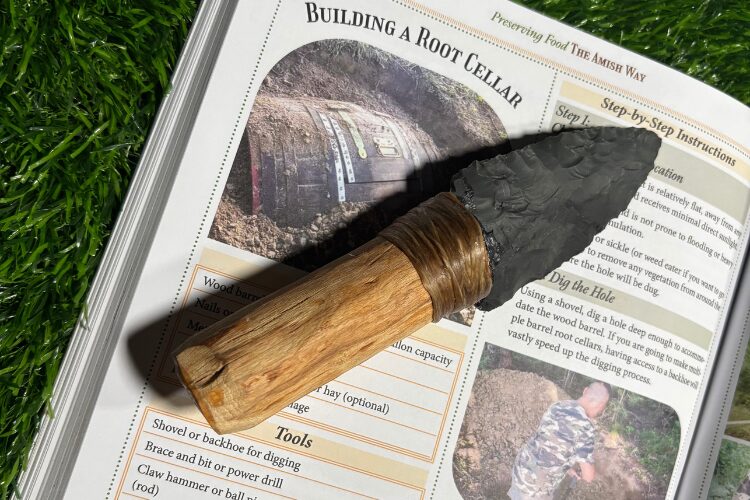
Next is food preservation the Amish way. This chapter covers canning, fermenting, drying, and many other traditional methods that don’t rely on modern appliances. It explains why these methods were developed, how they help a household stay prepared, and how to adapt them to your own kitchen with minimal investment. It even teaches you how to make your own completely off-grid Amish fridge!
The fourth chapter is a deep dive into the Amish off-grid living. It covers home projects like heating, water systems, and traditional lighting sources, showing how the Amish have built homes that can run smoothly even when modern conveniences aren’t available.
What the Off-Grid Chapter Actually Covers
Since “off-grid living” can mean very different things to different people, here is a breakdown of the specific projects and systems Eddie walks you through in this chapter:
- Water systems: Eddie covers gravity-fed water collection from rooftops and natural sources, including how to build a simple filtration system using sand, gravel, and charcoal layers. He also explains how the Amish manage water storage for dry seasons using underground cisterns — and how to adapt this to a modern homestead without digging up your entire yard.
- Heating: The chapter covers wood-burning rocket mass heaters, which use significantly less wood than a conventional fireplace and produce far more heat. Eddie explains how to build a basic version using materials available at most hardware stores, with a rough cost estimate and a realistic timeline for a first-time builder.
- Lighting: Beyond candles, Eddie covers Amish oil lamp systems — which types of oil burn cleanest, how to build a simple wick trimmer, and how to store fuel safely for long periods. There is also a section on solar lantern setups that even the more progressive Amish communities have begun adopting.
- The off-grid fridge: This was the section most people ask about. Eddie walks through building an evaporative cooling chest — sometimes called a zeer pot — using two containers, sand, and water. It requires no electricity and can keep produce cool for days even in warm weather. The instructions are clear enough that most people could build one in an afternoon.
Finally, the book wraps up with using money the way the Amish do. It might seem simple, but it’s surprisingly rich. You get insight into their financial habits, resource management, and prioritizing household needs, all without accumulating debt. There are actionable lessons for anyone who wants to save more, spend less, or just be more intentional with resources.
What I Liked and What I’d Do Differently
Before I received the book, I was a little worried it would feel dry, like a history textbook or a guide full of rules and lists you’d need a dictionary to get through. But Eddie writes in a clear, down-to-earth style that makes every chapter easy to follow, even when it comes to technical DIY projects. The book is also full of clear, colorful pictures that show exactly how things are done. As someone who’s always wanted to try these practices on my homestead, I found it incredibly useful to have both the step-by-step instructions and the visual examples.
If I had to nitpick, I’d say some sections left me wishing for a bit more detail. The gardening tips are great, but a few extra measurements or notes for different seasons would’ve been helpful. Still, it’s easy enough to adapt, and it didn’t really take away from the book. After all, if the author had added every single specific, the book would probably never end!
Who This Book Is For — and Who It Is Not
Before you decide whether to pick this up, it helps to know if it is the right fit for you.
This book is for you if:
- You live on a homestead or have a yard and want to become more self-sufficient
- You are interested in food preservation, natural remedies, or off-grid systems but do not know where to start
- You want practical, hands-on skills rather than theory or history
- You are preparing for emergencies and want to reduce dependence on supply chains
- You enjoy learning traditional methods that have been proven over generations
This book is probably not for you if:
- You live in an apartment or have no outdoor space — several core chapters require land or at minimum a garden
- You are looking for a deep historical or cultural study of Amish life — this is a practical skills guide, not an anthropology book
- You want highly precise measurements and scientific breakdowns — Eddie writes accessibly, which means some instructions require you to adapt and experiment
- You already have advanced homesteading experience — the content is beginner to intermediate, and experienced practitioners may find some sections too introductory
The sweet spot reader for this book is someone who is serious about self-sufficiency but still building their foundation — someone who wants to learn real skills, not just read about them.
Final Thoughts
All in all, The Amish Ways is a rare glimpse into a lifestyle built on self-sufficiency, practicality, and resilience. Eddie Swartzentruber does a fantastic job making these methods accessible, whether you want to try gardening, foraging, preserving food, or setting up simple off-grid systems. It leaves you inspired and ready to put these ideas into practice on your own homestead. Even with a few small gaps, it’s a practical guide that’s worth having on your shelf.
If you’re interested in checking it out, I noticed that the 76% off discount I used when I bought the book is available again, so now’s a good time to grab a copy for yourself. I honestly don’t have any idea how much longer it’s going to be available.
Click the button below to get your copy and start learning the Amish ways of self-sufficiency today!

P.S.: I found out that Eddie also created The Amish Ways Academy, which is full of video lessons and practical projects that perfectly complement the book. It’s been fun to see these practices in action and experiment with them on my own. Honestly, it makes me wish I had more time in my day just to try everything! If you’re curious about truly living self-sufficiently, it’s a great way to explore the Amish way of life even further.
You may also like:
12 Amish Farming Secrets Every Homesteader Should Know
The “Secret” Amish Device That Turns Air Into Water (Video)
Canning Myths Debunked By The Amish
Secret Amish Medical Care Hacks They Don’t Want You to Know
Homemade Amish Apple Butter Recipe With 12+ Months Shelf Life
5 Amish Gardening Techniques You Should Know