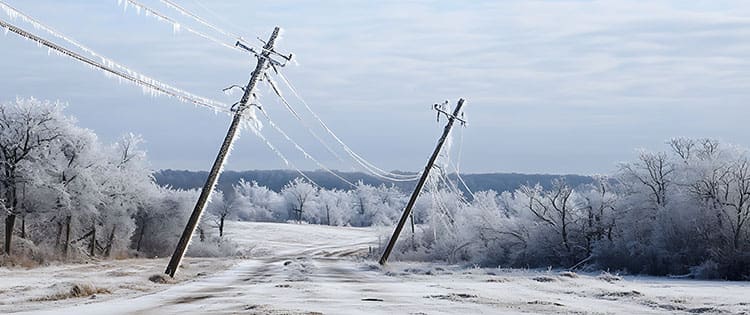
Power outages are all too common and are usually the result of weather. High winds take down trees that take down power lines and ice storms can be worse. In fact, in Quebec, Canada an ice storm took out power for months across parts of Canada in Winter. So let’s see how to survive a winter power outage.
Typically, power outages are measured in hours and sometimes days. It’s when outages stretch into weeks and months that things become serious, especially in winter.
Most of us are dependent on electricity to power our furnaces and heating options from baseboard heat to something as basic as a water heater. When an outage goes beyond hours in winter, things get serious fairly quickly.
Before getting into specific solutions, it helps to think about winter outage preparedness in three distinct phases, because the actions available to you change dramatically depending on whether you are preparing in advance, responding in the first hours, or managing an outage that has stretched into days and weeks.
Phase One: Before the Outage
This is where most of your leverage lives. Everything that requires purchasing equipment, installing hardware, building supply stockpiles, or learning skills belongs here. A wood stove cannot be installed after the power fails. A generator sitting in a store does you no good when roads are iced over. Medication supplies need weeks to build up. If you are reading this during a period of normal grid function, you are in Phase One right now, and the decisions you make in this phase determine how well every other phase goes.
Phase Two: The First 48 Hours
The first two days of a winter outage are a transition window. Your refrigerated food is still safe. Your home still holds residual heat. Roads may still be passable. This is the time to execute your pre-planned response: consolidate living space, set up your backup heat source, account for all household members, charge devices from your power bank or vehicle, check on neighbors, monitor weather forecasts, and make the decision early about whether to shelter in place or evacuate. Decisions made in hour two are almost always better than decisions made in hour 36 when you are cold and exhausted.
Phase Three: Extended Outage Beyond 48 Hours
Once an outage exceeds two days in winter, you have moved into genuine survival territory. Pipes are at risk. Food management becomes critical. Fuel and resource conservation requires discipline. The psychological weight of uncertainty starts affecting decision-making. This phase requires a different mindset: systematic management of heat, water, food, and communication rather than improvised responses to each new problem as it appears. Everything in this article is most relevant to this phase, which is why the preparation done in Phase One is so important.
What to Have Before the Outage: A Two-Week Supply Checklist
Emergency management agencies including FEMA recommend preparing for a minimum of two weeks of self-sufficiency for extended disaster scenarios. The following checklist covers the core categories. Quantities are given per person unless otherwise noted.
- Water: Store a minimum of one gallon per person per day, two gallons is more realistic for comfort. For a household of four people over two weeks, that is 56 to 112 gallons. Store in food-grade sealed containers away from direct sunlight and in a location that will not freeze. Rotate annually.
- Also store: a quality water filter such as a Sawyer Squeeze or Lifestraw, a large stock pot for boiling, and iodine or chlorine tablets as a backup purification method.
- Food: Two weeks of shelf-stable food per person with no refrigeration required. Prioritize calorie density and minimal preparation requirements. Core items include canned beans, canned fish and meat, nut butters, nuts and seeds, dried fruit, oats, rice, pasta, crackers, olive oil, honey, salt, and instant coffee or tea. Include a manual can opener. Do not forget comfort foods and items specific to children or elderly members of your household.
- Heat: A primary backup heat source and enough fuel for two weeks of operation. A secondary backup in case the primary fails. Enough firewood or pellets based on your stove’s consumption rate calculated for your climate’s coldest realistic temperatures.
- Power and light: At least one battery-powered or hand-crank weather radio with extra batteries. LED flashlights with extra batteries for each household member. At least one headlamp per adult for hands-free work. A large capacity power bank fully charged and rotated every three to six months. A solar panel charger if budget allows.
- Safety: At least one battery-powered carbon monoxide detector and one battery-powered smoke detector, both tested and with fresh batteries before winter. A fire extinguisher rated ABC, inspected annually.
- Medical: A two-week supply of all prescription medications, reviewed and rotated regularly to maintain freshness. A comprehensive first aid kit. Over-the-counter medications covering pain and fever, antihistamines, antidiarrheals, and any condition-specific items for your household. A two-week supply of any specialized medical supplies such as glucose test strips, wound dressings, or contact lens supplies.
- Tools and supplies: A manual can opener. Waterproof matches and lighters. Duct tape and heavy plastic sheeting for emergency insulation of broken windows or drafty areas. A basic hand tool set. Extra blankets and sleeping bags rated for low temperatures, one per person. Warm clothing layers including wool or synthetic base layers, insulating mid-layers, and waterproof outer layers. Work gloves. A snow shovel accessible from inside the house.
- Documents and cash: Copies of essential documents including insurance cards, identification, and prescription information in a waterproof bag. Cash in small bills, since card readers and ATMs do not work without power.
Winter Power Outage: The Worse Scenario
A winter power outage typically results from severe weather conditions like ice storms, snow, or high winds, which can damage power lines and infrastructure.
However, an EMP, whether caused by a solar flare or a nuclear detonation, could also cause widespread power outages by disrupting or damaging electrical grids and electronics. In the case of a winter EMP, the situation could worsen if the grid is already vulnerable to weather-related issues.
In either case, both scenarios would require you to have a backup plan. That’s why I wish more people knew about this EMP Cloth. This cloth was developed after years of extensive research by top U.S. scientists and it provides 98% military-grade protection against electromagnetic waves. You can cover everything in it – as long as you’ve got enough of them – from credit cards, a laptop, a fridge, and even your car!
The thing is, the EMP Cloth isn’t always available. They don’t restock them that often because they’re pretty hard to produce, so it took YEARS for me to finally get my hands on it. I found a reliable website to order it from, as I wanted to make sure the material was the right one. I recommend you secure your own cloth from here. It’s a rare find and not many people get to own it, which is a shame.
Alternative Heating Solutions 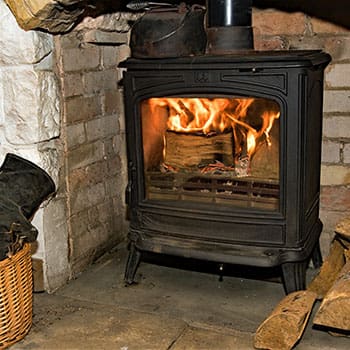
A fireplace makes things easier but if they’re not installed during the initial construction of a home they’re tough to put in after the fact. But there are alternatives.
There are a couple of ways to approach this. One is to install an alternative heat source like a wood-fired stove or pellet stove to provide heat in winter. That requires some investment and labor and also assumes an available source of firewood, if not a stockpile of wood pellets.
Other possibilities are more short term from small, alcohol-fueled heaters to heaters powered by natural gas. Natural gas is not always dependent on electricity for delivery to a home. The pressure in the natural gas lines delivers the gas without power. We’ll cover the possibilities and dangers as we go.
Related: Do This To Your Wood Stove Before Winter
Carbon Monoxide: The Danger Nobody Talks About Enough
Before covering any specific heating option, this needs to be said clearly: carbon monoxide poisoning is the leading cause of death during winter power outages in the United States. It kills more people than the cold does. It kills quickly, it is invisible and odorless, and it kills people who thought they were being careful.
Carbon monoxide is produced by any combustion process: propane heaters, gas stoves, generators, charcoal grills, alcohol burners, wood fires, and gasoline engines all produce it. In a well-ventilated outdoor environment this is not a problem. In a sealed or partially sealed indoor space during a winter storm, concentrations can reach lethal levels within minutes to hours depending on the source and the space.
The symptoms of carbon monoxide poisoning, headache, dizziness, nausea, confusion, and drowsiness, are easy to dismiss as tiredness or illness, particularly when you are already stressed and physically depleted from managing a cold home. People fall asleep and do not wake up. This is not a dramatic scenario. It happens every single winter to people who brought a generator into a garage, ran a charcoal grill in a basement, or left a propane heater running in a closed room overnight.
The rules are non-negotiable:
Generators must run outside, period. Not in the garage. Not in the basement with the door open. Not in the breezeway. Outside, at least 20 feet from any window, door, or vent. This applies regardless of how cold it is.
Any combustion heater, including propane heaters rated for indoor use, requires ventilation. A cracked window is the minimum. These heaters are safer than a generator indoors but they still produce carbon monoxide and should never run unattended or overnight in a sleeping space.
Never use a gas oven or stove as a primary heat source for extended periods. Brief use to cook a meal is different from leaving it running for hours.
Never bring a charcoal or propane grill indoors under any circumstances.
Every home should have at least one battery-powered carbon monoxide detector, ideally one on each occupied floor. If yours requires grid power or a plugin, replace it now. Check the batteries before winter. Place one near any sleeping area. If the detector alarms, get everyone outside immediately and call 911 from outdoors. Do not go back inside to retrieve belongings.
This is not optional equipment. A carbon monoxide detector costs less than a dinner out and it will be the most important piece of equipment you own if you ever use combustion heat indoors during an outage.
Common Mistakes During a Winter Power Outage
If you have a gas stove or oven it’s tempting to use that to provide temporary heat. That can work, but be careful. You don’t want to do this over days and weeks. If you want to use your gas stove or oven to provide some heat -cook a turkey or something else on the stove. You’ll get some heat but it won’t heat the whole house and as time goes on the fumes from natural gas will accumulate in your home.
Proactive Solutions
The most proactive solution is to install a wood-burning stove or pellet stove as a backup for your heating. If you live in an area where winter power outages are common or have surprised you -it’s worth thinking about.
Stove Types 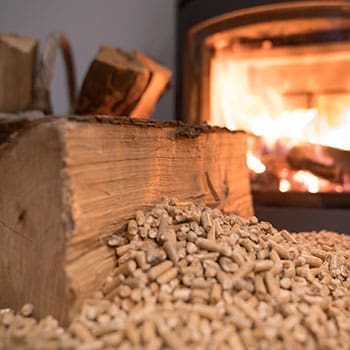
Pellet stoves typically rely on some level of electricity to operate but there are gravity-fed pellet stoves that you light by hand that keep the house warm even without electricity.
A fireplace seems like an obvious solution, but the unfortunate fact is that most of the heat from a fireplace simply goes up the chimney. Consider a fireplace insert that will radiate more heat into your home. Some have blowers (usually powered by electricity) but you can find hand-cranked blowers on fireplace inserts and you can always think about a solar generator or other power source like solar panels to keep the blower going on a fireplace insert.
Generators: Power, Safety, and Realistic Expectations
Generators are among the most useful pieces of equipment you can own for an extended winter outage and among the most dangerous if used incorrectly. Every winter, people die from generator-related carbon monoxide poisoning. Understanding both the capability and the rules for safe operation is not optional.
What generators can actually power: A portable generator’s output is measured in watts. A small 2,000-watt generator can run lights, phone chargers, a television, and a small space heater but not much else simultaneously. A mid-size 5,000-watt generator can run a refrigerator, several lights, a small electric heater, and device chargers. A large 10,000-watt generator can power most of a house’s essential circuits if connected through a properly installed transfer switch. Before purchasing a generator, calculate your household’s actual wattage requirements for essential items: a refrigerator uses approximately 150 to 400 watts running, a space heater uses 750 to 1,500 watts, a well pump uses 750 to 1,000 watts, and lights use 10 to 60 watts each depending on type.
Fuel planning: A 5,000-watt generator running at half load consumes approximately half a gallon of gasoline per hour. Running 8 hours a day for a week requires roughly 28 gallons of stored fuel. Gasoline degrades in storage within 30 to 60 days without a fuel stabilizer additive. If you store gasoline for emergency use, rotate it regularly and treat it with stabilizer. Propane stores indefinitely and propane generators are a more practical choice for long-term emergency fuel storage, though propane becomes less vaporized in extremely cold temperatures which can affect generator starting.
Non-negotiable safety rules:
- Never run a generator indoors, in an attached garage, in a breezeway, under an awning, or within 20 feet of any window, door, or vent opening. Carbon monoxide from a generator can reach lethal indoor concentrations within minutes. This rule has no exceptions regardless of weather conditions.
- Never refuel a running generator. Allow it to cool before adding fuel, as spilled gasoline on hot engine parts ignites.
- Connect appliances to a generator using properly rated extension cords. Undersized cords overheat and create fire risk. Use only cords rated for outdoor use with a wattage rating equal to or greater than the load you are running.
- The safest way to power household circuits from a generator is through a transfer switch installed by a licensed electrician, which physically disconnects your home from the utility grid before connecting the generator. Without a transfer switch, back-feeding power into utility lines creates electrocution risk for utility workers restoring power. Never plug a generator into a wall outlet.
Fuel-powered generator limitations: The most significant practical limitation of a fuel-powered generator for an extended outage is fuel availability. After a regional disaster, gas stations lose power, run dry, or have lines measured in hours. Plan your fuel supply for the worst-case duration you are preparing for before the outage begins, not after.
Solar Generators
A solar generator is essentially a large power bank recharged by solar panels. The size of the generators varies but if the sun is shining (even through the clouds) the solar panels will recharge the solar generator.
That can give you more than enough power to keep a pellet stove working or even enough power for small space heaters.
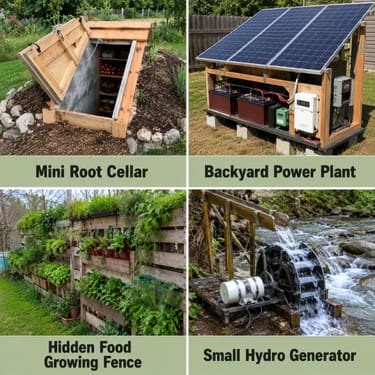
Modular Backyard Power Plant – Best Solution for a Winter Power Outage
If you want a reliable 24/7 power source in your own backyard that allows you to outlive any long-term blackout, this is my top choice. This guide shows you the exact steps you have to take to make your own power plant.
This Backyard Power Plant can run two chest freezers, a moderate-sized refrigerator, lights, satellite TV, satellite Internet, a desktop computer, a water pump, and many, many other items.
Isolate and Consolidate 
When heat in a home is compromised because of a winter power outage it makes sense to isolate and consolidate living spaces for available heat. Close doors to unused rooms, and hang a blanket or sheet to upstairs spaces that get less heat from a wood stove or pellet stove. Isolate yourself in a living space for the short term so that you can keep warm.
Furnaces and other whole house heating systems manage to get the heat everywhere. During a power outage, you’re generating heat in specific and small spaces. Keep the spaces small and specific. If you all have to sleep on a mattress next to the wood stove for the night -that might be a good idea.
In fact, many primitive people shared a bed as a family to share their body heat under covers. In a survival situation, it still works and is worth thinking about.
When Cold Becomes Medically Dangerous: Temperature Thresholds to Know
Understanding the specific temperatures at which cold becomes dangerous helps you make better decisions about when to keep trying to maintain your current situation and when evacuation becomes necessary.
For healthy adults, indoor temperatures below 55 degrees Fahrenheit begin to carry meaningful risk, particularly during sleep when the body is less active and metabolic heat production drops. The risk is manageable with adequate layering, sleeping bags rated for low temperatures, and shared body heat. Below 50 degrees, the situation is more serious and the physical effort required to stay warm through layering alone increases significantly. Below 40 degrees indoors, healthy adults are at genuine hypothermia risk without specialized cold-weather sleeping equipment or a functioning heat source.
For infants and young children the thresholds are significantly higher. Infants cannot shiver and cannot regulate their body temperature effectively. An indoor temperature below 65 degrees is already a risk condition for an infant. If you have an infant in your household and your indoor temperature is falling and you cannot maintain it above that threshold, evacuation is the right decision regardless of conditions outside.
For elderly adults, particularly those over 75, those with cardiovascular conditions, those with diabetes, and those on medications that affect temperature regulation including beta-blockers, diuretics, and some antidepressants, the danger zone begins earlier and progresses faster than for healthy middle-aged adults. Do not use your own comfort level as a proxy for an elderly person’s safety. Check on them directly and frequently.
Know the early warning signs of hypothermia so you can recognize it before it becomes severe. Early hypothermia presents as intense shivering, confusion or difficulty thinking clearly, slurred speech, loss of coordination, and unusual fatigue or drowsiness. If shivering suddenly stops in someone who was shivering heavily, that is a medical emergency indicating the body has lost the ability to generate heat. Severe hypothermia requires emergency medical treatment, not more blankets.
The decision to evacuate should be made early and based on temperature trends, not on current conditions. If your indoor temperature is falling by several degrees per hour and you have no functional heat source, calculate where you will be in six hours and make the evacuation decision based on that projection, not on how you feel right now.
Other Small Space Solutions 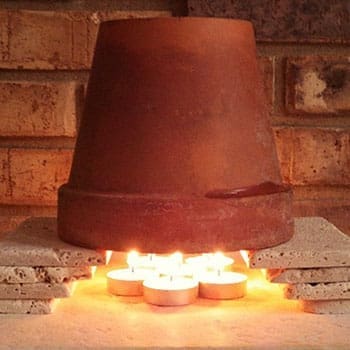
Propane heaters work well for heating small spaces in an emergency, but they require ventilation. It’s tricky to heat a space while keeping a window cracked open to let in cold air for ventilation.
An alcohol-wicking heater is a simple solution: take an empty paint can, stuff it in toilet paper, pour in rubbing alcohol, and light it. It burns steadily for hours, but again, ventilation is recommended. If you have a fireplace (but no firewood), it can provide both heat and ventilation.
Related: DIY Solar Water Heaters To Cut Down On Energy Bills
You can also use tea candles under a large, inverted flower pot. The pot helps direct heat into the room without worrying too much about ventilation, as candles don’t release harmful fumes.
If all else fails, pile on blankets. They’re a simple but effective way to stay warm, day or night.
Dress warmly, indoors or out. You might only need to wear a hood inside for a couple of days, but it makes a big difference.
If you have a solar generator or batteries with an inverter, an electric blanket can keep you warm through the night. You can lie on it and let the heat drift up while you use regular blankets for extra warmth.
What About Water, Cooking, Cleaning, Sanitation and Refrigeration and Freezing During a Winter Power Outage
When it’s cold and the powers out we want to stay warm. But we still have to eat, drink water, flush a toilet, and then there’s all that stuff in the refrigerator and freezer. The good news is that winter makes it a little easier to keep foods cold or frozen. The garage is a good place to start or a cooler on the deck or back porch for frozen foods.
Water: How Much You Need and How to Get It
Water is the resource most people underestimate during a winter outage because snow seems like an obvious and unlimited supply. The reality is more complicated than that.
How much water you actually need: The standard emergency planning figure is one gallon per person per day for drinking and basic sanitation. That is the bare minimum for survival. For comfortable function including cooking, basic hygiene, and flushing toilets, plan for two to three gallons per person per day. A family of four needs a minimum of 28 gallons for a one-week outage, and 56 gallons to be genuinely comfortable. Store water before an outage in sealed food-grade containers in a location that will not freeze. Filled bathtubs and large pots are useful emergency reserves in the first hours after power fails if you have advance warning.
Collecting and purifying snow and ice: Snow and ice are legitimate water sources but require more work than most people expect. It takes roughly ten inches of compacted snow to produce one inch of water, meaning you need a large volume of snow to produce a useful amount of water. Never eat snow directly to hydrate: your body expends significant energy warming it and you can accelerate heat loss in cold conditions. Collect snow in large pots, bring it inside to a warm area or melt it over your heat source, and allow it to melt completely before purifying.
Do not assume snow or ice is clean simply because it looks clean. Urban and suburban snow absorbs air pollutants, road chemicals, and roof runoff. Ice from gutters contains whatever has accumulated on your roof. Treat all collected snow and ice water by filtering through a clean cloth or commercial filter first to remove particulates, then boiling for at least one minute at elevations below 6,500 feet, or three minutes at higher elevations. Boiling kills biological contaminants but does not remove chemical pollutants from road salt or industrial sources. If you are in an area with significant road treatment or industrial activity, use collected snow for flushing and cleaning rather than drinking if you have any alternative.
Protecting your pipes: As your home cools during an extended outage, uninsulated pipes become vulnerable to freezing. Pipes most at risk are those running through exterior walls, in uninsulated crawl spaces or attics, and in unheated garages. At outdoor temperatures below 20 degrees Fahrenheit, exposed or poorly insulated pipes can freeze within hours. Wrap vulnerable pipes with foam insulation, towels, or newspaper secured with tape as a short-term measure. Keep cabinet doors under sinks on exterior walls open to allow whatever ambient warmth is available to reach the pipes. Allow a thin trickle of water to run from faucets on exterior walls when temperatures are critically low, as moving water is harder to freeze than still water.
If an extended outage makes a full pipe freeze likely and you have no way to maintain adequate indoor temperature, the right decision is to drain the water system entirely before it freezes on its own, which is a managed process you control, rather than letting pipes freeze and potentially burst, which creates water damage on top of your other problems. To drain the system, shut off the main water supply valve, then open every faucet in the house starting from the highest floor and working down, and flush every toilet until the tank is empty.
Toilet flushing without power: Most toilets flush by gravity and do not require electricity, only a full tank. If your water supply has failed, you can flush a toilet by pouring approximately two gallons of water directly into the bowl quickly enough to trigger the flush mechanism. This is more water-efficient than filling the tank and works reliably. Use water from melted snow for this purpose and reserve your cleaner water for drinking and cooking.
Food: What to Eat and in What Order
Cold weather changes your caloric needs significantly. Your body burns more calories maintaining core temperature in a cold environment, and physical activity involved in managing an outage, collecting fuel, moving between spaces, shoveling snow for water, adds to that demand. Plan for higher caloric intake during a winter outage than you would normally consume, and prioritize foods that are calorie-dense, require little or no cooking, and can be prepared with minimal water.
The consumption order for food safety:
Eat refrigerated foods first. An unopened refrigerator maintains safe temperatures below 40 degrees Fahrenheit for approximately four hours after power loss. If your indoor or outdoor temperature is already below 40 degrees, your refrigerator contents are effectively in a natural cold environment and will last significantly longer. Use outdoor temperatures strategically: place perishables in a cooler on the porch or in an unheated garage where temperatures hover between 32 and 40 degrees. Do not allow food to sit in the temperature danger zone between 40 and 140 degrees for more than two hours total.
Move to cooler-stored items next. A cooler packed tightly with food and ice or frozen items from your freezer extends safe cold storage significantly. Resist the urge to open it repeatedly. Each opening raises the interior temperature and shortens safe storage time.
A full, unopened freezer maintains safe temperatures for 24 to 48 hours after power loss. A half-full freezer holds safe temperatures for approximately 24 hours. Pack freezer items tightly together before an anticipated outage since the mass helps maintain temperature. Move frozen items to a cooler with ice or to your outdoor cold storage if the outage extends toward those time limits.
Move to shelf-stable emergency stores last. These should form the core of your long-term outage food supply: grains, legumes, canned goods, dried meat, nuts, nut butters, dried fruit, and other non-perishables. Prioritize foods that are high in fat and carbohydrates for caloric density, that require minimal cooking time and fuel, and that do not require significant water to prepare.
Cold-weather caloric priorities: In a genuinely cold indoor environment with limited heat, your body’s increased metabolic demand for warmth means calorie restriction is the wrong strategy. Prioritize calorie-dense foods: nut butters, nuts and seeds, dried meats, hard cheeses, crackers, oats, rice, and canned beans with fat added from cooking oil or butter. A person doing light activity in a cold environment may need 2,500 to 3,500 calories per day to maintain body temperature comfortably. Children and elderly adults with lower metabolic rates need proportionally less, but should not be allowed to go cold and hungry simultaneously.
Stockpile Medications Before a Winter Power Outage
Being ready means preparing to handle things on your own for several weeks.
If you take regular medications, always keep a supply for several weeks. Over-the-counter meds are just as important. You don’t want to run out of children’s Advil in the middle of a winter blackout! Since antibiotics are typically not available over the counter, here is an ingenious way to stockpile antibiotics without a prescription while you still can.
Special Considerations for Vulnerable Household Members
A winter power outage that is manageable for a healthy adult becomes a medical emergency much faster for certain members of a household. Planning specifically for these vulnerabilities before an outage is far more effective than improvising solutions when you are already cold and stressed.
- Infants and young children: Infants are physiologically incapable of regulating their own body temperature. They cannot shiver effectively, they have a high surface-area-to-volume ratio that accelerates heat loss, and they cannot communicate that they are dangerously cold. An infant who has become very quiet and still in a cold environment may already be hypothermic, not simply sleeping. Keep infants in direct skin-to-skin contact with an adult under shared covers in a cold situation, which transfers body heat directly and is more effective than wrapping them in layers alone. If indoor temperatures cannot be maintained above 65 degrees Fahrenheit and you have an infant, evacuation is the right decision. Do not wait to see how the infant handles it.
Young children also need more calories relative to their body weight than adults when cold, and they may not communicate hunger or cold clearly. Feed them frequently and check their extremities for warmth regularly.
- Elderly adults: People over 70, and particularly those over 80, have reduced metabolic rates that generate less internal heat, thinner skin that loses heat faster, and frequently take medications that impair temperature regulation. Many also have conditions including heart disease, diabetes, and poor circulation that make cold stress more dangerous. An elderly person may not feel as cold as they are, since temperature perception also diminishes with age. Do not rely on their self-report alone. Check their skin temperature directly and monitor for confusion or unusual drowsiness, which can indicate early hypothermia even in a person who does not feel cold.
- People on electrically dependent medical equipment: If anyone in your household uses a CPAP or BiPAP machine, a home oxygen concentrator, an electrically powered wheelchair, a home dialysis machine, an insulin pump with electrical charging requirements, or any other powered medical device, identify the backup power requirements for each device before an outage and confirm you have the means to meet them. Many of these devices can run on battery packs or inverters connected to a charged vehicle battery for short periods. Contact the device manufacturer for emergency power guidance specific to your equipment. As noted above, register with your utility company’s medical priority list and contact your local emergency management office so they are aware of your household’s medical needs.
- Pets: Domestic pets, particularly short-haired breeds, small dogs, cats, and animals not acclimated to outdoor temperatures, are vulnerable to cold in the same extended outage that affects their owners. Keep pets indoors and in the consolidated warm space with the rest of the household. Do not leave animals in unheated outbuildings or vehicles expecting them to manage. Hypothermia signs in pets include shivering, lethargy, muscle stiffness, and unresponsiveness. Livestock in outdoor structures need access to unfrozen water, which may require manual thawing of water sources multiple times per day in extreme cold, and adequate hay to maintain body heat through digestion.
Bail Out
If the power just won’t come back on you could always bail out or bug out. This could be as simple as going to another family member’s home that still has power, a local hotel that still has the lights on, or a local emergency shelter set up for the power outage.
It all depends on the temperatures and the health and age of the people in your family or group. The biggest challenge is the unknown duration of any power outage. We all remember those times after an outage when the lights suddenly came back on. What we dread is a time when that never happens and we have to wonder what we’re going to do.
Staying Informed and Signaling for Help
One of the most psychologically difficult aspects of an extended power outage is information isolation. Without grid power you lose internet access, television, and potentially cell service if local towers lose backup power. Knowing what is happening, how widespread the outage is, when restoration is expected, and whether conditions are worsening is critical for making good decisions about whether to stay or go.
A battery-powered or hand-crank NOAA weather radio is the single most important communications tool for a grid-down situation. These radios receive continuous broadcasts from the National Weather Service and can receive emergency alerts even when all other communications have failed. They require no internet connection, no cell towers, and no grid power. Keep one in your emergency supplies with fresh batteries and test it before you need it.
Cell phones remain functional as long as cell towers have backup power, which varies by carrier and location but typically ranges from four to eight hours without grid power on battery backup alone, and longer if the tower has a generator. Conserve your phone battery aggressively: reduce screen brightness to minimum, disable all apps running in the background, enable airplane mode when not actively using the phone and check periodically for messages, and avoid video or streaming entirely. A fully charged external power bank can extend a phone’s usable life by several full charge cycles. Charge power banks and devices immediately when you lose power, before the outage begins to affect you, not hours later when your phone is already at 30 percent.
If you or someone in your household has a medical condition or uses electrically dependent medical equipment, contact your utility company before an outage if possible and register for their medical priority restoration list. Many utilities maintain these lists and prioritize restoring power to registered medical-need addresses. Contact your local emergency management office for the same reason. This registration can be done at any time and costs nothing.
If you reach a point where you cannot safely self-rescue, where you are injured, medically compromised, or unable to move through winter conditions, know how to signal for help. In a vehicle, stay with it, run the engine periodically for heat if fuel allows and you have verified the exhaust pipe is clear of snow, and make the vehicle as visible as possible with bright cloth or reflective material. At home, a visible signal in an upstairs window, a bright flag or cloth at your door, or a pattern of three of anything, three horn blasts, three whistle blasts, three flashes of light, is the internationally recognized distress signal.
You may also like: 
Amish Powerless Tools For A World Without Power
How to Draw Electricity from Dead Batteries (Video)
Veggies You Should Actually Grow in Winter
Survival Items That Will Skyrocket in Price in 2025
I Tried Eating Like a Pioneer for 100 Days and This Is What Happened
Power Outage: How To Survive The First 7 Days