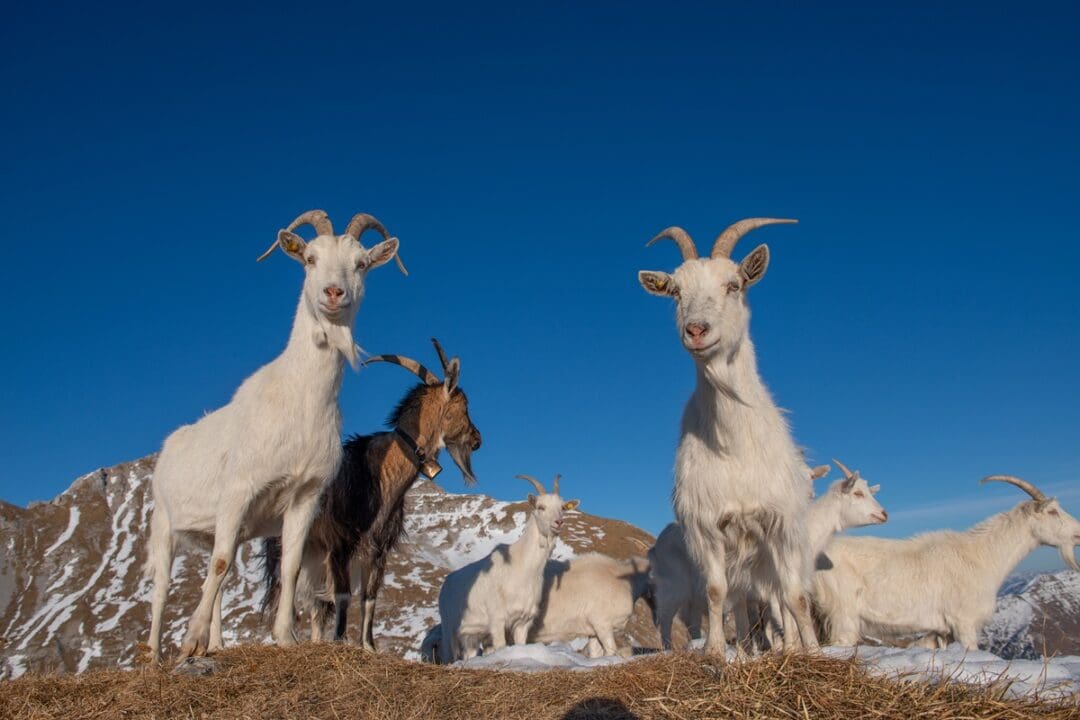
Goats are one of the most practical animals a homesteader can raise. They are efficient converters of rough forage, they produce milk, meat, and fiber, and they do it all on far less land and feed than cattle. But walk into any livestock auction or browse any farm store forum and you will quickly discover that not all goats are the same. The breed you choose determines what you can realistically expect from your herd, and picking the wrong one for your goals is an expensive lesson.
This guide breaks down the most common and most useful goat breeds by purpose, covering what each breed is actually good at, what the downsides are, and what kind of homestead setup each one fits best. Whether you are after a steady supply of fresh milk, a reliable meat animal, a fiber producer, or a dual-purpose breed that can do more than one job, there is a breed on this list worth knowing.
According to the American Dairy Goat Association (ADGA), goat milk production in the United States has grown consistently over the past two decades as more small-scale producers enter the market. That trend mirrors what is happening on homesteads across the country: more people are keeping goats, and more of them want to know which breed actually delivers.
Dairy Goat Breeds
If your primary goal is milk, you want a breed selected and developed specifically for high production and good milk composition. Dairy goats are the most common type kept on small homesteads because the milk is versatile. You can drink it fresh, make cheese, yogurt, kefir, butter, and soap, and the excess can go toward raising meat animals or feeding other livestock.
 Nubian
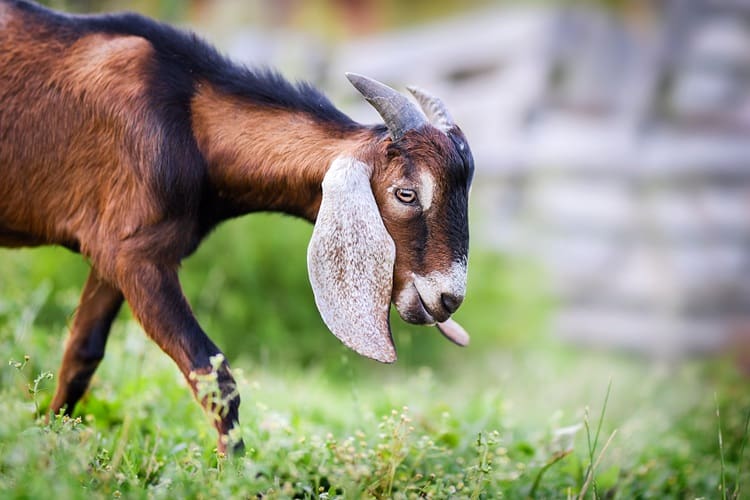
The Nubian is probably the most recognizable dairy goat in North America. It has long, pendulous ears, a Roman nose, and a loud, persistent voice that new goat owners often underestimate. Nubians are a large breed, with does typically weighing between 135 and 175 pounds. They produce less milk by volume than some other dairy breeds, but what they do produce has a higher butterfat content, often between 4 and 5 percent, which makes it excellent for cheese and soap making.
Nubians are vocal, social, and demanding of attention. They are not a breed for someone who wants a low-maintenance animal. They also do not tolerate cold climates as well as some other breeds because of their short, fine coat and floppy ears. In warm and temperate climates, they thrive.
- Average milk production: 1 to 2 gallons per day at peak
- Butterfat content: 4 to 5 percent
- Best for: Artisan cheese, soap making, warm-climate homesteads
- Pros: Rich milk, good temperament when well handled, dual-purpose potential for meat
- Cons: Very vocal, heat and cold sensitive, lower volume than Alpine or Saanen
 Alpine
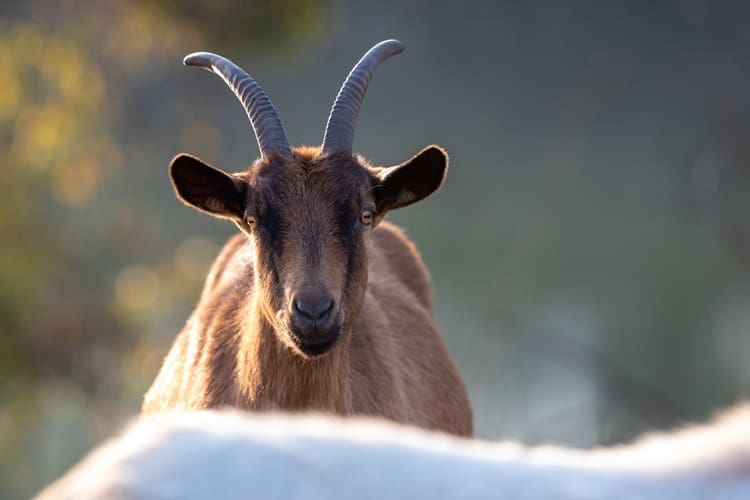
The Alpine is a Swiss dairy breed built for production. Does average between 125 and 150 pounds and are known for their consistent, high-volume milk output. A well-managed Alpine doe can produce between 1.5 and 2.5 gallons per day through a long lactation period. The milk has a moderate butterfat content, around 3 to 4 percent, which is lower than a Nubian but still useful for most dairy applications.
Alpines are adaptable to a wide range of climates and are known for being hardy, active, and curious. They are better suited for cooler climates than Nubians and handle pasture conditions well. On the downside, they can be dominant and bossy in a mixed herd, which requires attention to herd dynamics and fencing.
- Average milk production: 1.5 to 2.5 gallons per day at peak
- Butterfat content: 3 to 4 percent
- Best for: High-volume fluid milk, cool and temperate climates
- Pros: High production, hardy, long lactation, adaptable
- Cons: Can be aggressive, require sturdy fencing, strong-willed temperament
 Saanen
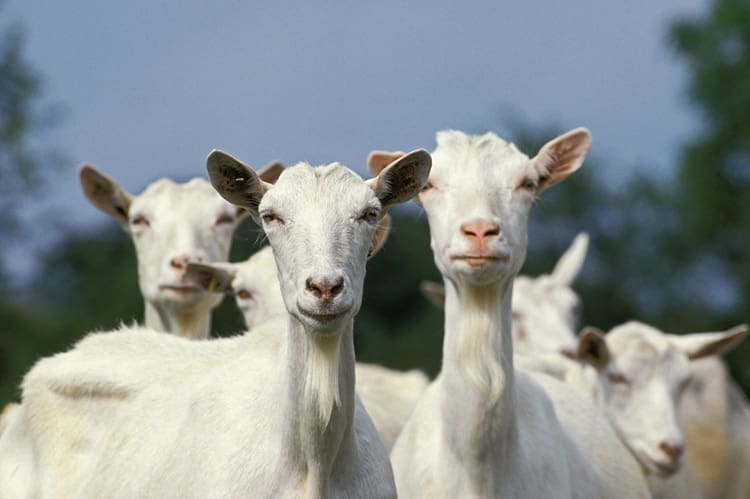
The Saanen is the Holstein of the dairy goat world: large, white, and built for sheer volume. Does can weigh up to 150 pounds and are consistently among the top milk producers across all goat breeds. The University of California Cooperative Extension notes that Saanens regularly lead in milk production trials, with averages of 2 to 3 gallons per day possible under good management. Butterfat is on the lower end, around 2.5 to 3.5 percent, which makes their milk better suited to fluid consumption than to rich cheese making.
Saanens are calm and docile compared to Alpines and Nubians, which makes them a good choice for beginners who want a manageable animal. They are sensitive to heat and sunlight due to their light pigmentation and do best in cooler climates or where shade is available. They do not browse as aggressively as other breeds and tend to prefer higher-quality forage.
- Average milk production: 2 to 3 gallons per day at peak
- Butterfat content: 2.5 to 3.5 percent
- Best for: Maximum milk volume, fluid consumption, beginner-friendly homesteads
- Pros: High production, calm disposition, easy to handle
- Cons: Sensitive to sun and heat, lower butterfat, more selective about forage quality
 LaMancha
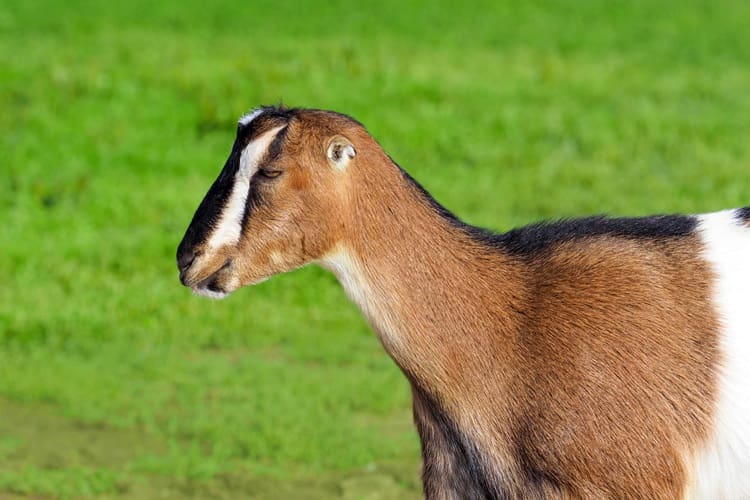
The LaMancha is an American breed distinguished by its extremely short, nearly invisible ears, sometimes described as gopher ears or elf ears. It was developed in the United States from Spanish goat stock and is recognized for both high milk production and a calm, steady temperament. Does weigh between 130 and 150 pounds and produce milk with butterfat content comparable to the Nubian, averaging around 3.5 to 4 percent.
LaManchas are often recommended for beginners specifically because of their calm nature. They handle confinement reasonably well, produce reliably, and tend to be less dramatic than Nubians or Alpines. The ear structure does not affect function but can make identification of ear infections trickier for new owners.
- Average milk production: 1 to 2 gallons per day at peak
- Butterfat content: 3.5 to 4 percent
- Best for: Beginner dairy homesteads, families with children
- Pros: Calm temperament, good butterfat, hardy, adapts well to different climates
- Cons: Lower volume than Alpine or Saanen, ear structure requires specific health monitoring
Meat Goat Breeds
Meat goats are selected for fast growth, muscular conformation, and efficient feed conversion. They are not primarily milked and are raised primarily for chevon, which is the term for goat meat. Goat meat is the most widely consumed red meat in the world, according to the Food and Agriculture Organization of the United Nations, and demand is growing in the United States driven by immigrant populations and a broader interest in alternative proteins.
 Boer
Boer
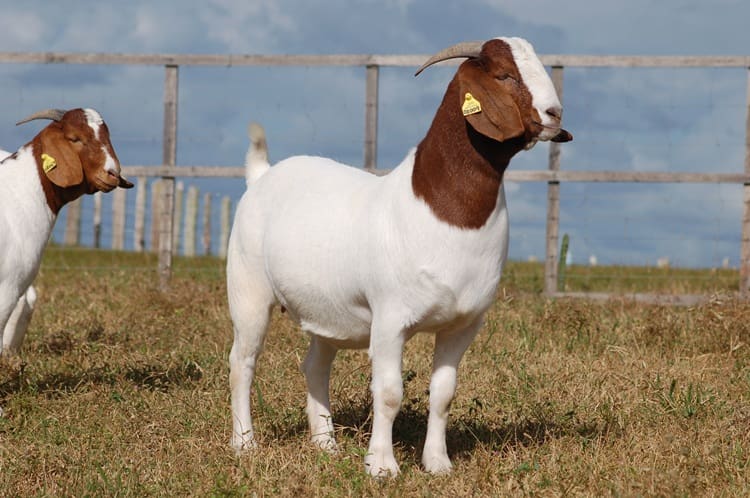
The Boer goat is the dominant meat breed in the United States and for good reason. Developed in South Africa, Boers are large, fast-growing, and heavily muscled. Bucks can reach 200 to 350 pounds, and does typically range from 150 to 225 pounds. They have a distinctive white body with a brown or red head and a Roman nose. Kids grow rapidly, reaching market weight between 60 and 90 days of age under good management.
Boers are adapted to browse-heavy environments and handle rough forage well. They are not high-maintenance animals in terms of feed quality, but they do need good parasite management, as they are susceptible to internal parasites under humid conditions. Boers are generally docile and manageable.
- Average daily gain: 0.4 to 0.5 pounds per day under good nutrition
- Best for: Meat production, crossbreeding programs, pasture-based systems
- Pros: Fast growth, heavy muscling, calm temperament, good foragers
- Cons: Susceptible to internal parasites, not suited for high-rainfall humid climates without management, limited milk for kids
 Kiko
Kiko
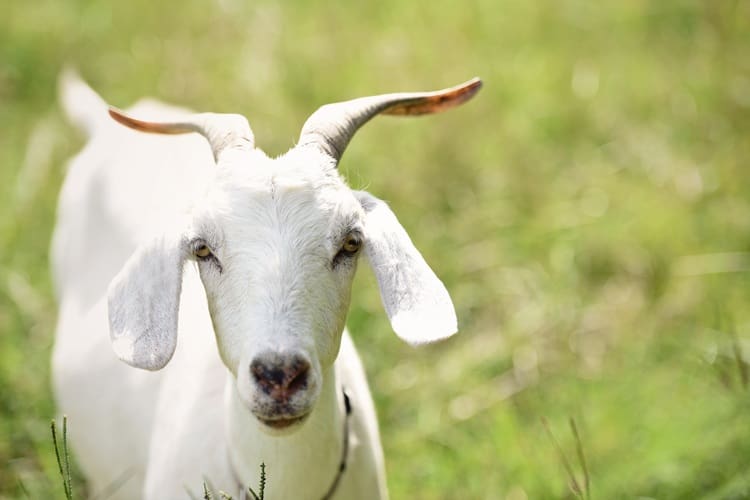
The Kiko was developed in New Zealand specifically for hardiness, parasite resistance, and maternal ability. It has become increasingly popular in the American South and Southeast, where internal parasites are a serious management challenge for other breeds. Kikos do not have the extreme muscling of a Boer, but they grow well on minimal inputs, kid easily, and require significantly less intervention than most commercial meat breeds.
Research from Langston University’s E (Kika) de la Garza American Institute for Goat Research, which is one of the leading goat research institutions in the country, has documented the Kiko’s superior performance under low-input, parasite-heavy conditions. For homesteaders who want a low-maintenance meat goat that can largely take care of itself, the Kiko is worth serious consideration.
- Best for: Low-input homesteads, humid climates, minimal intervention management
- Pros: Parasite-resistant, hardy, excellent maternal instincts, good foragers
- Cons: Less muscle mass than Boer, harder to source in some regions, less consistent conformation
 Spanish Goat
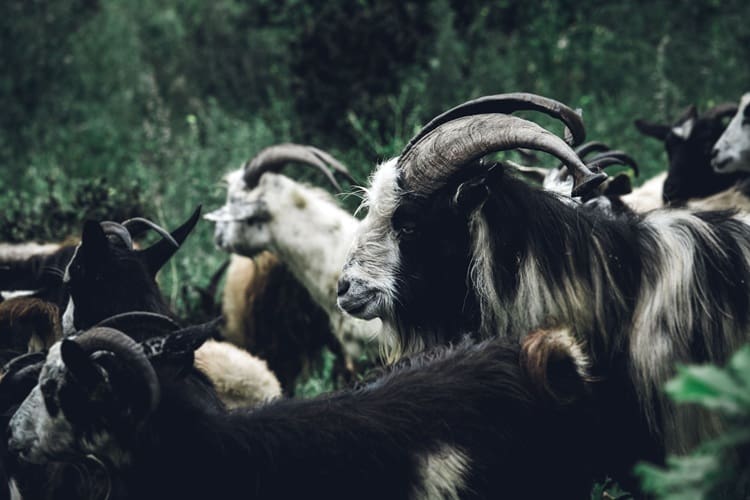
Spanish goats are feral-derived animals with centuries of natural selection behind them. They are lean, rangy, and extraordinarily hardy. They are not the top performers in a feedlot comparison with Boers, but on poor-quality pasture with minimal inputs, they hold their own and then some. They are excellent browsers, highly parasite-tolerant, and kid easily with minimal human intervention.
For a self-sufficient homestead operating on low inputs and rough terrain, the Spanish goat is a serious option. They are also used heavily in crossbreeding programs to introduce hardiness into Boer-based herds.
- Best for: Rough terrain, low-input brush management, crossbreeding
- Pros: Extremely hardy, parasite-tolerant, low-maintenance, efficient on poor forage
- Cons: Slower growth than Boer, less muscling, harder to source purebred stock
Fiber Goat Breeds
Fiber goats are raised primarily for their fleece, which is harvested and processed into yarn, textiles, and other products. They represent a smaller share of the homestead goat market but are extremely well-suited for homesteaders who spin, weave, or sell raw fleece.
 Angora
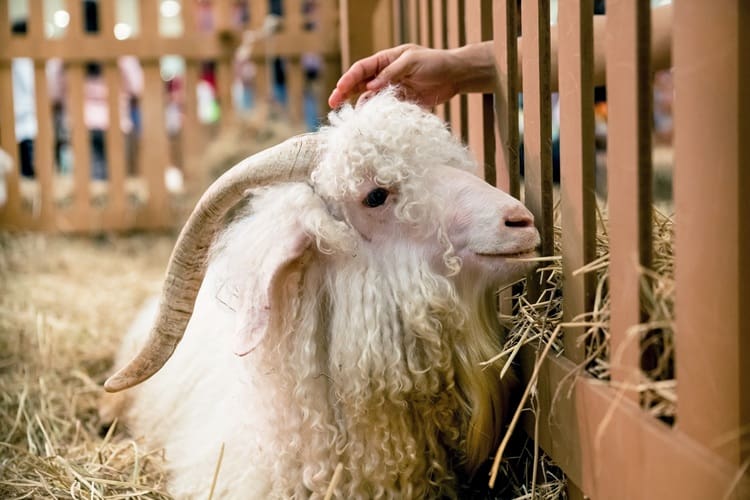
The Angora is the source of mohair, one of the most valuable natural fibers in the world. A single Angora goat is typically shorn twice per year and can produce between 5 and 10 pounds of fleece annually. Mohair is prized for its luster, durability, and softness and commands strong prices in both raw and processed form.
Angoras are not the most self-sufficient animals. They require more careful nutrition than meat or dairy breeds, are sensitive to cold and wet conditions immediately after shearing, and are more vulnerable to predators due to their fleece. They also do not thrive under the same browse-heavy conditions that suit Boers or Kikos. But for a homesteader with quality pasture, a market for fiber, and the ability to provide basic shelter, they are a productive and rewarding animal to keep.
- Fleece yield: 5 to 10 pounds per year, shorn twice annually
- Best for: Fiber production, homesteaders with spinning or weaving operations
- Pros: High-value fleece, manageable size, gentle temperament
- Cons: Sensitive to weather, higher nutritional requirements, vulnerable post-shearing
Cashmere-Producing Breeds
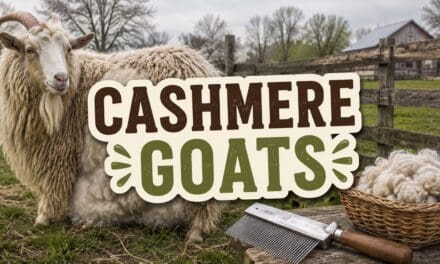
Cashmere is not a breed but a fiber type produced by the undercoat of several goat breeds, most notably feral and landrace breeds including Spanish goats and certain Australian and New Zealand lines. Cashmere production on a small homestead is possible but requires specific harvesting techniques and access to a processing or buying market. For most homesteaders, Angoras represent a more straightforward entry into fiber production, but cashmere is worth noting for those in the right markets.
Dual-Purpose Breeds
Dual-purpose goats offer reasonable performance in more than one category, which appeals to homesteaders who want flexibility and do not want to maintain separate herds for different functions.
 Nigerian Dwarf
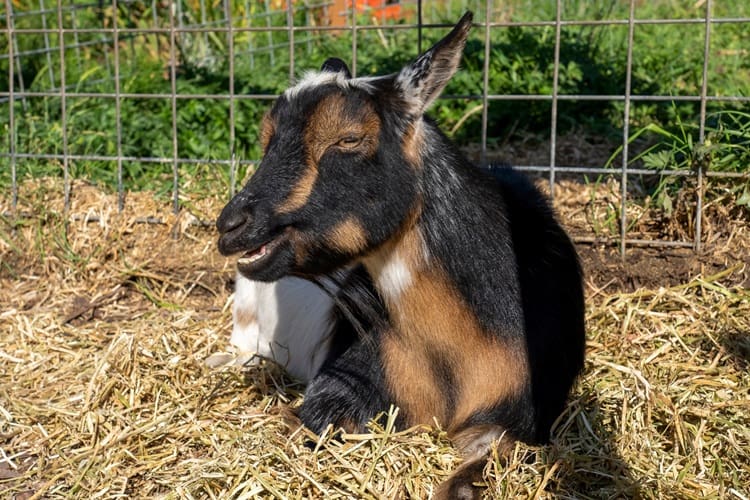
The Nigerian Dwarf is a small dairy breed that punches well above its weight. Does weigh only 50 to 75 pounds but produce milk with exceptionally high butterfat, often between 6 and 10 percent, the highest of any dairy breed. That makes their milk ideal for artisan cheese, soap making, and confections. They also produce enough milk relative to their size to make them genuinely productive for a small household.
Because of their small size, Nigerian Dwarfs are popular on urban and suburban homesteads where space is limited. They require less feed, less fencing height, and less space than full-size breeds. The National Pygmy Goat Association and the Nigerian Dwarf Goat Association both document the breed’s suitability for small-scale keeping. They are social, friendly, and breed year-round unlike most goats, which allows for more flexible milk production scheduling.
- Average milk production: 1 to 2 quarts per day
- Butterfat content: 6 to 10 percent
- Best for: Small homesteads, urban and suburban properties, artisan dairy
- Pros: Small size, extremely rich milk, year-round breeding, friendly temperament
- Cons: Lower total milk volume, kids are small and less practical for meat, require sturdy small-gauge fencing
 Oberhasli
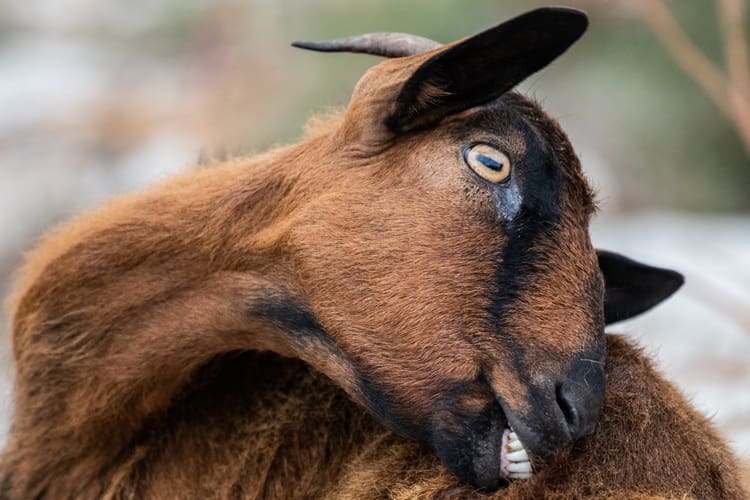
The Oberhasli is a Swiss mountain breed that offers solid milk production with a calm, manageable temperament. Does weigh around 120 to 150 pounds and produce milk averaging 3 to 3.5 percent butterfat with a clean, pleasant flavor. The breed is less common than Alpine or Saanen in the United States but has a dedicated following among homesteaders who appreciate a quieter, less demanding dairy animal.
- Average milk production: 1 to 1.5 gallons per day
- Butterfat content: 3 to 3.5 percent
- Best for: Homesteaders wanting a calmer dairy experience, cooler climates
- Pros: Gentle disposition, clean milk flavor, attractive appearance, cold-hardy
- Cons: Less common, lower production ceiling than Alpine or Saanen
How to Choose the Right Goat Breed for Your Homestead
With all the options above, the question becomes: which breed actually fits your situation? The answer depends on four practical factors: your primary purpose, your climate, your land and infrastructure, and your time and experience level.
Define Your Primary Purpose First
Do not try to do everything with one breed, at least not at first. If you want milk, start with a dairy breed. If you want meat, start with a meat breed. A Boer doe will not satisfy your dairy needs, and a Saanen buck will not efficiently produce marketable kids. Get clear on your primary goal, then consider whether secondary traits matter.
Match the Breed to Your Climate
Nubians and Boers handle warm climates well. Saanens and Alpines do better in cool and temperate climates. Kikos and Spanish goats handle humidity and parasite pressure better than most. If you are in the Gulf Coast states, the Deep South, or any high-humidity region, parasite resistance should be near the top of your criteria list. Internal parasites are the leading cause of death in goats in those regions.
Be Honest About Your Infrastructure
Full-size dairy goats need solid fencing, dedicated milking areas, and reliable refrigeration or processing capacity. Nigerian Dwarfs need smaller-gauge fencing because they can slip through standard field fence. Angoras need shelter and protection from cold after shearing. Meat goats on rough terrain can get by with simpler infrastructure. Assess what you already have before committing to a breed that requires significant investment to support.
Start with One or Two Animals
New goat keepers consistently overestimate how easy goats are and underestimate how much they learn in the first year. The Penn State Extension recommends starting with two animals minimum since goats are herd animals and do not do well alone, but keeping the initial herd small until you understand the basics of nutrition, parasite management, hoof care, and breeding cycles. Starting small with the right breed is far better than starting large with the wrong one.
Final Thoughts
There is no universal best goat breed. There is only the best breed for your goals, your land, your climate, and your capacity to manage them. The homesteader who wants fresh milk every morning and makes cheese on weekends needs a different animal than the one who wants to run a small meat operation on brushy pasture with minimal daily involvement.
Do the research, talk to experienced producers in your region, and if possible, visit a working farm before you commit. Goats will test your fencing, your patience, and your infrastructure in ways no other livestock quite matches. Choose the right breed for your situation and they will also reward you with food, fiber, and productivity for years.
You may also like:

The Succulent Red Plant That Tastes Like Bacon (Video)
7 Low-Maintenance Animals That Thrive on Small Homesteads (Best Choices for Limited Space)
The Best Guardian Animals for Your Homestead (Besides Dogs)
8 Miniature Farm Animals You Should Raise