Once your summer garden is gone, you might pretty much pack everything away and wait for the next year. But you’re left with a patch of good soil sitting empty for months.
Does it really have to?
The answer is no.
You can still grow food when the weather turns cold. A few vegetables will sit through freezing nights and some will give you fresh leaves long before the spring garden starts.
What’s even more important is that you don’t even need a greenhouse to do that.
So why not get another use out of a bed you’ve already dug and fed?
Here are seven crops I’d make room for, and how to grow them properly to have a nice winter harvest.
Can You Really Grow Vegetables in Winter?
Yes, especially if you live somewhere with fairly mild winters. In parts of the South and along the West Coast, a simple cover can help you keep growing greens through much of the season. You may even be able to sow another round of seeds in winter.
If you live where the ground stays frozen and temperatures drop far below zero, little outdoor hoops aren’t going to work as well. You may need a bigger unheated greenhouse, extra covers, or simply to settle for harvesting plants you grew earlier.
Here’s the part I don’t want you to miss: winter vegetables usually need a head start. Plant them in late summer or fall so they have plenty of leaves or full-sized roots before the darkest weeks arrive. They’ll grow very slowly during those short days, then pick up again toward spring.
No Greenhouse? Try This Simple Setup
You can buy a greenhouse, but I wouldn’t spend that kind of money just to see whether winter gardening suits you. Try covering one bed first.
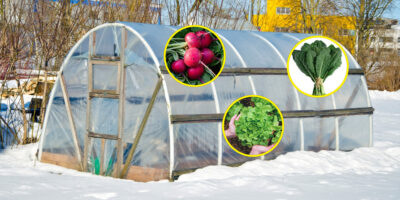
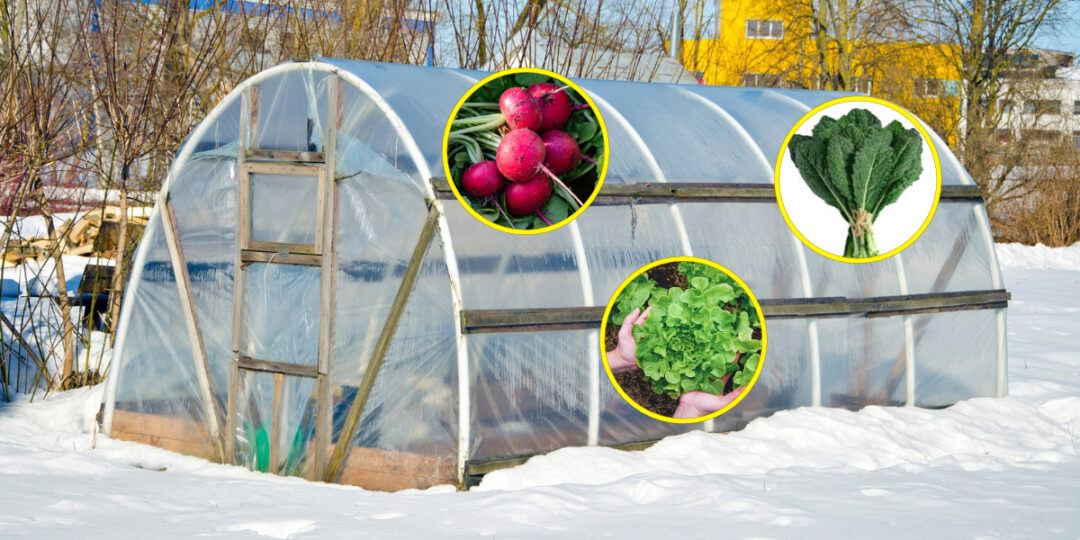
Bend sturdy wire hoops across the bed, spacing them about three feet apart. Push the ends roughly six inches into the soil, pull garden row-cover fabric over the hoops, and anchor the edges with soil or weights. That’s one simple setup you can start with.
For more protection, some gardeners add clear greenhouse plastic above a separate layer of fabric. Just remember to open the ends on sunny days. Plastic can trap too much heat and moisture, even when the air outside feels cold.
Also, when it’s snowing, make sure you give the hoops enough support to keep heavy snow from flattening them.
But if you don’t want to deal with all of these problems, there’s a better method you can use.
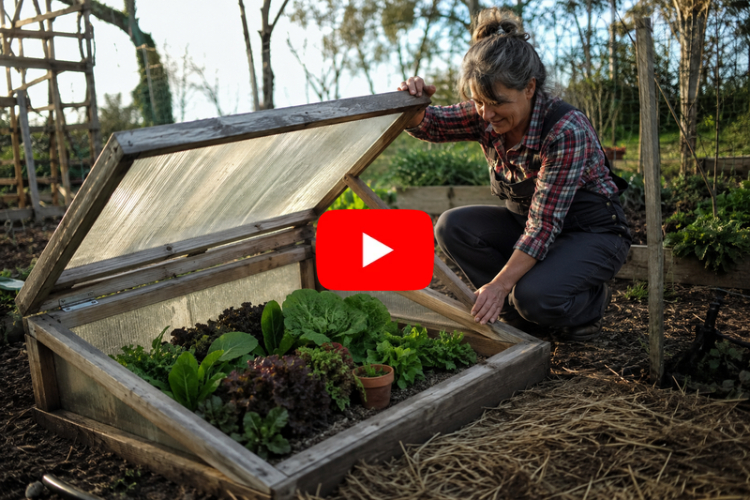
You can make some great and sturdy hoop houses from things you might already have in your backyard and garage. All you need to do is build them from old windows. But what makes windows so great for this purpose? Well, because a hoop house made from them offers your plants all that they need to grow healthy and strong.
First of all, old windows offer incredible protection against the cold. You simply can’t compare glass to plastic.
Second, glass lets in plenty of sunlight, even during winter. And here’s why that matters. On sunny days, the light coming through the windows warms the soil and air inside, giving your vegetables a better place to grow when it’s cold outside.
Third, unlike thin plastic sheeting, old windows are rigid, so you don’t have to worry about the covering flapping around in the wind.
See? All of the problems are gone and your plants get a better chance at surviving winter.
Ah, and I forgot ventilation is much less complicated for this setup compared to the plastic sheet that you need to pull up each time there’s a little more sun.
Click here and see how to build the window frame hoop house.
Spinach
If I had room for only one winter green, spinach would be high on my list. You can pick a handful for scrambled eggs, soup, or a quick side dish without cutting down the whole plant.
Sow seeds about 1/2 inch deep and thin plants to around 3 inches apart. In a colder state, aim for at least four or five good leaves before hard freezes arrive. Bloomsdale is one variety worth trying.
Here’s something interesting. Spinach grown in cold weather often tastes sweeter. And if it stops making new leaves in December, leave it alone under the cover. It may start growing again in late winter, giving you fresh greens before you plant the spring garden.
Kale
Kale takes up more room than spinach, but it really offers you more when you need a handful of greens for a pot of beans or a skillet supper.
If you want to plant it now, set transplants roughly 12 to 18 inches apart, and get them growing well before winter. Red Russian and other cold-hardy types are worth looking at. Pick the older outer leaves, leaving the small center leaves to keep growing. Frost often improves the flavor.
Kathryn Reed at Eastborn Gardens in the Mid-Atlantic tried it. She sowed kale on October 2, later than she’d planned. Her small plants survived with a frost cover, but she expected the real harvest in March.
This is something you should keep in mind. A late planting may give you an early spring harvest and this is a great advantage to have when you’re self-sufficient.
Mâche (Corn Salad)
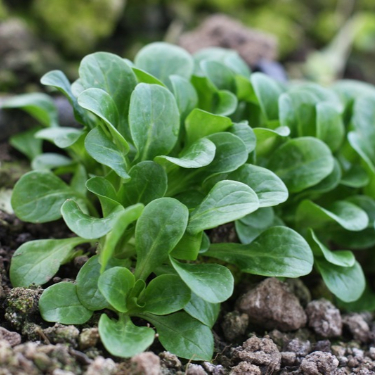
This one deserves more attention. Mâche grows in little clusters of soft, mild leaves, and you can tuck it into a corner of a covered bed. It makes a nice change from store-bought lettuce.
Sow seeds 1/4 inch deep and thin plants to about 4 inches apart. Utah State University says mâche germinates best in cool soil, roughly 41°F to 68°F. You’ll want four or five true leaves on the plants before winter for a better chance of survival.
A Virginia gardener writing at Tending My Garden picked enough mâche ahead of two January storms to eat for ten days. She had switched to stronger wire tunnels after earlier trouble with snow.
I like both lessons: grow something that handles the cold, and don’t forget about the cover holding it up.
Carrots
Carrots are incredible and you know why? You can keep them in the ground all winter and pull them out just when you need them. The ground they grow in is basically offering you free storage space.
The trick is to plant early enough for the carrots to reach eating size before deep cold. Sow into loose soil, thin to two or three inches apart, and check the maturity time on your seed packet.
Once the roots are ready, cover the bed with a thick layer of clean straw or shredded leaves. A hoop cover can give extra protection.
This is how I keep my second round of carrots and it is a method that works incredibly well. I keep my first harvest in the cellar inside a sand bucket, and the rest sits comfortably in the cold ground.
A lot of people manage to grow a lot of carrots, pull them from the ground, and then half of them rot in the fridge…
And that’s exactly what I am trying to get away from. I want to eat the carrots I grew, not spend money on store-bought ones.
I add carrots to most of my recipes, from soups to stews and I love to roast them along with meat. They are a staple in my kitchen, and I have a feeling you use lots of carrots too.
And this is a good habit because carrots are one of the healthiest vegetables out there. They are full of fiber, which allows you to have regular bowel movements and they are also packed with vitamin A. This vitamin helps your eyes remain sharp. This is why I started to eat even more carrots once I got older. If they can help me keep my vision healthier, why not take advantage of this?
When I was a little girl, my mother used to give me a raw carrot to eat every time she was cooking. Now I realise that my mom knew what she was doing. Good bless her heart!
Nowadays, one of my favorite recipes is the Three Sisters Soup. This soup was a staple for natives from the upstate New York area and southern Canada. I like this recipe so much because it blends the perfect amount of fiber and nutrients while being a savoury treat that works incredibly well, especially when the weather gets a little bit colder.
I make this soup every fall and winter and for me it is probably one of the best things I did for my gut. All that fiber keeps my bowels moving and I’ve never felt better in my life.
If you want to give it a try, I’ll leave you a link for where you can find the recipe: Three Sisters Soup Recipe here.
Tatsoi
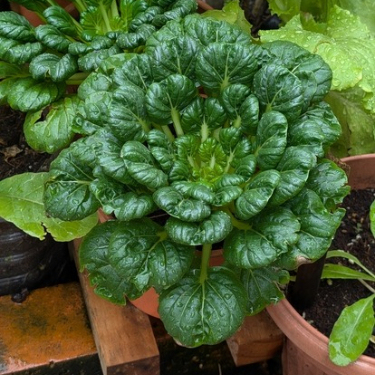
Have you tried tatsoi? It looks a bit like a flat circle of dark green, spoon-shaped leaves. The young leaves are good in salads, and the larger ones cook quickly in soups or stir-fries.
This is one I’d grow under hoops because it likes cool weather and doesn’t need much room. Start it in late summer or fall where winters are cold. In a milder area, you may have time for another planting under cover.
Pick a few outside leaves while leaving the center intact. And check the bed for moisture. Tatsoi grows close to the ground, so damp, poorly ventilated tunnels can give you trouble. When spring warms up, harvest before it sends up flower stalks.
Arugula
Arugula gives you something that plain lettuce doesn’t: a more interesting taste that fits well in a lot of dishes.
Sow it in cool soil, following the seed packet for depth, and grow it close together for small salad leaves. Cut leaves when they’re a few inches long, but leave enough growth for another picking.
Under a hoop tunnel, arugula can keep producing in a mild winter. In colder places, you may get a late fall harvest, a long pause, and then fresh growth in early spring.
Winter Lettuce
I know lettuce sounds too tender for winter, but the variety makes a difference. Look for cold-tolerant types such as Winter Density or Ice Queen, and grow them to a good size before short winter days arrive.
One gardener at Skippy’s Vegetable Garden had about 5 inches of wet snow on her tunnel in December 2017. The ends collapsed because she’d left out the top support. Yet she was still picking about a bowl of salad greens a week, and her Ice Queen lettuce was doing well.
That’s a good reminder to brace your hoops. It also shows that a little protected bed can be worth checking even when the rest of your garden looks finished. Pick outer leaves, wait until frozen leaves thaw before handling them, and expect slower regrowth in midwinter.
Ready to Give Winter Gardening a Try? Start Here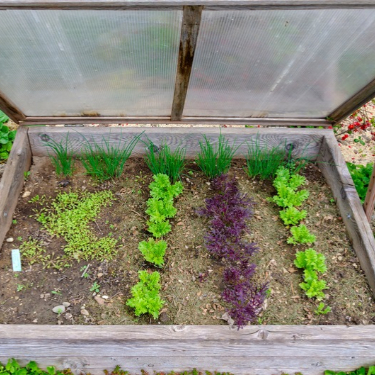
Before Planting
- Check your local first frost date.
- Pick 2 or 3 cold-hardy crops.
- Clear one garden bed and add compost.
- Plant seeds at the depth and spacing on the packet.
- Water the soil and label your rows.
Before the First Hard Freeze
- Make sure spinach and mâche have 4 to 5 true leaves.
- Set up hoops about 3 feet apart.
- Cover with row-cover fabric and secure the edges.
- Add extra protection if severe cold is expected.
During Winter
- Check soil moisture every few days.
- Open plastic covers on warm, sunny days.
- Remove heavy snow from the hoops.
- Pick outer leaves from greens and leave the centers to regrow.
Get Your Winter Seeds Before It’s Too Late
After you’ve read this whole article, you might think about starting a winter garden, but at the same time you might also think about all the seeds you need to buy. I know how much of a hassle it can be to buy different seeds from different places with different delivery dates. This is for sure a nightmare.
But since I discovered these seed packages, this is the only place I get my garden seeds from. Why? Because all of the trouble I listed above is gone. All of these packages are tailored exactly for your needs, so you don’t have to waste time anymore.
This year I started my winter garden more easily. I got this All-in-One Fall/Winter Seed Bank because it comes with 20 different seed varieties, including some of the vegetables we just covered. There’s also broccoli, cabbage, turnips, radishes, beets, and other crops worth growing during the colder months.
All of the seeds are 100% U.S. produced and non-GMO.
But even more importantly, especially for homesteaders and self-sufficient folks, is that the seeds are non-hybrid and open-pollinated. This means that the producers had in mind the people who want to save seeds for future planting seasons.
This kind of approach is very rare these days. Almost all of the seeds you find online and in stores are hybrids. The problem with hybrid seeds is that you can’t count on getting the same vegetables when you save and replant them. The next generation may grow differently, with changes in size, flavor, or yield.
But this is not the case for the seeds you get from this package I’m talking about. You can buy one pack now and then save the seeds with no worries. This means you only need to invest money once. The rest comes naturally.
Take a look at everything included in this Fall/Winter Seed Bank here.
Final Thoughts
Just because summer is over doesn’t mean your growing season has to end with it. You can still grow certain vegetables during winter, especially if you give them a little protection from the cold.
And even if you live somewhere with harsh winters, you can use this time to get a head start on spring. Some of these vegetables can survive the cold and start growing again as soon as the weather improves.
You may also like: 
The Survival Trick That Turns Saltwater Into Drinking Water (Video)
The $0 Garden to Build in 2026
7 Amish Greenhouse Hacks That Will Save You Money
9 Vegetables That Grow Better in Fall Than Summer